Sep 3, 2026 10:44 AM
In Memoriam: Cassandra Wilson, 1955–2026
Cassandra Wilson, a singer, songwriter and producer who was one of the most acclaimed and successful jazz vocalists of…


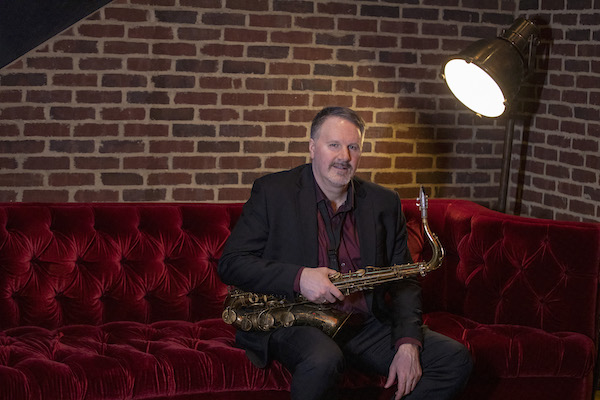
Saxophonist Russ Nolan’s new album is titled Sin Fronteras.
(Photo: Blaga Ditrow/Lush Life Film)The origin story of saxophonist Russ Nolan’s new album, the Pan-American-oriented Sin Fronteras, dates to 2007, five years after he moved from Chicago to Queens. Nolan—who had earned a black belt in taekwondo—retired from that practice because, he said, “The danger of hurting myself for good was great.” Looking for another physical activity, he decided to take up salsa dancing.
Early in the process, Nolan took lessons three nights a week from Eddie Torres (aka “The Mambo King”), a “melodic dancer” whose sage advice on “telling a story, phrases, breathing and using space” broadened his rhythmic palette. Meanwhile, Nolan spent quality time at the popular Jackson Heights venue Terraza 7, whose owner had cultivated a number of traditional dance styles. Around 2010, he became friendly with Colombian drummer Juan Felipe Mayorga, a recent emigrant who was moonlighting as the room’s bartender.
“Juan had the keys to Terraza 7 during the day, and we started calling sessions,” said Nolan, who was already exploring possibilities of fusing Afro-Caribbean rhythms with post-bop harmony in groups with pianists Manuel Valera and Michael Eckroth.
Eventually, in 2016, Nolan and Mayorga began weekly midday rehearsals there with Swiss pianist Manu Koch and Bulgarian bassist Trifon Dimitrov. Nolan used the sessions as opportunities to further coalesce his investigations into transmuting various south-of-the-border rhythmic structures into musical narrative.
How these encounters bore fruit is apparent throughout Sin Fronteras, a collection of 10 tunes written or arranged by Nolan. The band incorporates metrically modulating beats culled from various sources, including Puerto Rican plena (“The Long Ranger”), Spanish bulería (“Nature Boy”), Afro-Peruvian festejo (“Somewhat Festive”), Afro-Cuban abakuá (“Chachalokafun”), rumba (“Cruzado”) and bossa (“Nublado Y Claro”). Throughout the program, Nolan uncorks melodic, across-the-barline improvisations on tenor and soprano saxophones.
“Russ is always researching, always writing,” said Mayorga, who plays on the album alongside Dimitrov and Koch. “Russ never stops if something isn’t familiar—he just does it. He’ll present a tune with a rhythm I don’t know a lot about, so I do some research to make it more traditional. Perhaps the interpretations don’t show precisely how a specific style is played, but I don’t think it matters. We’re trying to have a basic understanding, with some of our own fingerprints.”
A son of Gurnee, Illinois, Nolan ascribes his can-do persistence to his father (“a quietly motivated cancer researcher who always stayed in the lab trying to find cures”) and his no-nonsense mother (“one of 13 from a North Dakota farm family, so there wasn’t a lot of talk about ‘How am I feeling?’”).
“I could certainly get down and depressed about aspects of the music business, but life is short, and I can’t spend another minute being negative,” Nolan said in late February, the day before a high-octane happy-hour show with organist Pat Bianchi at the Marriott Vacation Club Pulse hotel in Midtown. “In the end, it’s the joy it brings me. If I can share that joy, I think I’ve done my job as a human being.”
In an email exchange with DownBeat in early April, Nolan explained how, during the coronavirus lockdown, he had been using video conference calls to provide instruction to the adult musicians who normally study with him in person at JazzLabNY, the music education company he founded.
Despite the economic hurdles presented by the complete halt of his live performances, Nolan remained optimistic.
“Musicians—and many other professions—must continually reinvent themselves, reassess their strengths, be honest about what they are willing and unwilling to do, and make serving other people with their music a priority,” he said. “Find a need and fill it.” DB
This story originally was published in the July 2020 issue of DownBeat. Subscribe here.
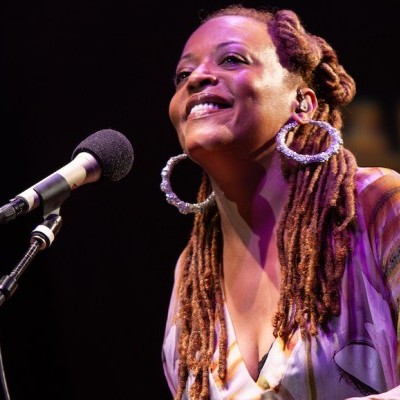
Wilson’s ability to connect to audiences helped her to win two Grammy awards and multiple other accolades. She was named an NEA Jazz Master in 2022.
Sep 3, 2026 10:44 AM
Cassandra Wilson, a singer, songwriter and producer who was one of the most acclaimed and successful jazz vocalists of…
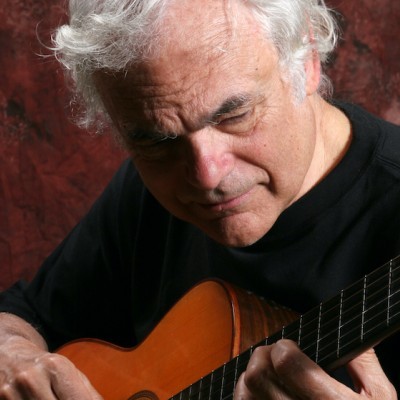
Bertoncini was a specialist and advocate for the nylon-string acoustic guitar, turning down high-profile opportunities that were unsuited to the sound and techniques that he used with that instrument.
Sep 1, 2026 11:06 AM
Gene Bertoncini, an esteemed jazz guitarist, composer, arranger and educator, died Aug. 29 at the Lillian Booth Actors…
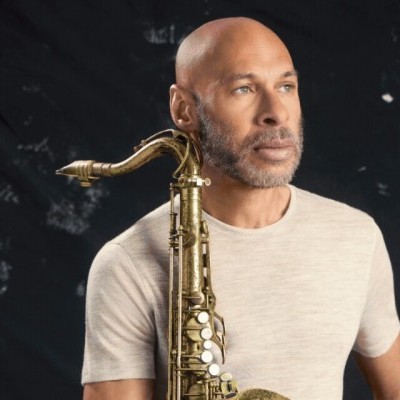
A solo concert by saxophonist Joshua Redman will close the first night of the Hyde Park Jazz Festival on Sept. 26.
Sep 22, 2026 12:26 PM
The Hyde Park Jazz Festival will take place for the 20th time on the final weekend of September 2026. Beginning half…
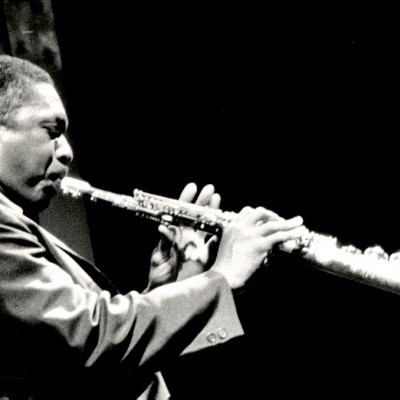
“It was just that suddenly … I could hear it,” Ravi Coltrane said of an epiphany he experienced during his late teens regarding his father’s music. “And it was almost like a calling, like something saying, ‘Hey, man, come on. It’s time to get serious.’ And the first time you really tune in and dial in and focus like that, it can be very life-changing.”
Sep 22, 2026 1:39 PM
Editor’s Note: Tomorrow, Sept. 23, is the 100th anniversary of John Coltrane’s birth. In honor of the tenor and…
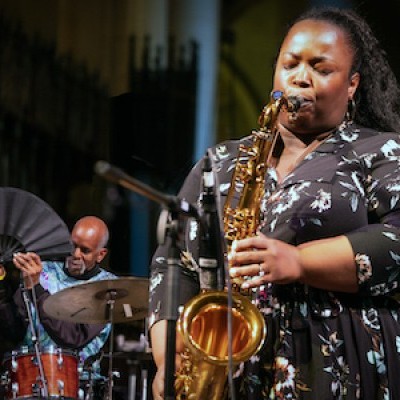
Camille Thurman took to the stage alongside bassist Kenny Davis and drummer Tommy Campbell for a rendition of Johnny Mercer’s “I’m An Old Cowhand” that recalled Rollins’ epochal 1957 trio outing Way Out West.
Oct 6, 2026 1:33 PM
As emcee Mark Ruffin noted at the commencement of an epic tribute to saxophonist Sonny Rollins at the Cathedral of…