
By Michael J. West | Published June 2026
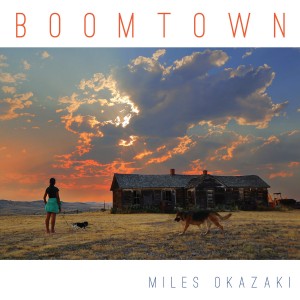
It’s hard to remember a time when so many jazz guitarists were making such exciting music. Miles Okazaki, whom this writer once watched make a fascinating solo out of parroting a nearby car alarm, is high on that list; that alone would make his 11th album, Boomtown, essential listening. But the caliber of the 10-piece ensemble he’s assembled for the album (half of whom — saxophonists Caroline Davis, Jon Irabagon and Anna Webber, trombonist Jacob Garchik and pianist Matt Mitchell — were on his previous release, 2024’s Miniature America) pushes it over the top.
Together, they make it a magnificent effort. Big though the ensemble is, it often reduces to two-person interactions with group accompaniment. Yet it’s still loaded with unique and surprising turns. I’m not sure, for the most obvious example, that I’ve ever heard another guitar-trombone feature before “Diamondville,” with Okazaki sensitively comping a tender, searching Kalia Vandever (and unsourced synth strains behind them). No less compelling, though, is “Recluse Road’s” determined back-and-forth between Okazaki and Irabagon (on tenor), with Mitchell and bassist Chris Tordini playing referee; nor the fearsome wrestling match between altoist Davis and the guitarist that is the nucleus of “Devils Tower.” The rest of the band serves as a ring for their match, though that ring becomes a swirling maelstrom. Not every face-off involves Okazaki; the central spar in “Ten Sleep” is between two bassists, Tordini and Hannah Marks.
Notably, drummer Dan Weiss tends to sit out these tête-à-têtes, even the group interplay that surrounds them. Yet he’s a vital element of the more fully arranged pieces, putting the foundational 6/4 pulse under the polyrhythmic “Thermopolis” and throwing a nagging, defiant beat into “Big Horn,” while being the most kinetic and improvisational figure on the glorious blast of “Grand Prismatic.” Okazaki knows how to use these brilliant musicians, singly or together. Best of all, though, is his own work, from the expressive chromatics of the opening “Magic Hour” to the buzzsaw drone of “Hole In The Wall” to the menacing growl of the closing “Ghost Town Girl.”