
By Ed Enright
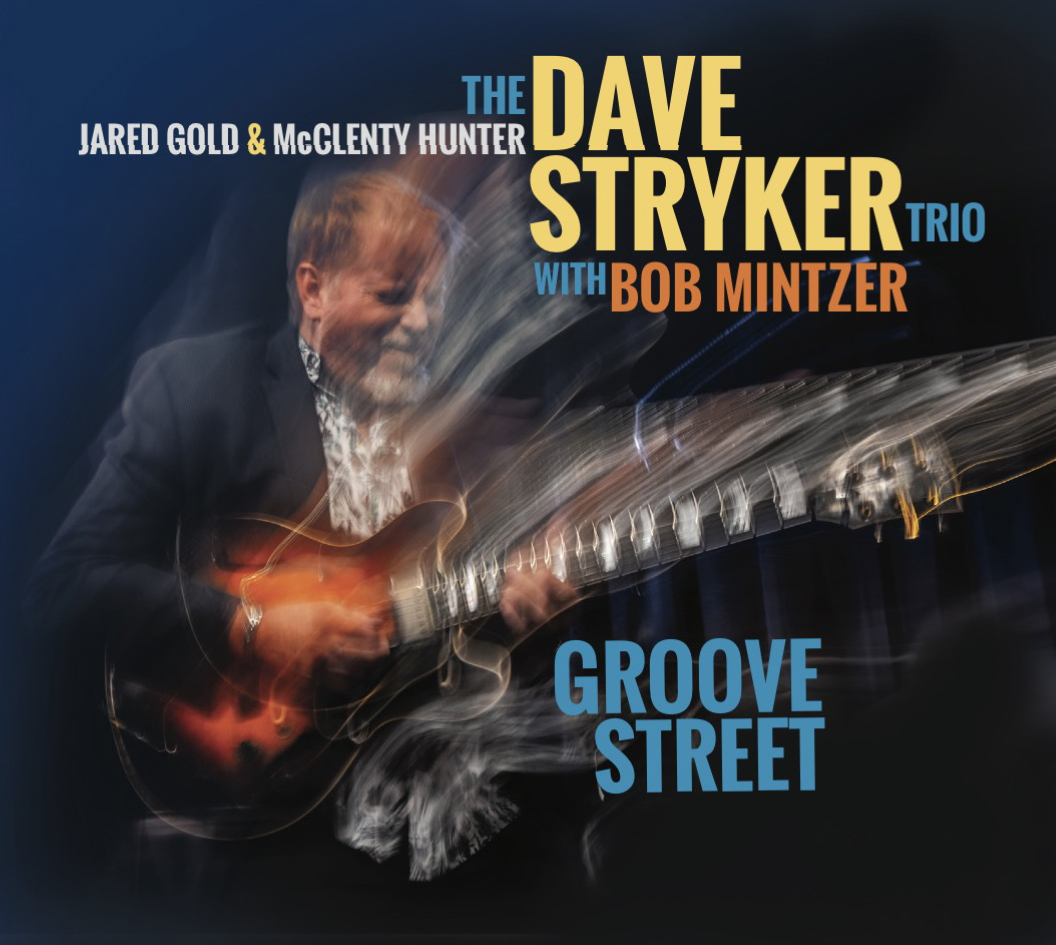
Last summer, guitarist Dave Stryker’s rock-solid trio got together in the studio with the adventurous saxophonist Bob Mintzer to record an album of new music in advance of a weeklong gig at Birdland in New York. To no one’s surprise, the session was a festive reunion of sorts, as Mintzer — a longtime friend of Stryker’s who arranged and conducted an entire album of the guitarist’s music for the 2020 album Blue Soul (Strikezone) with the WDR Big Band — had guested with the trio on past tours and was more than familiar with how they approach a groove — any groove. He had never played any of this program of new music and standards with Stryker, organist Jared Gold and drummer McClenty Hunter, however, before arriving at the studio. The energy, laid-back swing and high-spirited interplay the foursome engages in on Groove Street speaks to the height of communication among these first-class players, who allow themselves to become completely absorbed in any given moment. Most of the songs were captured in one take; the band brims with confidence and indulges in streaks of spontaneous combustion from start to finish, digging deep into the classic organ-shuffle feel of Stryker’s title track and other soul-stirring originals (“Summit” and “Code Blue”), devouring the Mintzer compositions “Overlap” and “Straight Ahead,” elevating the very essence of Gold’s “Soulstice,” bringing a laid-back swagger to the standard “The More I See You” and the Eddie Harris classic “Cold Duck Time,” and reflecting with curious, reverent wonderment on Wayne Shorter’s “Infant Eyes.” So many avenues lead to and from Groove Street, where the food trucks add fresh flavors to well-seasoned traditional fare and stay open all night — a veritable feast for the soul.
By Frank Alkyer
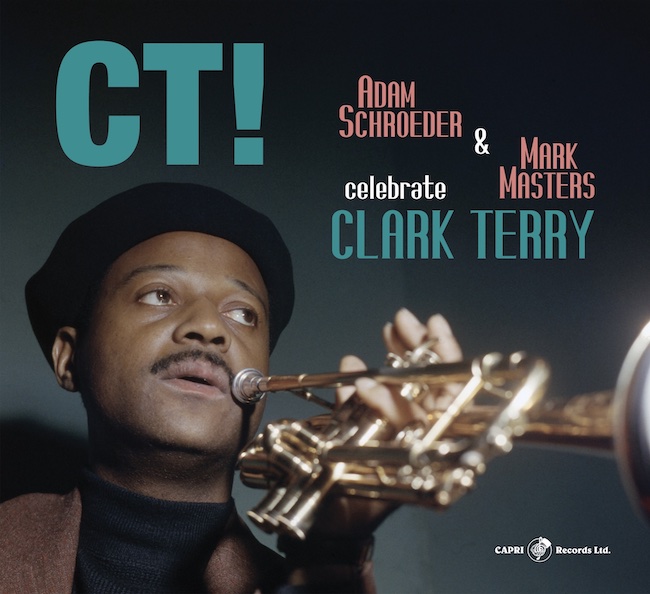
There are times when a good, hard-charging, swinging big band hits the spot on a cold Chicago morning. That’s exactly what happened when we dropped the needle on CT!, Adam Schroeder & Mark Masters Celebrate Clark Terry. The pitfalls of such an endeavor are many: the trap of rehashing the past, the horror of creating a museum piece, the crime of not swinging. But baritone saxophonist Schroeder and arranger Masters deliver the fresh, the new and the swing in five-gallon buckets. First credit the rhythm section of Edwin Livingston on bass and Peter Erskine on drums. The two veteran West Coast heroes lock it down and knock it out of the park — Livingston walking the bass like a reincarnation of Milt Hinton, Erskine swinging the drums, with the perfect amount of taste and sass, driving the machine. Next, the horn sections deliver beautifully tight work. Add the soloists just kill it. Schroeder is a beast on bari: Just check out the first track, “Serenade To A Bus Seat.” He swoops, sails and swings through the tune. The same holds true for every soloist in this West Coast-based all-star cast. But the biggest star here is the music of the great Clark Terry, lovingly arranged by Masters and joyously played by this 12-piece ensemble. Terry knew how to write for big band. “Groundhog” digs into a blues delight. “Ode To Pres” pays respect to the one and only Lester Young. On “Slow Boat,” you can feel the blues ooze from that band as it pulls at your heartstrings. Terry had a spirit that was unequalled in jazz. Schroeder and Masters thankfully remind us and make it fresh for today.
By Michael J. West
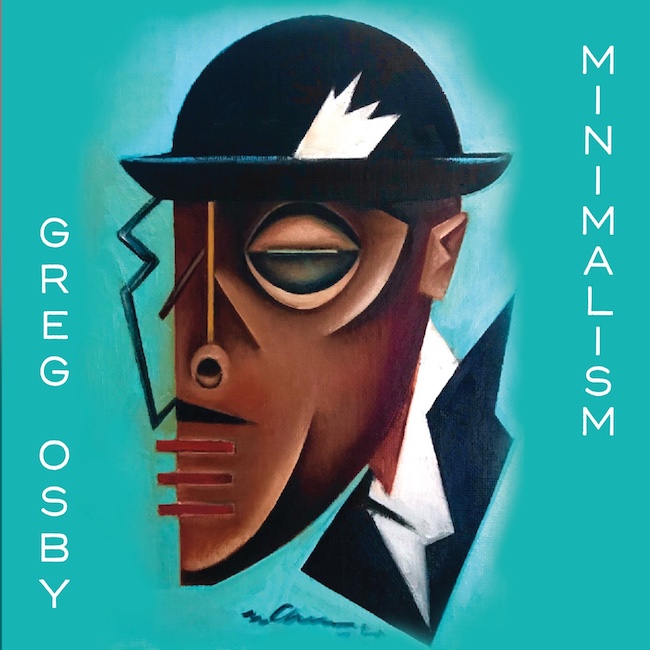
Alto and soprano saxophonist Greg Osby’s first album in 15 years is, as the title suggests, an understated affair. It offers a renewed focus on clear, uncluttered melody — both thematically and improvisationally — and on spaciousness for Osby as well as his collaborators.
Note that that’s “spaciousness,” not “space.” The former implies the latter, of course, but this album is really about giving the musicians, and the music itself, room to breathe. “Dedicato,” with its slow and fast sections, is an instructive example. Establishing the long-tone theme on his soprano, Osby treats every note as a pronouncement, buffered by interesting accents from pianist Tal Cohen, bassist Nimrod Speaks and drummer Adam Arruda. Once the double-time improvisations begin, however, the attention to detail does not subside. Osby and accordionist Joao Barradas’ contrapuntal lines are carefully constructed, designed for a common language between two very different instruments. Notes fly fast and furious but with deliberate intent.
This is especially true on the album’s four vocal tracks. Viktoria Pilatovic’s wordless delivery on “Minimalism” and “Once Known” (which is actually more minimalist, in the classical sense, than the title track) is overdubbed into lush harmony that commands attention even though it’s largely background stuff, and Osby’s pointillistic solo approach acknowledges it. Alessandra Diodati sings lyrics on Becca Stevens’ “I Forgive You” and Kendrick Scott’s “Journey.” On the often-gauzy Stevens piece, she stakes out an ethereal presence that haunts the ballad even when she falls silent; on “Journey,” she is determinedly an equal partner with Osby (who doubles her vocal) in an interchange that puts both players in their best light.
None of this is to say that the music is simple, per se; the opening “Minimalism” quickly shows the polyrhythms and metrical shifts that remind us of Osby’s co-founding role in the 1980s M-Base movement. It is, however, a thoughtful and clean approach to those complexities: a new maturity for Osby that makes his long-awaited return a welcome one.
By Ed Enright
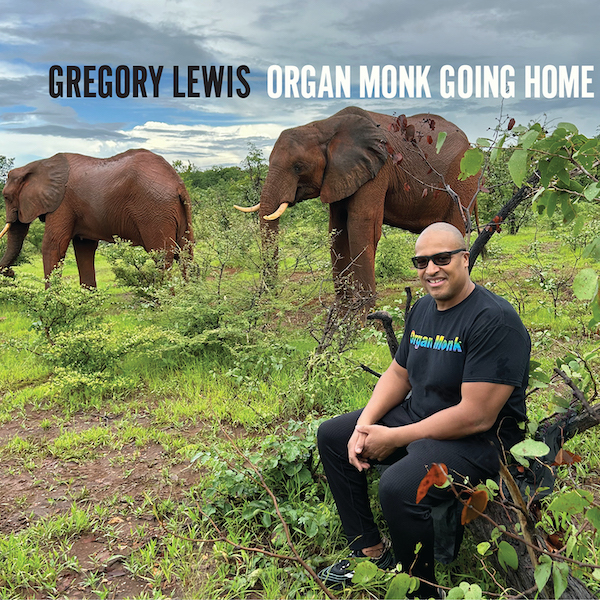
New York Hammond B-3 organist Gregory Lewis has spent a substantial portion of his career delving into the music of Thelonious Monk, a practice that has taken him to concerts halls and clubs in faraway locations and led to opportunities to connect with top musicians from a variety of soulful, funky genres. Years of practice and repertoire development have honed Lewis’ skills not only as a formidable jazz improviser and composer, but as a celebrated interpreter of both well-known and obscure material by Monk, the historic composer-pianist whose legacy is associated with the birth of bebop, the upending of conventional harmony and the sound of surprise in general. With a title inspired by a 2020 trip to Zimbabwe, Organ Monk Going Home takes Lewis on a spiritual journey of sorts to jazz’s proverbial African homeland, where he finds himself in the company of guitarist Kevin McNeal and drummer Nasheet Waits, longtime simpatico collaborators who demonstrate a keen familiarity with the organist’s every impulse. To kick things off, the trio digs into the uptempo swing of “Who Knows,” with Lewis applying manic energy and a burst of momentum to the tune’s downward-spiraling movement; Waits takes the tune out in dramatic fashion, ending a grand crescendo of drum-solo-over-band-accompaniment with a crash. Lewis and company have a gas navigating the metric displacement on the head to the herky-jerky “Evidence,” then fall comfortably into a long section of medium swing groove and inspired soloing in which the players borrow freely from the song’s quirky, stop-start motifs. Other highlights of Organ Monk Going Home include a brilliant take on “Brilliant Corners” that spotlights the composer’s attention-getting shifts in and out of double-time and features a Lewis organ solo bursting with handfuls of sustained, Leslie-swirling chords that intensify as they increase in density; “Two Timer,” played here with a funky organ-pedal bass line and a hip-hopping drum beat underneath a melodic line so catchy it could pass for a pop hit; and a greasy take on “Brake’s Sake” that brings additional funkiness and even a bit of disco feel to the session. The album concludes with “Jaclyn’s Eyes,” an original composition by Lewis that submerges the listener into an ocean of ambient atmospherics and a rock-anthem beat — a striking juxtaposition to everything that comes before it. Lewis does an amazing job of approaching Monk’s piano-centric ideas to organ, a completely different animal with enough idiosyncratic tendencies to satisfy even the most curious and discriminating Monk enthusiasts among us.
By Frank Alkyer
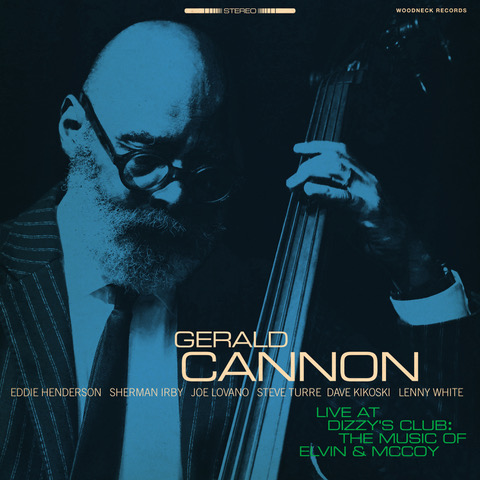
If you are not familiar with the bass work of Gerald Cannon, now’s a good time to get hip. A disciple of the great Milt Hinton, Cannon knows how to walk a bass line, as he does with elegant swing on “EJ’s Blues,” the opening track to his latest recording, Live At Dizzy’s Club: The Music Of Elvin And McCoy. Elvin, of course, is the late, great Elvin Jones (1927–2004), who Cannon played with for nine years. “EJ’s Blues,” one of the Hall of Fame drummer’s signature tunes, leaves plenty of blowing room for members of the all-star cast assembled for these proceedings. Tenor saxophonist Joe Lovano, trumpeter Eddie Henderson, trombonist Steve Turre, alto saxophonist Sherman Irby and pianist Dave Kikowski all swing hard and heartily on this opening number. And it’s all held down by the great Lenny White on the drum kit. Cannon pulled this cast together for a tribute to Jones, and to another venerated jazz artist, pianist McCoy Tyner (1938–2020), who Cannon played with for 14 years. The eight-track program includes two Jones vehicles, a Cannon original and five pieces penned by Tyner. Tyner’s “Search For Peace” seems hauntingly appropriate in these troubled times. His “Blues In The Minor” kicks with some powerful unison horn lines and White delivers a sizzling drum solo. “Contemporary Focus” tells us all we need to know about Cannon; his bass solo steals the tune. And the band sends us off with a kick-ass version of Tyner’s “Inception.” Kikowski fills in admirably on piano. He’s fit and fleet in the role, playing the tune as his own, all the while showing utmost respect to its creator. This listener’s favorite tune on the record is the Cannon original called “Three Elders.” It’s a beautiful ballad that opens with Henderson’s plaintive trumpet and the shimmer of White’s cymbals, settling into a noir, pull-at-the-heartstrings tempo. He wrote it in honor of Elvin and McCoy, but the third elder referred to in the title is Cannon’s longtime friend and bandmate, pianist Larry Willis, who passed away in 2019. Willis and Cannon were stalwarts in Roy Hargrove’s band in the late ’90s and early 2000s. It’s a fitting and fond tribute. If you need a pick-me-up to help you find your New Year’s groove, Gerald Cannon and this band delivers.