
By Ed Enright
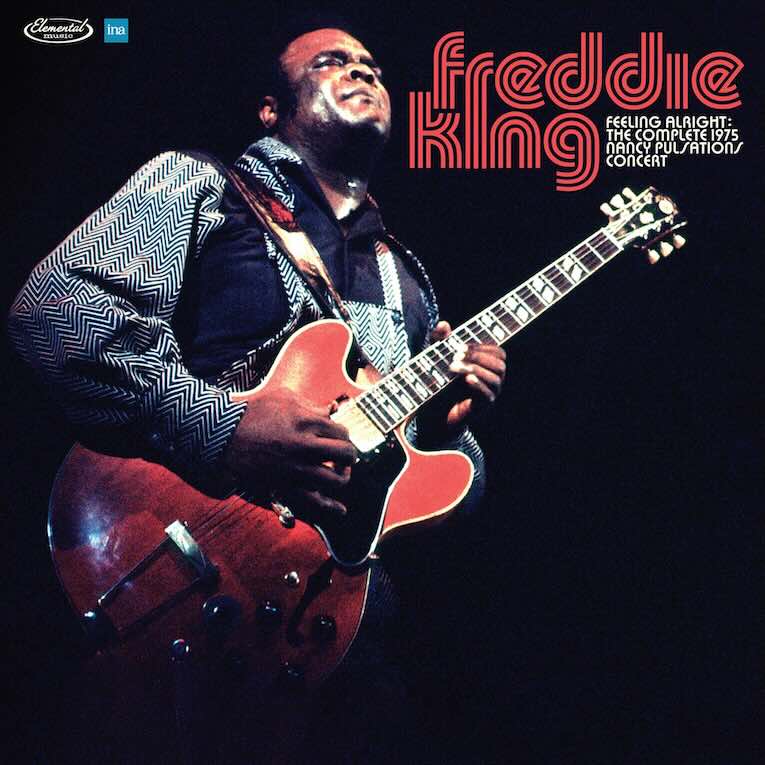
We’re super fortunate that this three-LP vinyl set consisting of previously unreleased material recorded live at the 1975 Nancy Jazz Pulsations Festival in France was released earlier this month as a limited-edition Record Store Day “First.” Freddie King was in peak form and at the height of his popularity when the blues guitar giant and his crack band played to a huge, enthusiastic crowd at one of Europe’s major music festivals at a time when audiences raised on rock ’n’ roll began widely embracing those pioneering artists who were closely connected to the music’s traditional roots. Thanks to album producer and archivist Zev Feldman, who sourced the recordings from the French Radio and Television Broadcasting Office, we now have a great-sounding live document of The Texas Cannonball — something that hasn’t been very forthcoming in the past — performing a generous 16-song mix of his best-known instrumentals (including “Hide Away and “Sen-Sa-Shun”), essential blues standards (“Got My Mojo Working,” “Messin’ With The Kid” and “Stormy Monday,” to name a few) and covers of the late-’60s rock radio hits “Goin’ Down” (by southern soul-rocker Don Nix) and “Feelin’ Alright” (by Traffic’s Dave Mason). Supporting King’s stinging guitar lines and commanding vocals are simpatico touring band members Alvin Hemphill (organ), Lewis Stephens (piano), Ed Lively (second guitar), Benny Turner (bass) and Calep Emphrey (drums), a tight unit if there ever was one. The expertly paced program ranges in mood from calming blue-sky coolness to stormy rock intensity to see-the-light gospel ecstasy, the music leaving ample room for judicious soloing, stretching and testifying. The notoriously hard-living King died just a year after this performance, at age 42, a sobering bit of blues history that makes this deluxe package all the more valuable for today’s listeners and collectors. Also available in CD format, it makes a great companion piece to the two-LP set B.B. King In France: Live At The 1977 Nancy Jazz Pulsations Festival, produced by Feldman and released as a Record Store Day “First” in November 2024.
By Michael J. West
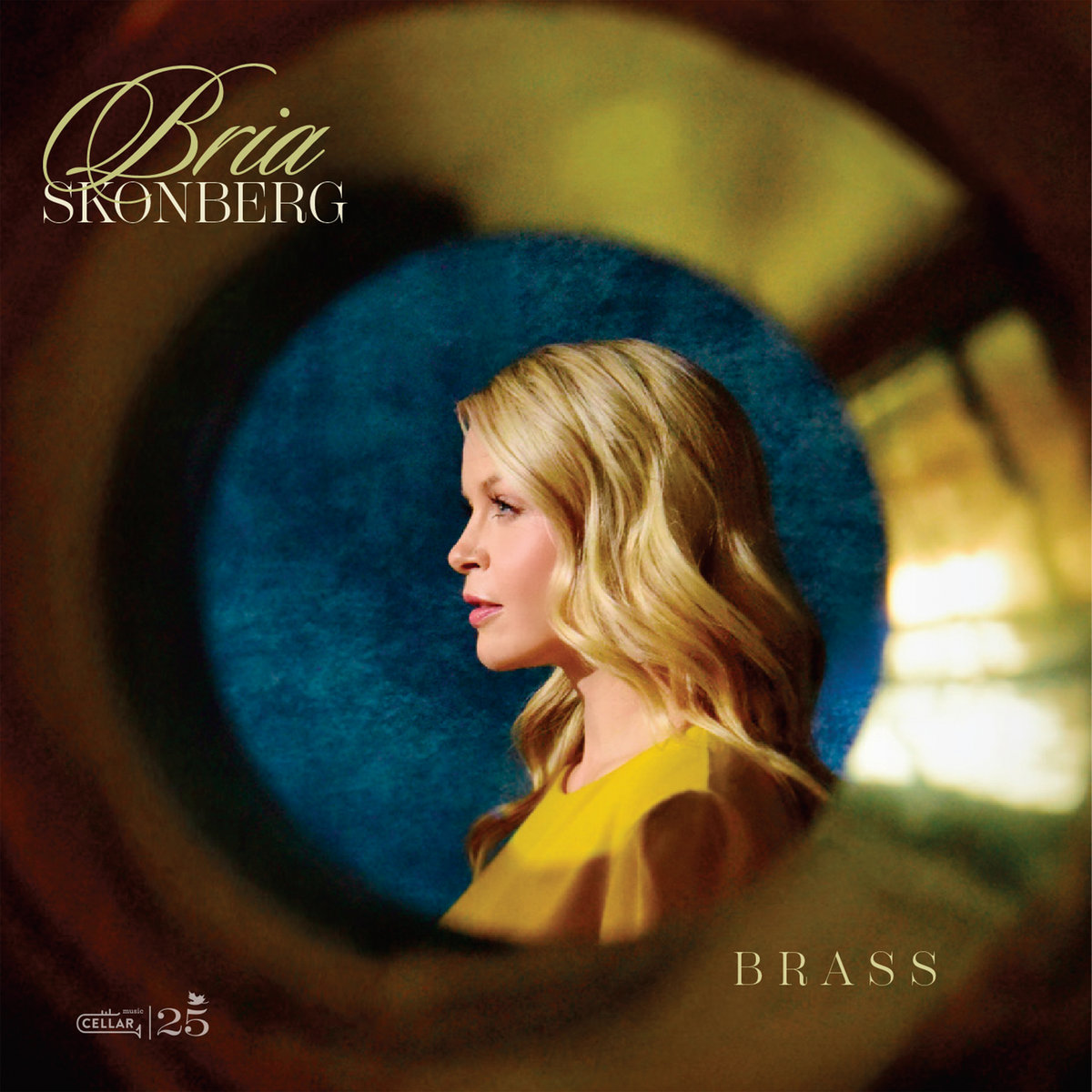
Bria Skonberg is often asked whether she’s a trumpeter or vocalist first — a question that becomes irrelevant when you see how much fun she has doing both on stage. On Brass, she’s firmly a trumpeter first. Indeed, there’s only one vocal on the whole album, on the closing medley “Comin’ Home Baby/You’d Be So Nice To Come Home To.” (She plays the former and sings the latter.) The rest lives up to the album’s plainspoken title, with Skonberg demonstrating her considerable accomplishment on the horn.She’s certainly developed a unique voice, one that combines the dry-champagne tone of Miles Davis (though with a smidge more vibrato) with a healthy cache of brio and technique. The technique is most evident when she uses mutes, as in her boisterous plunger growl on Jelly Roll Morton’s “New Orleans Bump” and remarkably high-spirited Harmon on “Between The Devil And The Deep Blue Sea” (where she slips in some deliciously upturned trills that feel like a calling card). The brio is apparent everywhere — from the jump-blues trumpet battle (with guest Kellin Hanas) on “Brotherhood Of Man” to the ballad “Somewhere Out There” (from the 1986 animated film An American Tail). Skonberg does not improvise here, handling the written melody and leaving pianist Luther Allison to solo, but she doesn’t need to. Her sweet delivery and subtle blues colors make her statement.
Hot jazz — trad and swing — remain Skonberg’s stock-in-trade; “Somewhere Out There” could easily be transposed to a trumpet feature in a big band set. But there’s some modernism here as well: The leader’s own “Of Liberty” is the prime example, resting on sophisticated harmonies and rhythmic details that give Allison, bassist Eric Wheeler and drummer Darrian Douglas a great showcase. There are also shades of Sonny Rollins (including a paraphrase from “St. Thomas”) in the calypso opener “Markham Sunrise.” It’s a hell of a lot of ground to cover, and Skonberg gets it all in without even seeming to break a sweat. DB
By Frank Alkyer
There’s something about the soulfulness of Shabaka Hutchings, who now goes simply by Shabaka, that stirs emotion and summons the spirit. It’s been that way with his various bands (Sons of Kemet, Melt Yourself Down, The Comet Is Coming, the Ancestors) as well as his solo projects (Afrikan Culture and Perceive Its Beauty, Acknowledge Its Grace). So now comes a truly solo project, Of The Earth, one where Shabaka composes, produces and plays every instrument on the recording, which he released on his own record label. It’s spellbinding. The multi-instrumentalist took an 18-month break from performing on tenor saxophone, long known as his main instrument, to pursue his interest in flute. But here on Of The Earth, he returns to saxophone, employing it as just one of many instruments in his artistic palette along with flutes, drum machines and assorted electronics pulled from a portable audio setup he has been traveling with on the road. He pulls it all together into a sound bath that would make Pharoah and Coltrane smile. “A Future Untold” offers a dripping plea from his saxophone over a wash of chimes and electronic soundscapes. With “Those Of The Sky,” Shabaka brings in a chorus of overdubbed flutes and reeds with infectious, slow-groove beat-making. On “Go Astray,” Shabaka raps, his voice processed, poised and driving over an industrial-age, metallic beat. He offers a more inward-looking spoken word on the album’s closing number, “Lowered Eyes.” In between, there are mind-blowing nods to Mother Africa with “Dance In Praise,” “Ol’ Time African Gods” and “Marwa The Mountain.” The way he uses the sound of flutes to soothe, his saxophone to shred and beats to drive on “Stand Firm” is fascinating. As a whole, it seems as though Shabaka has channeled the elders and pulled them into the future. Bottom line, Of The Earth offers a rare, beautiful listen from a modern master of the art form.
By Ed Enright
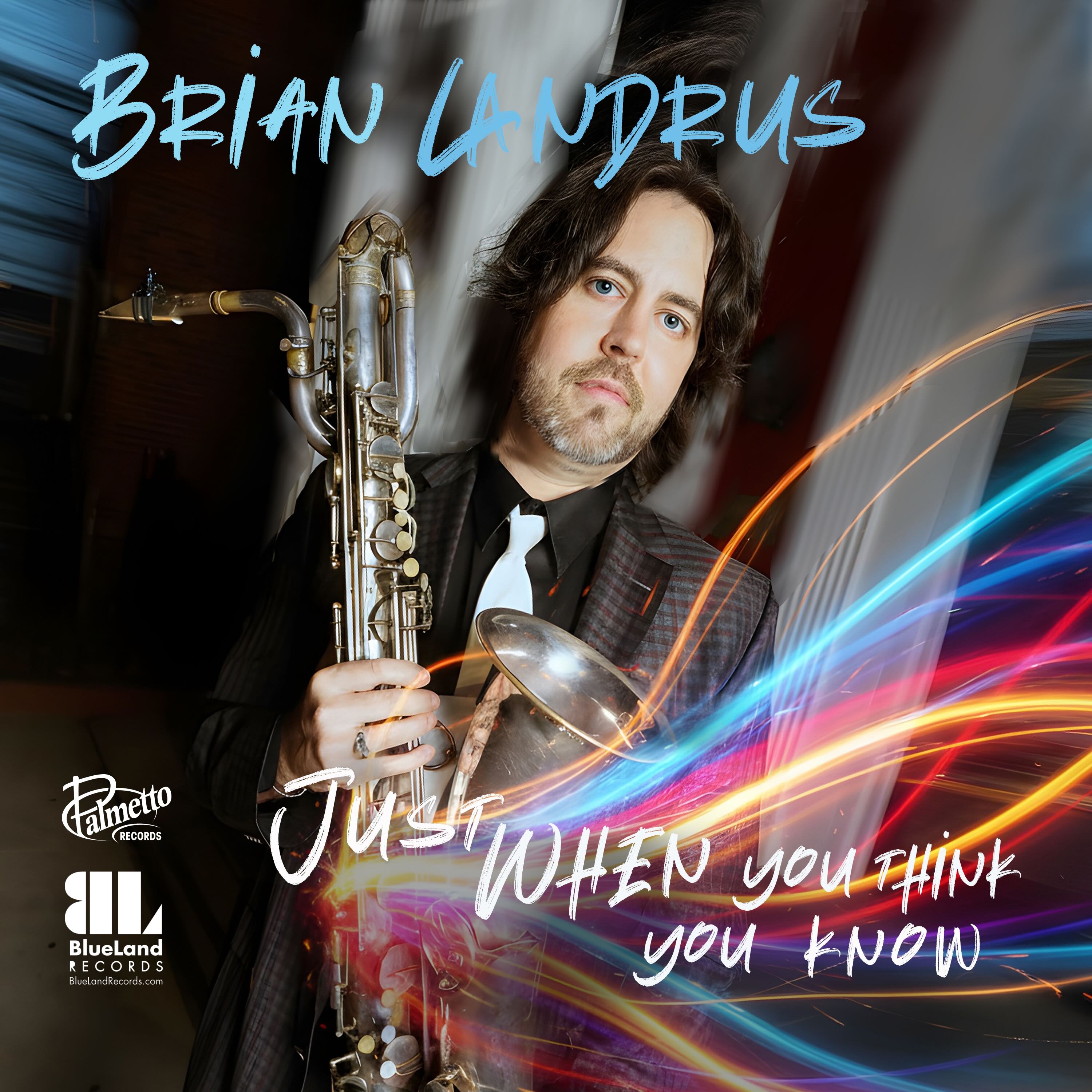
It’s one thing to listen to a low woodwind specialist play a bunch of large reed instruments at a really high level. But it’s another thing entirely to experience a versatile, sensitive artist like Brian Landrus, who keeps expanding the small army of reed instruments he commands with power, finesse and a distinctive personal voice while working to widen his stylistic range as a jazz composer and bandleader. On his 14th album as a leader — with guitarist Dave Stryker (who returns from 2024’s Brian Landrus Plays Ellington & Strayhorn), pianist/keyboardist Zaccai Curtis (a longtime friend working with Landrus for the first time) and frequent rhythm section partners Lonnie Plaxico (bass) and Rudy Royston (drums) — Landrus adds tenor sax and C flute to his palette of woodwind colors, which here also includes his usual suspects baritone sax, bass clarinet, alto flute and bass flute. The 14 tracks on Just When You Think You Know are catchy, smartly arranged original compositions that provide fertile contexts for Landrus’ highly personal, expressive playing on all of these instruments. There’s a lot of heart and soul to be discovered in his composed lines and improvisations, all of them rooted in the type of raw emotions that arise when one breaks free of established norms, embraces the unexpected and confronts elements of uncertainty and surprise with openminded vulnerability. The same is true of Stryker, an essential contributor to this project who frequently doubles melodies with Landrus and takes several lyrical and sultry solos of his own. Landrus’ determination to roll with life’s sudden changes is also reflected in the spontaneity and in-the-moment interactions of his stellar quintet as they skillfully throw down a full gamut of stylistic variations from one track to the next. Bass clarinet plays an important role on several tunes, including the opener, “All In Time,” where a contemplative and meditative attitude dominates Landrus’ eloquent solo amid a chorus of overdubbed woodwinds, showcasing the textural beauty of his newly expanded instrumental array. His C flute makes an auspicious debut, helping to fill out the high end of the mini wind ensemble and playing prominent roles on pieces like the alluring bossa nova “Continuance,” the atmospheric groover “Under Dark” and the disco-funk flutter fest of the closer “Paroxysm.” His plays tenor on five tracks, including the swinging jazz-waltz title track, making the horn sing with the same extreme confidence and ease he’s displayed so consistently over the years on his other axes. Whether luxuriating on the mellow side or asserting himself with bluesy, authoritative boldness, his tone is robust in the tenor’s bottom tones and midrange, his high register reinforced with a mellow weightiness. Baritone sax, the axe for which Landrus is perhaps best known, takes the lead on the R&B groover “Untold Story,” the straightahead hard-bopper “One Year” and the modern bossa nova “Averse.” Deep personal emotions fuel the well-paced, thoughtfully developed and listener-accessible program of Just When You Think You Know, where Landrus, serious-minded artist that he is, bears his intimate, unselfconscious love for each and every one of the woodwinds he’s mastered.
By Michael J. West
Out less than a week, Flea’s Honora is already under the usual level of intramural controversy. Another pop-millionaire jazz dilettante! Suddenly he plays trumpet! And this one makes the cover of DownBeat! Does he have any idea what he’s doing? Is it really even jazz? Either way, can it really be good?
Let’s first answer the second question: I don’t know, but I can’t rule it out. Flea (famous as the acclaimed bassist for Red Hot Chili Peppers) is probably not going to start hitting the clubs or the jam session any time soon. But Honora is on the same plane as albums by, for example, Thundercat or Mark de Clive-Lowe, both of whom have also been reviewed in these pages. Much of it is uncategorizable. Best to say, it’s on the jazz spectrum somewhere.
Back to the first question, whether he knows what he’s doing: Not really, but that’s the point. Honora is an experiment, Flea attempting something new and out of his comfort zone. And he’s got great guidance. Flea’s a relative beginner here, especially on trumpet (which he played as a kid) — he certainly doesn’t claim to be Clifford Brown. Yet such accompanists as guitarist Jeff Parker, saxophonist Josh Johnson (who also produces, with liberal use of electronic effects), flutist Ricky Washington and fellow four-stringer Anna Butterss have forward-pointing jazz credentials that can’t be denied, and they keep him on point on pieces like the atmospheric fusion original “Frailed”; the slow, but punchy and anthemic “Free As I Want to Be,” also an original; and a surprisingly delicate “Wichita Lineman” (with rocker Nick Cave on a shaky but weirdly apropos vocal). Flea confirms he can swing on his own boppish composition “Morning Cry” and quasi-postbop-but-also-hip-hoppy “Traffic Lights” (with Radiohead’s Thom Yorke on vocals). There’s some subtle swing gestures as well on a murky electronicized “Willow Weep For Me,” though they’re well disguised in a blank-verse rhythmic matrix.
Finally to the last question, the one that brings you here: Is it any good? It is. All of the above is taken seriously, but with a spirit of adventure. If he’s not a virtuoso trumpeter (as he is on bass, using that instrument to light-touch funky ends on “A Plea”), Flea has put real work into the horn, and he shows it with an interesting mix of reverence and roguishness. That mix raises some question marks when it comes to his version of Funkadelic’s “Maggot Brain.” Originally an improv platform for guitarist Eddie Hazel, Flea gives a verbatim trumpet transcription of the first half of Hazel’s solo (with gauzy flute-and-vibraphone backgrounds). Is it a sincere tribute, a cheeky “whitefacing” of a Black American Musical masterpiece, a showoff of his chops-in-progress, or all of these at once? It’s pretty either way, but also the only thing here that comes off as a novelty bit.
By Frank Alkyer
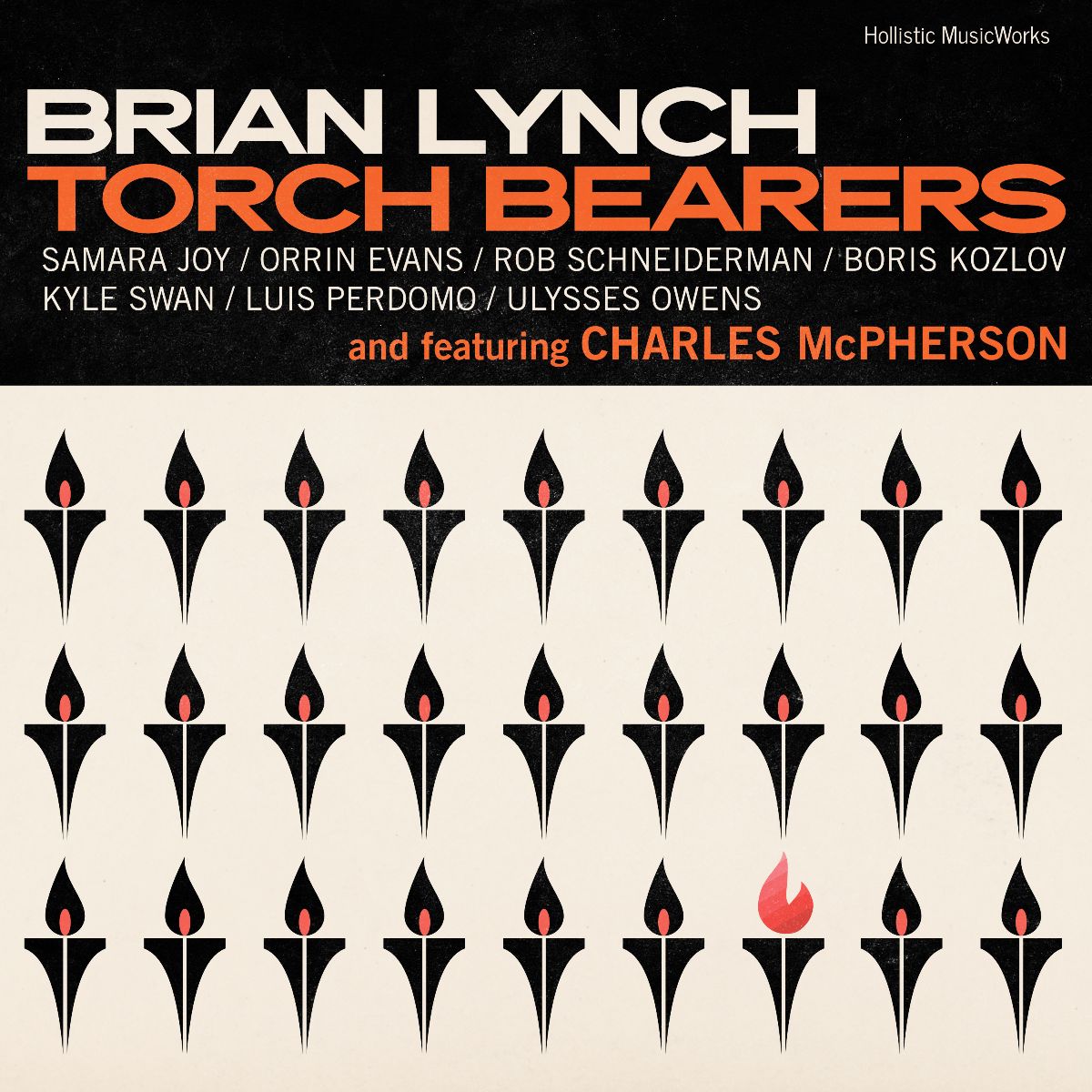
There’s no question about Brian Lynch’s mastery of the trumpet and flugelhorn, his skill as a composer and arranger and his fine-tuned taste when crafting music and projects. But the 69-year-old with three Grammy Awards doesn’t get enough credit for knowing how to throw a fascinating musical dinner party. Take, for example, his latest recording, Torch Bearers on his own Hollistic MusicWorks label. “I carry the torch of my heroes,” says Lynch in the press materials with the new recording. And he proves it by inviting in the always-tasteful Charles McPherson to play saxophone and write three tunes for the recording. But Lynch’s heroes aren’t just his elders. He also invites the silky contralto of Samara Joy into the festivities to not only sing on two tunes, but also to write lyrics. McPherson and Joy share songwriting credits on the beautiful, noirish “The Joy Of Love,” a ballad that could comfortably rest in any era of the jazz continuum. Double that statement down with the Lynch/Joy-penned “Pursuit Of A Dream,” another wistful ballad that floats by in the breeze. The Joy-Lynch connection runs deep, as he co-produced her chart-topping, Grammy-winning album Portrait. But the connection between all three artists runs even deeper when the subject of the late pianist Barry Harris comes up. All three artists studied with Harris, who passed in 2021 — McPherson being one of his first students, Lynch in the middle and Joy one of his last. In tribute, Lynch and McPherson tear into an upbeat treatment of Harris’ “Luminescence” backed Rob Schneiderman on piano, Boris Kozlov on bass and Kyle Swan on drums. Throughout the album the star-studded lineup includes pianist Orrin Evans sharing piano duties with Schneiderman along with Luis Perdomo and Ulysses Owens taking the piano and drum chairs respectively on “Pursuit Of A Dream.” It’s great to hear how the other Lynch originals (“Luck Of The Draw” and “Kyle’s Dilemma”) dovetail so smoothly with McPherson’s (“The Juggler” and “7-24”). They close by swinging out to Dizzy Gillespie’s “Blue N’ Boogie,” a fitting dessert at the end of this sonic feast. Somewhere Barry Harris is smiling. He taught them well.