
By Ed Enright
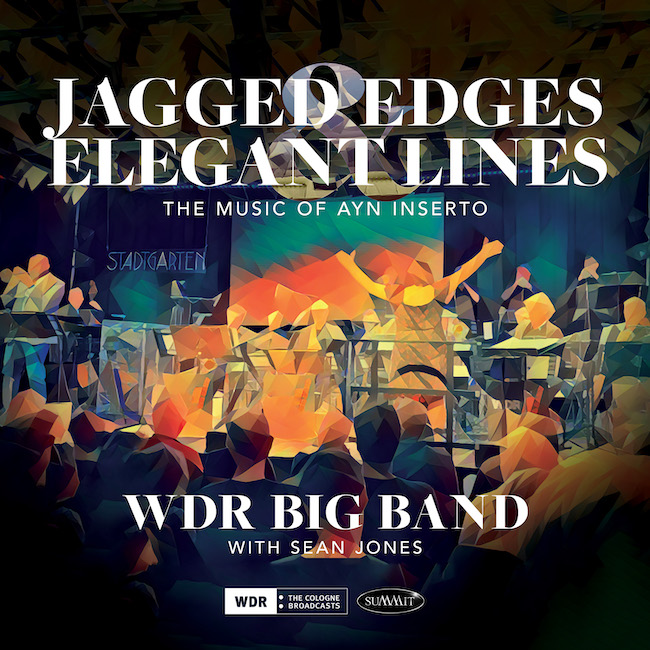
Ayn Inserto captures the beautifully complex and soulful essence of the celebrated trumpeter-educator Sean Jones on this spectacular new recording made in collaboration with Germany’s renowned WDR Big Band. When the Boston-based composer-arranger — an important contributor to the worldwide contemporary large ensemble scene who’s worked extensively with her own jazz orchestra for 25 years as well as the Frankfurt Radio Big Band beginning in 2022 — was commissioned by the Cologne-based WDR to present an evening-length concert performance of her original music in 2024, she selected compositions representing various aspects of her existing oeuvre and wrote a brand-new suite for Jones, the night’s featured soloist. The program begins with a series of pieces released on earlier albums by the Ayn Inserto Jazz Orchestra (“Eschel Sketch,” “La Danza Infinita,” “Vinifera” and “Down A Rabbit Hole” for those already familiar with her work). The middle portion of the set includes “Mr. Jones And Company” (a 2019 piece commissioned by NYO Jazz, the Carnegie Hall national youth ensemble led by Jones) and “BJ’s Tune” (Inserto’s arrangement of a Jones composition) — both of which contribute to setting up the show’s grand finale: the 22-minute, four-part “Suite For Sean Jones,” dedicated to the evening’s special guest artist, a personal friend who’s had productive and meaningful musical encounters with Inserto previously. Named for the many disparate qualities that embody Inserto’s work — including deliberate yet heavily syncopated rhythms, flowing lyricism amid a buoyant sea of tonal rubs and harmonically tense ensemble figures, and a youthful attitude that vitalizes her more mature, abstract constructs — Jagged Edges & Elegant Lines documents a monumental event in the large ensemble realm and paints a gorgeous portrait of one of jazz’s most well-rounded and accessible instrumentalists.
By Michael J. West
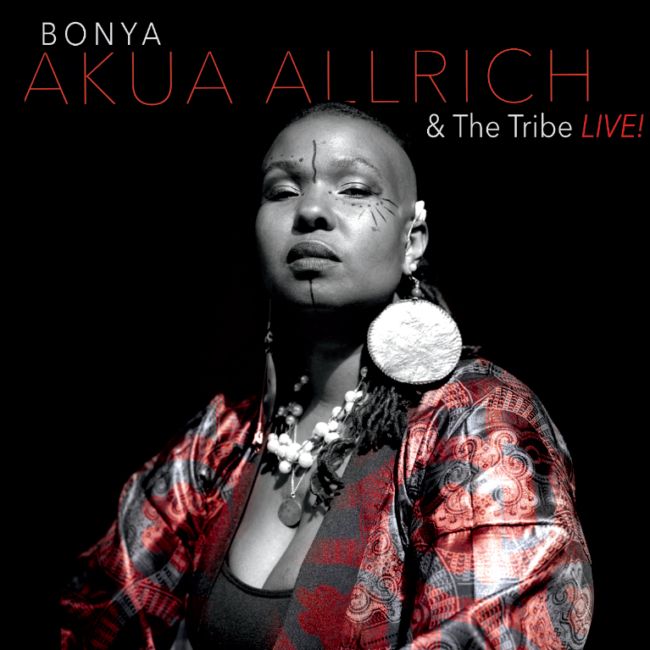
Vocalist Akua Allrich isn’t shy about the themes in her work: pan-Africanism; politics, racial and otherwise; Black womanhood; and spirituality, including the gods of the West African Akan people (who she thanks in her liner notes). Indeed, shyness is not in her performing vocabulary: Maryland-based Allrich has a robust, booming alto voice that she further imbues with powerful presence. It seems at first to belie the title Bonya, which she initially translates as “humility”; she elaborates, however, that Bonya is “the practice of listening deeply and allowing Spirit to speak, create and inspire.”
Indeed, it does exactly that. This live performance in Baltimore includes takes on Nina Simone’s “Four Women” and Billie Holiday’s “Fine And Mellow”: signature pieces by two of Allrich’s heroes. Some singers would be trapped in the composers’ outsize personas; Allrich, unintimidated, inhabits both songs completely. She pushes ahead of the beat on “Fine And Mellow” where Holiday famously fell behind, then scats with all her might through one chorus, yet sacrifices none of the blues flavor (thanks in part to bassist Kris Funn, in whom Allrich has a splendid musical partner). On Simone’s song, she simply lets her confidence and conviction burst forth, sounding only like herself. (Funn remains a solid partner, but Samuel Prather’s piano, Brent Birckhead’s alto saxophone and Tyler Leak’s patient drum line are also essential).
Much more stunning music occurs. Allrich transforms Randy Newman’s “Baltimore” into a reggae-fied shout, Prather’s echoey Rhodes giving it a faint dub vibe. Her own compositions, the joyful “Bonya” and the soulful ballad “Push And Pull,” arrive with as much weight and presence as everything else. If there is a missing element here, it’s intimacy; even on “Push And Pull,” both Allrich’s power and the sound of the room are very much on display. But that’s OK. The Spirit that Allrich allows to speak, create and inspire on Bonya is delivering its message not to a small group of listeners, but to the world.
By Frank Alkyer
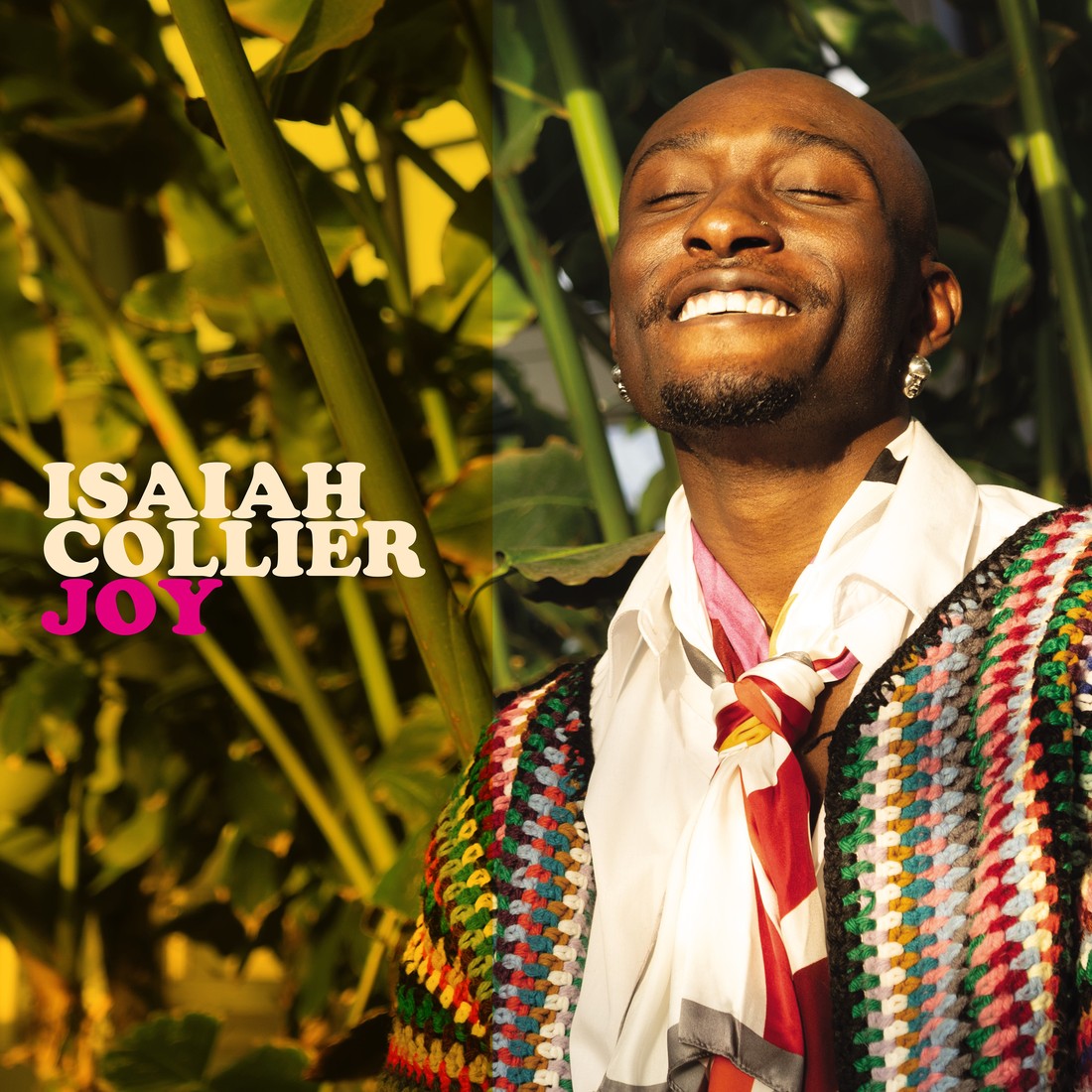
Saxophonist and multi-instrumentalist Isaiah Collier has become known as a fiery artist channeling John Coltrane’s driven spirituality, Chicago’s AACM avant garde aesthetic and a personal love of individual expression. But drop the needle on Joy, his new five-song EP, and there’s a totally different side of Collier’s artistic being. He delivers old-school Motown wrapped in hip, young Chicago for 27 minutes and 11 seconds of pure … Yep, you’ve got the idea. If you’ve been following the 28-year-old rising star’s career, the title track, which is also the first track, snaps your head around. Sixties pop piano? R&B chimes? Violins? A killin’ horn section riff? The buildup is one part Smokey Robinson and one part fellow Chicagoan Chance the Rapper. And then it happens. Isaiah Collier sings. The man who tells stories through his array of instruments also has a great voice. “Joy,” the song, is a summertime, top-down, driving slow banger that can also raise you up for church on Sunday morning. It’s guaranteed to pick you up when you’re feeling down. On “Landscape Of Dreams,” Collier plays all the instruments — piano, flutes, percussion, drums, bass — on this breathy dose of happiness. “Where I’m Loved” shines the spotlight on Collier’s falsetto and relationships on a straight-up r&b groove. “When The Dust Settles” takes the set in a totally different very electric direction. Collier had just received a microKorg synth from co-producer Sunny Daze. So, he started messing with it joined by Cole Runge on guitar and his brother Jeremiah Collier on drums. For those who don’t know, Jeremiah is incredibly talented, too, touring with Stanley Clarke as well as playing with his own band The REUP. The result is a massive U-turn from the rest of the set, but it’s crazy fun. To close the set, Mr. Collier takes us to church with “God’s By Your Side.” Collier notes that the song was inspired by the passing of D’Angelo. The theme is absolutely beautiful: keep moving, keep going forward. And that’s exactly what Isaiah Collier does. He moves forward, following the muse, following his heart. And he has a big, curious heart.
By Ed Enright
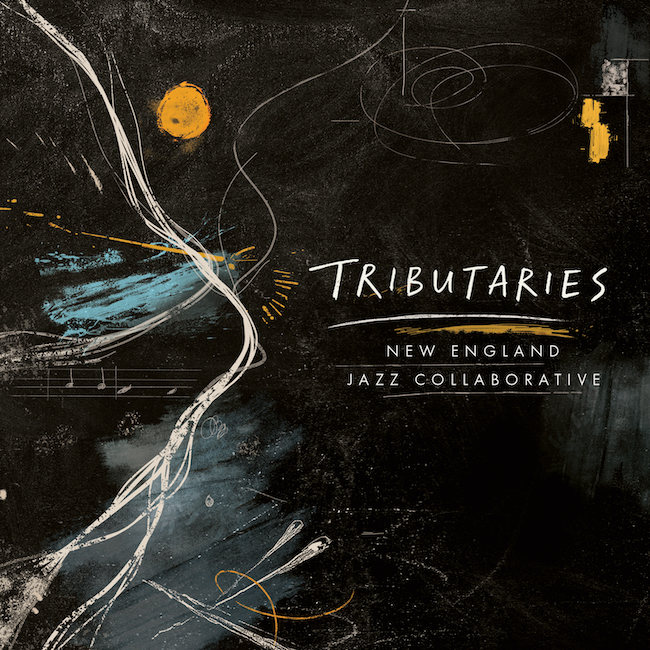
Taking up the mantle of the influential Jazz Composers Collective — a non-profit assemblage that included such forward-thinking artists as Ben Allison, Michael Blake, Ron Horton, Ted Nash and Frank Kimbrough from 1992 to 2005 — the New England Jazz Collaborative is an artist-led entity dedicated to fostering a stylistically diverse range of new music from today’s top contributors to the large ensemble canon. Formed five years ago when percussionist Jeremy Cohen reached out to like-minded colleagues and peers in need of resources to have their original music properly performed and recorded, the group has been actively commissioning and presenting new works for 17-piece big band. Tributaries is the collaborative’s first album, consisting of six original pieces by four of its composer-bandmembers: Cohen, clarinetist Darryl Harper, electronic musician Matan Rubinstein and saxophonist Sam Spear. It’s a strong and vibrant debut that covers a wide range of stylistic territory and offers something for everyone, in keeping with the collaborative’s all-are-welcome ethos of creating music that’s accessible and engaging. The program ranges from classic New Orleans swing, progressive jazz and odd-meter funk to West African highlife, Third Stream hybridism and lush balladry, evoking an expanse of moods and textures. Like tributary rivers leading to a glorious confluence of all things jazz, the carefully curated playlist moves fluidly across styles and traditions, teeming with compelling individual expression and resonating with a massive ensemble sound that highlights the skill and versatility of the collaborative’s improvising instrumentalists. Many of the orchestra members on Tributaries share strong ties to the Greater Boston area, including trumpeters Jason Palmer and Bijon Watson, saxophonists Felipe Salles and Brian Landrus, and guitarist Eric Hofbauer, while others hail from more remote corners of the globe. The unifying and risk-embracing influence of ensemble conductor Ken Schaphorst, chairman of jazz studies at New England Conservatory, helps this auspicious initial outing from New England Jazz Collaborative carry forward the East Coast’s long legacy of championing heavyweight composer-arrangers such as Gunther Schuller, George Russell and Bob Brookmyer — while bringing much-deserved attention to rising-star players like guitarists Mitch Selib and Eric Hofbauer, saxophonists Temidayo Balogun and Allan Chase, drummer Lumanyano Mzi, bassist Bob Nieske and pianist Ellie Pruneau. There’s great honor in striving for originality in jazz composition and performance, and, in the case of the dedicated, hard-working members and visionaries of New England Jazz Collaborative, it can also yield tremendous rewards, like Tributaries.
By Michael J. West
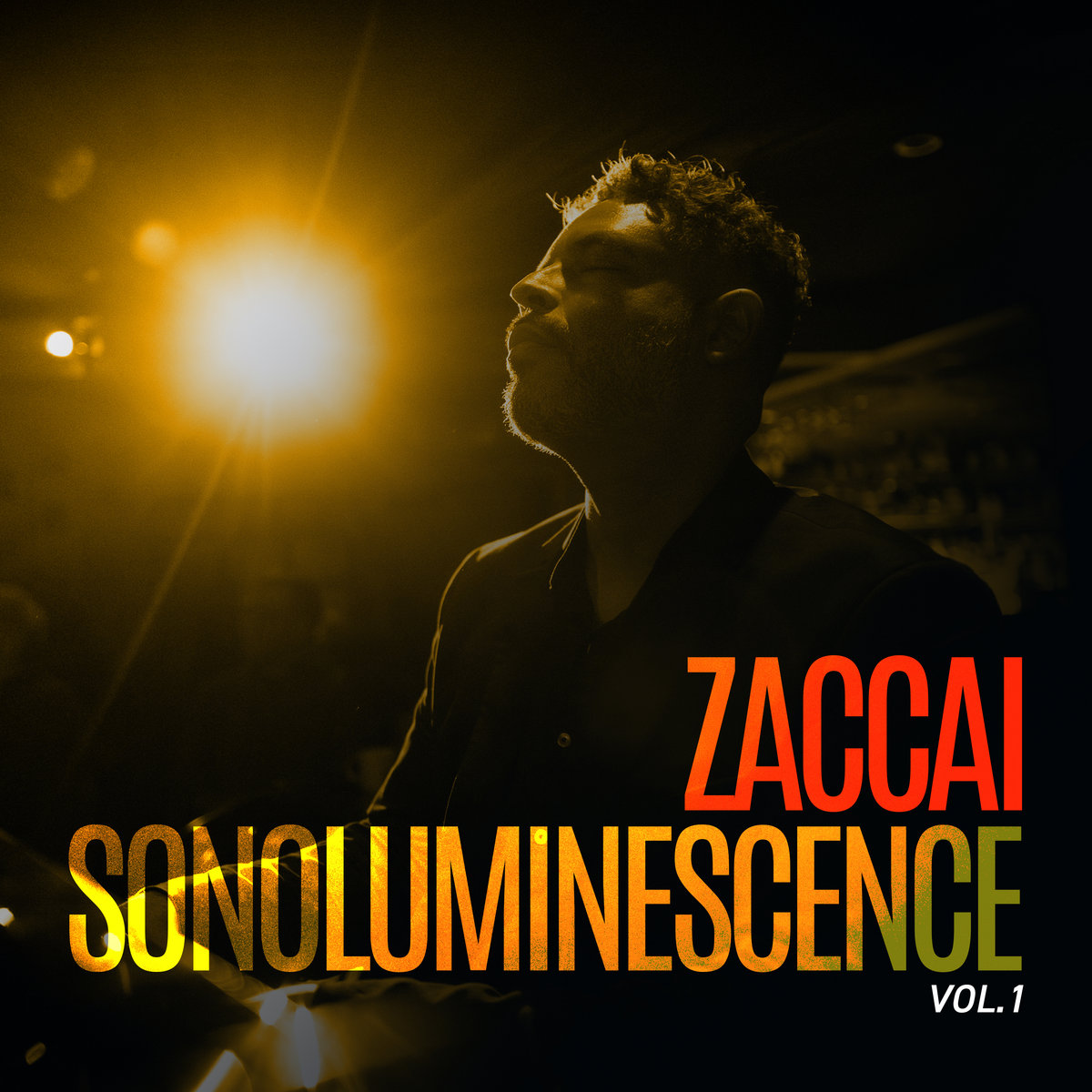
Where to begin? Truly, there are so many layers at play on pianist-keyboardist Zaccai Curtis’ latest that singling out a starting point is an overwhelming task.
Whole lineages of history and style seem to be happening at once. Most obviously, the Afro-Latin grooves that Curtis so deftly explored on 2024’s Cubop Lives intertwine with ’70s vintage funk-rock fusion. No surprise there. Some of the directions it takes from that point are also obvious: The Mahavishnu Orchestra/Brecker Brothers pastiche that drummer Joe Dyson and guest guitarist Aurelien Budynek drive on the epic “Message” is almost too perfect. (It works, though, not least because of their convincing zeal.) Ah, but it’s buttressed by acid-jazz implications on one side (“A Patient Resolve”), trip-hop and lounge-jazz gestures on the other (“I Want To Feel the Way You Move”). Saxophonist Craig Handy peppers the opening “Joust” with Charlie Parker quotes, stamps “Mayci’s Dream” with ominous soul-jazz figures and even takes some fierce M-Base-like runs on “Last Call.” Talk about intensive.
Appropriately, with this variety of sounds and feels comes a variety of moods. The stylistic shifts should give a glimpse of where these fall. There is, however, a specific tension that recurs throughout the album: that between percussionist Brevan Hampden, whose congas (primarily) simmer and continually threaten to turn things up to a boil, and Curtis, whose Fender Rhodes (primarily) offsets Hampden with cooler currents. Each sporadically gains the upper hand — on the penultimate “Wellspring,” Hampden recruits a searing Handy and Dyson to his team, and even seems momentarily to whip up Curtis (on piano) — but neither keeps it for long. The interchange is fascinating, and fun.
There are many more games afoot on Sonoluminescence; we haven’t even touched the alternating percussive and sinuous work of bassist Luques Curtis (Zaccai’s brother) and Mike Boone, or the deliciously weird synth strains that weave across the tracks. These and more, reader, await your own discovery.
By Frank Alkyer
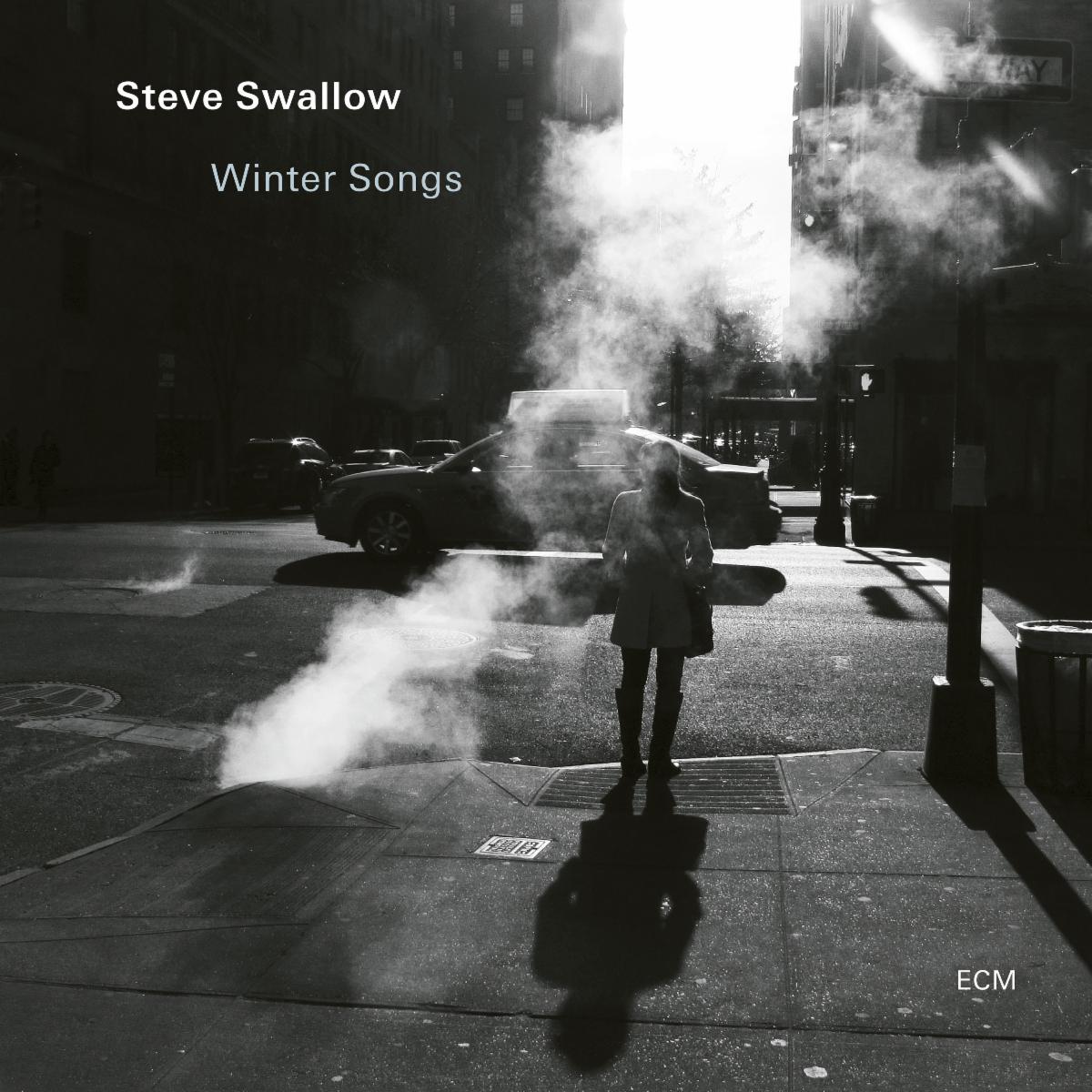
On Winter Songs, bassist Steve Swallow stirs feelings of late-night New York in a small club where the musicians are playing for their own souls and sanity as much as for an audience. It’s thoughtful music of truth, beauty and community brought forth by a stellar cohort of close friends. Chris Cheek beautifully lays it down the saxophone. Mike Rodriguez lopes in his clear, soulful tone on trumpet. Adam Nussbaum comes in as fluid and tasteful as ever on drums. Gil Goldstein adds just the right panache on piano. Steve Cardenas lays back to dramatic effect on guitar. And Swallow, for his part, holds it down perfectly on bass. This is a thoughtful ensemble cast, not a cutting contest of individual stars, and it’s a record this writer will be playing over and over again when the moon and the mood are just right. The tunes on Winter Songs are simply named by numbers “One” through “Nine.” Simplicity, directness, easy swinging yet thematically grand, the music flows so beautifully from one tune to the next, pulling at the heartstrings with a sense of well-worn, timeless nostalgia. On “Three,” Goldstein, Cardenas and Swallow offer a beautiful prayer of a ballad; notes played to let the melody breathe, and not one extra needed. “Six” picks up the tempo to an easy stroll featuring Cheek’s exquisite jazz-noir tenor work with the rhythm section digging deep into the groove before passing the baton to Rodriguez, perhaps the most underrated sideman in the music today. When Mr. Swallow steps out for the occasional solo, as he does on “Seven,” it’s a reminder of what a gift his art has been to the jazz world since his arrival on the scene, at the tender age of 20, with Jimmy Giuffre in 1960. With “Nine,” the album ends as it begins, a collective of artists locked into their thoughtful, heartfelt work, offering a respite from the noise outside. These are Winter Songs for any season.