
By Michael J. West
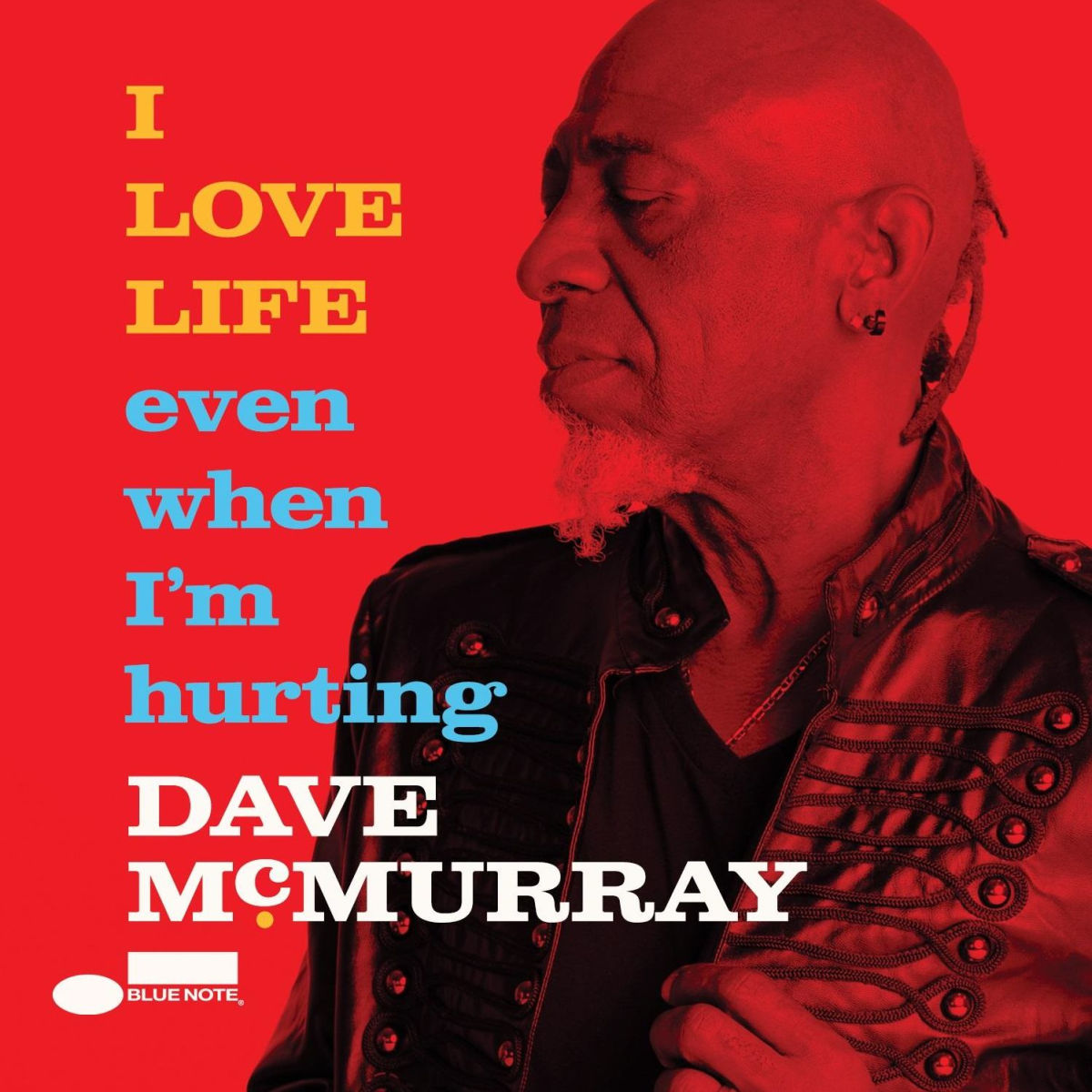
So much is happening on I LOVE LIFE even when I’m hurting that trying to figure out where to start leads to a serious paradox of choice. Detroit tenor man Dave McMurray has a lot to say, and, on his fourth album for Blue Note, a lot of ways to say it. Afrobeat (“The Jungaleers”), downtempo (“7 Wishes 4 G”), sexy slow jams (“We Got By”) and Caribbean grooves (“Find Your Peace (4 Tani)”) all have a place in this album’s wide lens. None of it sounds forced; all of it sounds fantastic.
There are many constants here as well. Accessible melody suffuses every corner of the album, even on pieces like “The Jungaleers” where the beat’s the thing. Add to that the tracks’ brevity (the two longest don’t quite break seven minutes), reservoirs of soul that won’t quit (most affectingly on the title track) and a passionate and relatable lead voice in McMurray’s tenor — more in common with Sonny Rollins and fellow Detroiter Joe Henderson than with his Oakland-born near namesake — and you’ve got something very close to a pop album. Or at least a populist jazz album, the kind Blue Note made in its Lion-Wolff heyday.
That, surely, was part of the intention. McMurray’s music also resonates with allusions to the overall jazz legacy (the opening sax-and-text “This Life” echoes Chalres Mingus’ “Scenes From The City” and Detroit’s specific legacy, from Henderson to Motown to techno. Its most profound throughline is the tight-yet-sprawling interface McMurray shares with his Motor City colleagues: guitarist Wayne Gerard, keyboardists Luis Resto and Maurice O’Neal, bassist Ibrahim Jones, drummer Jeff Canady, percussionist Mahindi Masai and vocalist Herschel Boon. Their magical convergence on the concluding “The Wheel” is one of the year’s final sublime musical moments.
By Ed Enright
Django New Orleans is guitarist Stephane Wrembel’s nine-piece special edition ensemble consisting of some of New York’s top jazz musicians, including Josh Kaye (guitar), Dion Berardo (guitar), David Langlois (washboard/percussion), Nick Driscoll (clarinet/soprano saxophone), Joe Boga (trumpet), Steven Duffy (tuba/sousaphone), Adrien Chevalier (violin), Scott Kettner (drums) and Sarah King (vocals). The group made its debut in November 2021 with eight shows at Dizzy’s Club in New York and shared its swing-to-second-line jubilation with the rest of the world on the acclaimed 2023 recording Django New Orleans. Now, with the release of Django New Orleans II: Hors-Série, Wremble and company continue to forge meaningful connections between the joyful party groove of New Orleans brass band culture with the fiery Gypsy spirit of Reinhardt’s Jazz Manouche. The 10-track recording includes fresh renditions of classic repertoire like Edith Piaf’s torch song “La Vie en Rose,” Astor Piazzolla’s “Libertango” and Antonio Carlos Jobim’s “Waters Of March” along with two original pieces by Wrembel: the passion-filled and angst-ridden “Holden Caulfield” and the gorgeously rueful “Ménage à Trois.” Wremble makes his debut as a singer here, adding his heartfelt, earnest vocals to two tracks: “La Javanaise” and “Le Poinçonneur des Lilas,” both by the French actor/singer-songwriter Serge Gainsbourg. Coming from one of the world’s most highly regarded Reinhardt specialists, Django New Orleans II: Hors-Série is an inspired sequel to Wremble’s adventurous celebration of historic material that reaches from France to Congo Square interpreted with just the right amount of tasteful, funky NOLA spirit and technical Sinti jazz guitar flash. Following a tour of Asia in January where he will perform in India, Korea, China and Japan, Wremble will bring his Django New Orleans group to The Kate in Old Saybrook, Connecticut (Feb. 12), Regattabar in Cambridge, Massachusetts (Feb. 13), The Woodland in Maplewood, New Jersey (May 13) and New York’s Symphony Space (May 15–16). His quartet will hit the road starting Feb. 19 with stops in Virginia, West Virginia, North Carolina, Tennessee, Georgia, New York, Illinois, Kansas and Michigan.
By Michael J. West
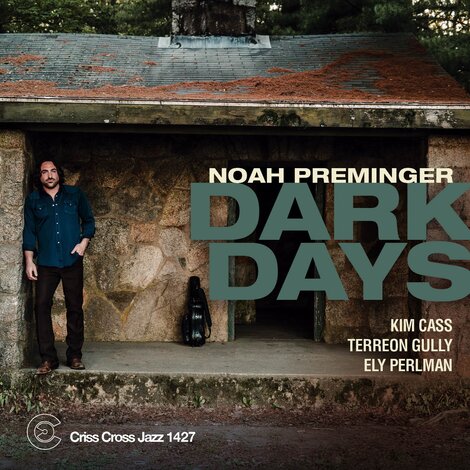
Angst sprays like flop sweat from “Hummus,” the opening track on tenor saxophonist Noah Preminger’s Dark Days, and the album continues in that mode. If you hadn’t guessed from the title, the album isn’t a soothing balm but a deep-mining catharsis. The otherwise jaunty “Mopti” packs anguish and fatigue into its bridge and uncertainty into its harmonies. Even the mildest pieces, the 7/4 “Casa Pueblo” and the ballad “Nash’s World,” have discomfited undertones.
Preminger at his happiest still prefers his music to have a raw edge; this is not him at his happiest. Recorded in December 2024, at a time of personal trauma for Preminger, Dark Days easily transforms into a conduit for our collective traumas. (If that needs more illumination, check the news.) We can ride the bumpy, fraught road laid down by “FTSC,” trudge to the downcast key and rhythm of “Dark Days” and find a low-level release in the semisweet closer “Barca.”
Yet it’s really the sidemen who make this catharsis happen. Bassist Kim Cass and drummer Terreon Gully are solid and taut, yet skittery. This translates on “Hymn #1 (For Moving On)” and the enigmatic “Sarajevo With Neira” to a kind of stately nervousness, a holding of one’s composure while the number rises in the pressure gauge; on “Barca,” it becomes an urgent energy that amplifies the track’s sense of release. Still, guitarist Ely Perlman, a protégé of Preminger’s, is the album’s secret sauce. His ominous lines on “Hummus,” “Hymn #1” and “Sarahevo With Neira” are deft and inventive, but engage just the right amount of causticity, distortion and unease to leave them trailing in the ear. Sometimes, as on Dark Days, unease is what we really need.
By Ed Enright
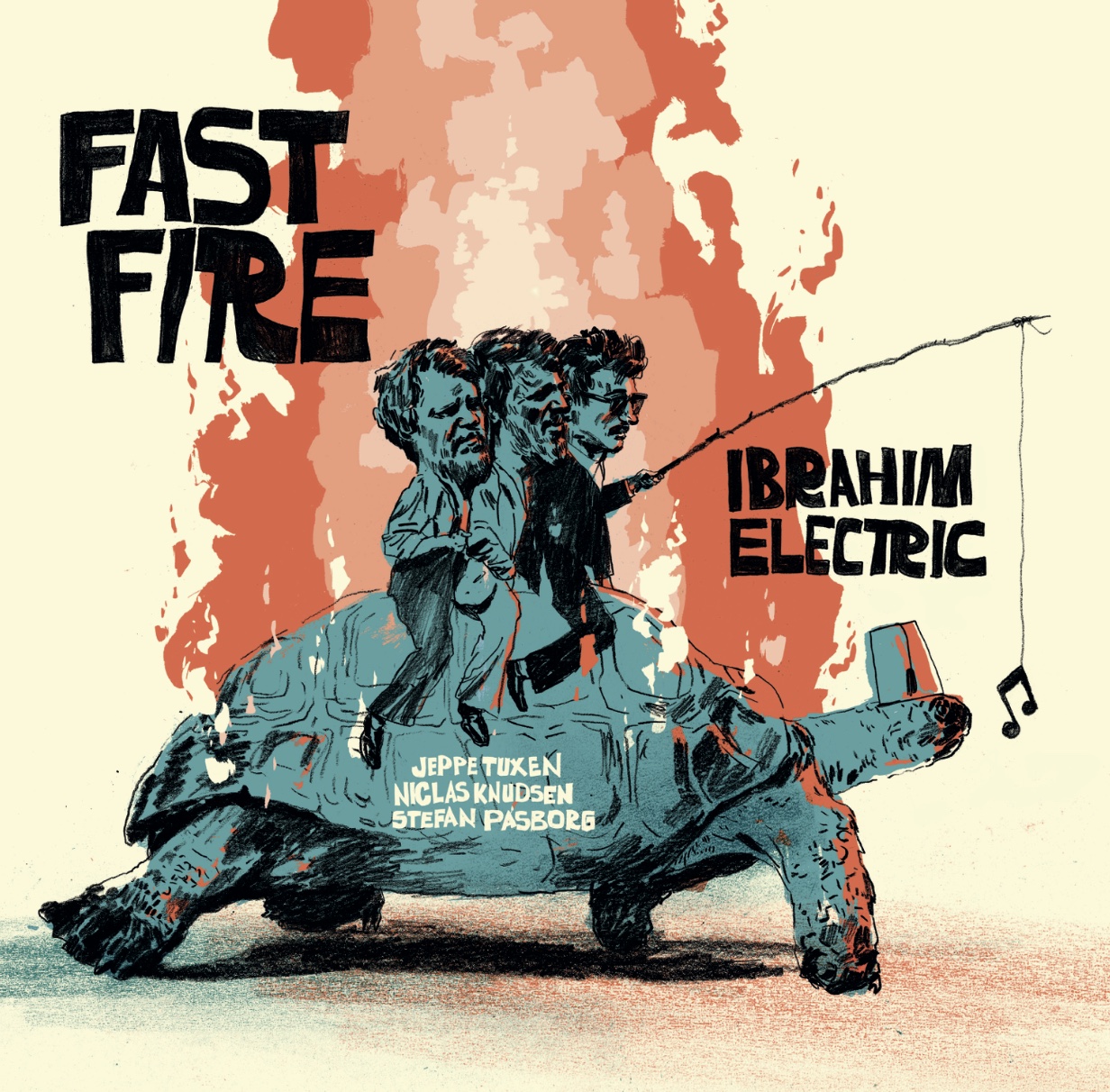
The Copenhagen-based instrumental trio Ibrahim Electric has been riding a musical heat wave in 2025, electrifying audiences at jazz festivals across Europe this summer, blazing through a series of wildly energetic livestreamed Miniature Concerts on small instruments throughout the fall and finally releasing their first full-length studio recording in five years. Fast Fire, out Dec. 6 on the sleeve.fm platform and available digitally and on vinyl, is the 23-year-old group’s most explosive recording yet. The 10-track program taps into the groove-heavy, feel-good energy of Ibrahim Electric’s hard-hitting live shows, delivering the band’s intense signature blend of soul, R&B, rock, punk, afrobeat, straightahead jazz, free-jazz, dramatic balladry and raw jam-band energy. These three veteran Danish instrumentalists — guitarist Niclas Knudsen, Hammond B-3 organist Jeppe Tuxen and drummer Stefan Pasborg — have established reputations in Europe as highly versatile practitioners of their respective instruments. Together, their chemistry is downright combustible, as I witnessed earlier this year during Bohemia Jazz Festival sets in Prague and Plzn, Czech Republic, where revelers young and old couldn’t stand still once the band struck a groove. Passionate extroverts, Ibrahim Electric brings everything in its bag out into the open: Waves of John Scofield, Mike Stern, Ali Farka Touré, Jimi Hendrix Experience, Santana, James Brown, Booker T. and the MG’s, the Doors, John Coltrane, Stanley Turrentine, 1950s surf music, Oscar Pettiford, Jimmy Smith, Roy Haynes and Art Blakey stir your soul and resonate deep within your body. The freedom-embracing trio’s fiery approach to performing original material is exhilarating and contagious, their vibe chill and welcoming. From the catchy, swinging riffs of “Shuffle Corn” to the galloping, minor-key Western soundscape of “Cheyenne,” the mysterious tones and twisted lines of “Hidden Bandit,” the futuristic, snake-charming enchantment of “Flambino” or the title track’s bubbling caldron of hard-bop elixir, there’s plenty of enticing and rewarding music on Fast Fire to fan your internal flame, warm your heart and satisfy that burning appetite for a piping-hot serving of invigorating jazz with everything on it. Expect Ibrahim Electric to perform songs from the new album along with fan favorites from the trio’s expansive repertoire during record release concerts Dec. 10–11 at Hotel Cecil, one of the premier live music venues in central Copenhagen.
By Frank Alkyer
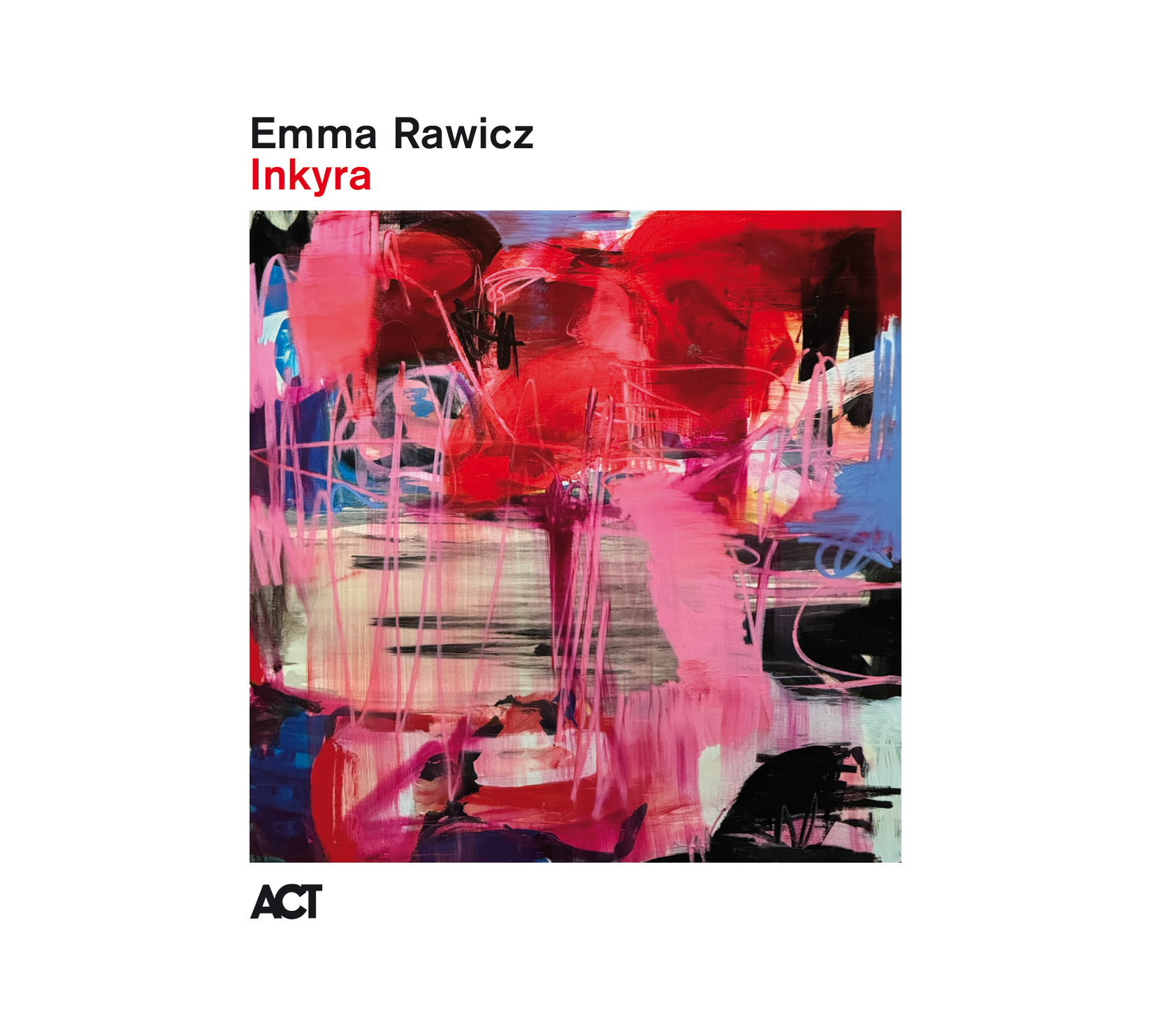
There’s so much to say for youthful ambition. There’s also so much to say about 23-year-old saxophonist Emma Rawicz, who is loaded with it, in addition to a maturity that’s well beyond her years. As she says in a feature article coming out in DownBeat’s January issue, “In a couple of years I’ve gone from being a normal university student to suddenly being on international stages, playing four countries in four days and being at home hardly any of the time.” Not that she’s complaining, just stating fact. After self-releasing her first album in 2022, while still a student, she was scooped up by ACT Music for her sophomore release, Chroma. Both recordings proved to be a very good start to her career. But with her latest release, the fusion-adjacent Inkyra, Rawicz comes in full-bloom, an artist with a great vision and voice that uplifts the spirit and taps the soul. The opening track, “Earthrise,” soothes as a call to listen. It’s a minute-long meditation that slides into “Particles Of Change,” an anthemic romp beautifully arranged for her sextet, which includes Gareth Lockrane on flutes, David Preston on guitar, Scottie Thompson on keyboards, Kevin Glasgo on electric bass and Jamie Murray on drums. But when Rawicz solos on tenor saxophone, the tune lifts into the stratosphere. She shows off her serious chops in building a soaring improvisation that, at its conclusion, left this listener saying, “Whew!”
By Michael J. West
If ever you’ve imagined what Sonny Rollins must have sounded like, playing in solitude (between trains) on the Williamsburg Bridge, ArchMusic might be the soundtrack to those fantasies — if you adjust them down an octave or two. Multi-reedist Andrew Hadro, who specializes in low-end winds (bass clarinet, baritone and bass saxophone), made this music in not-dissimilar conditions. During the isolation of COVID (and a couple of years after) he played each night under the Cleft Ridge Span, the concrete arch bridge in Brooklyn’s Prospect Park. His recordings capture not just the sound of his axes but of the resonance and reverb they created inside the arch — and how different instruments and weather conditions affected them. Read like an experiment in acoustical physics? Well, it doesn’t sound like one. Hadro piles his playing with soul, blues and intrigue, so that the sonics become not waves to be examined but atmosphere to be relished. The opening “Out There In Orbit” feels like one has stepped into a film noir, echo and drone standing in for shadow and Dutch angles. The feeling only intensifies on “Old Olmsted Steady,” “Sustainable” and “Bari de Lune,” going into overdrive when Hadro breaks out a standard like “Out Of Nowhere” or “Stella By Starlight.” He also sometimes accompanies himself with a shruti box, an Indian drone instrument that can add a faintly exotic flavor but is no less compelling. Hadro does occasionally play alto sax, most notably on “Spanning Cleft Ridge” and the closing “Voix a Vaux.” But it’s not always easy to tell within this wash of sound (and the vast range he applies to every instrument), and it’s not terribly relevant. The ambiance is the thing, and outside our own romantic dreams of jazz history, there’s no other ambiance quite like what ArchMusic generates.