
By Ed Enright
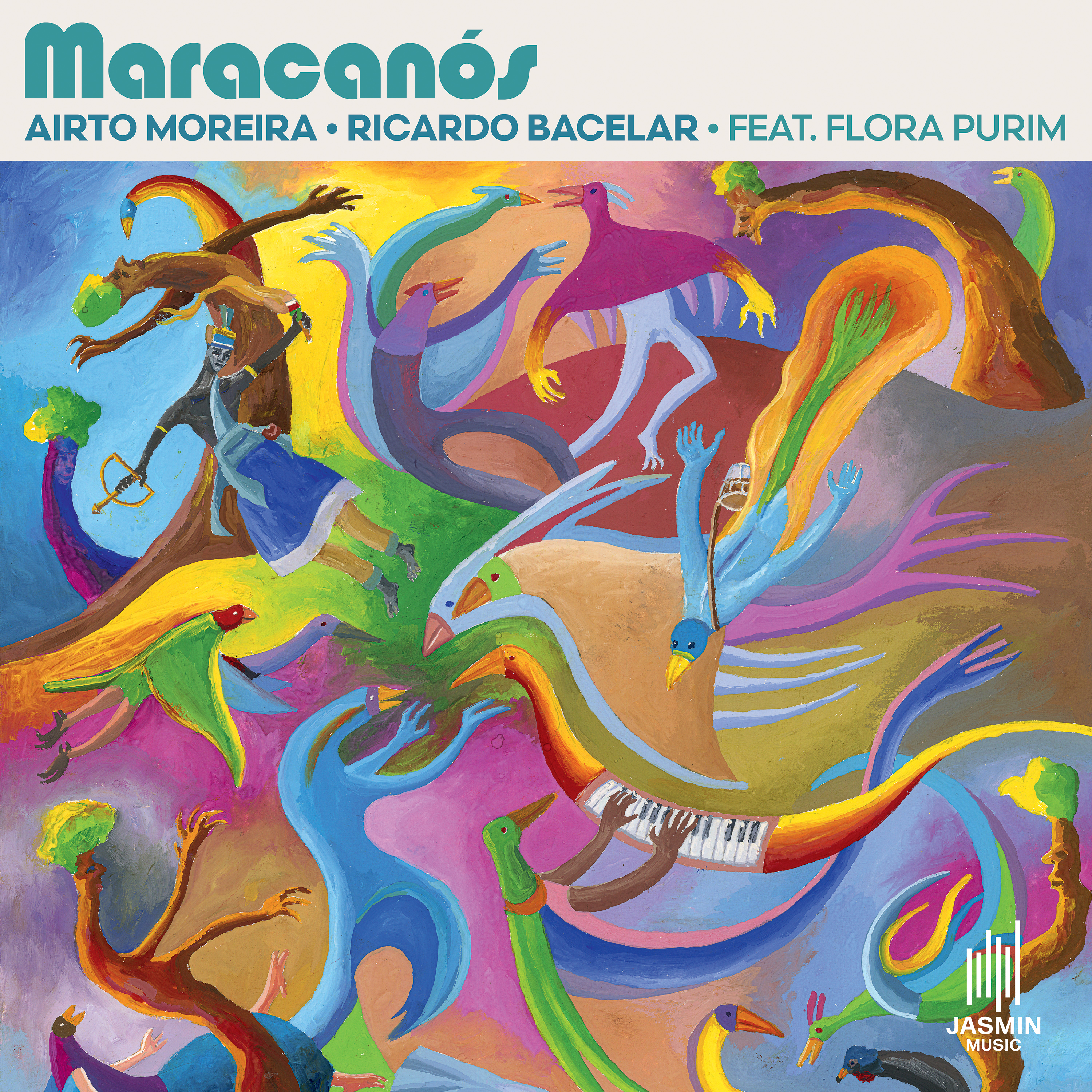
I consider myself lucky to have given this new album by Ben Rosenblum’s Nebula Project the kind of close, critical listen that it deserves. The Longest Way Around is the third release by the world-traveling accordionist/pianist/composer’s ensemble of virtuosic companions who share the leader’s restless curiosity and bring their own far-flung influences and backgrounds into the conversation. Returning from the Nebula Project’s previous recordings (2020’s Kites And Strings and 2023’s A Thousand Pebbles) are trumpeter/flugelhornist Wayne Tucker, saxophonist/reedman Jasper Dutz, guitarist Rafael Rosa, bassist Marty Jaffe and drummer Ben Zweig, who are joined on this melodically fortuitous and rhythmically adventurous new outing by percussionists Gustavo Di Dalva and Brad Dutz. Rosenblum and company venture further afield and in more divergent directions on The Longest Way Around, experimenting with distinct traditions on nearly every piece. Rosenblum casts the album’s 11 original compositions in colorfully arranged, carefully woven tapestries of woodwinds, brass, keyboards and guitar, with the drums and bass playing essential parts in the charts. Propelled by feel-good ostinato grooves, world-funk syncopation and smooth-shifting time signatures — all spiraling around a foundation of straightahead jazz improvisation while delving into a range of distinct non-jazz traditions — the program maintains a heightened feeling of intensity from start to finish. Even during its more reflective, balladic moments, The Longest Way Around (Rosenblum’s fifth overall release as a leader) seems to hurtle through space and time with strong-force cohesion and unbound momentum. While Rosenblum’s piano playing on several tracks is exceptional, and his bandmembers go deep in their numerous solo spotlights, the leader’s mind-blowing and heart-melting accordion chops — along with his uncanny ability to blend his stomach-Steinway with horns and guitar in a hard-bop esthetic — are the main attraction here. Starting with the J-Pop-inspired changes of “Merengue x Fantasy” and continuing through pieces like the Irish-inflected “Sheridan’s Reel,” the introspective three-part suite “Scenes Frozen In Time,” “Círculo” (built upon West African rhythms shared by Zweig after a trip to Cameroon), the steady-sailing tack of the reggae/ska number “Blue Water,” the straightahead-leaning “Albatross” and “Fool’s Gold” (with direct nods to classic hard-bop icons) and closing with the neo-soul vibe of “Last Call,” Rosenblum effortlessly integrates the frequently underestimated instrument into his all-enveloping musical vision.
When he’s not touring with stars like Rickie Lee Jones, Catherine Russell and Indian singer Kiran Ahluwalia, or performing with bassist Curtis Lundy at festivals alongside jazz luminaries Bobby Watson, Sean Jones and Warren Wolf, the tireless Rosenblum is known to spend a lot of time on the road fronting his own ensembles and performing solo. Among numerous gigs scheduled for this year, he’ll bring the Nebula Project to Smalls in New York to play a CD release party on Feb. 26, and the group will make subsequent appearances at Miami’s Pinecrest Gardens on March 14 and Abington Presbyterian Church in Abington, Pennsylvania, on June 7.
By Michael J. West
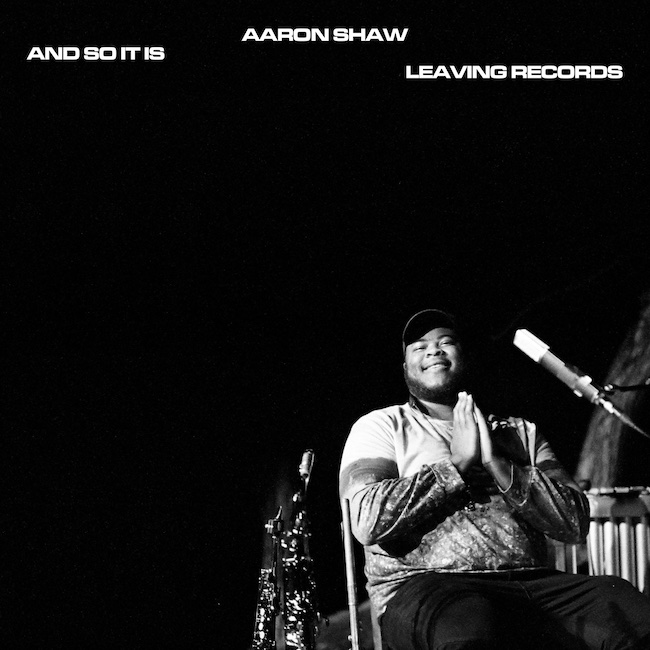
Wow. Young jazz musicians who want to traverse the cosmic paths of Pharoah Sanders, Sun Ra, Alice Coltrane, etc., are a dime a dozen. Far rarer are the ones who go about it with the delicate touch that L.A. multi-reedist Aaron Shaw does. All the more remarkably, Shaw is a protégé of Kamasi Washington’s (whose name has never, ever appeared alongside the phrase “delicate touch”). Let there be no doubt, though, that on And So It Is, Shaw stands alone.
In fact, Shaw’s production (with drummer/percussionist Carlos Niño) often emphasizes that aloneness, despite the presence of multiple collaborators. His tenor on the first half of “Heart Of A Phoenix” has so much reverb it’s as if he was recorded at the other end of a warehouse from the mics capturing pianist Sam Reid, harpist Merci B, bassist Lawrence Shaw, cellist Kiernan Wegler, vocalist Dwight Trible and Niño — and indeed Shaw’s own flute. It’s as if he’s already well ahead on the journey (though they all catch up in the back half). “The Path To Clarity,” meanwhile, is dense, but it’s dense with Shaw’s own overdubs of himself on flute; some of these layers are electronica-like drones that evoke Sanders’ final album with Floating Points. “Echoes Of The Heart” replicates this device, but adds in saxophones; Shaw is that much more alone with himself.
The spiritual dimensions of And So It Is, then, are rarely the usual confluence of gospel and raga (though that confluence makes its presence known, especially on the opening “Soul Journey”). “Jubilant Voyage” instead sounds at first more like a field recording of some tribal ritual, at least until it becomes a feast of tape loops and glitches. The soft-spoken tenor/piano duo “Windows To The Soul,” on the other hand, has a hard-bop melody that might have highlighted a ’50s Blue Note album or even found a place on pop radio of the era. Shaw has much to say, and many glorious ways to say it. DB
By Frank Alkyer
There is something compelling in the way that Maria Schneider tells a story. Her multi-award-winning album Data Lords from 2020 warned of a world being taken over by technology and big data. It was breathtaking, full of inspired composition and musicianship. Data Lords won DownBeat’s Album of the Year for both the Readers and Critics polls in 2021, and Schneider was named Composer and Arranger of the Year. The Maria Schneider Orchestra was named Large Ensemble of the Year, too. Schneider’s latest work, American Crow, serves as an extension of Data Lords. It’s an EP that clocks in at around 30 minutes, with two versions of the title song, and it is well worth every minute of listening.
“American Crow” as a composition delivers a fascinating mix of cacophony and quiet, demonstrating “the toxicity of our present social discourse that’s devolved into an impenetrable knot of curated rage,” as Schneider says in the work’s accompanying “visual narrative” on YouTube. That “video,” a fine piece of filmography, leads with a quote by the ancient philosopher Epictetus: “We have two ears and one mouth so that we can listen twice as much as we speak” — something that seems like a lost art. And that’s the true essence of Schneider’s vision. She asks for listening, understanding, care. Through her music, she asks us to come together. She is a unifying force.
“American Crow” hits hard from the downbeat, the band blaring, the trumpet section imitating the sound of crows cawing. From that chaos — and a quick side note, even chaos sounds beautiful in Schneider’s hands — the mood of the tune turns to a meditative lament featuring Mike Rodriguez’s tear-rendering trumpet work. Schneider, like her heroes before, has mastered the art of writing for her individual band members, all of whom have been with the ensemble for most of its three-decade career. In this case, it’s Rodriguez who enjoys the featured role. And his emotionally charged playing is simply devastating.
As the piece builds, the orchestra gradually turns up the heat. Cawing saxophones here, trumpets there, trombones reverberating down below. Johnathan Blake drives the music from the drum kit.
Then the tune slowly turns quiet, almost like birds on a wire chattering back and forth while Rodriguez’s plaintive trumpet calls out over the top. The trombones deliver an occasional low growl. Then the end. Silence.
Along with the two versions of “American Crow,” the EP includes another terrific piece, a re-recording of “A World Lost” from Data Lords, but done in a much different, more Americana, American Crow style. This piece serves as a feature spot for guitarist Jeff Miles. And it just slams. Julien Labro conjures a longing accordion drone, over which Miles blazes tasteful, tuneful and audacious in all the right places. The tune also briefly features a beautiful piano contribution from Gary Versace.
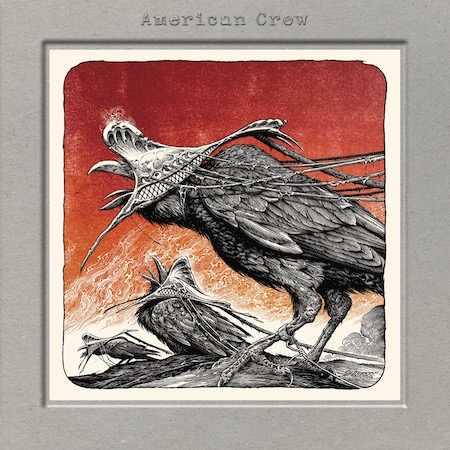
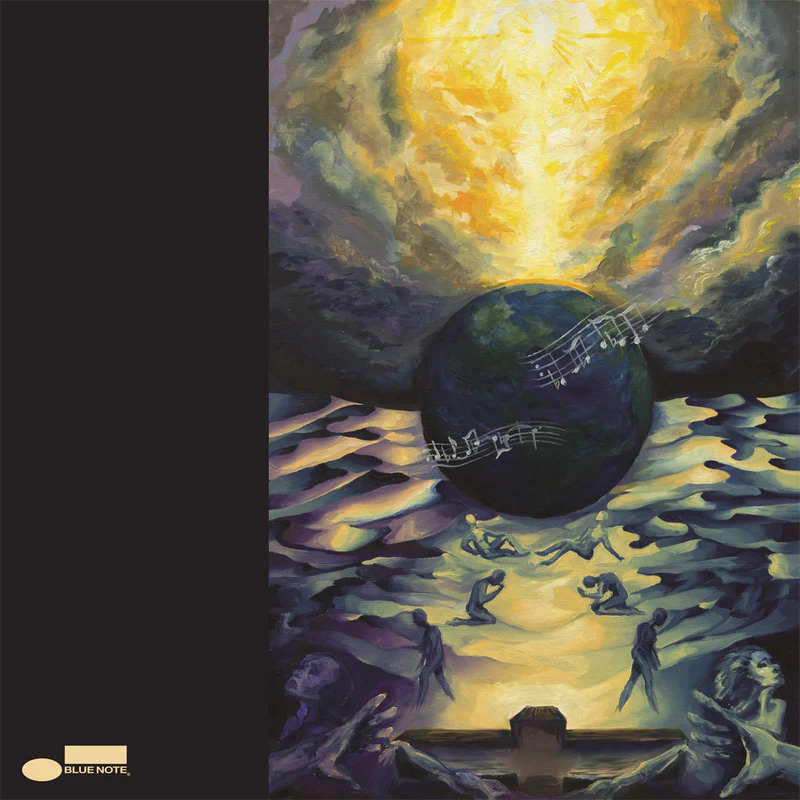
The packaging here is exquisite as well. The album art is very cool, commissioned by Aaron Horkey, who’s from Schneider’s hometown of Windom, Minnesota. The video narrative is totally worth a watch.
The only thing better than hearing this EP is hearing the music performed live. Schneider has been featuring the piece during recent shows. It was a major highlight of the orchestra’s performance last Labor Day Weekend at the Detroit Jazz Festival. An added bonus there was watching how much she, and the members of her band, enjoyed performing the music.
The Maria Schneider Orchestra is one of the greatest joys in jazz today. American Crow is proof.
By Ed Enright
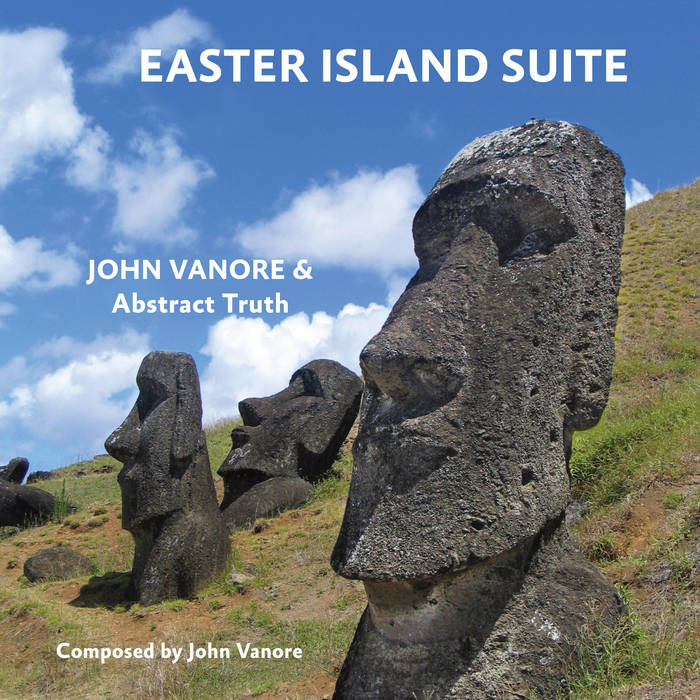
This four-part suite from trumpeter-composer John Vanore and his long-running 12-piece ensemble Abstract Truth is a sonic monument to Easter Island — whose giant stone sculptures and shadowy underground caverns have fascinated explorers and historians, and inspired dreamers like Vanore, since its discovery in the Pacific off the coast of Chile in 1722. The recording dates for this compelling program, an appropriately epic work characterized by towering musical structures and solos that probe deep into realms of hidden beauty, took place over the course of 35 years (during sessions in October 1989, June 2012 and June 2024). The suite’s first movement, “Discovery” (originally titled “Easter Island” and released on Abstract Truth’s 1990 debut album, Blue Route), evokes as sense of dawning urgency, starting with a thematic statement from French horn (George Barnett) and bowed bass (Craig Thomas) and continuing with a majestic tenor saxophone solo (Mike Falcone) that represents the immensity and mystery of the island’s enthralling humanesque statues. The suite continues with “Gods & Devils,” a depiction of the island’s spiritual culture in which Vanore on trumpet takes on the role of a god while tenor saxophonist Bob Howell embodies a more diabolical persona. “Secret Caves” starts a bit tenuously, with short, inquisitive statements by bass clarinetist Brian Landrus, guitarist Greg Kettinger and bassist Thomas that set up the ensemble for revelatory moments illuminated by Michael Mee’s flute and Thomas’ shimmering waterphone. The final movement, the haunting and serene “Rano Raraku,” is named for the volcanic crater whose stone was quarried to create the nearly 1,000 moai figures that ring the coastline of Easter Island. The full realization of Vanore’s dedication marks a profound accomplishment for the composer, whose aim is simply to take the listener to the island. While Vanore has never made the daunting trip himself, he succeeds in painting a vivid picture of one of the world’s most beautiful yet enigmatic locales based on his extensive research, visionary zeal and expert composing chops alone.
By Frank Alkyer
Bassist Martin Wind doesn’t play fair. In fact, he stacks the deck. And for that, we should all be happy. For his latest release, Stars (Newvelle), Wind enlists an A-list group of collaborators, including drummer Matthew Wilson, clarinetist Anat Cohen and pianist Kenny Barron. What? That’s right, the German-born Wind, who now lives in New York City, recruited three of the best musicians in jazz to join him on Stars.
As you might guess, the results are amazing. Wind has been collaborating with these talented artists and many more ever since moving to New York from Germany back in the 1990s, becoming a first-call sideman and a skilled leader in his own right.
With Stars, Wind leads off the new Newvelle Ten Collection, the first of five albums coming out on the label this year to celebrate its 10th anniversary. Stars sets the bar high for the collection with a combination of amazing musicianship and undoubted camaraderie.
The set kicks off with “Passing Thoughts,” a lesser-known tune by fellow bassist Aaron Bell, who performed with Duke Ellington, Billy Holiday, Buck Clayton and many others. It’s a slow groove that takes its sweet time with the blues. Kenny Barron thrills, filling space in just the right places with just the right sauce. Also thrilling are Anat Cohen’s flights, soloing with a facility that few can master on clarinet and a tone that flat-out kills it. Locking in the rhythm section, one can almost see Wilson and Wind, who are frequent collaborators, smiling, resulting in a delightful blues noir.
The set includes three beautiful tunes penned by Wind, including the sweet “Life” and “Moody,” a cooling tribute to the memory of saxophonist James Moody, with whom Wind had collaborated before the saxophonist passed away in 2010. But “Standing At The Window Waving Goodbye” is a favorite, an ode to his late grandmother. The tune oozes with wistful memories, a tune that’s both simple and complex, challenging the musicians to be restrained, yet creative.
Beyond these are two fine renditions of Ellington tunes. “Black Butterfly” has an old-school, modern charm — just easy and bright, a walk “on the sunny side of the street.” Wind walks the bass with a suave confidence. Wilson plays those brushes just so. Barron is majestic and Cohen romances the dickens out of the melody. “The Feeling Of Jazz” comes in as a masterful medium-tempo recreation of the Duke’s work.
Beyond that, Bud Powell’s “Wail” features Wind and Cohen magically doubling on the melody. “Pra Dizer a Deus,” by Edu Lobo, gives Wind an opportunity to play his bass with loving arco finesse. It then slips into a perfect small-club, cocktail listening experience fronted by Barron’s impeccable touch and Cohen’s gift of romancing a melody, especially a Brazilian melody, one of her favorite modes.
The set concludes with “Stars Fell From Alabama,” the Mitchel Parish/Frank Perkins chestnut made most famous by Ella Fitzgerald and Louis Armstrong. It serves as the perfect capper to this thoughtful, lovely album. The arrangement plays to the strengths of all three musicians on the tune (Wilson sits this one out) — Barron’s taste, exquisite; Cohen’s clarinet, flawless; and Wind’s bass line, rich with style, joy and grace.
Martin Wind may not play fair with this lineup of jazz ringers, and that’s better than good. He simply plays beautifully, as does the entire band on this tasty set.
Note: There are two terrific bonus tunes on the digital edition: “Blues With Two Naturals” written by Wind, Barron and Wilson; and “Marc’s Moments” by Wind.
Other forthcoming releases in the Newvelle Ten Collection include Landings by Ingrid Jensen (Feb. 27); Renee Said by Elan Mehler (March 17); Seer by Loren Stillman (April 24); and For All Your Flowers by Skúli Sverrisson with Bill Frisell (Aug. 1).
By Michael J. West
If the title has you looking for “Take My Hand Precious Lord” on organ in 12/8, this ain’t it. In fact, vibraphonist Joel Ross’ Gospel Music is nearly two-thirds through before it shows any of the traditional hallmarks of, well, gospel music. What we hear instead is Joel Ross music: contemplative, sometimes intricate, often moody 21st-century post-bop with subtle emotional colorings.
All that said, Gospel Music is a musical retelling of the Bible, placing an epigram up top (the thoughtfully patterned “Wisdom Is Eternal (For Barry Harris)”) before diving into an analogue of Genesis 1:1 (“Trinity (Father, Son And Holy Spirit)”) and continuing through Revelation (“Now And Forevermore”). But one need not know the Old Testament to recognize the troubled mien saxophonists Josh Johnson (alto) and Maria Grand (tenor) project on “Hostile,” corresponding to humanity’s growing corruption before the Flood — though schooling in jazz probably helps one recognize the echoes of Bud Powell’s “Tempus Fugit.” The transition into hope and peace offered by “The Sacred Place,” with Jeremy Corren’s gentle piano line over Kanoa Mendenhall and Jeremy Dutton’s light bass and drums. The album liners offer chapter-and-verse citations that provide perspective, but the message is clear without them.
In that final third, not only do the familiar gospel music tropes resound (beginning with the short but quietly joyful “A Little Love Goes A Long Way”), but so do vocals. Laura Bibbs offers soft plaintiveness on “Praise To You, Lord Jesus Christ”; Ekep Nkwelle brings stately grandeur to “Calvary”; guitarist Andy Louis quietly declaims in an intimate and profoundly moving duo with Corren on “The Giver.” Gospel Music is rewriting the rules of gospel music; these moments simply place it more firmly in our grasp.