
By Michael J. West
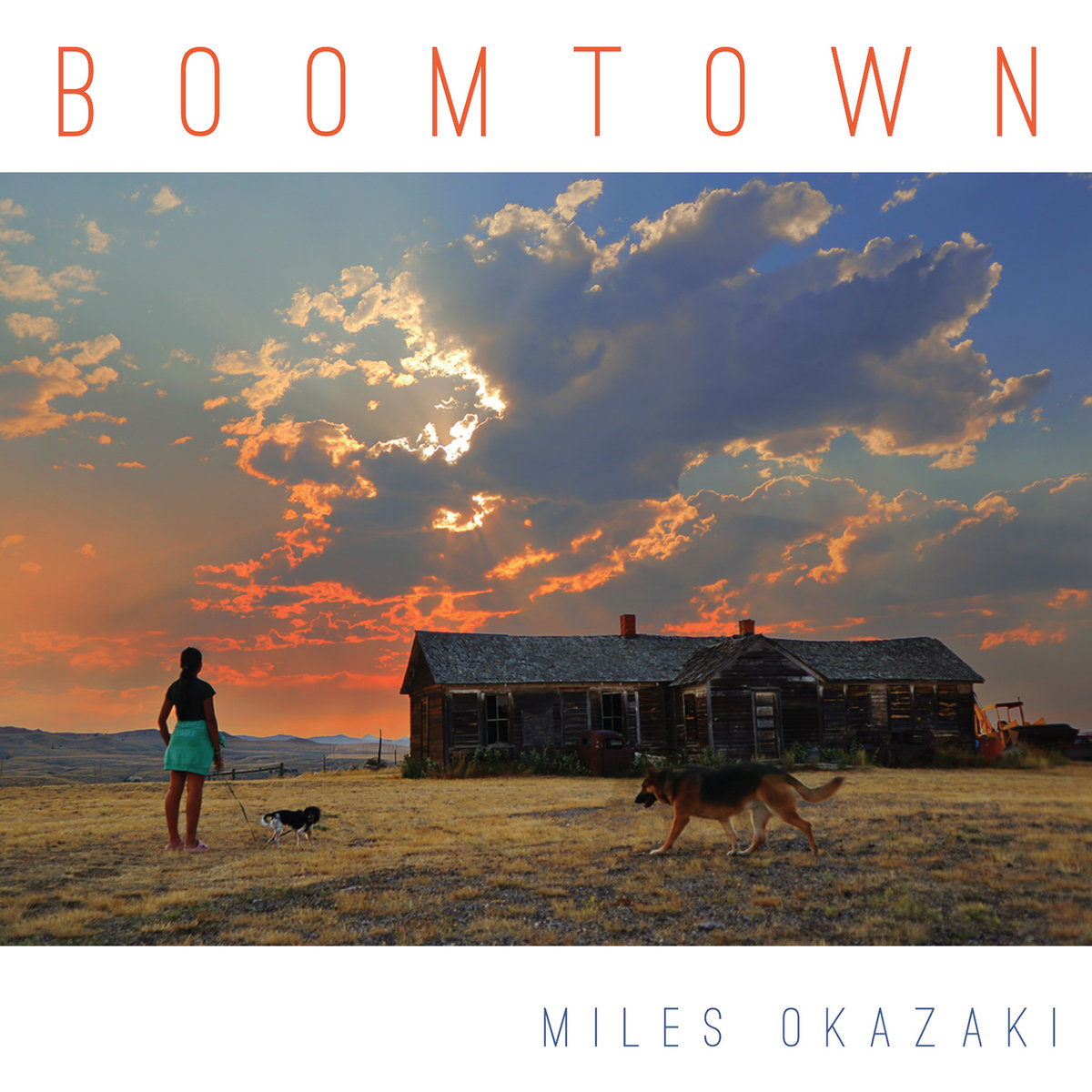
It’s hard to remember a time when so many jazz guitarists were making such exciting music. Miles Okazaki, whom this writer once watched make a fascinating solo out of parroting a nearby car alarm, is high on that list; that alone would make his 11th album, Boomtown, essential listening. But the caliber of the 10-piece ensemble he’s assembled for the album (half of whom — saxophonists Caroline Davis, Jon Irabagon and Anna Webber, trombonist Jacob Garchik and pianist Matt Mitchell — were on his previous release, 2024’s Miniature America) pushes it over the top.
Together, they make it a magnificent effort. Big though the ensemble is, it often reduces to two-person interactions with group accompaniment. Yet it’s still loaded with unique and surprising turns. I’m not sure, for the most obvious example, that I’ve ever heard another guitar-trombone feature before “Diamondville,” with Okazaki sensitively comping a tender, searching Kalia Vandever (and unsourced synth strains behind them). No less compelling, though, is “Recluse Road’s” determined back-and-forth between Okazaki and Irabagon (on tenor), with Mitchell and bassist Chris Tordini playing referee; nor the fearsome wrestling match between altoist Davis and the guitarist that is the nucleus of “Devils Tower.” The rest of the band serves as a ring for their match, though that ring becomes a swirling maelstrom. Not every face-off involves Okazaki; the central spar in “Ten Sleep” is between two bassists, Tordini and Hannah Marks.
Notably, drummer Dan Weiss tends to sit out these tête-à-têtes, even the group interplay that surrounds them. Yet he’s a vital element of the more fully arranged pieces, putting the foundational 6/4 pulse under the polyrhythmic “Thermopolis” and throwing a nagging, defiant beat into “Big Horn,” while being the most kinetic and improvisational figure on the glorious blast of “Grand Prismatic.” Okazaki knows how to use these brilliant musicians, singly or together. Best of all, though, is his own work, from the expressive chromatics of the opening “Magic Hour” to the buzzsaw drone of “Hole In The Wall” to the menacing growl of the closing “Ghost Town Girl.”
By Frank Alkyer
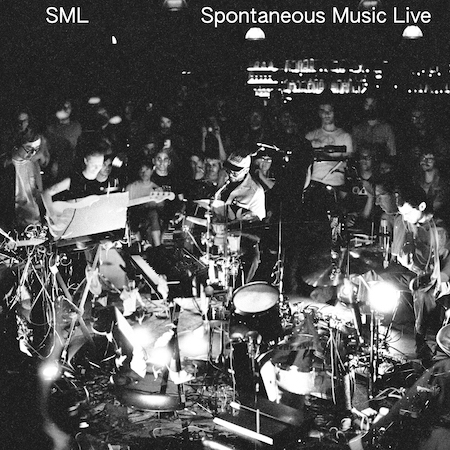
If you’re looking for some pulsating, full-metal-jacket instant improvisation, SML delivers and then some. The Los Angeles-based quintet has been thrilling audiences with its live shows, including a killer three-night, six-set residency at the Big Ears festival in Knoxville, Tennessee, last March. The group has built an enviable reputation since its debut in 2022 with Small Medium Large, followed by How You Been in 2025, both receiving lofty critical praise. But the band’s latest release, Spontaneous Music Live, offers the deepest understanding of why fans flood the floor to hear them. There are just two tracks, “The Drums” and “Roundabouts,” clocking in at 23:46 and 24:34 minutes, respectively. On “The Drums,” Booker Stardrum, appropriately the drummer, lays out an awe-inspiring wall of rhythm. Anna Butterss tucks in an incredibly tasteful, melodic bass grove. Saxophonist Josh Johnson wails over this sonic bed while keyboardist Jeremiah Chiu and guitarist Gregory Uhlmann float on a cloud of sound when the music turns from driving to atmospheric. “Roundabouts” begins with some muffled voices leading into what sounds like the beat and timbre of an alarm clock. Processed voices, electronics and sparse saxophone drops dance in and around. It’s one part art music, one part dance music — looping, hypnotic and cool. The music of Spontaneous Music Live feels like 2 a.m. on a Los Angeles freeway. There’s a noir edge to the music, drawing the listener in with irrepressible beats and layer upon layer of sound and nuance. There’s an element of, “Oh, I missed that before,” because there’s so much sound to take in. It’s an aural treat — jazz with a punk rock attitude and high-art complexity.
By Ed Enright
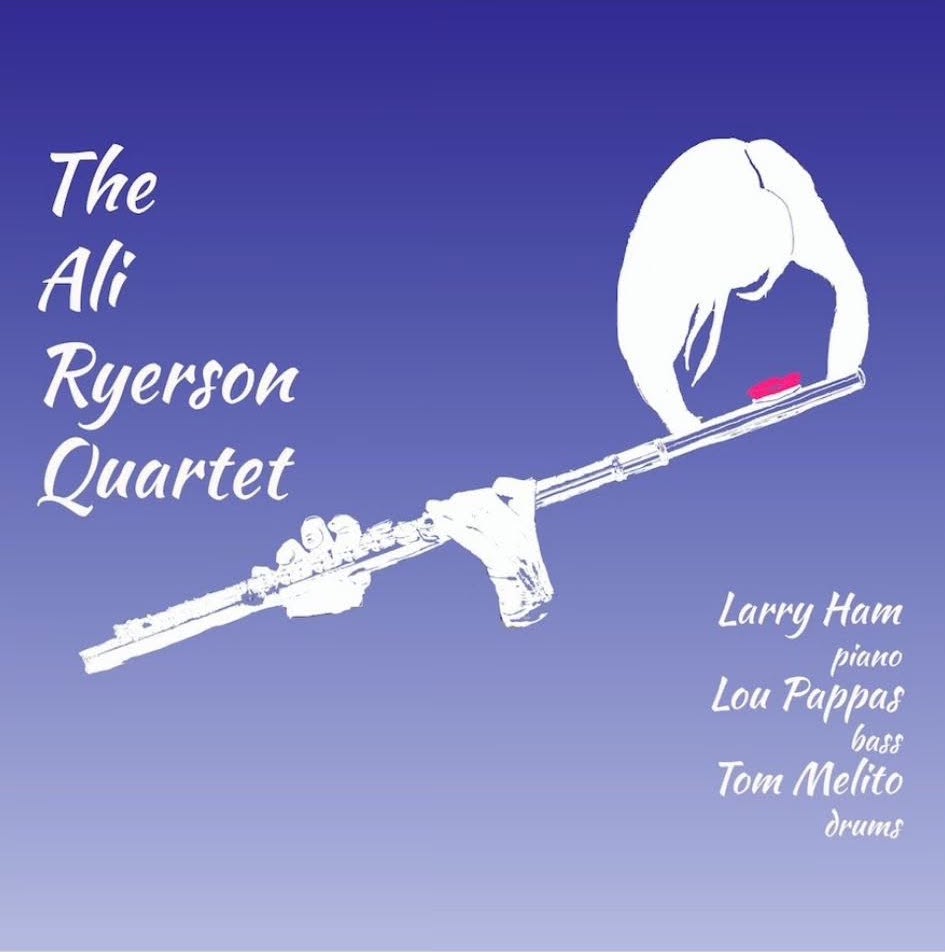
By the time I got to track 3 of the latest outing from Ali Ryerson, I was hooked on her album concept and enthralled with her longstanding quartet’s musical chemistry. The group’s cover version of the Thad Jones classic “Three And One” — with flutist Ryerson, pianist Larry Ham and bassist Lou Pappas digging deep into the tune’s three-part harmonized line supported by drummer Tom Melito’s swinging bebop groove — struck me as a brilliant take on the intricate composition that was immortalized on the 1966 big band recording Presenting Thad Jones/Mel Lewis & The Jazz Orchestra. Intrigued and quite pleased by the uplifting vibe of the group’s interpretation, I immediately wanted more, and, boy, did this recording deliver. Ryerson, who has long excelled on C flute and alto flute in both jazz and classical settings, also treats curious listeners to six contrafact originals (“Chuck’s Tune/Solar,” “Flying In Space/Falling Grace,” “Before Today/Yesterdays,” “Let’s Call It Love/What Is Thing Thing Called Love,” “AliCat Blues,” “Boppin’ Low”), a groove-inspired original of her own (“Cold Snap”) and three beautiful Brazilian tunes (“Começar de Novo,” “Nada Como Ter Amor,” “Fé”) on this 11-track collection, the second release on her ACR Music label. The genesis of The Ali Ryerson Quartet dates back to the pandemic lull of 2020, when Ryerson began to take on writing projects — one of which was composing jazz solos based on the changes of popular standards to teach essentials of jazz style to her students in lessons conducted via Zoom. When touring started up again in 2021, she took those solos a step further by weaving them into her arrangements for the group’s live shows, sometimes pairing them with the original standards, and sometimes not. Ryerson’s rhythm section soon began to develop entire soli sections with her, and it became a whole “thing” worthy of further ambition, serious documentation and, ultimately, celebration. The topper to all this is the veteran flutist’s mature and complex yet irresistibly pleasing instrumental tone, a highly personal sound that meshes perfectly with her effortless mastery of the bebop language and a natural inclination to make everything swing.
By Michael J. West
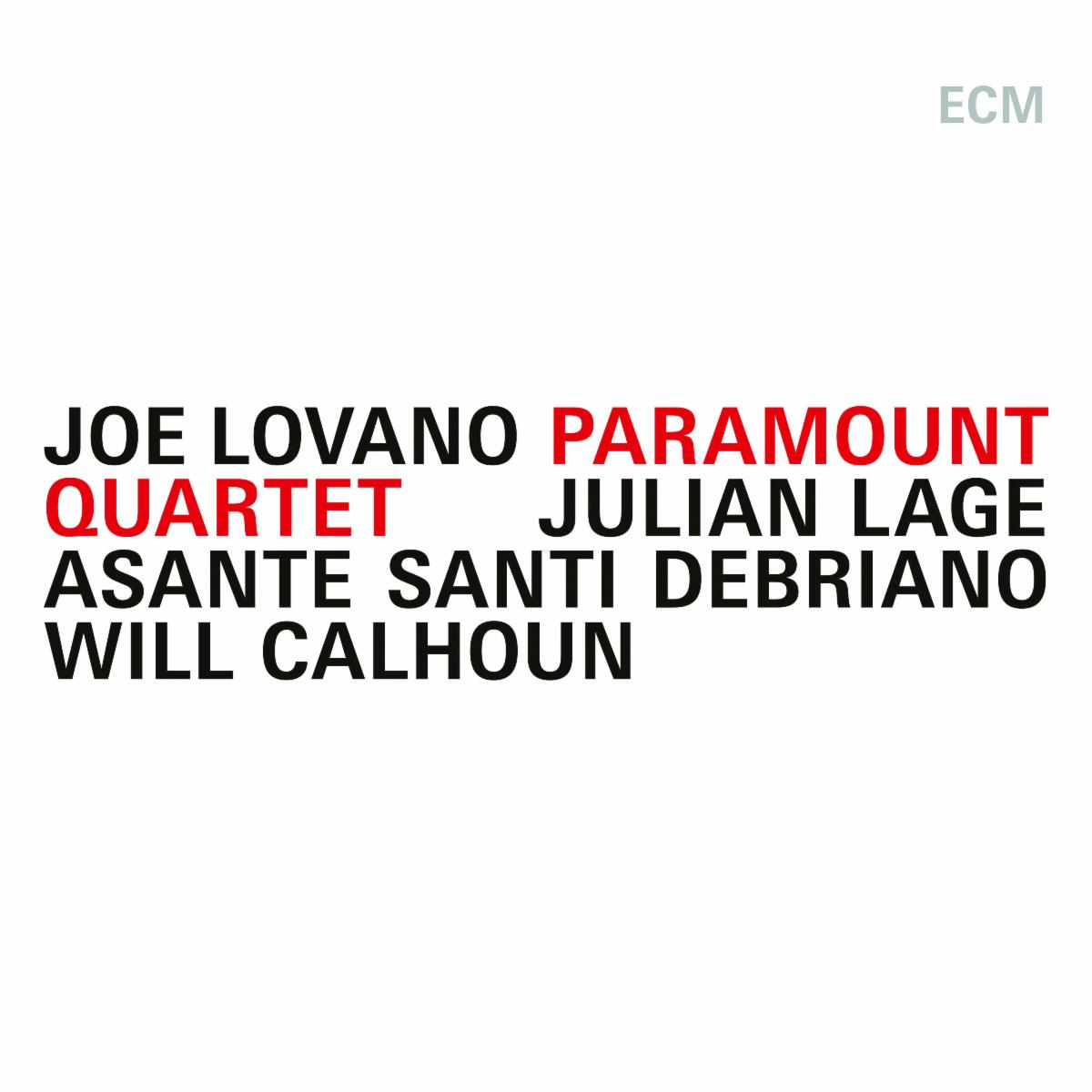
That the musicians on this new recording from Joe Lovano can maintain such exquisite sensitivity in their interactions, even while all four of them are practically bursting with creative energy, tells what kind of mastery we’re dealing with here. But don’t confuse sensitivity with softness. Paramount Quartet comprises tenor/soprano saxophonist Lovano, guitarist Julian Lage, bassist Asante Santi Debriano and drummer Will Calhoun, none of whom are whisperers. Most of the album finds them driving, asserting, grooving, even — as on “Amsterdam” and “The Great Outdoors” — pushing into free territory.
On the set’s three ballads, where the players do don kid gloves, we can still hear the ideas coming fast and furious. If the texture of the accurately titled opening “First Song” is finery, Lovano’s silken tenor over Lage and Debriano’s lace and Calhoun’s brushed gold leaf, the saxophonist still manages to percolate, having so much to say that he has to double-time it (though with such acuity that one barely notices). Similarly, on “Lady Day,” Lage lays down with microscopic precision lines that gradually develop into stinging, but fragile and melodic, barbs.
The sensitivity at issue, however, is in their abilities to detect, examine and respond to each other’s finenesses. “Fanfare For Unity” features short bursts of collective, polyrhythmic improv in between leitmotifs; that’s all it needs. So attuned are these musicians that Calhoun can sketch out a quick rhythmic phrase; Lage and Debriano can grab and melodize it in unison and without hesitation; and Lovano can invert and extend it before they’ve even finished it. On the soul groover “Congregation,” Calhoun seems to anticipate Lovano’s every solo shape; when Lage’s solo follows the saxophonist, Debriano shares a similar telepathy with him. It’s listening that thus becomes the paramount part of Paramount Quartet.
By Frank Alkyer
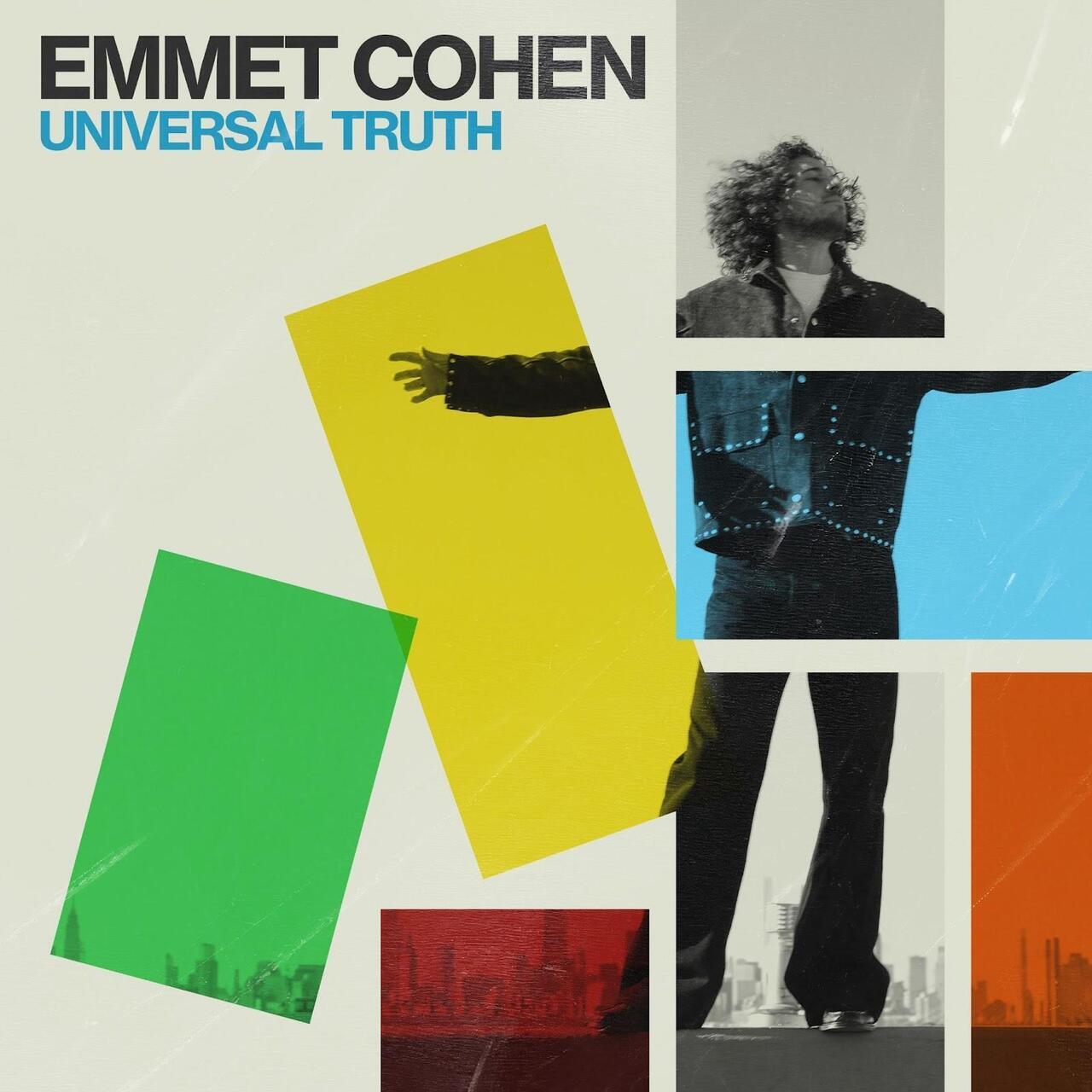
Pianist Emmet Cohen has always been the quintessential old soul, dipping back into the history of classic jazz tunes, heaping hero worship on the generations of artists who came before him and cheerleading for the generation coming up behind him. On the hero-worship front, his Master Legacy Series of recordings has featured Jimmy Cobb, Benny Golson and Albert “Tootie” Heath, to name a few. And the guest list on his massively popular video-streaming show, Live From Emmet’s Place, includes Houston Person (who was also part of the Master Legacy Series), Ken Peplowski, Kurt Elling, Sheila Jordan, Anat Cohen, Dick Oatts and Terell Stafford, among others. The list is long and amazing. And what do they play? Standards, of course, in the most organic, original way possible, taking that music to a new generation in ways that reach around the globe. So, it’s no surprise that his latest recording is a celebration of the centennials of two of this music’s greatest artists — Miles and Coltrane — while also giving love to his favorite pianists. His trio with bassist Yasushi Nakamura and drummer Joe Farnsworth is joined by a host of terrific guests. Trumpeter Jeremy Pelt blows clear and clean on an uptempo take of Thelonious Monk’s “Well You Needn’t.” “My Funny Valentine” serves as a reunion for bassist Ron Carter and tenor saxophonist George Coleman, who played the song in Miles’ band some 60 years earlier. Coleman and rising tenor star Tivon Pennicott dig in with the trio on a sweet-grooving spin of Coltrane’s “Blue Trane.” In between, there are nods to Bud Powell with “Budo,” which appeared on The Birth Of The Cool; and Jimmy Heath, another artist celebrating a centennial this year, with “Gingerbread Boy.” But Cohen is also a fine composer who writes with a smile and a sigh. He’s deeply in the present with an affinity for the past. “Universal Truth,” his three-part suite, offers proof of that range, beginning with the bubbling group play of “Eternal Glimpse” into the noir balladry of “Compassion” and wowing with the power and soul of “Universal Truth.” This is a truly fine recording and the reason Mr. Cohen will be on the cover of the July issue of DownBeat. He’s also in the midst of a heavy touring schedule. Catch him live if you can!
By Ed Enright
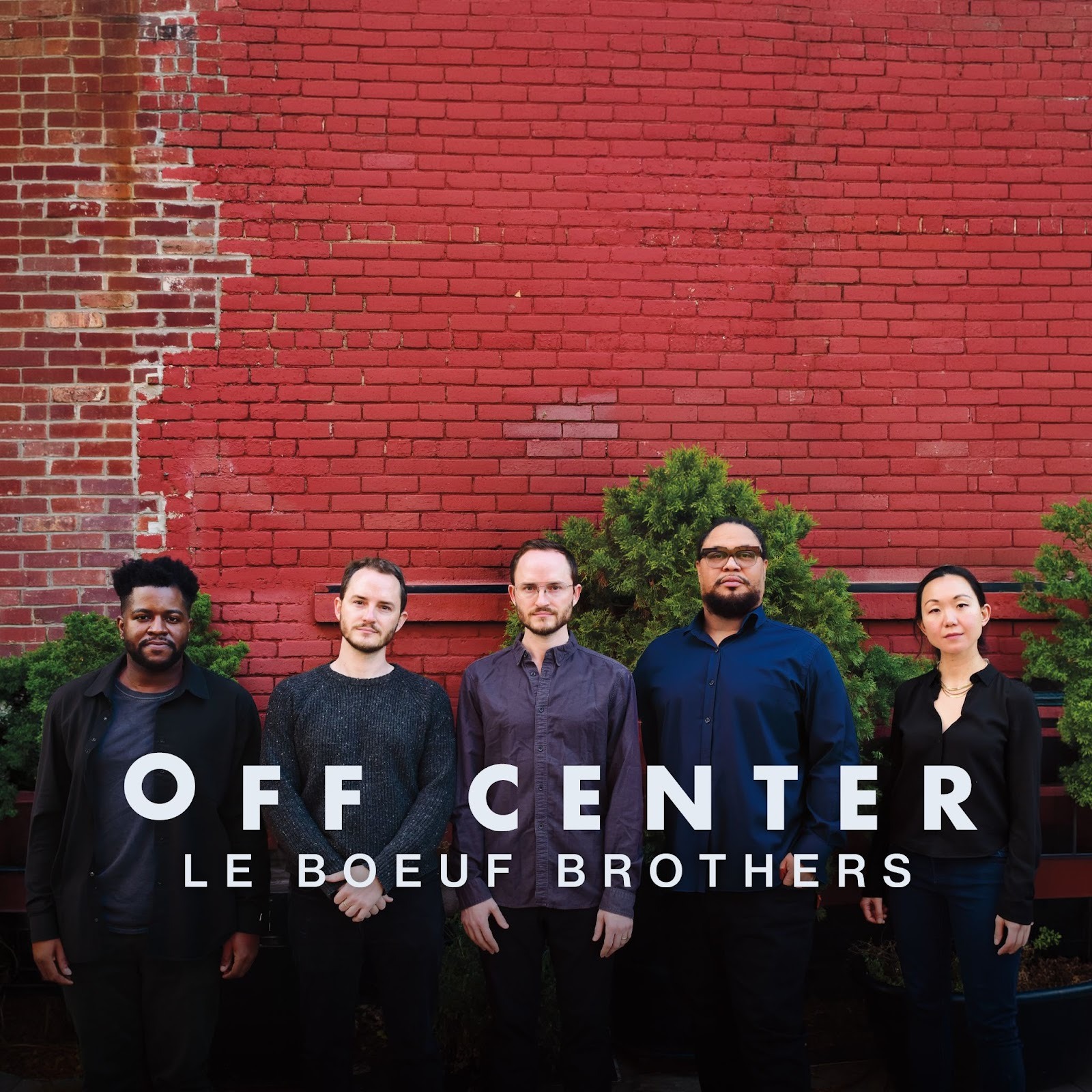
Remy and Pascal Le Boeuf, twin brothers from Santa Cruz who have teamed up to release six albums that embrace their jazz upbringing and venture bravely into contemporary classical and indie-rock realms, are currently at the top of their game as composers, having recently won individual Grammy Awards for Best Instrumental Composition. The upcoming Le Boeuf Brothers album Off Center, a follow-up to their whisper-quiet 2023 recording HUSH, jacks up the excitement factor with a program of all-original material that goes even further in engaging the simpatico members of their quintet, which includes alto saxophonist Remy and pianist Pascal joined by longtime co-conspirators Dayna Stephens (tenor saxophone), Linda May Han Oh (bass) and Christian Euman (drums). It’s an all-acoustic affair that finds the group leaning into spontaneity and elasticity in search of the unconventional, stretching the compositions (six by Pascal, five by Remy) far beyond what’s written on the page in a delightful adventure of shared risk and mutual trust. The Le Boeufs — who became involved with high-profile West Coast educational jazz programs at a young age, attended Manhattan School of Music and went on to get advanced degrees — have carved out neat career paths of their own. They have each produced significant bodies of work, releasing their own recordings as bandleaders, attaining high-level job roles in prominent educational institutions, garnering awards galore and delivering masterful compositions in connection with commissions and grants. And let’s not forget their well-honed chops, in-the-moment instincts and their seemingly second-nature ability to navigate and manipulate chord changes while improvising — qualities that come to prominence in this quintet environment and set in motion the more exciting and engaging aspects of Off Center. Since even before the 2009 release of their debut recording, House Without A Door, Remy and Pascale Le Boeuf have constituted one of the most compelling creative partnerships in jazz and contemporary music. They have developed into essential contributors to the modern jazz canon, and are well worth checking out on record and in live performance. Upcoming tour dates for Le Boeuf Brothers include shows on June 5 at Sam First in Los Angeles, June 6 at Kuumbwa Jazz Center in Santa Cruz, California, and June 7 at the Palo Alto Art Center Auditorium in Palo Alto, California. To listen to the single “In Captivity” from Off Center, CLICK HERE.