
By Michael J. West
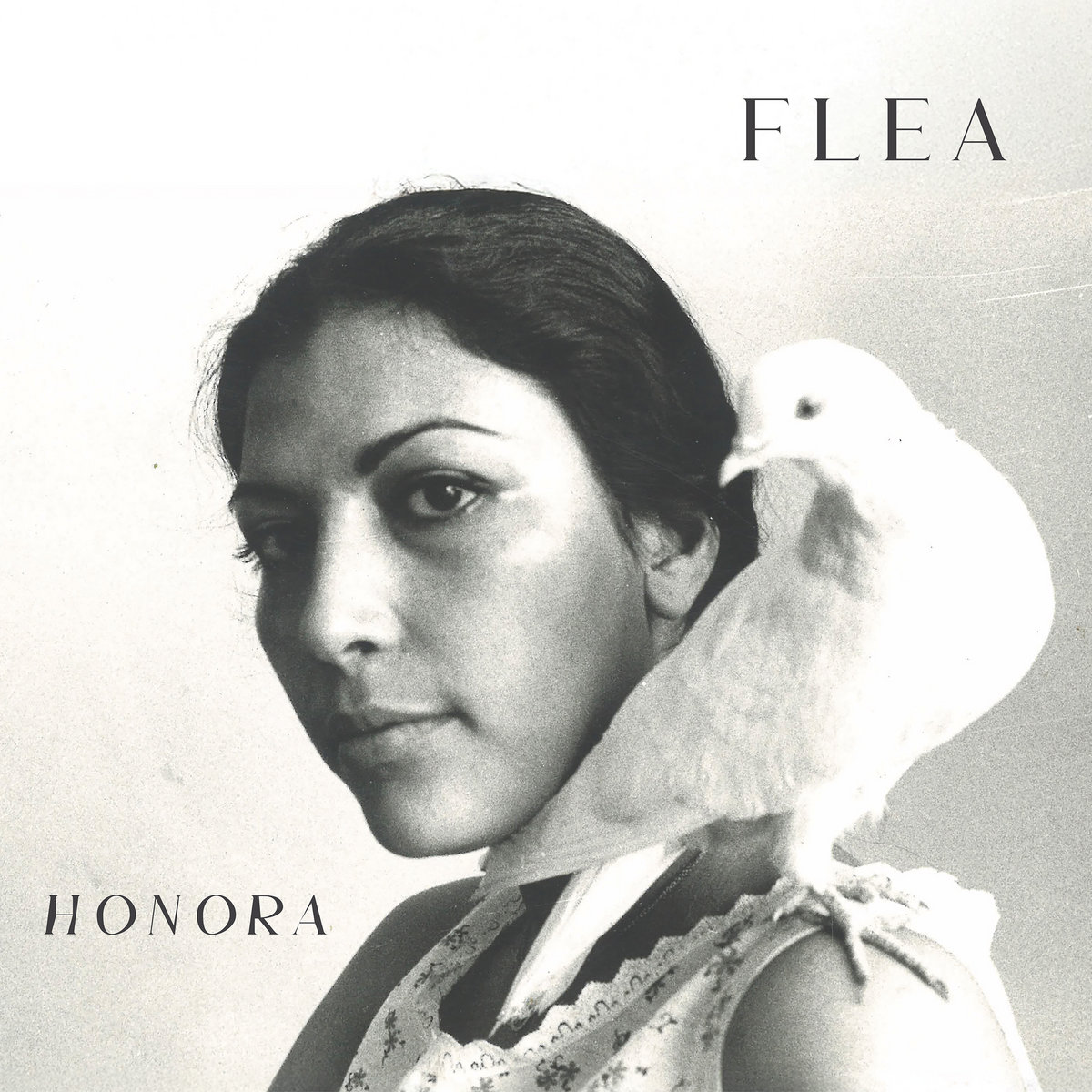
Out less than a week, Flea’s Honora is already under the usual level of intramural controversy. Another pop-millionaire jazz dilettante! Suddenly he plays trumpet! And this one makes the cover of DownBeat! Does he have any idea what he’s doing? Is it really even jazz? Either way, can it really be good?
Let’s first answer the second question: I don’t know, but I can’t rule it out. Flea (famous as the acclaimed bassist for Red Hot Chili Peppers) is probably not going to start hitting the clubs or the jam session any time soon. But Honora is on the same plane as albums by, for example, Thundercat or Mark de Clive-Lowe, both of whom have also been reviewed in these pages. Much of it is uncategorizable. Best to say, it’s on the jazz spectrum somewhere.
Back to the first question, whether he knows what he’s doing: Not really, but that’s the point. Honora is an experiment, Flea attempting something new and out of his comfort zone. And he’s got great guidance. Flea’s a relative beginner here, especially on trumpet (which he played as a kid) — he certainly doesn’t claim to be Clifford Brown. Yet such accompanists as guitarist Jeff Parker, saxophonist Josh Johnson (who also produces, with liberal use of electronic effects), flutist Ricky Washington and fellow four-stringer Anna Butterss have forward-pointing jazz credentials that can’t be denied, and they keep him on point on pieces like the atmospheric fusion original “Frailed”; the slow, but punchy and anthemic “Free As I Want to Be,” also an original; and a surprisingly delicate “Wichita Lineman” (with rocker Nick Cave on a shaky but weirdly apropos vocal). Flea confirms he can swing on his own boppish composition “Morning Cry” and quasi-postbop-but-also-hip-hoppy “Traffic Lights” (with Radiohead’s Thom Yorke on vocals). There’s some subtle swing gestures as well on a murky electronicized “Willow Weep For Me,” though they’re well disguised in a blank-verse rhythmic matrix.
Finally to the last question, the one that brings you here: Is it any good? It is. All of the above is taken seriously, but with a spirit of adventure. If he’s not a virtuoso trumpeter (as he is on bass, using that instrument to light-touch funky ends on “A Plea”), Flea has put real work into the horn, and he shows it with an interesting mix of reverence and roguishness. That mix raises some question marks when it comes to his version of Funkadelic’s “Maggot Brain.” Originally an improv platform for guitarist Eddie Hazel, Flea gives a verbatim trumpet transcription of the first half of Hazel’s solo (with gauzy flute-and-vibraphone backgrounds). Is it a sincere tribute, a cheeky “whitefacing” of a Black American Musical masterpiece, a showoff of his chops-in-progress, or all of these at once? It’s pretty either way, but also the only thing here that comes off as a novelty bit.
By Frank Alkyer
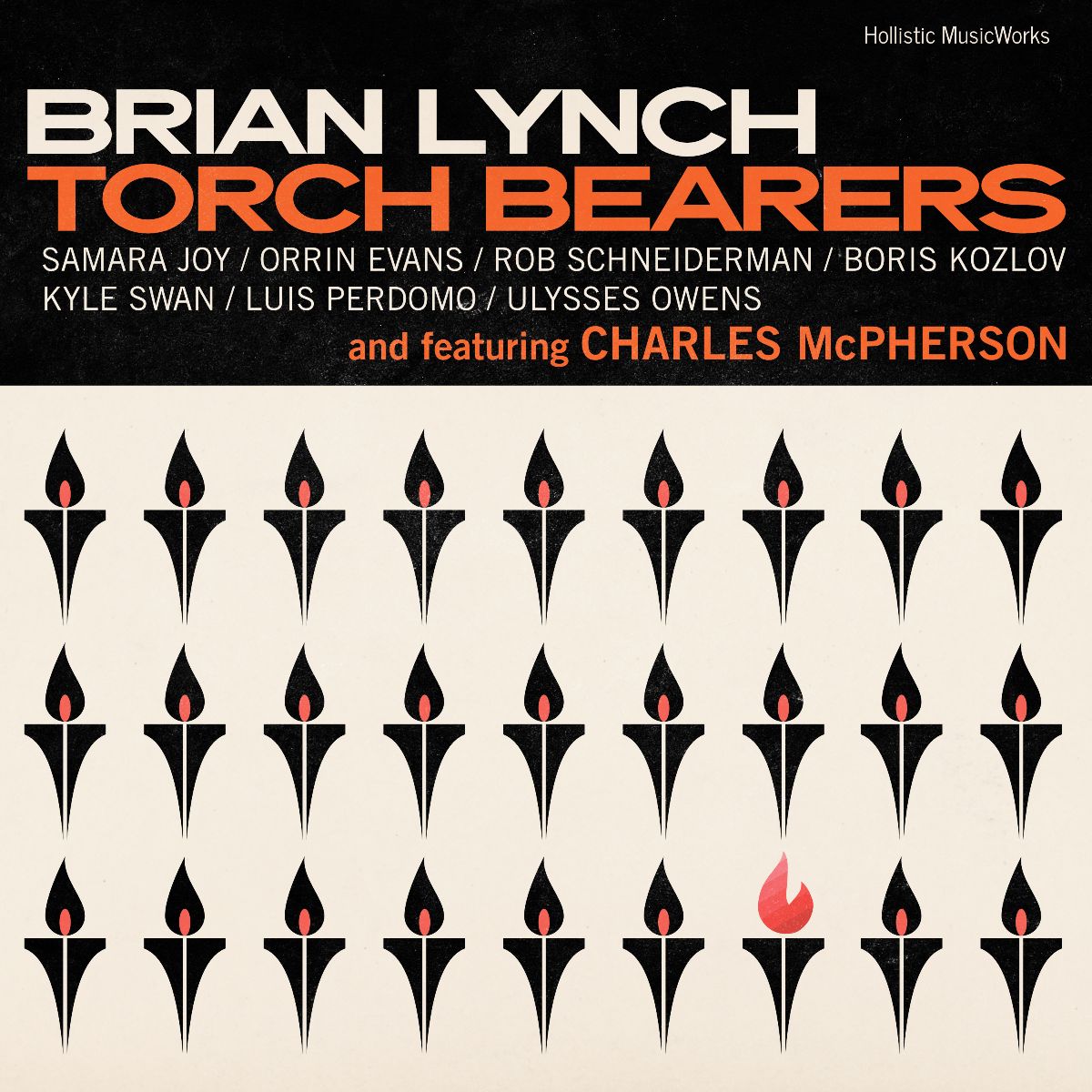
There’s no question about Brian Lynch’s mastery of the trumpet and flugelhorn, his skill as a composer and arranger and his fine-tuned taste when crafting music and projects. But the 69-year-old with three Grammy Awards doesn’t get enough credit for knowing how to throw a fascinating musical dinner party. Take, for example, his latest recording, Torch Bearers on his own Hollistic MusicWorks label. “I carry the torch of my heroes,” says Lynch in the press materials with the new recording. And he proves it by inviting in the always-tasteful Charles McPherson to play saxophone and write three tunes for the recording. But Lynch’s heroes aren’t just his elders. He also invites the silky contralto of Samara Joy into the festivities to not only sing on two tunes, but also to write lyrics. McPherson and Joy share songwriting credits on the beautiful, noirish “The Joy Of Love,” a ballad that could comfortably rest in any era of the jazz continuum. Double that statement down with the Lynch/Joy-penned “Pursuit Of A Dream,” another wistful ballad that floats by in the breeze. The Joy-Lynch connection runs deep, as he co-produced her chart-topping, Grammy-winning album Portrait. But the connection between all three artists runs even deeper when the subject of the late pianist Barry Harris comes up. All three artists studied with Harris, who passed in 2021 — McPherson being one of his first students, Lynch in the middle and Joy one of his last. In tribute, Lynch and McPherson tear into an upbeat treatment of Harris’ “Luminescence” backed Rob Schneiderman on piano, Boris Kozlov on bass and Kyle Swan on drums. Throughout the album the star-studded lineup includes pianist Orrin Evans sharing piano duties with Schneiderman along with Luis Perdomo and Ulysses Owens taking the piano and drum chairs respectively on “Pursuit Of A Dream.” It’s great to hear how the other Lynch originals (“Luck Of The Draw” and “Kyle’s Dilemma”) dovetail so smoothly with McPherson’s (“The Juggler” and “7-24”). They close by swinging out to Dizzy Gillespie’s “Blue N’ Boogie,” a fitting dessert at the end of this sonic feast. Somewhere Barry Harris is smiling. He taught them well.
By Ed Enright
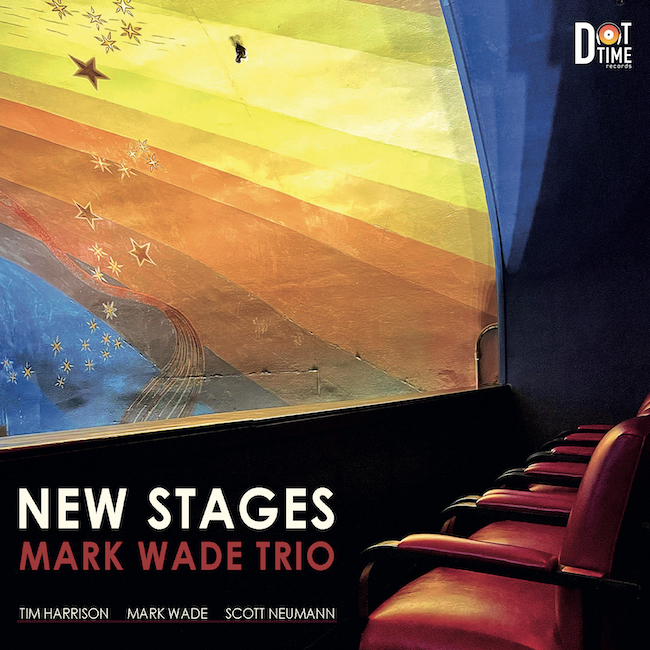
A distinctive instrumentalist and inventive composer whose profile has been on the rise since the 2015 release of his first trio album, Event Horizon, New York-based bassist Mark Wade tries to take inspiration wherever he can find it. In composing the original jazz pieces for his trio’s upcoming release New Stages, he found that inspiration in his experience performing classical masterworks with the Key West Symphony, as well as the orchestras of Lincoln Center and Carnegie Hall and the S.E.M./Janáček Philharmonic in the Czech Republic. Consisting of three dynamic suites, the album draws from a variety of classical sources, spanning the baroque to the contemporary, and incorporates Wade’s own compositional ideas and personal perspectives — resulting in something completely new and utterly satisfying. It’s an expansive exploration of catchy melodies, subtle yet essential countermelodies, Westward-facing harmony, swinging rhythms and advanced improvisational techniques, a truly collaborative effort among Wade and longtime bandmates Scott Neumann (drums) and Tim Harrison (piano) that defies easy classification and delights the ear. While listening for the familiar and not-so-familiar themes that dwell at the core of each of the 15 tracks on New Stages, be sure not to miss out on Wade’s bear-hugging bass tone, Neumann’s nimble cymbal-play and Harrison’s superfluid keyboard mastery. Upcoming performances by the Mark Wade Trio include gigs at London’s Pizza Express Dean Street (March 25); Hidden Rooms in Cambridge, U.K. (March 26); The Cowshed Jazz Club in Hertz, U.K. (March 27); Shanghai Jazz in Madison, New Jersey (April 9); and Culture Club in Long Island, New York (April 17).
By Michael J. West
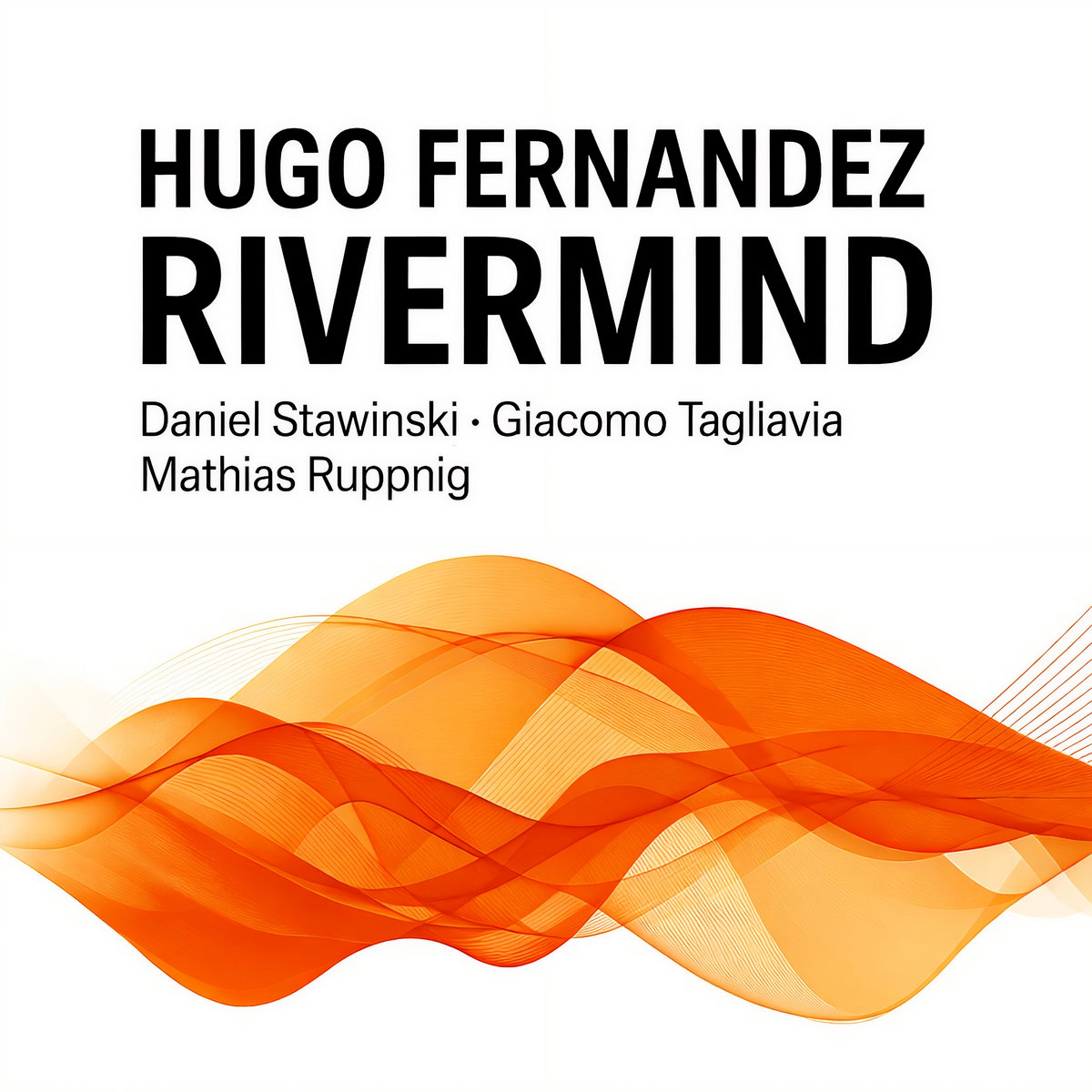
Jazz critics are often accused of bias towards novelty: not unfairly. (Try listening to 100 new albums a month and see if you’re not disproportionately thrilled to hear something different.) Sometimes, though, a record penetrates the critic’s defenses just by being gorgeous. Rivermind — the sixth album by Mexican-born, Berlin-based guitarist Hugo Fernandez — is such a record.
With its quartet lineup of guitar, piano (Daniel Stawinski), bass (Giacomo Tagliava) and drums (Matthias Ruppnig), Rivermind isn’t an album of fireworks. This isn’t to say that there’s no audacity at work here. The title track and “Dancing Leafs” play games with form and meter, while “Playing Chase” and “La Sonaja” throw unexpected change-ups. But all of these are handled with light touches and attention to fine detail. That, not the post-bop playfulness, is what gives the record its distinction.
Well, that and the lyrical poise that the soloists, in particular, bring to the party. Tagliava carries an unusual amount of weight here; he takes frequent solos, including the first on opener “Babaob,” a nimble, traipsing passage that for all its softness hews close to the low register. Stawinski’s tender, luminous tones impress throughout the session, though his highlight is on the 7/8 “Big Hope,” wherein he brings a Monkish harmonic perspective and manages to make the odd meter suggest clave (though part of that credit goes to Ruppnig, who never solos but also never fails to invent with his comping patterns). Fernandez, meanwhile, sounds beautiful everywhere. He has a clear, open tone (sometimes with a very thin veneer of distortion), brought to great effect in his poetic structure on “Brightsteps” and long, exploratory line on “La Sonaja.”
And that’s it. No reinvention of the wheel, few and simple tricks: That’s all Fernandez and the quartet need to elevate Rivermind to the superlative.
By Frank Alkyer
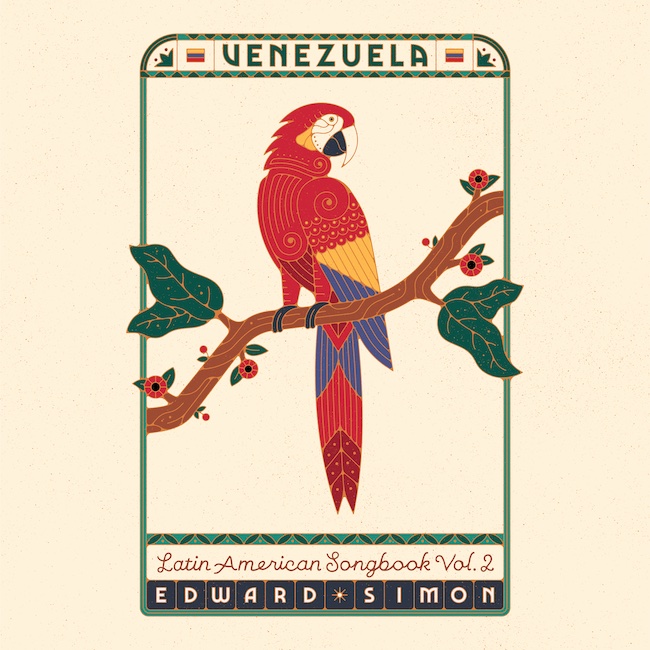
There’s an elegance to the music of pianist and composer Edward Simon, whose love affair with the music of Latin America comes to him naturally as a native of Venezuela. He demonstrates his affection for the music of his homeland beautifully on Venezuela: Latin American Songbook Vol. 2. With this second volume, Simon takes a more focused approach to presenting the Latin American songbook he so adores. The first installment culled material from the breadth of South America — Astor Piazolla’s Argentina, Antônio Carlos Jobim’s Brazil, for example — with a Cubano bolero here, a bossa nova there and a selection of songs from Puerto Rico, Chile and his own beloved Venezuela. On Vol. 2, Simon’s spotlight shines squarely on his home country.
And what a time it is to release such an album. With the U.S. capturing Venezuelan President Nicolás Maduro, it’s muy interesante that the opening track, “Presagio,” which translates to omen in English, takes a slightly ominous, yet beautiful, tone. Although it came out well in advance of Maduro’s capture, Simon might have a slight bit of fortune-teller to his credit. From that launch pad, Simon with the help of his incredibly talented trio mates Ruben Rogers on bass and Adam Cruz on drums deliver an exquisite, six-tune set. “Atardecer,” translated to sunset, brings the feel and form of the close of a day. It’s a gorgeous ballad featuring Simon’s always elegant pianism and a to-die-for solo by Rogers. With “Dama Antañona,” Simon and company rework a nostalgic waltz written in the early 1900s by Venezuelan composer Francisco de Paula Aguirre. Clocking in at nearly 18 minutes, this triumphant number may not be the title piece of the album, but it’s certainly the centerpiece. “Anhelante” features another beautiful bass solo by Rogers. The understated touch of drummer Cruz lays perfectly into the arc of the music. The crowd-pleaser “El Vuelo de la Mosca” may be a Brazilian choro, but it becomes the property of this Venezuela-themed set with guest Jackeline Rago jumping in on the cuatro, a four-string folk instrument often associated with Venezuelan music. It’s also the tune on which Simon shines brightest (and that’s saying something). He overflows with rapid-fire fingers all the while maintaining an incredibly smooth flow over the piano keys. Venezuela: Latin American Songbook Vol. 2 ends with “Sabana,” an achingly slow ballad that drives home the emotions of a very troubled land.
“This music is part of who I am,” Simon wrote in his press materials. “With Vol. 2, I wanted to go deeper, to offer an immersive listening experience that honors the original songs while bringing them into the trio’s expressive language.” He succeeds, and then some.
By Ed Enright
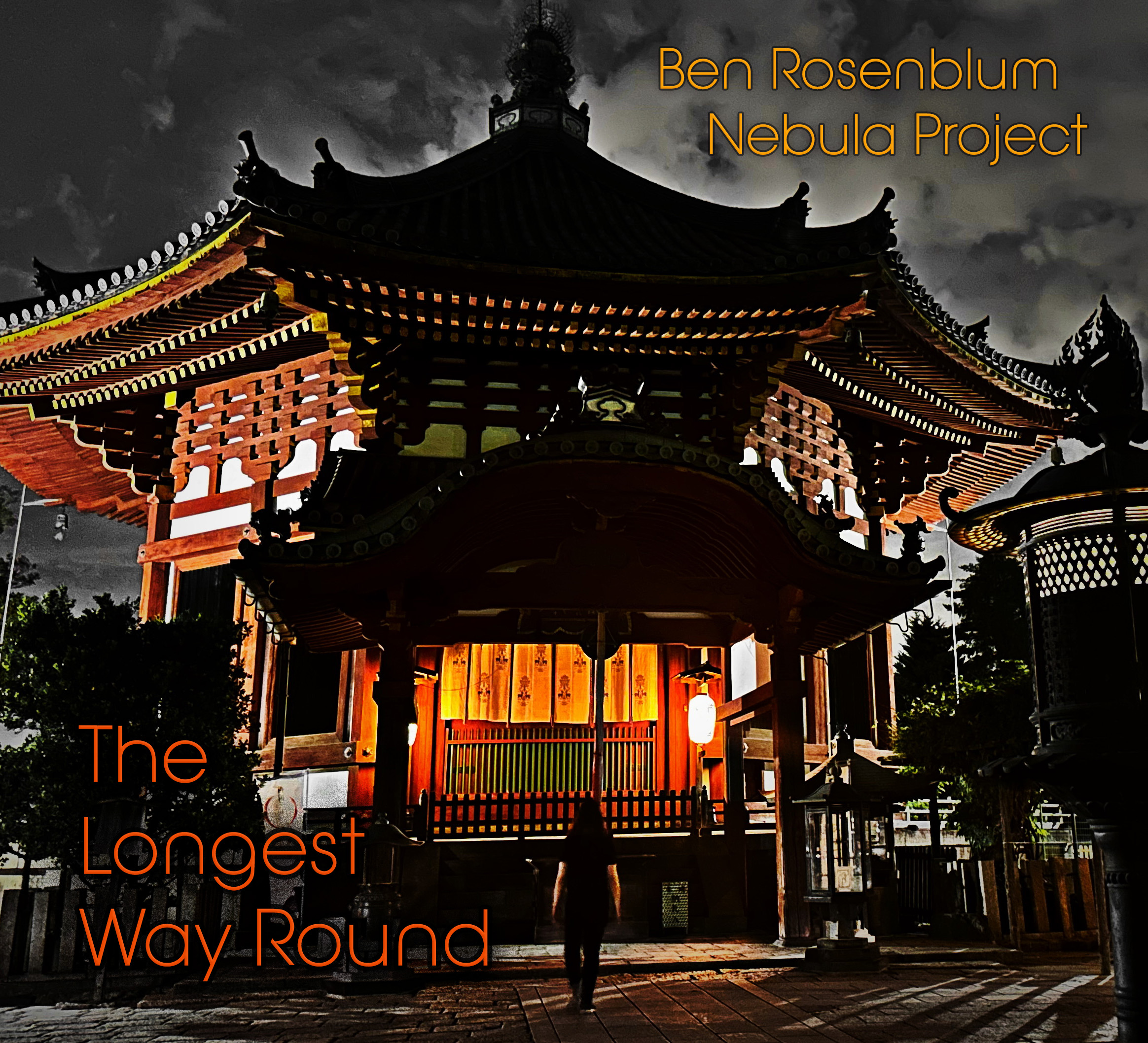
I consider myself lucky to have given this new album by Ben Rosenblum’s Nebula Project the kind of close, critical listen that it deserves. The Longest Way Around is the third release by the world-traveling accordionist/pianist/composer’s ensemble of virtuosic companions who share the leader’s restless curiosity and bring their own far-flung influences and backgrounds into the conversation. Returning from the Nebula Project’s previous recordings (2020’s Kites And Strings and 2023’s A Thousand Pebbles) are trumpeter/flugelhornist Wayne Tucker, saxophonist/reedman Jasper Dutz, guitarist Rafael Rosa, bassist Marty Jaffe and drummer Ben Zweig, who are joined on this melodically fortuitous and rhythmically adventurous new outing by percussionists Gustavo Di Dalva and Brad Dutz. Rosenblum and company venture further afield and in more divergent directions on The Longest Way Around, experimenting with distinct traditions on nearly every piece. Rosenblum casts the album’s 11 original compositions in colorfully arranged, carefully woven tapestries of woodwinds, brass, keyboards and guitar, with the drums and bass playing essential parts in the charts. Propelled by feel-good ostinato grooves, world-funk syncopation and smooth-shifting time signatures — all spiraling around a foundation of straightahead jazz improvisation while delving into a range of distinct non-jazz traditions — the program maintains a heightened feeling of intensity from start to finish. Even during its more reflective, balladic moments, The Longest Way Around (Rosenblum’s fifth overall release as a leader) seems to hurtle through space and time with strong-force cohesion and unbound momentum. While Rosenblum’s piano playing on several tracks is exceptional, and his bandmembers go deep in their numerous solo spotlights, the leader’s mind-blowing and heart-melting accordion chops — along with his uncanny ability to blend his stomach-Steinway with horns and guitar in a hard-bop esthetic — are the main attraction here. Starting with the J-Pop-inspired changes of “Merengue x Fantasy” and continuing through pieces like the Irish-inflected “Sheridan’s Reel,” the introspective three-part suite “Scenes Frozen In Time,” “Círculo” (built upon West African rhythms shared by Zweig after a trip to Cameroon), the steady-sailing tack of the reggae/ska number “Blue Water,” the straightahead-leaning “Albatross” and “Fool’s Gold” (with direct nods to classic hard-bop icons) and closing with the neo-soul vibe of “Last Call,” Rosenblum effortlessly integrates the frequently underestimated instrument into his all-enveloping musical vision.
When he’s not touring with stars like Rickie Lee Jones, Catherine Russell and Indian singer Kiran Ahluwalia, or performing with bassist Curtis Lundy at festivals alongside jazz luminaries Bobby Watson, Sean Jones and Warren Wolf, the tireless Rosenblum is known to spend a lot of time on the road fronting his own ensembles and performing solo. Among numerous gigs scheduled for this year, he’ll bring the Nebula Project to Smalls in New York to play a CD release party on Feb. 26, and the group will make subsequent appearances at Miami’s Pinecrest Gardens on March 14 and Abington Presbyterian Church in Abington, Pennsylvania, on June 7.