Sep 3, 2026 10:44 AM
In Memoriam: Cassandra Wilson, 1955–2026
Cassandra Wilson, a singer, songwriter and producer who was one of the most acclaimed and successful jazz vocalists of…


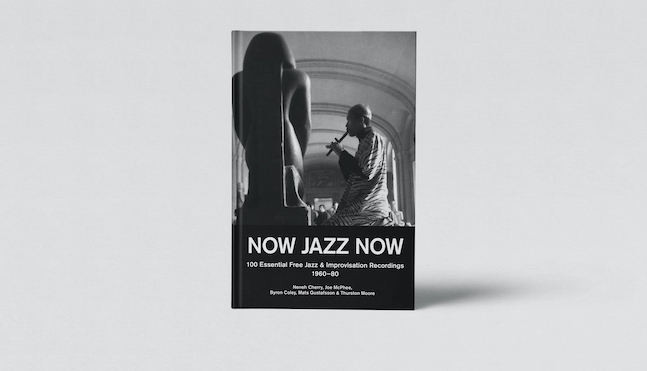
While much free-jazz remains well off the beaten path, its adherents are more passionate and obsessive than ever.
(Photo: Ecstatic Peace Library)Original issues of most of the rugged recordings featured in the new coffee table book Now Jazz Now: 100 Essential Free Jazz & Improvisation Recordings 1960–80 are nearly impossible to find these days, although they may have been reissued in various iterations over the years. In his entry on The Third World, an obscure 1971 album billed to saxophonist and flutist Abdul Hannan, which features one of the earliest dates of the brilliant tenor saxophonist David S. Ware, writer Byron Coley recalls encountering the record regularly while perusing the bins of used records shops in Boston years back.
“Would that I’d have bought every copy I ever saw rather than the five or so I’ve gone through,” he writes. “I weep now when I look at the old set sale lists where I sold them for $12.” That passage illustrates how many of the featured releases failed to sell many copies in their day — by dint of their uncompromising intensity or poor distribution — and how, over time, they’ve become storied collector’s items, many fetching hundreds of dollars, if not more, decades later. Some of this music remains challenging to the layman, while time has transformed other recordings into classics such as the 1961 Ornette Coleman album that gave the style its name.
Thurston Moore, an experimental guitarist best known as a founding member of Sonic Youth, operates the publishing imprint Ecstatic Peace Library with his wife, Eva Prinz, and they’ve billed this hefty 277-page volume as an art book for record collectors, a category that applies to its three primary authors: Moore, Coley and saxophonist Mats Gustafsson. The trio collectively decided what fit the book’s billing, strictly limiting any musician to a single title regardless of how large and important their output may have been. They’ve embraced a nicely catholic sensibility, both in terms of geographic reach and stylistic prerogative, with the final tally all but certain to instigate passionate arguments about what was included and the countless recordings they omitted.
The book also includes a prologue in which Gustafsson offers some crucial free-jazz antecedents by artists as disparate as Mary Lou Williams, Charles Mingus, Lennie Tristano, Stan Kenton, Sun Ra and Cecil Taylor. The authors liberally toss around subgenres as they discuss a music that sought to rip them apart, but in her preface singer Neneh Cherry, the stepdaughter of the singular trumpeter Don Cherry, writes, “The term ‘Free Jazz’ might’ve been talked about by journalists, but I don’t recall the musicians referencing themselves in the world of Free Jazz. The musicians just played.”
The feverish prose, particularly by Gustafsson, provides unbridled enthusiasm more than verifiable information or analysis. And indeed, in a recent story published by the Guardian, Moore avers, “Enthusiasm is key, we didn’t want to couch it in too much of a smarty-pants vibe.” Obviously such a selection can’t help but be subjective, but it’s hard not to see some of the inclusions as much about celebrating ultra-rare items in the trio’s personal collections as it is about offering a guide to essential music. The sole entry from the prolific Japanese alto saxophonist Kaoru Abe, for example, is Winter 1972, a solo album recorded during the titular period that didn’t surface until nearly three decades later when “a box of coverless vinyl copies suddenly showed up.” Luckily the music was eventually released on CD. Gustafsson offers an appetite-whetting description of Oltre, a 1963 quartet album led by the influential Italian pianist Giorgio Gaslini that has never been reissued in any format.
Occasionally Gustafsson will interrupt his gushing with trenchant musical observations, while Moore tends to offer broader context for each musician, although it’s sometimes contained within an impenetrable thicket of discographic data, to say nothing of mistakes like conflating a country like Algeria with an ethnic group like the Tuareg in an entry about pianist Dave Burrell as he provides context for the 1969 Pan-African Festival in Algiers.
Unsurprisingly, it’s Coley — the veteran writer — who delivers the most legible text. Despite the uneven writing, the book is gorgous, with extensive photos of the featured albums, all drawn from their collections. Certain albums feature shots of album art long discarded in subsequent reissues. And while there are plenty of classics by the likes of Albert Ayler, John Coltrane, Roscoe Mitchell, Peter Brötzmann and Jan Garbarek included, I encountered a handful of recordings for the first time. There’s always more to learn. (ecstaticpeace.net)
Free Jazz and Improvisation on LP and CD 1965–2024 is a seriously expanded version of a 2014 book also made by Norwegian art historian Johannes Rød, but that earlier out-of-print edition was limited to vinyl released between 1965 and ’85.
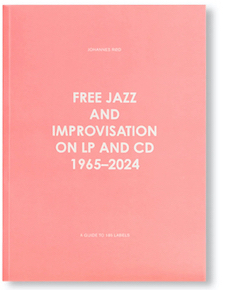
The original book ran 128 pages, while this one (published by Smalltown Supersound) has swelled to 382. The author included selective discographies of 185 labels spanning nearly six decades, with short texts providing thumbnail histories of labels as disparate as ESP-Disk’ and Black Saint along with Bird Notes, the ridiculously obscure vanity imprint of Swedish saxophonist Bengt “Frippe” Nordström, and Wobbly Rail, the five-year endeavor of Mac MacCaughan of the post-punk band Superchunk.
As with its predecessor, the book is beautifully designed with the selections arrayed by catalog number on ledgers. A section of album art spans the years covered by the book, but more than anything this seems designed as a kind of checklist for budding collectors of improvised music, stratifying the wild west of Internet discographies into something more approachable. (smalltownsupersound.com)
Both of these books reinforce that while much of this music remains well off the beaten path, its adherents are more passionate and obsessive than ever. DB
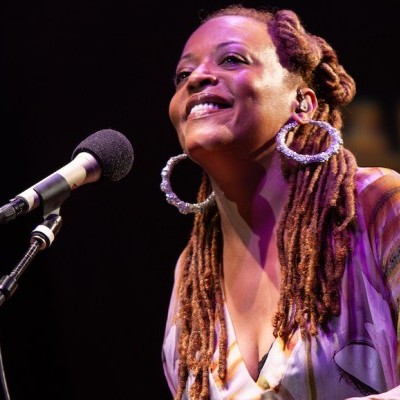
Wilson’s ability to connect to audiences helped her to win two Grammy awards and multiple other accolades. She was named an NEA Jazz Master in 2022.
Sep 3, 2026 10:44 AM
Cassandra Wilson, a singer, songwriter and producer who was one of the most acclaimed and successful jazz vocalists of…
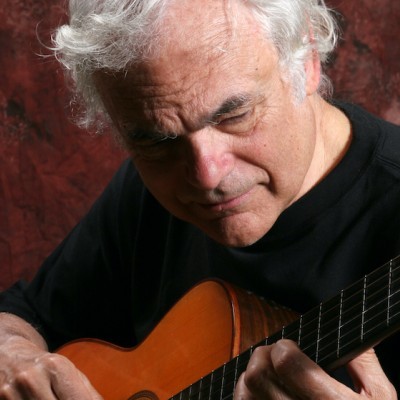
Bertoncini was a specialist and advocate for the nylon-string acoustic guitar, turning down high-profile opportunities that were unsuited to the sound and techniques that he used with that instrument.
Sep 1, 2026 11:06 AM
Gene Bertoncini, an esteemed jazz guitarist, composer, arranger and educator, died Aug. 29 at the Lillian Booth Actors…
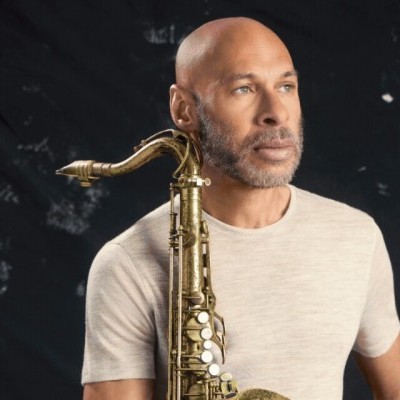
A solo concert by saxophonist Joshua Redman will close the first night of the Hyde Park Jazz Festival on Sept. 26.
Sep 22, 2026 12:26 PM
The Hyde Park Jazz Festival will take place for the 20th time on the final weekend of September 2026. Beginning half…
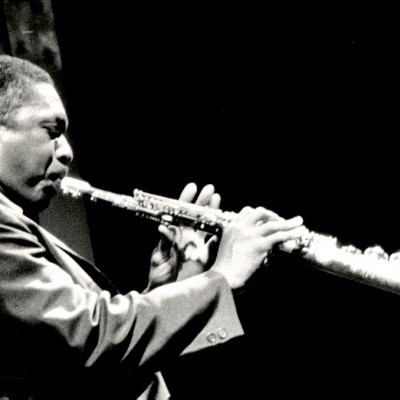
“It was just that suddenly … I could hear it,” Ravi Coltrane said of an epiphany he experienced during his late teens regarding his father’s music. “And it was almost like a calling, like something saying, ‘Hey, man, come on. It’s time to get serious.’ And the first time you really tune in and dial in and focus like that, it can be very life-changing.”
Sep 22, 2026 1:39 PM
Editor’s Note: Tomorrow, Sept. 23, is the 100th anniversary of John Coltrane’s birth. In honor of the tenor and…
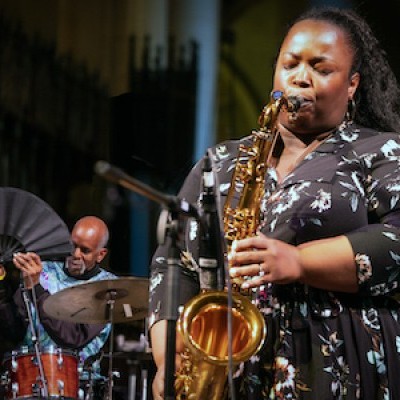
Camille Thurman took to the stage alongside bassist Kenny Davis and drummer Tommy Campbell for a rendition of Johnny Mercer’s “I’m An Old Cowhand” that recalled Rollins’ epochal 1957 trio outing Way Out West.
Oct 6, 2026 1:33 PM
As emcee Mark Ruffin noted at the commencement of an epic tribute to saxophonist Sonny Rollins at the Cathedral of…