Sep 3, 2026 10:44 AM
In Memoriam: Cassandra Wilson, 1955–2026
Cassandra Wilson, a singer, songwriter and producer who was one of the most acclaimed and successful jazz vocalists of…


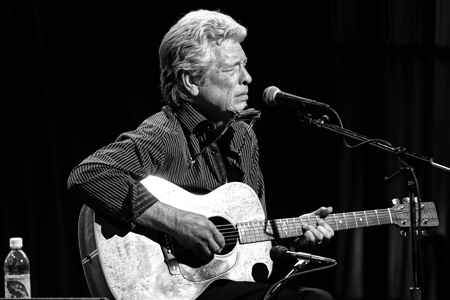
Hammond came to the blues through the folk boom of the late 1950s and early 1960s, which he experienced firsthand in New York’s Greenwich Village.
(Photo: Courtesy johnhammond.com)John P. Hammond (aka John Hammond Jr.), a blues guitarist and singer who was one of the first white American interpreters of traditional blues, died Feb. 28. He was 83. His death was announced by singer-guitarist Paul James, a longtime friend and colleague of Hammond’s, who said on Facebook that he had received the news from Hammond’s wife of 32 years, the former Marla Silver.
The son of famed record producer and talent scout John H. Hammond, the younger Hammond came to the blues not through his father’s machinations, but through the folk boom of the late 1950s and early 1960s, which he experienced firsthand by spending his days (and eventually living) in New York’s Greenwich Village. He gained a following there by playing classic blues songs in the neighborhood’s clubs and coffee shops, and in 1963, at age 20, began a 60-year recording career that would include collaborations with some of the most important and acclaimed artists of all time.
Although he was never a commercial phenomenon, Hammond was also never out of work as a performing and recording artist. Those two facts, he said, were interrelated. “Since I don’t make rock star money, I have to play a lot,” he told the Los Angeles Times in 1995. “I play smaller theaters and clubs. With experience you learn how to maintain your energy and not blow it.”
John Paul Hammond was born Nov. 13, 1942, in New York City, the son of John H. Hammond, Jr. and actress Jemison McBride. His parents separated when he was 5 years old, and the younger Hammond maintained a distant relationship with his father and namesake, seeing him only a few times a year. (Indeed, John P. Hammond didn’t know of his father’s stature in the music business until he was already a working musician.)
Instead, though he couldn’t quite identify how or why, John P. Hammond came to the blues on his own. By high school he was a fanatic, consuming any blues recording he could get his hands on and seeing Jimmy Reed — who became his idol — performing at the Apollo Theater. At 18, he got a guitar of his own and “drove all my friends nuts for about a year-and-a-half.”
Attending Antioch College in Ohio on scholarship, Hammond quit after a year to become a blues musician. It was 1962, and the American folk-music revival was reaching its peak; Hammond hitchhiked to California, where he busked on the L.A. streets before finding work on the club scene. He then made his way back east, amassing enough practice and experience that by the time he made it back to New York, he was quickly able to get a gig at the Newport Folk Festival, followed shortly by his first (self-titled) album for Vanguard Records.
Hammond settled into Greenwich Village, where he was able to hobnob with everyone from Bob Dylan to Mississippi John Hurt to Jimi Hendrix. (In 1968, Hammond briefly formed a band with both Hendrix and Eric Clapton while playing a week at the Village’s Gaslight Café.) His third album, 1965’s So Many Roads, featured three of the musicians who would soon become known as The Band; Hammond recommended them to Dylan for the following year’s electric tour. He also formed a band in 1969 that featured Duane Allman on electric guitar.
Hammond continued recording and touring with ad hoc bands and accomplished peers (such as Mike Bloomfield and Dr. John, with whom he made the trio album Triumvirate in 1975) until 1976, when he stripped down to a solo act. While he continued to record with friends and special guests — his 1984 album Blues Explosion, with Stevie Ray Vaughan, Koko Taylor and Luther Johnson, won him a Grammy award — solo guitar (mostly acoustic) and vocals remained his primary orientation for the remainder of his career. In addition to his Grammy, Hammond won eight Blues Awards. He was inducted into the Blues Hall of Fame in 2011.
Hammond is survived by his third wife, Marla Silver Hammond. DB
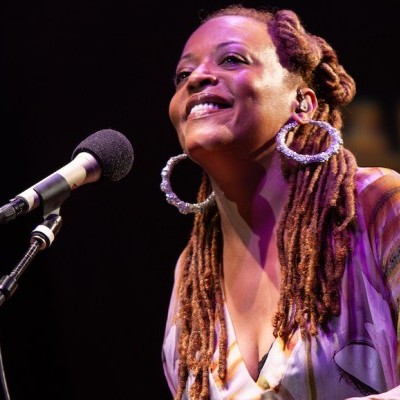
Wilson’s ability to connect to audiences helped her to win two Grammy awards and multiple other accolades. She was named an NEA Jazz Master in 2022.
Sep 3, 2026 10:44 AM
Cassandra Wilson, a singer, songwriter and producer who was one of the most acclaimed and successful jazz vocalists of…
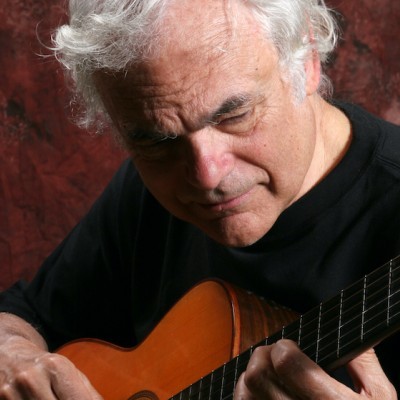
Bertoncini was a specialist and advocate for the nylon-string acoustic guitar, turning down high-profile opportunities that were unsuited to the sound and techniques that he used with that instrument.
Sep 1, 2026 11:06 AM
Gene Bertoncini, an esteemed jazz guitarist, composer, arranger and educator, died Aug. 29 at the Lillian Booth Actors…
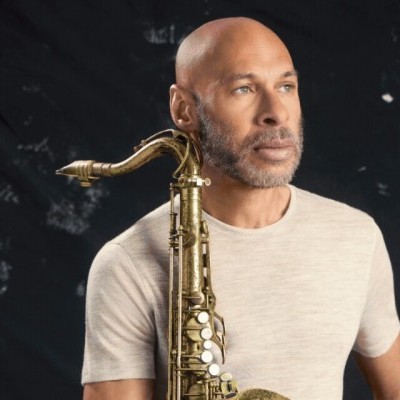
A solo concert by saxophonist Joshua Redman will close the first night of the Hyde Park Jazz Festival on Sept. 26.
Sep 22, 2026 12:26 PM
The Hyde Park Jazz Festival will take place for the 20th time on the final weekend of September 2026. Beginning half…
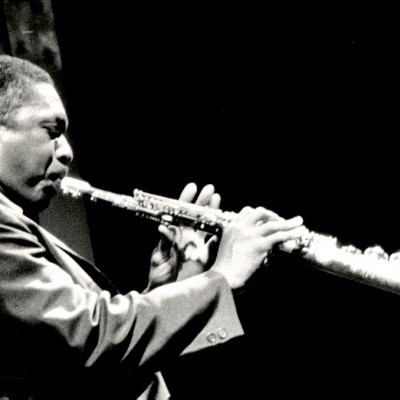
“It was just that suddenly … I could hear it,” Ravi Coltrane said of an epiphany he experienced during his late teens regarding his father’s music. “And it was almost like a calling, like something saying, ‘Hey, man, come on. It’s time to get serious.’ And the first time you really tune in and dial in and focus like that, it can be very life-changing.”
Sep 22, 2026 1:39 PM
Editor’s Note: Tomorrow, Sept. 23, is the 100th anniversary of John Coltrane’s birth. In honor of the tenor and…
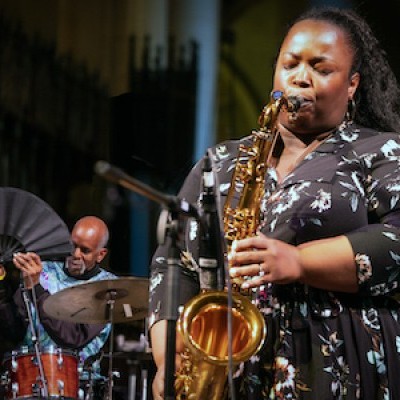
Camille Thurman took to the stage alongside bassist Kenny Davis and drummer Tommy Campbell for a rendition of Johnny Mercer’s “I’m An Old Cowhand” that recalled Rollins’ epochal 1957 trio outing Way Out West.
Oct 6, 2026 1:33 PM
As emcee Mark Ruffin noted at the commencement of an epic tribute to saxophonist Sonny Rollins at the Cathedral of…