Sep 3, 2026 10:44 AM
In Memoriam: Cassandra Wilson, 1955–2026
Cassandra Wilson, a singer, songwriter and producer who was one of the most acclaimed and successful jazz vocalists of…


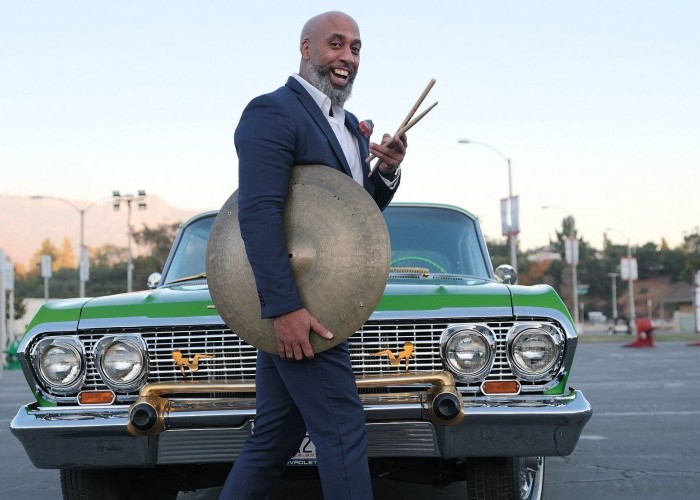
“I always believe in having a positive message,” says drummer Brandon Sanders. “I want to touch my audience’s heart and get them to start listening to jazz.”
(Photo: Jaimie Milner)When drummer Brandon Sanders walked onto the main stage at Dizzy’s Club in November for the release of his third album, Lasting Impression (Savant/HighNote), he wasn’t expecting the night to unfold the way it did. A year prior, he’d made his debut there at a late-night session. But this time, he returned as a headliner and delivered a sold-out performance, earning a standing ovation and afterwards selling boxes of CDs.
For Sanders, who didn’t pick up a pair of drumsticks until age 25, moments like that aren’t taken for granted. They’re milestones in a journey he describes as improbable, humbling and fueled by a deep desire to reach people.
“I always believe in having a positive message,” he says. “I want to touch my audience’s heart and get them to start listening to jazz. I had a couple come to the show and said, ‘Man, we never listened to jazz, but your performance really touched us.’ That’s what I’m trying to do.”
At 54, he has been playing for nearly 30 years, but considers himself a novice, constantly practicing, trying to catch up to his peers.
He made his recording debut as a leader with 2023’s Compton’s Finest, a tribute to his hometown. With Lasting Impression, he’s found his sweet spot, at ease as a leader.
The album features elite musicians deeply woven into his musical life: saxophonist Stacy Dillard, bassist Eric Wheeler, pianist Eric Scott Reed, vibraphonist Warren Wolf and vocalist Jazzmeia Horn. Wolf and Horn also appeared on his first record.
He aims to play with the best. When his mentor and producer Willie Jones III suggested he collaborate with veterans like Reed and Dillard, he jumped at the chance.
Sanders’ compositions are shaped by the musicians he brings into the room. As a composer, he draws inspiration from Duke Ellington, Billy Strayhorn and Norman Connors, a drummer he believes deserving of more attention and recognition. Before writing, he studies his band’s stylistic DNA.
“I try to learn their style — their cadences — before I start writing,” he says. “Like with ‘Tales Of Mississippi,’ I wrote it with the vibes in mind. I was thinking about how I wanted it to sound and the story I wanted to tell.”
Even standards on the album took shape through personal connection.
For “Soul Eyes,” Sanders wanted to capture the vibe John Coltrane played. And when it came to “Our Love Is Here To Stay,” he felt Horn’s live arrangement needed to be documented.
Sanders’ style of drumming is akin to his mentors’ — drummers Kenny Washington, Marvin “Smitty” Smith and Lewis Nash. He rides the cymbals with a similar smoothness, color and versatility, supporting and pushing his bandmates when the zoom lens is cast on him. With the thought and precision he puts into his playing, it appears he’s been drumming at a master’s level his entire life. But his road to jazz wasn’t just unusual — it was nearly accidental.
His childhood was surrounded by music. His mother was a violinist, his father and stepfather were horn players, and his grandmother owned the Kansas City jazz club Casablanca.
Sanders and his mother moved from Kansas City to Los Angeles when he was 22 months old, settling in the Compton neighborhood. He grew up around rappers such as DJ Quik and attended the same high school as Kendrick Lamar.
“If you weren’t gangbanging or doing something illegal, the positive things you did were basketball and house parties,” he says. “I used to have two turntables and a mixer.”
He absorbed the rhythms and demands of the crowd long before he ever touched a drum set. His years as a DJ in Compton influenced the way he currently approaches his records and live sets, taking the listener on a journey.
At the urging of his grandmother, he returned home. She didn’t want him to be victimized by the violent streets of Compton in the 1980s. Sanders attended the University of Kansas and joined the basketball team as a walk-on player.
“I wasn’t thinking about drums at all,” he says. “Not until my college basketball eligibility ran out. Then I saw a set of drums at a church and thought, ‘How do you play this?’ It just captivated me.”
He practiced obsessively for two years, then applied to Berklee College of Music, entering at the lowest rating (“a1”) and graduating as an “8” — the highest level. At Berklee, he studied with masters like Joe Lovano and met Wolf, who encouraged him to start recording.
“The one thing that I’ve always appreciated about him is that he respects the history of the music, and he’s just somebody who’s serious about his craft,” says Wolf. “And I think he recognizes that he’s not trying to be the absolute top drummer out here. He’s trying to just be an important component in someone’s group and be a good leader.”
Even with Wolf”s encouragement, it was a while before Sanders started recording. With a master’s degree in social work, he worked for years in the field and only moved to New York because his Boston landlord wanted her apartment back. Lewis Nash invited Sanders and his 10-month-old son to stay in his apartment until Sanders found a place.
With three albums in his catalog now, Sanders says he’s only getting hungrier.
“When I leave a gig like Dizzy’s, it motivates me,” he says. “I’m like, OK, now you got to do more work. You got to get better.” Sanders is already thinking about his next album — a project he hopes to record at the legendary Van Gelder Studio in early 2026.
“To be truthful,” he says, “I want to be worldwide. I want people saying, ‘Let’s go hear Brandon Sanders’ show.’ Not from an ego standpoint, but because I believe I have something that can touch people. I want people to know it’s never too late. I never thought at 25 I’d be a drummer. But if you stick with it and have some patience, you can do something great.” DB
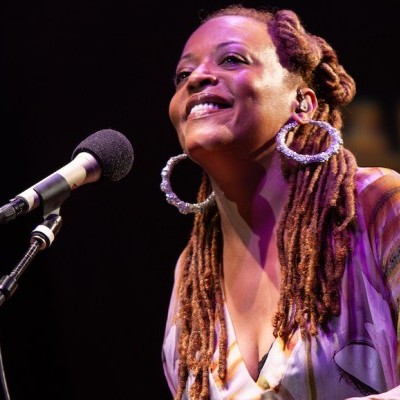
Wilson’s ability to connect to audiences helped her to win two Grammy awards and multiple other accolades. She was named an NEA Jazz Master in 2022.
Sep 3, 2026 10:44 AM
Cassandra Wilson, a singer, songwriter and producer who was one of the most acclaimed and successful jazz vocalists of…
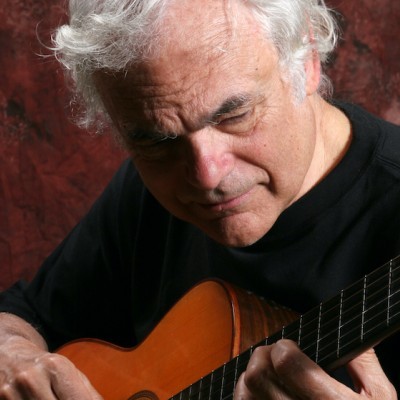
Bertoncini was a specialist and advocate for the nylon-string acoustic guitar, turning down high-profile opportunities that were unsuited to the sound and techniques that he used with that instrument.
Sep 1, 2026 11:06 AM
Gene Bertoncini, an esteemed jazz guitarist, composer, arranger and educator, died Aug. 29 at the Lillian Booth Actors…
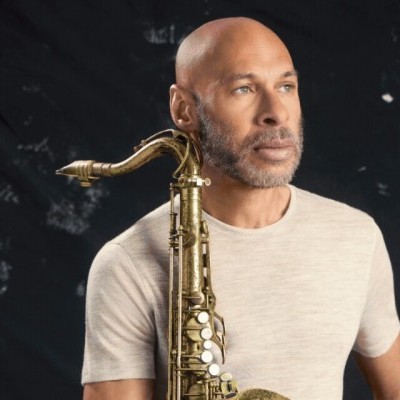
A solo concert by saxophonist Joshua Redman will close the first night of the Hyde Park Jazz Festival on Sept. 26.
Sep 22, 2026 12:26 PM
The Hyde Park Jazz Festival will take place for the 20th time on the final weekend of September 2026. Beginning half…
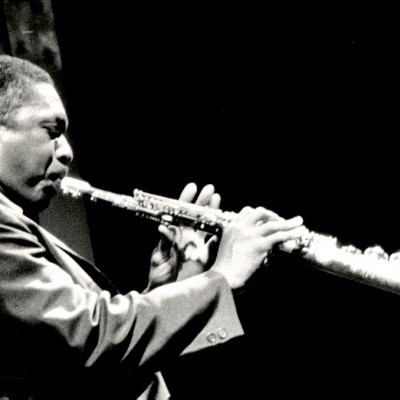
“It was just that suddenly … I could hear it,” Ravi Coltrane said of an epiphany he experienced during his late teens regarding his father’s music. “And it was almost like a calling, like something saying, ‘Hey, man, come on. It’s time to get serious.’ And the first time you really tune in and dial in and focus like that, it can be very life-changing.”
Sep 22, 2026 1:39 PM
Editor’s Note: Tomorrow, Sept. 23, is the 100th anniversary of John Coltrane’s birth. In honor of the tenor and…
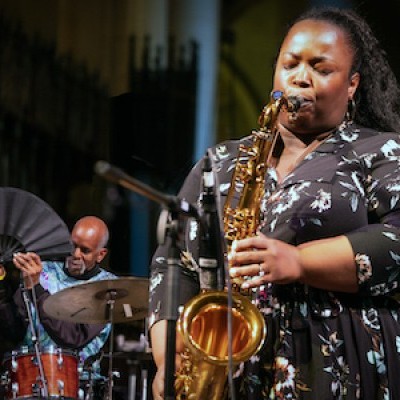
Camille Thurman took to the stage alongside bassist Kenny Davis and drummer Tommy Campbell for a rendition of Johnny Mercer’s “I’m An Old Cowhand” that recalled Rollins’ epochal 1957 trio outing Way Out West.
Oct 6, 2026 1:33 PM
As emcee Mark Ruffin noted at the commencement of an epic tribute to saxophonist Sonny Rollins at the Cathedral of…