Sep 3, 2026 10:44 AM
In Memoriam: Cassandra Wilson, 1955–2026
Cassandra Wilson, a singer, songwriter and producer who was one of the most acclaimed and successful jazz vocalists of…


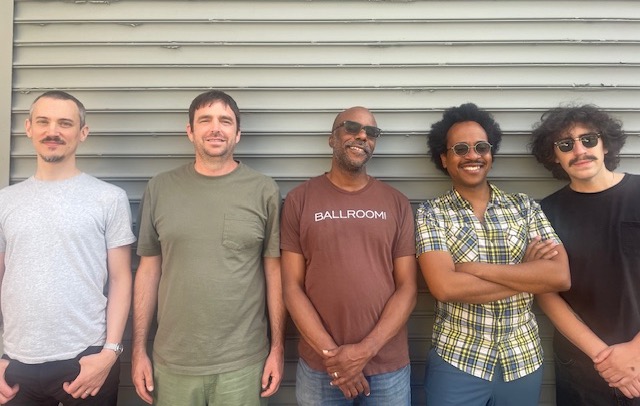
Drummer Chad Taylor’s quintet for his new recording, Smoke Shifter, from left: Bryan Rogers, Matt Engle, Taylor, Jonathan Finlayson and Victor Vieira-Branco
(Photo: Grady Bajorek)It is perhaps inevitable that Chad Taylor will forever be associated with Chicago. The drummer and composer played a vital role in the Windy City’s late-’90s jazz renaissance, collaborating with a host of adventurous musicians including Fred Anderson, Jeff Parker, Nicole Mitchell, Joshua Abrams and others. For more than 25 years has co-led the innovative and mutable Chicago Underground Duo, along with its several variously scaled iterations, with the cornetist, multi-instrumentalist and “abstractivist” Rob Mazurek.
Many of the connections that he forged during that period remain active, not least the one with Mazurek: The pair reconvened in 2025 to release Hyperglyph (International Anthem), their first album as a duo in 11 years. But neither has called Chicago home in nearly a quarter century; Mazurek spent five years in Brazil before settling in Marfa, Texas, while Taylor embarked for New York in 2001 and has lived in Philadelphia for almost a decade. As of 2024, he added one more city to his collection of musical homes, assuming the role of artistic director of jazz studies at the University of Pittsburgh.
Taylor has fully immersed himself in the jazz community in every one of these locales, leaving his indelible rhythmic imprint. His time in New York is marked by tenures in the late jaimie branch’s bracing group Fly or Die, Marc Ribot’s Ayler-influenced Spiritual Unity quartet and Eric Revis’ bold quartet. Since leaving the city, he’s continued to work with some of its most adventurous residents, including ongoing collaborations with fiery saxophonist James Brandon Lewis and bassist Luke Stewart.
The drummer’s latest album as a leader, Smoke Shifter (Otherly Love), is his strongest document to date of his time in Philly. Aside from trumpeter Jonathan Finlayson — an acquaintance that Taylor had long wanted to work with — the remainder of the quintet is made up of Philadelphia locals. Saxophonist Bryan Rogers and bassist Matt Engle are longtime members of the scene (though Rogers recently returned from a lengthy sabbatical) who were students at the University of the Arts in the mid-’00s when they co-founded the audacious quartet Shot x Shot. Vibraphonist Victor Vieira-Branco is a more recent transplant that played with Mazurek during his time in São Paulo.
“I really wanted to showcase these great Philly musicians,” Taylor said on a brisk November day, over lunch at a café in Philly’s Chestnut Hill neighborhood. “I don’t think a lot of people outside the city are aware of them, and they’re all incredibly creative players.”
Taylor landed in Philly after a Google search for “best neighborhoods on the East Coast to raise a family,” looking for more affordable, less cramped surroundings for himself, his wife and his three daughters. Since his arrival he’s shared stages frequently with hometown heroes like saxophonist Bobby Zankel and centenarian Marshall Allen, appearing as part of several diverse configurations of the latter’s ever-changing Ghost Horizons ensemble.
He also joined with Philly percussionist Kevin Diehl and the legendary Joe Chambers to form the percussion trio Onilu, which released its self-titled debut in February 2025 via Eremite. When Diehl initially conceived the project, he had no idea that Taylor had studied with Chambers at the New School early in his career.
“Reconnecting with Joe was really amazing,” Taylor said. “When I was studying with him I was 19 or 20 years old and had a chip on my shoulder — I was not a good student, I’ll put it that way. But he was giving me all this incredible information that I didn’t start using and practicing until years later. A lot of what he taught me has become the foundation of my playing, so to work with him now, using all these ideas that I’ve developed from what he taught me, was really special.”
Taylor also credits Chambers with encouraging him to compose, and to offer his works in whatever context he might find himself. “The worst thing that’s going to happen is someone says, ‘No,’” he shrugged. On Smoke Shifter, he carries that advice forward, including compositions by every member of the band except Finlayson.
Despite the multiple compositional voices, Smoke Shifter presents a band with a distinct vocabulary out of the gate, centered on the mesmerizing polyrhythms woven by Vieira-Branco and the band leader. Engle supplies buoyant and elastic bass lines bridging the percussive voices with the intricate, angular horn melodies. There is a touchstone in Andrew Hill-style modernism, but the compelling pieces are also sculpted by Taylor’s distinctively sculptural approach to the kit. The music sounds nothing like the dizzying electronic mutations of Hyperglyph, but the two projects share undeniable DNA via the drummer’s entrancing urgency.
Those unmistakable trademarks serve as a reflection of the qualities that Taylor seeks out in his sideman capacity.
“I have always been very intentional in the groups that I decide to work with,” he explained. “I tend to gravitate towards people who want to develop their own sound, their own language and approach to music. But I’m at a point in my career where I’m trying to focus more on my own work as a leader.”
That shift is due in part to the demands of his new role at the University of Pittsburgh. Taylor is the fourth artist to head the program, following founder Nathan Davis, Geri Allen and Nicole Mitchell. The school is unique in offering the country’s only Ph.D. concentration in jazz studies, along with an undergraduate program bolstered by the resources offered by the institution’s other disciplines.
“Believe it or not, jazz history is the No. 1 elective in the entire school,” Taylor said. Prior to this interview, he had just wrapped up the 55th annual jazz seminar and concert, which brought renowned artists like Chambers, Joel Ross, Warren Smith, Bobby Sanabria and Sasha Berliner to the school for a week of workshops, discussions and performances.
“I believe this program is the future of jazz education,” he continued. “It was hard to be a professional jazz musician when I was growing up, and it’s only getting harder. Yet jazz music is still incredibly important and vital. For instance, so much of the business world is about collaborating, and jazz music is all about collaboration, taking your ego down a notch and learning how to listen. There are so many ways that you can take from jazz music and put it into other disciplines.” DB
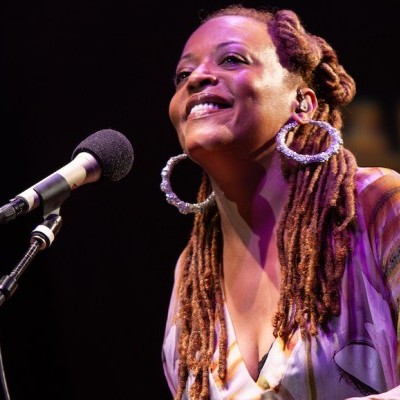
Wilson’s ability to connect to audiences helped her to win two Grammy awards and multiple other accolades. She was named an NEA Jazz Master in 2022.
Sep 3, 2026 10:44 AM
Cassandra Wilson, a singer, songwriter and producer who was one of the most acclaimed and successful jazz vocalists of…
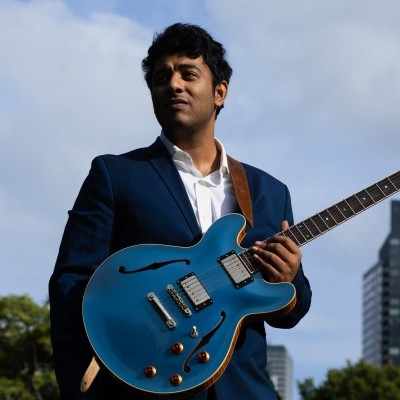
“The love from the jazz and music community restored my faith in humanity,” Walia wrote in an online post upon his release from detention at an ICE facility.
Aug 18, 2026 2:15 PM
Indian jazz guitarist and composer Pritesh Walia has been released after being unexpectedly detained by ICE and taken…
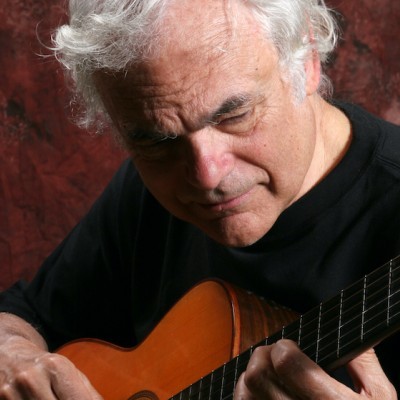
Bertoncini was a specialist and advocate for the nylon-string acoustic guitar, turning down high-profile opportunities that were unsuited to the sound and techniques that he used with that instrument.
Sep 1, 2026 11:06 AM
Gene Bertoncini, an esteemed jazz guitarist, composer, arranger and educator, died Aug. 29 at the Lillian Booth Actors…
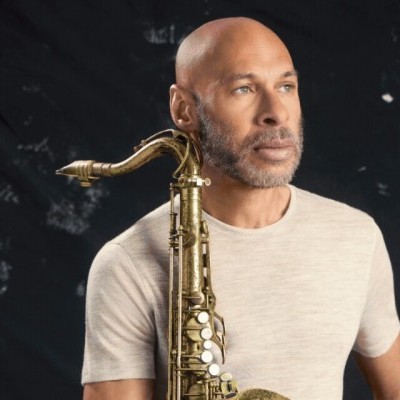
A solo concert by saxophonist Joshua Redman will close the first night of the Hyde Park Jazz Festival on Sept. 26.
Sep 22, 2026 12:26 PM
The Hyde Park Jazz Festival will take place for the 20th time on the final weekend of September 2026. Beginning half…
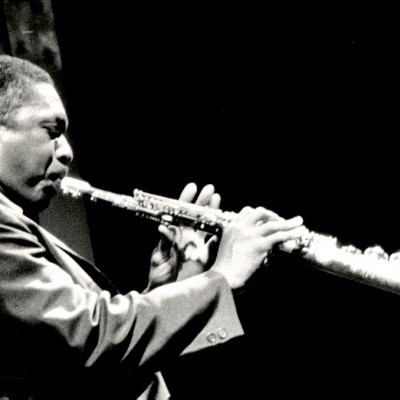
“It was just that suddenly … I could hear it,” Ravi Coltrane said of an epiphany he experienced during his late teens regarding his father’s music. “And it was almost like a calling, like something saying, ‘Hey, man, come on. It’s time to get serious.’ And the first time you really tune in and dial in and focus like that, it can be very life-changing.”
Sep 22, 2026 1:39 PM
Editor’s Note: Tomorrow, Sept. 23, is the 100th anniversary of John Coltrane’s birth. In honor of the tenor and…