Sep 3, 2026 10:44 AM
In Memoriam: Cassandra Wilson, 1955–2026
Cassandra Wilson, a singer, songwriter and producer who was one of the most acclaimed and successful jazz vocalists of…


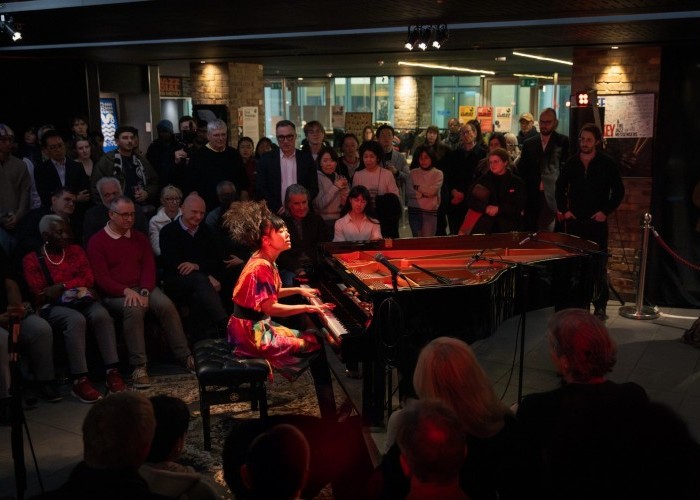
Hiromi delivered an exuberant performance of muscular piano playing.
(Photo: Sam Walton)Back for its 34th edition on Nov. 14–23, the EFG London Jazz Festival was as vibrant and wide-ranging as ever, featuring over 350 shows taking place throughout the city by more than 2,000 performers covering improvisatory music from across the globe.
Representing the extensive and ever-evolving tradition of British jazz was a lively double bill of homegrown acts, trumpeter Laura Jurd and pianist Fergus McCreadie, at North London’s Union Chapel. Playing music from her latest album, Rites & Revelations, Jurd kicked off proceedings with a deeply atmospheric, folk-referencing set backed by guitarist Tara Cunningham, viola player Ultan O’Brien, bassist Ruth Goller and drummer Corrie Dick. Channeling dark, undulating grooves punctuated by Dick’s rim clicks and textural cymbal hits, as well as Goller’s distorted bass pedals, Jurd’s performance was a master class in dynamic control and sense of tone. Playing as a member of the band rather than its soloing leader, Jurd’s trumpet lines were refined and constrained, serving the jaunty jigging rhythm of “You Again,” trilling through the distorted ambience of “Lighter & Brighter,” which picked up speed to reach a frenzied dance tempo, and finally sinking into an earthy, rooted funk-referencing groove on the driving feel of “What Are You Running Towards?” The highlight of the performance came on Jurd’s version of the standard “St. James Infirmary,” turning Louis Armstrong’s slow-swinging blues into a wildly emotive and freeform journey through drone sounds, cymbal splashes and bursts of piercing, affecting trumpet melody. A tour de force from a restlessly adventurous composer who never fails to produce a rounded, engaging full band sound.
Following Jurd was Scottish pianist McCreadie and his trio featuring bassist David Bowden and drummer Stephen Henderson. Playing repertoire from his latest album, The Sheiling, which was in fact produced by Jurd earlier in the year in a remote studio in the Outer Hebrides, the trio’s set evoked the sparse, blustering landscape of its making, bringing to mind thrashing wind through Henderson’s cymbal splashes, spattering rain via McCreadie’s melismatic piano runs and the rumble of thunder through Bowden’s double bass plucking. Showcasing his signature melodic style, McCreadie’s presence behind the Yamaha grand piano was delicate and confident, soloing with frenetic virtuosity on tracks like “Wayfinder” and “The Path Forks,” while equally leaving space for rhythmic interplay on “Windshelter” and moments of beautiful introspection on the ambience of “The Orange Skyline,” which featured the inspired addition of drone sounds produced by Henderson’s playing of the Indian classical bellow instrument, the shruti box.
Representing improvisatory traditions from further afield, Japanese pianist Hiromi took to East London’s Barbican Hall for a headline show presenting the funk fusions of her Sonicwonder group. Arriving on stage with her striking silhouette of spiky hair piled high above her head and flanked on both sides by Nord synthesizers, Hiromi delivered an exuberant performance of muscular piano playing driven by a freewheeling sense of interconnectedness with her band. Regularly leaping out of her seat with joy at the soaring trumpet lines of Adam O’Farrill, the polyrhythms of bassist Hadrien Feraud and the thumping groove of drummer Gene Coye, Hiromi’s performance was marked by a mood of exhilaration. Playing music from the group’s two albums, Sonicwonderland and Out There, the band largely delved into the titular four-part suite from 2025’s Out There, seamlessly moving from the synthesized trumpet lines and journeying funk of opening movement “Takin’ Off” to the soulful swing of “Strollin’,” the downtempo lyrical piano soloing and emotive crescendo of “Orion” before finally reaching the maximalist prog-infused instrumental freakouts of “The Quest,” peaking on a virtuosic trading of fours between Hiromi on keys and drummer Coye playing pounding fills across the kit. Throughout the 90-minute show the energy was relentlessly high and constantly governed by Hiromi’s animated piano playing, highlighting her presence as one of jazz music’s most irrepressible creative forces.
Away from the larger concert halls such as the Barbican or Union Chapel — where other highlights came courtesy of post-rock pioneers Tortoise, who played a thrilling set of percussive polyrhythms and driving bass lines, or Chicago drummer Makaya McCraven, who hammered his way through the hip-hop beatmaking improvisations of his latest album, Off The Record — the EFG London Jazz Festival equally presented delightful showcases of lesser-known combos in intimate club spaces. Tomoki Sanders, child of the late Pharoah Sanders, delivered a wildly free and intensely energetic set at the London jazz club Ronnie Scott’s, for instance, while in the quiet confines of West London’s Ismaili Centre the Triveni Quartet played a deeply moving tribute to their founder, the late Zakir Hussain.
Referencing Indian classical tradition as much as jazz improvisation, the quartet’s combination of tabla, stringed veena, violin and percussive mridangam broke genre convention in the same vein as Hussain previously did while playing in fusion groups such as Shakti or the Grateful Dead. For the duration of their hour-long performance the group improvised through the melodic scale of the Raga Kirwani, opening on a hauntingly beautiful jugalbandi (duet) between Kala Ramnath on the North Indian violin and Jayanthi Kumaresh on the South Indian veena. Traversing classical tradition that would typically see northern or southern Indian players isolated within their cultural and geographical heritages, the duo traded lyrical phrases that gradually increased in tempo and ferocity. As the female duo who played with Hussain in the original Triveni trio, Ramnath and Kumaresh displayed a confident and agile improvisatory rapport, while the gradual introduction of Hussain’s brother, Fazal Qureshi, on tabla and Anantha R Krishnan on mridangam delivered an ensuing rhythmic cascade. Building in pace and energy, the quartet ascended to a mighty crescendo of fiercely competing rhythms and melodies that burst briefly into moments of ecstatic harmony. The astonished silence after the performance had ended and before the applause arrived felt like the perfect tribute to Hussain’s awe-inspiring creativity.
With dozens of bars, clubs, concert halls and community centers across London each filled with improvising musicians and crowds throughout the 10 days of the EFG London Jazz Festival, this year’s edition proved once more that the city’s appetite for this music is mighty. DB
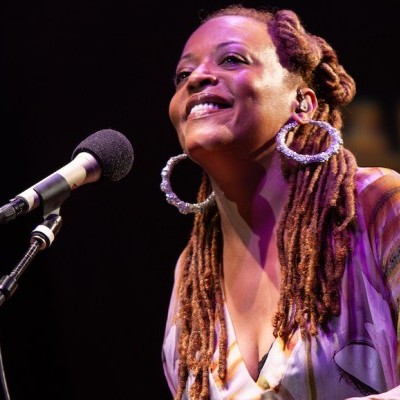
Wilson’s ability to connect to audiences helped her to win two Grammy awards and multiple other accolades. She was named an NEA Jazz Master in 2022.
Sep 3, 2026 10:44 AM
Cassandra Wilson, a singer, songwriter and producer who was one of the most acclaimed and successful jazz vocalists of…
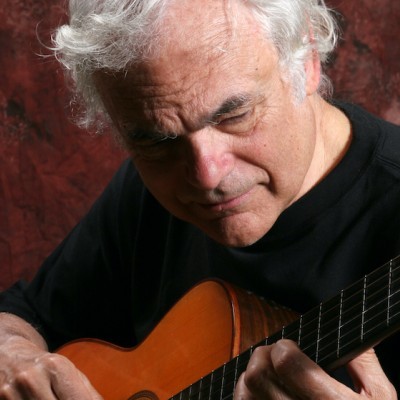
Bertoncini was a specialist and advocate for the nylon-string acoustic guitar, turning down high-profile opportunities that were unsuited to the sound and techniques that he used with that instrument.
Sep 1, 2026 11:06 AM
Gene Bertoncini, an esteemed jazz guitarist, composer, arranger and educator, died Aug. 29 at the Lillian Booth Actors…
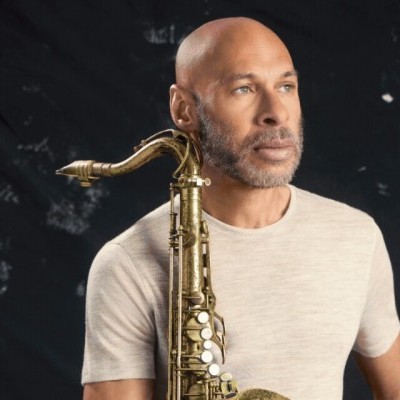
A solo concert by saxophonist Joshua Redman will close the first night of the Hyde Park Jazz Festival on Sept. 26.
Sep 22, 2026 12:26 PM
The Hyde Park Jazz Festival will take place for the 20th time on the final weekend of September 2026. Beginning half…
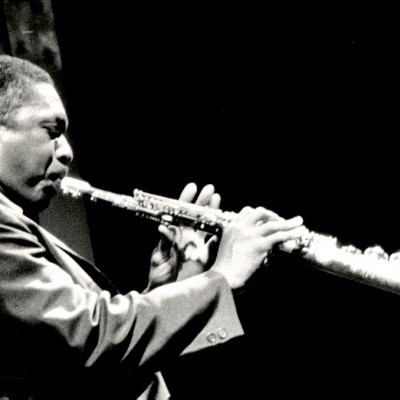
“It was just that suddenly … I could hear it,” Ravi Coltrane said of an epiphany he experienced during his late teens regarding his father’s music. “And it was almost like a calling, like something saying, ‘Hey, man, come on. It’s time to get serious.’ And the first time you really tune in and dial in and focus like that, it can be very life-changing.”
Sep 22, 2026 1:39 PM
Editor’s Note: Tomorrow, Sept. 23, is the 100th anniversary of John Coltrane’s birth. In honor of the tenor and…
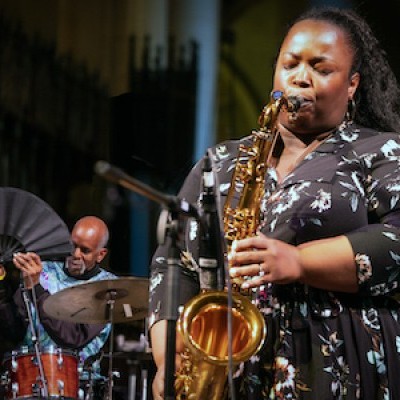
Camille Thurman took to the stage alongside bassist Kenny Davis and drummer Tommy Campbell for a rendition of Johnny Mercer’s “I’m An Old Cowhand” that recalled Rollins’ epochal 1957 trio outing Way Out West.
Oct 6, 2026 1:33 PM
As emcee Mark Ruffin noted at the commencement of an epic tribute to saxophonist Sonny Rollins at the Cathedral of…