Sep 3, 2026 10:44 AM
In Memoriam: Cassandra Wilson, 1955–2026
Cassandra Wilson, a singer, songwriter and producer who was one of the most acclaimed and successful jazz vocalists of…


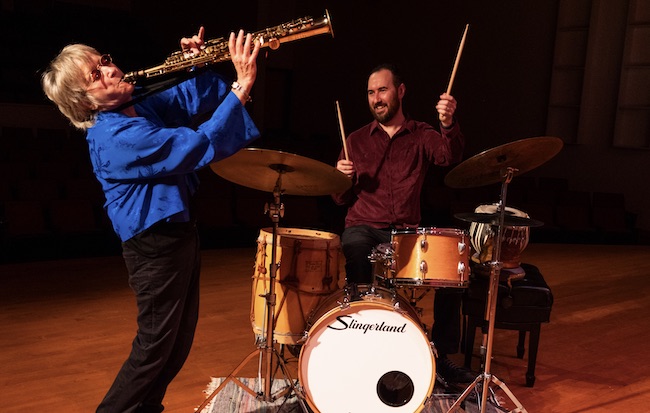
“It’s a fact — I love drummers,” says Jane Ira Bloom of working with Brian Shankar Adler. “I just light up next to the rhythmic energy of drums and percussion.”
(Photo: John Doyle)By some conceptual standards, the art of an effective duo is rooted in a central paradox. The objective is to celebrate the intimacy of the close relationship while also suggesting an expressive world larger than the sum of its parts. Those twin senses of scale become all the more prevalent in the rare, “chordless” and bass-less meeting of percussion and a lone melodic voice.
Exhibit A: the inspired and symbiotic relationship of soprano saxophonist Jane Ira Bloom and drummer/percussionist and interdisciplinary artist Brian Shankar Adler. As heard on their debut album once like a spark (Adhyâropa), the duo speaks low and speaks volumes, simultaneously.
Key to the success of the endeavor is a kindred spirit and common adventurousness between the two, although their orbits vary widely. Renowned soprano saxophonist Bloom is highly laurelled, poll-winning, Grammy-earning and category-defying — as well as gravity-defying, having collaborated with NASA and her name attached to an asteroid (asteroid 6083janeirabloom). Adler is a jazz and so-called “world music” musician who has performed with many established and emerging artists and seeks to banish musical boundaries in his work.
The common ground between them was Maine, where Adler has lived after putting in his growing time in New York, and where Bloom spends some quality time. Years ago, Adler bravely emailed Bloom about getting together to play. A bond was born and, after playing periodic live shows, a recorded document of their chemistry has finally gone public.
Bloom summarizes the duo’s evolution thusly: “We just started rehearsing together — freely improvising, playing some of my tunes and some of his tunes. The duo setting was kind of magical for us — felt both connected and totally free.
“I don’t like to overthink it too much. I think we shared a sound palette coming from interest in a wide range of improvisational genres — from more open forms of jazz to world music to contemporary new music. We played a few performances in art spaces in Lewiston and Portland, Maine, and things just started to develop. I wasn’t in a hurry to record anything because we were letting the music evolve in its own way without any expectations. That’s when it’s the best.
“Years went by and then it felt like it would be fun to document what we were up to. I really didn’t have an album in mind when we went into the studio in Portland. It was just like an extension of our rehearsals together. It just flowed and there were so many first takes. The album actually took shape after some time went by and we listened back to what we did. Bingo.”
Adler has a somewhat different recollection of the duo’s initial stage, recalling that “the first time she came over to play, I was so nervous. Here was a hero, a legend — the Grammy Award-winning Jane Ira Bloom — coming over to my home to play with me! I had to take some deep breaths to keep cool.
“Once we started playing, the simpatico that you describe was there from the start. It was so easy. We played free, and it was as if we were playing a tune from the American song book. We played each other’s compositions, and the music came alive instantly. Over the years, we built up a hefty book of tunes and a musical language with which to communicate.”
Although the pair did some gigs with bassist Ken Filliano — who also joins in on the album track “Psalm” — the decision was to keep the recording primarily a twosome. “We both felt that less was more,” Bloom offers. “There is just enough room to express a composition and just enough space to go anywhere in the moment. We’re a couple of musicians who like to play with the negative spaces.”
The album’s title track, “once like a spark,” is borrowed from the e.e. cummings poem of the same name. Adler composed the piece 20 years earlier and it found an ideal home on this project. “When I came across this particular e.e. cummings poem, it felt like jazz,” he says. “The words jumped off the page like an uptempo improvisation. Cummings uses a lot of parentheses like a sub-narrative, which struck me as to how I like to imply pulse via the ride cymbal or a dialogue in comping phrases.”
Surprisingly, there are relatively few precedents to draw from when it comes to pairing percussion with a melodic instrument like soprano saxophone. Bloom says her attraction to this format is easy to understand. “It’s a fact — I love drummers. I just light up next to the rhythmic energy of drums and percussion. I think it must be because I always wanted to play drums. I love the freedom of being able to create melody or harmony in the moment with the motion of drums.
“During the pandemic I did release a remote duo recording with Allison Miller called Tues Days, which explored the sax/drum duo. Ed Blackwell and Don Cherry come to mind as spirit guides in this journey, and Sonny Rollins always inspires me when I think about the act of creating in the moment without harmony. I think what Brian brings to the music that is so special is his ability on tabla as well as drumset and his diversity as a percussionist. His knowledge of both world and contemporary music percussion made this an excellent new adventure.”
In Adler’s case, he pursued adventures in duo-making during the pandemic, in remote liaisons with Kamala Sankaram, Mike Effenberger and Jesse Stiles. As an impressionable young player and listener, he recalls a deeply influential encounter at the old Knitting Factory in New York, circa 1999, when David Liebman met “Ra-kalam” Bob Moses.
“Their playing was so multidirectional,” Alder says. “It was fire. I remember talking with Ra-kalam afterward, and he said something like: ‘I always feel free to be myself in the music, but with Liebs, I feel completely free.’ Well, that stuck with me, and that is how I feel playing with Jane. Charles Lloyd and Billy Higgins, on Which Way East, is another important reference point. I was fortunate to study with both Ra-kalam and Billy, and their approaches have been hugely influential.”
If jazz, per se, is the seedbed grounding this duo, pan-ethnic influences and directions come naturally to both musicians, a leaning reflected in the music they collectively created. North Indian Hindustani colors emanate from “Song For Khan” and “Psalm,” keyed off of Adler’s tablas, while his gamelan-like use of the percussion instruments known as chromatic discs steers “Together We” and “Shan Dara” in an Indonesian direction.
Bloom cites growing up steeped in the international scope of Nonesuch Explorer Series albums as a motivator for her various cross-global interactions, with such musicians as Geetha Ramanathan Bennett (veena), Miya Masaoka (koto), Min Xiao Fen (pipa), Jin Hi Kim (komungo) — “some seriously high-powered women instrumentalists.”
Adler, who grew up in an ashram and is part Argentinian, has long followed his interests in the world’s music along with maintaining strong jazz roots. “The way I see it,” he observes, “music is interconnected and has the power to communicate beyond borders. Listening to and playing jazz, it’s evident that the music has roots beyond America and arms that extend to virtually every corner of the world. When approached with open ears, curiosity and a sense of respect for the traditions, the possibilities for exchange are really limitless.”
Back on more definitively jazz-flavored turf, the album tune “Be Cowboy” is an angular post-bopper hinting at the influence of Ornette Coleman, about which Bloom mentions, “Ornette’s music is always with me, especially what I learned first-hand from playing with his rhythm section (Charlie Haden and Ed Blackwell).” The comment serves as a reminder of Bloom’s vast history — in, out of and around jazz — for more than four decades.
How has the meaning of music changed for Bloom over her creative life so far? “To start with,” she notes, “I’ve learned that perfection is not required. I actually like hearing the struggle inherent in creative minds at work. Everything for me is about having a sound, and it’s not always a linear path how you get there, so enjoy the ride.”
Is this new album the start of a beautiful recording friendship, and a deeper link to the project, among her other pursuits?
“I’m totally on board with you and Humphrey Bogart,” she quips. “It’s been a joy making music in the moment with Brian.” DB
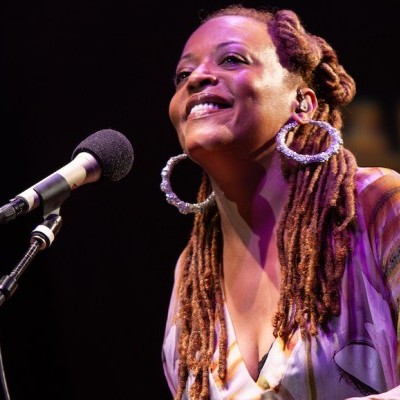
Wilson’s ability to connect to audiences helped her to win two Grammy awards and multiple other accolades. She was named an NEA Jazz Master in 2022.
Sep 3, 2026 10:44 AM
Cassandra Wilson, a singer, songwriter and producer who was one of the most acclaimed and successful jazz vocalists of…
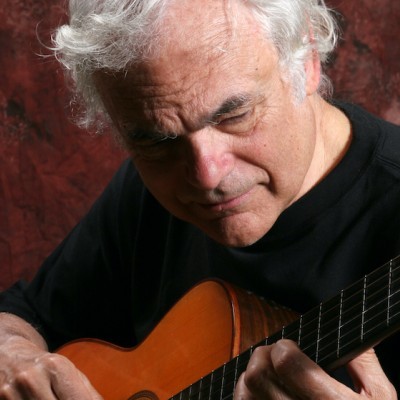
Bertoncini was a specialist and advocate for the nylon-string acoustic guitar, turning down high-profile opportunities that were unsuited to the sound and techniques that he used with that instrument.
Sep 1, 2026 11:06 AM
Gene Bertoncini, an esteemed jazz guitarist, composer, arranger and educator, died Aug. 29 at the Lillian Booth Actors…
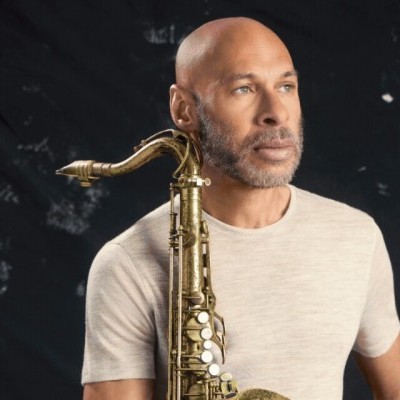
A solo concert by saxophonist Joshua Redman will close the first night of the Hyde Park Jazz Festival on Sept. 26.
Sep 22, 2026 12:26 PM
The Hyde Park Jazz Festival will take place for the 20th time on the final weekend of September 2026. Beginning half…
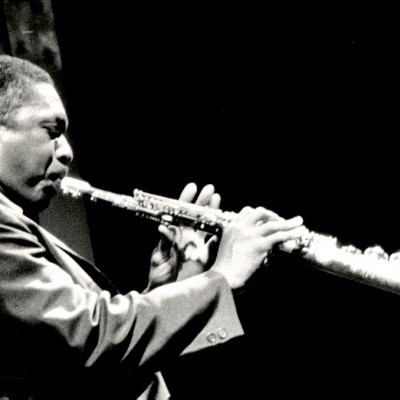
“It was just that suddenly … I could hear it,” Ravi Coltrane said of an epiphany he experienced during his late teens regarding his father’s music. “And it was almost like a calling, like something saying, ‘Hey, man, come on. It’s time to get serious.’ And the first time you really tune in and dial in and focus like that, it can be very life-changing.”
Sep 22, 2026 1:39 PM
Editor’s Note: Tomorrow, Sept. 23, is the 100th anniversary of John Coltrane’s birth. In honor of the tenor and…
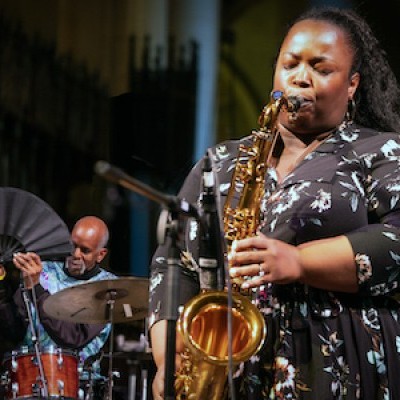
Camille Thurman took to the stage alongside bassist Kenny Davis and drummer Tommy Campbell for a rendition of Johnny Mercer’s “I’m An Old Cowhand” that recalled Rollins’ epochal 1957 trio outing Way Out West.
Oct 6, 2026 1:33 PM
As emcee Mark Ruffin noted at the commencement of an epic tribute to saxophonist Sonny Rollins at the Cathedral of…