Sep 3, 2026 10:44 AM
In Memoriam: Cassandra Wilson, 1955–2026
Cassandra Wilson, a singer, songwriter and producer who was one of the most acclaimed and successful jazz vocalists of…


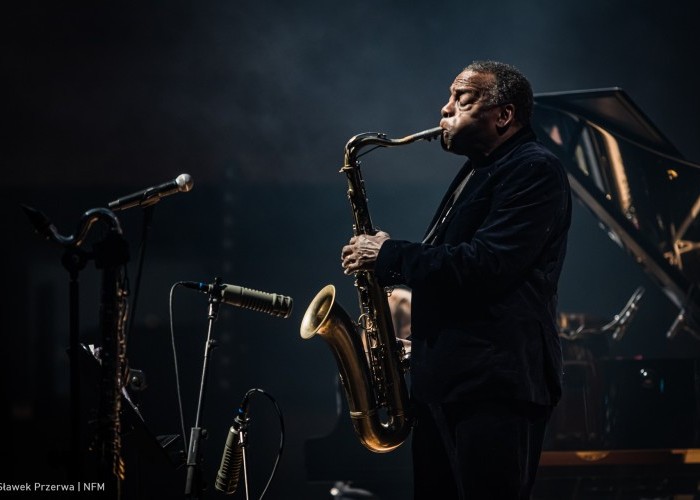
David Murray provided ample solos that took flight at controlled heights, then crept down to a deep reed-richness.
(Photo: Slawek Przerwa)Now that it’s completed its 22nd edition, the Polish festival Jazztopad (a play on “Listopad,” meaning November) is well beyond being a volatile newcomer but not yet settled into an august, reflective-sage state. For a Wrocław festival that’s proud of its dedication towards flashpoint improvisation, Jazztopad has also encouraged an annual template that includes side-running sequences of sets in public living rooms (weekend afternoons) and almost all-night basement happenings in the den of café Mleczarnia, hosted by the eternally free trio Sundogs.
Artistic director Piotr Turkiewicz reserves space for a meditationally oriented concert, and always guarantees specially commissioned works that unite out-there jazz artists with open-eared moderne classical outfits such as the Lutosławski Quartet. Jazztopad is also one of the participants in the multiple-festival-touring Melting Pot, where a cabal of artistic directors nominate an artist to represent among a quintet of spontaneous creators. The festival has also built long-lasting relationships with artists from Australia and Canada, as well as running a June manifestation in New York. Jazztopad courts wild unpredictability against a backdrop of feet-planted certainty: freedom improvised, but not out of a pit of complete anarchy.
Old masters of the tenor saxophone opened and closed the 10 days of Jazztop adperformances (Nov. 14–23), with David Murray’s new-ish quartet and Charles Lloyd’s Sky Quartet both performing in the grandiose concert hall setting of Jazztopad’s core venue, the National Forum For Music. Meanwhile, there were the expected discoveries to be made, as festival attendees were guided towards unfamiliar young artists who were given ample forums to lay out their sonic introductions.
Murray’s latest band has rapidly established its personal style, melodic but with flecks of improvisatory spirit, balancing the personalities of pianist Marta Sánchez and bassist Luke Stewart, the leader providing ample solos that take flight at controlled heights, then creep down to a deep reed-richness in the lower regions.
Lloyd is joined by pianist Jason Moran, again exploring differing zones of active attack or assured smoothness. The Sky Quartet set uncoiled via a slow gathering of forces, frequently introverted, but developing an old-school soulful blues groove towards its carefully constructed climax. Lloyd is a master of pacing, subtly moving in to lift up the audience’s spirits.
Neither of these leaders took to the late-night improvising stage at Mleczarnia, but Stewart showed up at the first post-midnight session, operating at his free-jazz extremes. The Polish-Australian host-trio Sundogs are masters of conducting these sets, leading their own forays and inviting players from the festival’s more formal gigs, as well as drawing in musicians from Wrocław and Polish cities beyond.
This year’s Melting Pot band brought together young artists from Poland, Germany, Austria, Norway and the Netherlands, on violin, baritone saxophone, drums, bass and keyboards. Their extended improvisation took place at the base of the steep stairs at the NFM’s entrance, concocting atmospheric conditions of moodsome changeability. A mist-ship trawled into the dock, baritone calling, violin shaping Polish folk swirls, as Katarzyna Kapela also vocalized with a similarly haunting traditional banshee cry. Argentinian Berliner Sofia Salvo (very aptly named) found a quivering reed vibrato, while Silesian pianist Hania Derej explored free barrelhouse abstraction. Central focus would switch naturally between each player, slow and thoughtful, between mild drone and folk balladry. They became unmoored after around 40 minutes, but soon coalesced for a finale.
Kahil El’Zabar’s Ethnic Heritage Ensemble played on the main hall’s stage, but with the audience also seated around its rear chorus rows. Following a few gigs that resided in a placid corner of introversion, it was invigorating to witness the extroverted charms of drummer-singer-leader El’Zabar, inciting a joyous appreciation of free-groove, even if some of the EHE’s repertoire is inclined towards the obvious.
The EHE’s compelling saxophonist Alex Harding turned up during an afternoon apartment session, teaming up for a doubled baritone throwdown with Salvo, freshly tipped out of the Melting Pot. They helped produce a set of colossal free-jazz power, locking horns down at the buffalo end of the noise-plain spectrum. Sundogs drummer Samuel Hall hit the thin-sticked whipcrack trigger for this blow-out escalation of slippery honking.
Back on the reversed main stage, the Danish guitarist Jakob Bro premiered his Jazztopad commission “Fox On Hill,” featuring trumpeter Wadada Leo Smith, along with percussionist Midori Takada and The Polish Cello Quartet. The composer’s own guitar was thankfully a shrouded e-bow presence, as Bro sat relaxed, governing the more prominent contributions of his interpreters. There wasn’t much compositional substance, but it was Smith’s measured and crisply articulated phrases that provided glowing jet-stream ascendance, although the four dolorous cellos often seemed either sparsely used or not very integrated, fenced off in their own zone. Takada’s marimba sequence also sounded isolated, as if this work was built by antisocial elements, each sitting alone, with little dynamic overlap.
The Lutosławski Quartet fared much better with alto saxophonist Immanuel Wilkins, also commissioned by the festival to pen “Ethnic Cleansing: An American Tradition,” which was calmer than its title might suggest. Wilkins maintained his circuitous jazz tone unwindings, sometimes continuing alone as the string quartet paused, diligently persisting with a logically constructed sequence. When bonded with the strings, Wilkins upheld Third Stream notions, but carved out a very specific ratio-balance between jazz and moderne classical styles. His arresting work was notable for its highly individualistic approach, genuinely avoiding the tendencies often displayed within such musical meetings.
A particular highlight came with Kneejerk, a foursome from Vancouver, playing the first in a sequence of “formal” concerts down in the Mleczarnia basement, prior to the later improvising sessions. Their second album, The Speed Of Dark, provided much of the meaty mayhem. Kneejerk wisely dedicated “Sun Gods” to Sundogs, a restful opener that steadily climbed to power, led by flowering guitar and Nord keyboard. Not dissimilar to the now-departing Bad Plus, this crew tipped crazed soloing statements inside themes of restless groove complexity. Newest member guitarist Cole Schmidt toe-tapped FX spasms, as Brian Horswill’s Nord evoked broken glass, running bass kept up by Karlis Silins, as extreme dynamism roles were casually tossed from player to player: jazz structures with uppers and no downers. Duo alliances were fleetingly engaged, as a heavy-duty rock cargo was unloaded, with corrosive drippings galore. Of course, these Kneejerkers were prime movers during the following all-nighter session, as well as the next day’s more studied invasions of family apartments. Stamina is a requisite for all at Jazztopad.
The next night’s basement gig revolved around the new Presencia album by a trio with Camila Nebbia (tenor saxophone), James Banner (bass) and Moritz Baumgärtner (drums). Unusually, the Argentinian Berliner Nebbia provided compositions here, in league with the trio, whereas she’s mostly known as a free improviser. Spontaneity was still welcome, but the pieces usually held a poised formation, as reeds, bass and drums sensitively negotiated planned harmonies and structures, sonically arrayed in a very visual manner. Striding bass was led into slowdown by Nebbia, with her vibrato oscillations, a surprise calmness intervening. This music is spacious and subtle, with shimmers and splashes, soft bondings and tuned timbral drumskins. Rapid-fire tenor worked though a panoply of tones and textures, switching from unctuous flow to broken scatter.
The third act in the basement early slot arrived from Amsterdam, impressing with a twinned bass clarinet front line, along with drums, upright bass and a heavily processed electric bass guitar. Önder might have lacked aggressive forcefulness, surrounded by so many power-upping ensembles, but their cerebral colonization was more incrementally insidious. Their heavily composed aura reeked of music skool, but was nevertheless tonally gripping. Önder were formally organized, riffing in tandem, but this debuting material possessed an alternative strength in quiet focus. DB
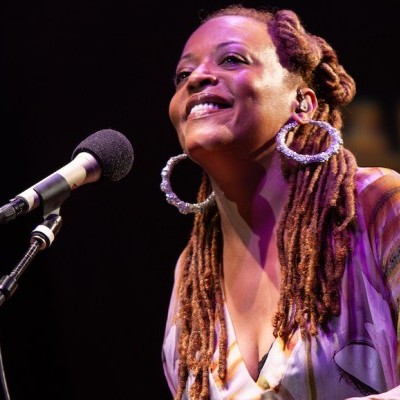
Wilson’s ability to connect to audiences helped her to win two Grammy awards and multiple other accolades. She was named an NEA Jazz Master in 2022.
Sep 3, 2026 10:44 AM
Cassandra Wilson, a singer, songwriter and producer who was one of the most acclaimed and successful jazz vocalists of…
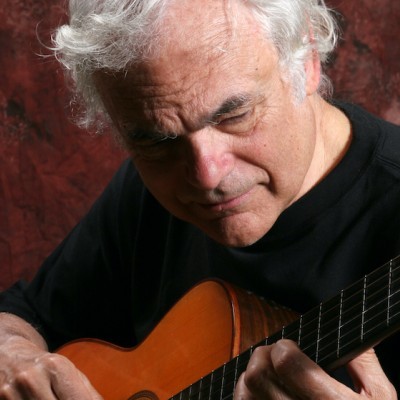
Bertoncini was a specialist and advocate for the nylon-string acoustic guitar, turning down high-profile opportunities that were unsuited to the sound and techniques that he used with that instrument.
Sep 1, 2026 11:06 AM
Gene Bertoncini, an esteemed jazz guitarist, composer, arranger and educator, died Aug. 29 at the Lillian Booth Actors…
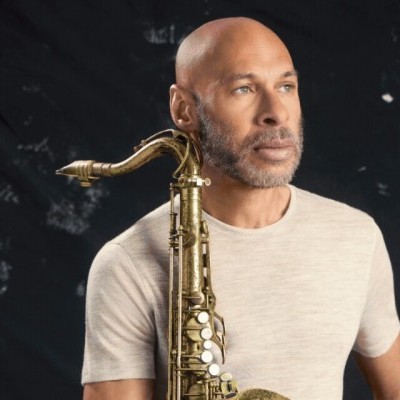
A solo concert by saxophonist Joshua Redman will close the first night of the Hyde Park Jazz Festival on Sept. 26.
Sep 22, 2026 12:26 PM
The Hyde Park Jazz Festival will take place for the 20th time on the final weekend of September 2026. Beginning half…
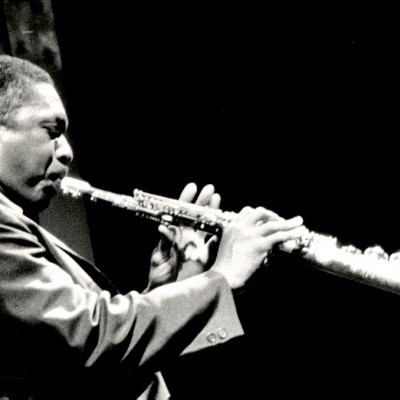
“It was just that suddenly … I could hear it,” Ravi Coltrane said of an epiphany he experienced during his late teens regarding his father’s music. “And it was almost like a calling, like something saying, ‘Hey, man, come on. It’s time to get serious.’ And the first time you really tune in and dial in and focus like that, it can be very life-changing.”
Sep 22, 2026 1:39 PM
Editor’s Note: Tomorrow, Sept. 23, is the 100th anniversary of John Coltrane’s birth. In honor of the tenor and…
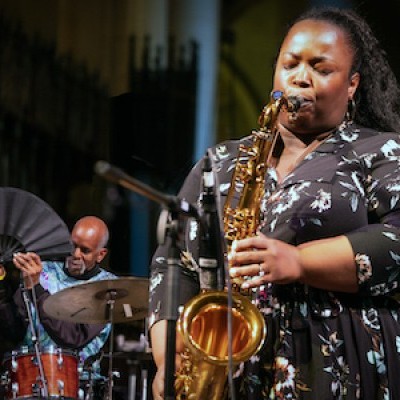
Camille Thurman took to the stage alongside bassist Kenny Davis and drummer Tommy Campbell for a rendition of Johnny Mercer’s “I’m An Old Cowhand” that recalled Rollins’ epochal 1957 trio outing Way Out West.
Oct 6, 2026 1:33 PM
As emcee Mark Ruffin noted at the commencement of an epic tribute to saxophonist Sonny Rollins at the Cathedral of…