Sep 3, 2026 10:44 AM
In Memoriam: Cassandra Wilson, 1955–2026
Cassandra Wilson, a singer, songwriter and producer who was one of the most acclaimed and successful jazz vocalists of…


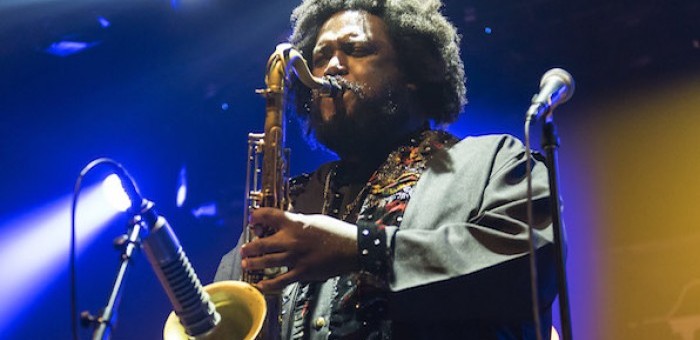
Kamasi Washington performs material from his three-CD opus The Epic at Webster Hall in New York on Feb. 24. (Photo: ©Jack Vartoogian/FrontRowPhotos)
(Photo: )The choice of Webster Hall as a venue was telling, and not just because Washington has become too big a draw for a jazz club. The East Village concert hall usually presents rock and indie shows, and the mostly young and white audience for Washington’s show seemed not especially different from the venue’s typical fans.
Part of the appeal may stem from the desire of every generation to have its own jazz deity. In the ’60s and ’70s, the Baby Boomers had Miles and Coltrane, not to mention Hendrix. It’s a little too soon to say, but for the moment, the mantle appears to have fallen on Washington.
The show began with a brief opening set by keyboardist Marc Cary, the pianist and electronic groove-master who warmed up the audience using just his computer and keyboard rig, and a little help from trumpeter Igmar Thomas. Cary and Thomas established a suitably cosmic/grooving mood with digital bleeps and washes underpinning sinuous electric piano lines.
When Washington was introduced and emerged from the wings, wearing a black dashiki with a long, spangled scarf with celestial designs, the overflow crowd went wild. They continued to roar their approval for every solo, no matter how free or abstruse the playing got, connecting on an emotional level.
For this gig, Washington fronted a percussion-heavy septet, a smaller version of his normal 10-piece group. The scaled-down live show was something of an antidote to the “more is more” aesthetic of The Epic, with tighter solos and a cleaner ensemble sound than on the album.
The band consisted of two well-coordinated drummers (Ronald Bruner Jr. and Tony Austin), a bassist (Miles Mosley), keyboardist (Brandon Coleman), trombonist (Ryan Porter) and singer (Patrice Quinn)—all of whom were outstanding. They were augmented by two guests, trumpeter Thomas, and Kamasi’s father, Rickey Washington, on flute and soprano sax.
Wisely, the group did not attempt to play the entire Epic, but included several of its strongest songs. They began, as on the album, with the anthemic “Changing Of The Guard,” with strong solos by Porter and Washington.
In “Askim,” Quinn’s lilting voice carried the melody well, replacing the somewhat bombastic choir that reinforces the melody in the climax of the recorded version. Keyboardist Coleman, who Washington refers to as “Dr. Boogie,” was featured, switching from piano to keytar in order to play a screaming synth solo.
From that point on, Washington was a model of generosity and humility, highlighting tunes by his associates. “Abraham,” by Mosley, featured the bassist’s soulful singing and made extensive use of an array of effects pedals; the engaging funk-rock tune even featured an upright bass solo with wah-wah effects.
A compelling new tune by Coleman, “Giant Feelings,” sung by Quinn and including another howling keytar solo, was closer to stadium rock than jazz. “Henrietta, My Hero,” Washington’s song about his grandmother, featured his dad on flute, as well as a moving vocal by Quinn. It ended with a quiet, reflective flute and piano coda that was easily one of the most touching moments of the evening. “Re-Run,” a brisk jazz-funk tune from the album, was eminently danceable, and featured a funky tenor solo by Washington, his best of the night.
If Washington’s music is a throwback to the ’70s, his showmanship is also a throwback to the same era: That’s when jazz-rock achieved the grandeur and spectacle necessary to attract a mass audience, as practiced by groups like Weather Report and Return to Forever.
Washington and the band were recently booked at the Coachella Festival in April and Bonnaroo in June, and will make their Newport Jazz Festival debut in July. Perhaps Washington and friends, along with the equally popular Snarky Puppy, are the “gateway drugs” for a new generation of jazz fans. If so, more power to them. Welcome to the party.
(Note: To read a 1968 Classic Interview with DownBeat Hall of Fame inductee Jimi Hendrix, click here.)
—Allen Morrison
Page 1 | Page 2
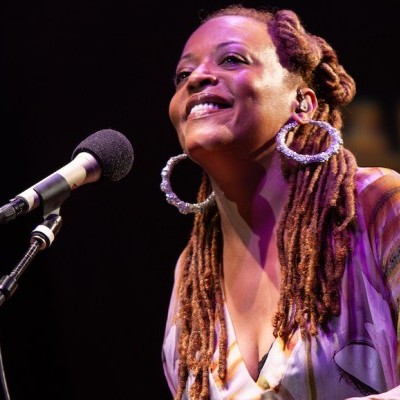
Wilson’s ability to connect to audiences helped her to win two Grammy awards and multiple other accolades. She was named an NEA Jazz Master in 2022.
Sep 3, 2026 10:44 AM
Cassandra Wilson, a singer, songwriter and producer who was one of the most acclaimed and successful jazz vocalists of…
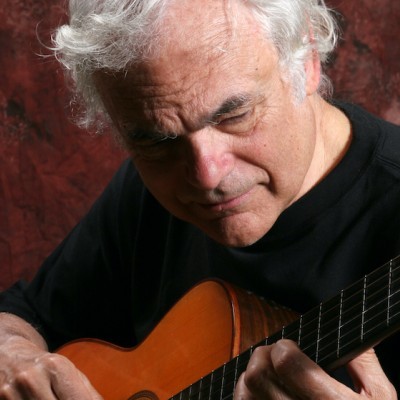
Bertoncini was a specialist and advocate for the nylon-string acoustic guitar, turning down high-profile opportunities that were unsuited to the sound and techniques that he used with that instrument.
Sep 1, 2026 11:06 AM
Gene Bertoncini, an esteemed jazz guitarist, composer, arranger and educator, died Aug. 29 at the Lillian Booth Actors…
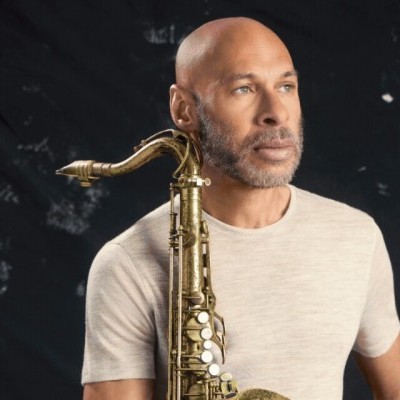
A solo concert by saxophonist Joshua Redman will close the first night of the Hyde Park Jazz Festival on Sept. 26.
Sep 22, 2026 12:26 PM
The Hyde Park Jazz Festival will take place for the 20th time on the final weekend of September 2026. Beginning half…
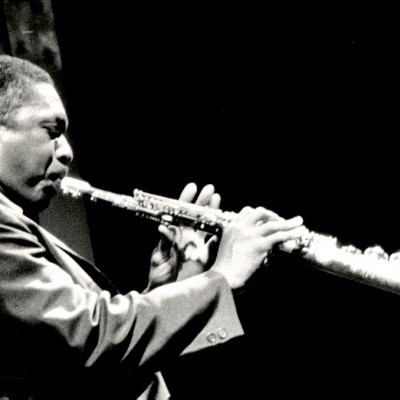
“It was just that suddenly … I could hear it,” Ravi Coltrane said of an epiphany he experienced during his late teens regarding his father’s music. “And it was almost like a calling, like something saying, ‘Hey, man, come on. It’s time to get serious.’ And the first time you really tune in and dial in and focus like that, it can be very life-changing.”
Sep 22, 2026 1:39 PM
Editor’s Note: Tomorrow, Sept. 23, is the 100th anniversary of John Coltrane’s birth. In honor of the tenor and…
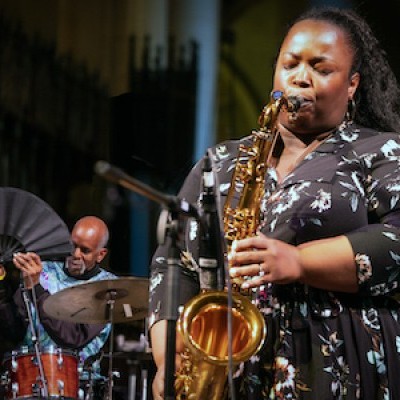
Camille Thurman took to the stage alongside bassist Kenny Davis and drummer Tommy Campbell for a rendition of Johnny Mercer’s “I’m An Old Cowhand” that recalled Rollins’ epochal 1957 trio outing Way Out West.
Oct 6, 2026 1:33 PM
As emcee Mark Ruffin noted at the commencement of an epic tribute to saxophonist Sonny Rollins at the Cathedral of…