Sep 3, 2026 10:44 AM
In Memoriam: Cassandra Wilson, 1955–2026
Cassandra Wilson, a singer, songwriter and producer who was one of the most acclaimed and successful jazz vocalists of…


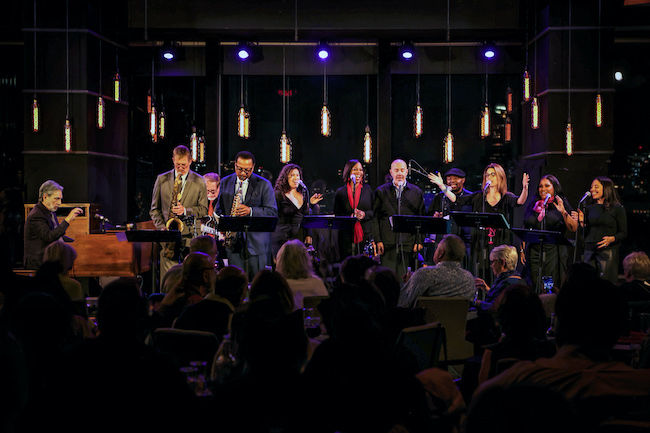
LeDonne convened saxophonists Eric Alexander and Vincent Herring, percussionist Daniel Sadownick, guitarist Mark Stryker, drummer Jason Tiemann and singers Carolyn Leonhart, Keith Anthony Fluitt, Nicki Richards, Jamie Leonhart, JD Walter, Jamie Staevie Ayres and Tanesha Gary to toast his 21-year-old daughter, Mary.
(Photo: Michael Jackson)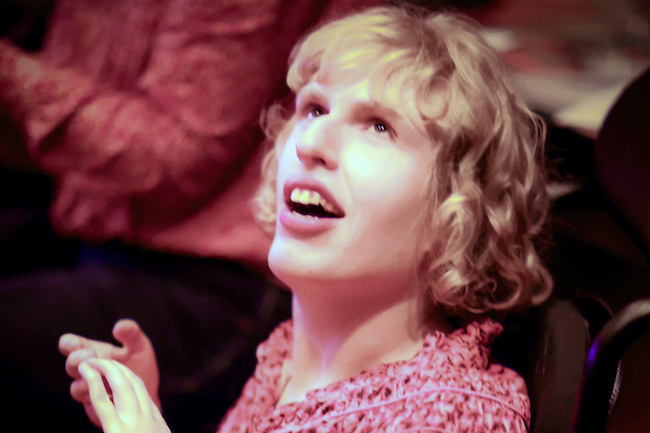
Mary LeDonne attended the Oct. 26 celebration with her mother, Margaret LeDonne. “One of the things we really can’t stand is people expressing pity for us because of Mary’s condition,” Mike LeDonne said, before launching into the title cut from his 2024 album Wonderful, dedicated to his daughter.
(Photo: Michael Jackson)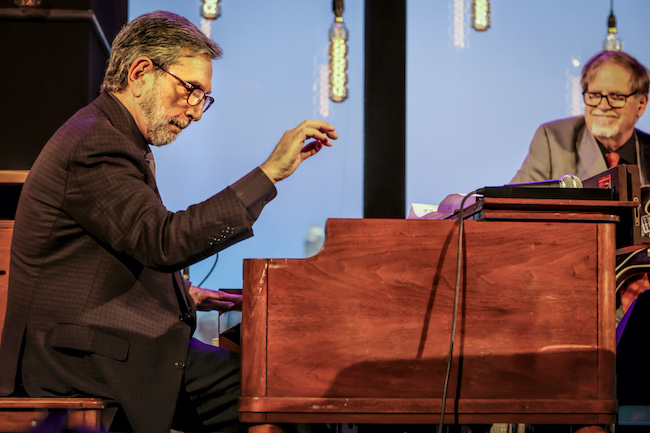
MIke LeDonne on stage with guitarist Dave Stryker and others at Dizzy’s Club on Oct. 26.
(Photo: Michael Jackson)Pianist/organist Mike LeDonne, who began his leader career alongside Gary Smulyan and Tom Harrell on the Criss Cross label in 1988, released the 25th album under his own name, Wonderful (Cellar Music), in 2024. It featured his aptly named Groover Quartet with Peter Bernstein, Eric Alexander and Joe Farnsworth, plus alto sax firebrand Vincent Herring, percussion Daniel Sadownick and the addition of an 11-piece gospel choir led by Carolyn Leonhart.
There’s ample evidence of LeDonne’s bruising B-3 mastery on the album, including southpaw pugnacity worthy of Jimmy Smith on the rousing opener “Let Us Go.” The fleet closer, “Genesis,” kicks out with the hum of his boot-driven bass line and features considerable dexterity from Bernstein and Alexander, a virtuoso drum solo from Farnsworth and further ferocious organ-ism.
LeDonne has shrugged at DownBeat Poll results when listed contenders are comparative dilettantes. There “Ain’t Nothing Like The Real Thing” to quote the Ashford and Simpson hit from Wonderful, which swung hard at his recent performance at the picturesque Dizzy’s in New York.
“I’m not one to put stock in polls, seeing that my dear friends and great masters like Harold Mabern, Bob Cranshaw and Mickey Roker were never celebrated in them,” commented LeDonne over email. “I remember pianist extraordinaire Mulgrew Miller being asked why his name had not been in the piano poll. He came back with, ‘I guess I’m not a polecat.’”
Active on social media weighing all manner of societal inequity, LeDonne recently posted classic stories about his auditions with such historic bandleaders as Benny Goodman and Sonny Rollins. He’s also performed with Milt Jackson, Benny Golson, Bobby Hutcherson and George Coleman during a career that’s spanned a couple hundred recordings. “I have never placed even last in the piano poll in almost 45 years of being out here on the world stage,” LeDonne commented ruefully. “The only time my name ever appeared in a DownBeat poll was for my organ playing. Ironically, when I won the Rising Star [category] I was in my 50s — LOL!”
It’s no biggie, just a matter of amusement. “I’ve been in there every year since, which I appreciate … usually towards the top, but behind people who really don’t even play organ, maybe a solo with their right hand only on one recording, plus people who never played jazz in their lives. It’s so ridiculous it’s just funny to me. I’m happy to get any attention at all because I certainly don’t play music to win polls.”
Completely self-taught on organ (prior to piano tutelage with Jaki Byard at NEC), LeDonne smelled early on the rich gravy of Jack McDuff, “Groove” Holmes, Jimmy McGriff and the Mighty Burner, Charles Earland, and also dug boppers Don Patterson, Mel Rhyne and Larry Young. “Dr. Lonnie Smith was a major influence because I was lucky to see him play more than anyone else. We became good friends. I also loved Shirley Scott when I was younger and Wild Bill Davis (a seminal Jimmy Smith influence), who played what I call big band style organ.”
The holy rollin’, testifyin’ passion of many organists led LeDonne to gospel music, and he took the rare opportunity to feature seven gospel singers on the final run of his testimonial residency at Dizzy’s in October. After celebrating his long association with Golson and his Heavy Hitters group on successive evenings, for his 69th birthday on Sunday, Oct. 26, LeDonne convened Alexander, Herring, Sadownick, guitarist Dave Stryker and drummer Jason Tiemann, together with singers Leonhart, Keith Anthony Fluitt, Nicki Richards, Jamie Leonhart, JD Walter, Jamie Staevie Ayres and Tanesha Gary to toast, not himself, but his 21-year-old daughter Mary Patterson-LeDonne.
Mary was present at Dizzy’s, chaperoned in a wheelchair by her mother, Margaret, LeDonne’s beloved wife of 33 years. As this writer waited outside the all-gender restroom shortly before the start of the show, the door opened and closed three times. Margaret was maneuvering Mary’s chair to make their exit.
Mary was born with a rare syndrome called Prader-Willi, which has many complications. “It comes with a wide spectrum of things that may or may not set in,” LeDonne shared later, “almost like autism, but in different ways. We were told all kinds of scary things when she was born, but as it turns out very little of what they told us came to pass.”
Seated close to Mary during her showtime dinner at Dizzy’s, I was witness to the significant challenges her disabilities present for her caregiving parents, yet LeDonne will have none of it, as he made clear onstage during the concert. “One of the things we really can’t stand is people expressing pity for us because of Mary’s condition,” he said, before launching into the eponymous cut from the album, dedicated to his daughter. “Mary is absolutely wonderful, and being around her completely changed my life.”
LeDonne underscored his support for issues of diversity that have been scoffed at by some within the current political climate. “Diversity is not some dirty word,” he stated forcefully to the packed house.
He and Margaret — and Mary — founded and have been involved, for a decade now, in an inspirational initiative to raise awareness and normalize attitudes towards people with disability. The annual Disability Pride Parade marches from Madison Square to Union Square on the second Sunday in October and has included up to 11,000 participants, including many famous musicians. “We had a stage set up for a three-hour festival with performances from people in the disability community. The reason I was able to pull it off is because of the love I was given by my own community, the jazz community,” emphasized LeDonne. “The only thing I could think of to raise the money — parades are expensive — was to put on a concert by jazz luminaries I was lucky to get to play with and get to know in my journey as an artist. I called masters like Ron Carter, Benny Golson, Wynton Marsalis, Jimmy Cobb, George Coleman, Louis Hayes, Bob Cranshaw, Kenny Barron and Roberta Gambarini … younger masters like Christian McBride, Brad Mehldau, Roy Hargrove, Eric Alexander, Bill Charlap and Renee Rosnes. By the third year I had jazz greats calling me to say they wanted to participate. I’d ask them, ‘You know it’s for free, right?’ I couldn’t believe the response.”
LeDonne charged $100 a ticket, all proceeds pertaining to the parade. “I will never forget those concerts as long as I live. The love was palpable from both artists and public. Each artist would play two songs — the music was always amazing. This was by far the greatest accomplishment of my life because it directly helped people from my daughter’s community.”
The first year the parade was held in the summer, and New York Mayor Bill de Blasio attended and declared that July “Disability Pride Month.”
“The disabled community had been in the shadows for far too long,” stated LeDonne in his reflective email. “They came out in large numbers, down the street with marching bands, everybody had a blast, declaring, ‘We’re loud and we’re proud!’ Once that happened, all the stereotypes, divisions and fear disappeared. They became nothing more than human beings hanging out, having a ball. Bringing people together was the plan — it worked like a charm.”
Back at Dizzy’s the group grooved hard on “Let Us Go” with an insistent ‘Come on, go with me’ refrain from the choir, which LeDonne said he imagined as a rallying cry for the non-verbal Mary, in her capacity as the parade’s grand marshal.
Ripping solos from Alexander, Herring and Stryker (beautiful guitar tone) abounded, with climactic dynamics on the ants-in-pants, Eddie Harris-styled “Put It Back,” fueled by Tiemann and Sadownick. The leader proved orchestral, pumping double-time bass with feet while trampolining right hand over swirling sustain in the left — state-of-the-art Hammond heroics — culminating in a cut-time breakdown.
LeDonne claimed “Put It Back” was dubbed “the most dope clean-up song” at Bank Street pre-school, where teacher Margaret also oversees Special Ed kids. “Mary prepared her for that but she was born to do it,” LeDonne says of his wife’s career.
As the band swaggered through “Bridge Over Troubled Water” with an upbeat shuffle, Sadownick adding tambourine, Mary swayed her head backwards and forwards gazing rapturously at the ceiling to the sanctifying choir; later, arms flailing, she’d catch mom’s glasses and send them flying.
“She’s heard me play piano since she was in the womb; music was the source of our first real communication,” LeDonne remembered after the show. “There’s a melody I played for her every day when she was no more than 1 or 2 — she began to react, becoming very calm, starting to smile. She knew the song was something special between us. The first of many incredible experiences seeing how life is when you’re a different level than the typical person.”
LeDonne sees it as living life in a different key. “It may seem harder at first but then you realize there are different kinds of beauty that only exist in that key. I eventually named the song ‘Listen’ and recorded it years later as the first movement of Suite Mary.”
Early on Mike and Margaret would sit Mary on the piano bench and she would pluck at the keys. As she got older they noticed she’d purposefully repeat melodic fragments and bass lines that elicited certain moods and sounds — they realized she was making her own music.
“She didn’t walk until she was 5,” recalled LeDonne. “Margaret and I would stand her up at one end of the room and call out to her, ‘Come to Mommy and Daddy,’ but she wouldn’t move.”
Margaret corroborated via email: “Her first steps were towards Mike’s Steinway, not toward us.” LeDonne opened the lid of the keyboard after standing Mary at a distance from the piano and she took her first steps to get close to the instrument. “Now we have to tape the lid shut to get her to stop because she can sit there for an hour, playing her little songs with her head moving around like a great artist, feeling every note,” he said. “She’s definitely an artist at heart.”
Grateful for his storied career playing with the masters of jazz from different eras, LeDonne considers it a privilege to make a living getting to do what he does. “My music is for the people,” he asserts, and that’s the only “poll” that matters to him.
“Make Someone Happy” the penultimate track from Wonderful, might be the manifesto. He and Margaret have certainly achieved that end by the thousand, with the uplifting parades in Manhattan.
Despite a certain attitude about what the real deal may constitute with regard to the music, notwithstanding the inherent struggles of the jazz life itself, LeDonne has learned his greatest lessons being the father of Mary.
“You start to see, she’s just different, not broken. It may take a little extra effort to get into her world and a little extra work to take care of her, but when you make the effort, what you discover … is a gift that only getting to know her can give. The truth is that disabilities are not good or bad, they just are. The disabled are not lesser than the able-bodied — they are simply another aspect of the diversity of humanity.” DB
Wilson’s ability to connect to audiences helped her to win two Grammy awards and multiple other accolades. She was named an NEA Jazz Master in 2022.
Sep 3, 2026 10:44 AM
Cassandra Wilson, a singer, songwriter and producer who was one of the most acclaimed and successful jazz vocalists of…
Bertoncini was a specialist and advocate for the nylon-string acoustic guitar, turning down high-profile opportunities that were unsuited to the sound and techniques that he used with that instrument.
Sep 1, 2026 11:06 AM
Gene Bertoncini, an esteemed jazz guitarist, composer, arranger and educator, died Aug. 29 at the Lillian Booth Actors…
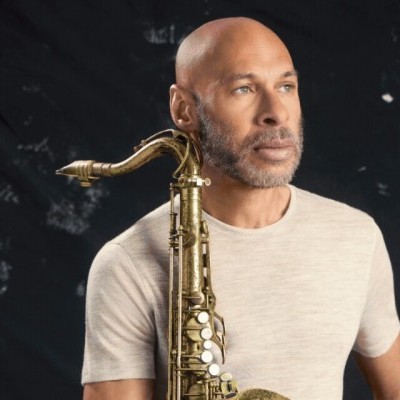
A solo concert by saxophonist Joshua Redman will close the first night of the Hyde Park Jazz Festival on Sept. 26.
Sep 22, 2026 12:26 PM
The Hyde Park Jazz Festival will take place for the 20th time on the final weekend of September 2026. Beginning half…
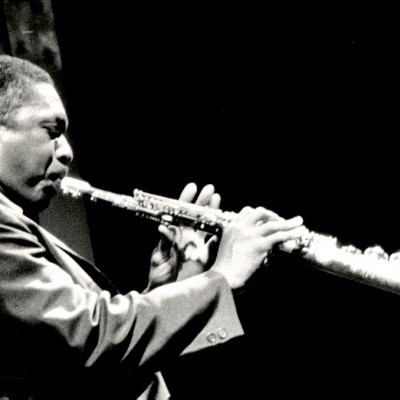
“It was just that suddenly … I could hear it,” Ravi Coltrane said of an epiphany he experienced during his late teens regarding his father’s music. “And it was almost like a calling, like something saying, ‘Hey, man, come on. It’s time to get serious.’ And the first time you really tune in and dial in and focus like that, it can be very life-changing.”
Sep 22, 2026 1:39 PM
Editor’s Note: Tomorrow, Sept. 23, is the 100th anniversary of John Coltrane’s birth. In honor of the tenor and…
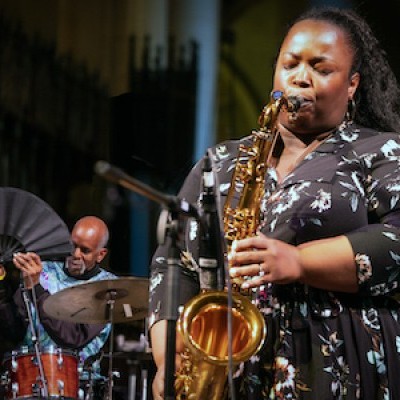
Camille Thurman took to the stage alongside bassist Kenny Davis and drummer Tommy Campbell for a rendition of Johnny Mercer’s “I’m An Old Cowhand” that recalled Rollins’ epochal 1957 trio outing Way Out West.
Oct 6, 2026 1:33 PM
As emcee Mark Ruffin noted at the commencement of an epic tribute to saxophonist Sonny Rollins at the Cathedral of…