Sep 3, 2026 10:44 AM
In Memoriam: Cassandra Wilson, 1955–2026
Cassandra Wilson, a singer, songwriter and producer who was one of the most acclaimed and successful jazz vocalists of…


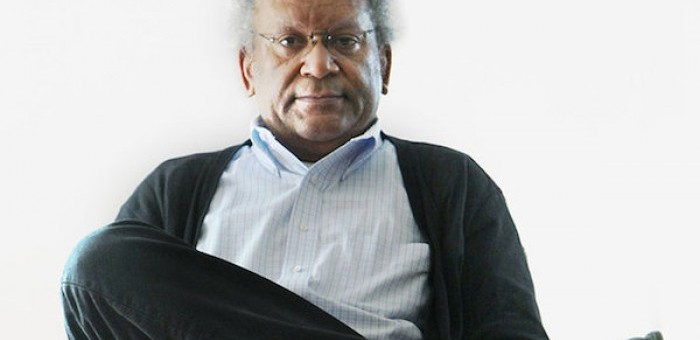
Prolific saxophonist Anthony Braxton is the subject three box sets due out April 1. (Photo: Courtesy of the Tri-Centric Foundation)
(Photo: )Last year was a busy one for the irrepressible Anthony Braxton. The saxophonist’s activities included a University of Alabama residency, a presentation of his Sonic Genome project at Italy’s Torino Jazz Festival and six days of various combinations at the Doek Festival in Amsterdam, just to name a few. It was a year filled with an unusual amount of concert activity for the radical conceptualist and avant-garde hero.
It was also the year Braxton celebrated his 70th birthday, and if his 2016 concert calendar isn’t quite so crowded, it’d be a mistake to think the man is any less busy. (Fortunately there are multiple active ensembles that perform his work.)
April 1 will be a big date for Braxton and his legion of fans. It will be the first of two days at the Big Ears festival in Knoxville, Tennessee, where he will appear with his 10+1tet and then in a very promising trio with vocalist Kyoko Kitamura and cornetist Taylor Ho Bynum.
Additionally, April 1 is the release date for three new box sets from the Tri-Centric Foundation (a nonprofit that supports Braxton’s ongoing legacy). The sets highlight three very different facets of Braxton’s work, and cumulatively represent nearly 14 hours of material. They are the reedist’s most accessible releases in years—even if they aren’t exactly easy listening.
Trillium J (The Unconfessionables) is Braxton’s latest opera, presented in four acts and four CDs (the included Blue-Ray disc of a concert performance at Roulette in Brooklyn was not available at press time). Braxton is hardly a conventional storyteller, and in fact he outlines 14 manners of breaking the time continuum in the lengthy liner notes here. But one thing that might often be missed in his dense operas, rife with social commentary and cosmic consciousness, is that they are often quite funny.
Trillium J wears its charm on its sleeve, with each of the acts rooted firmly in a different variety of genre fiction. Using Southern gothic, children’s fable, murder mystery and courtroom drama settings, Braxton crafts scenes about group dynamics and the conventions of social interaction. In the process, he provides some exceptional scores that should firmly place him alongside Robert Ashley (1930–2014) and Philip Glass as adventurous proponents of the operatic form.
While his librettos tend to be written in a sung-speech common to much contemporary opera, there are some striking passages of multiple-voice arrangements. And while the music is through-composed and played by the 37-piece Tri-Centric Orchestra, there are sections that deliver the jazz energy that always seems to underpin his music. The whole work, in fact, is dedicated to Sun Ra.
3 Compositions is a set of works (over three CDs) in one of Braxton’s most recent strategies for decentralizing his own compositions. Where his Ghost Trance Music allowed subsets of the band to play other of his pieces within the larger ensemble framework, Echo Echo Mirror House Music arms the musicians with digital players loaded with Braxton’s records so they can actually select performances from the past to drop in midstream.
The result is somewhat cacophonous and, depending on the listener’s taste, might seem exhilarating or perhaps disorienting. Braxton has been employing this system for several years now and has found opportunities for humor in the mix, playing off incongruous audio qualities, abrupt stops and even misplaced applause.
The music unsurprisingly sounds much bigger than the septet actually playing it—a group that includes Taylor Ho Bynum, guitarist Mary Halvorson and violist Jessica Pavone, all players who are well-versed in the intricacies of Braxton’s systems.
Despite his reputation for being an dyed-in-the-wool avant-gardist, Braxton has carried the torch for earlier generations of jazz musicians throughout his career. Quintet (Tristano) 2014 continues his traditionalism with seven discs (recorded in studio in three days) of loving interpretation of the great pianist Lennie Tristano (1919–’78), a pioneer who broke from the constraints of bop into freer playing.
The saxophone duties here are given over to Jackson Moore and André Vida, while Braxton positions himself at the piano. The band is the same as the one that recorded Quintet (Tristano) 1997, but with Eivind Opsvik replacing Chris Lightcap on bass.
One of the most remarkable recordings of Braxton on the piano—and there aren’t many—is Piano Quartet, Yoshi’s 1994 (released by Music & Arts in 1996). Over the course of that four-disc set, saxophonist Marty Ehrlich, bassist Joe Fonda and drummer Arthur Fuller played pieces by Dave Brubeck, John Coltrane, George Gershwin, Eric Dolphy, Dizzy Gillespie, Thelonious Monk, Billy Strayhorn and others, with Braxton at the piano.
It was the first time many had heard him on the piano, and it was a shock. He played the tunes with a deep knowledge and a surprising bit of muscle. His touch seems to have softened in the ensuing two decades (good news for the detractors of the ’94 album), although there is the occasional smack-down, as in a wonderful take on “Jazz Of Two Cities.”
As CD sales continue to flag, it’s a bold move to release three box sets on the same day, but Braxton is nothing if not bold. It’s impossible to predict how many listeners will end up with all three in their collections. But for “friendly experiencers” (as Braxton likes to say) who like to binge listen, it wouldn’t be the worst way to spend the better part of a Sunday.
(Note: To read a review of a tribute concert to Anthony Braxton by the Wet Ink Ensemble, click here.)
—Kurt Gottschalk
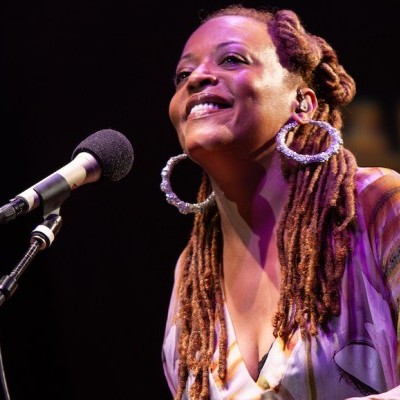
Wilson’s ability to connect to audiences helped her to win two Grammy awards and multiple other accolades. She was named an NEA Jazz Master in 2022.
Sep 3, 2026 10:44 AM
Cassandra Wilson, a singer, songwriter and producer who was one of the most acclaimed and successful jazz vocalists of…
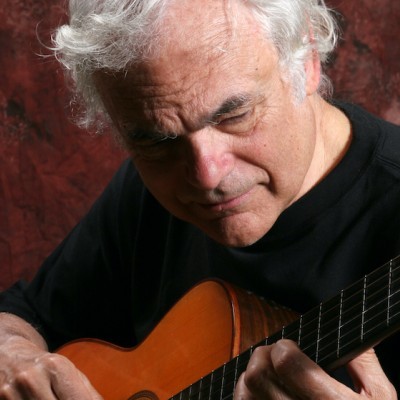
Bertoncini was a specialist and advocate for the nylon-string acoustic guitar, turning down high-profile opportunities that were unsuited to the sound and techniques that he used with that instrument.
Sep 1, 2026 11:06 AM
Gene Bertoncini, an esteemed jazz guitarist, composer, arranger and educator, died Aug. 29 at the Lillian Booth Actors…
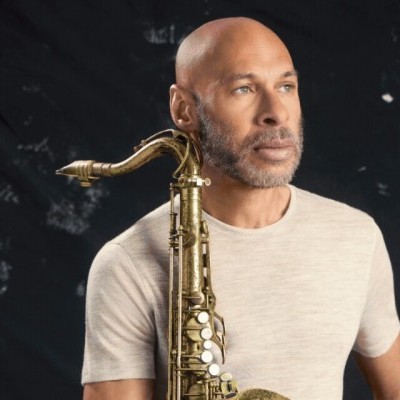
A solo concert by saxophonist Joshua Redman will close the first night of the Hyde Park Jazz Festival on Sept. 26.
Sep 22, 2026 12:26 PM
The Hyde Park Jazz Festival will take place for the 20th time on the final weekend of September 2026. Beginning half…
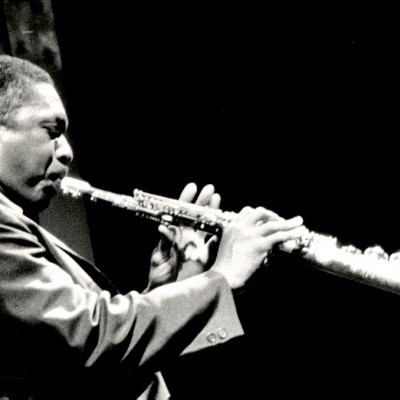
“It was just that suddenly … I could hear it,” Ravi Coltrane said of an epiphany he experienced during his late teens regarding his father’s music. “And it was almost like a calling, like something saying, ‘Hey, man, come on. It’s time to get serious.’ And the first time you really tune in and dial in and focus like that, it can be very life-changing.”
Sep 22, 2026 1:39 PM
Editor’s Note: Tomorrow, Sept. 23, is the 100th anniversary of John Coltrane’s birth. In honor of the tenor and…
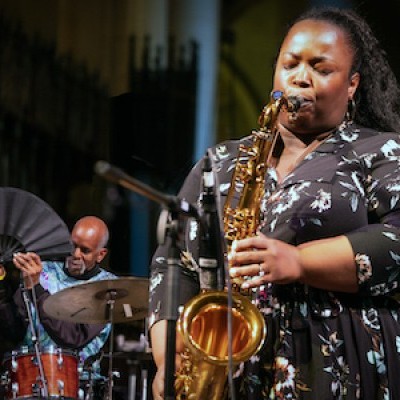
Camille Thurman took to the stage alongside bassist Kenny Davis and drummer Tommy Campbell for a rendition of Johnny Mercer’s “I’m An Old Cowhand” that recalled Rollins’ epochal 1957 trio outing Way Out West.
Oct 6, 2026 1:33 PM
As emcee Mark Ruffin noted at the commencement of an epic tribute to saxophonist Sonny Rollins at the Cathedral of…