Sep 3, 2026 10:44 AM
In Memoriam: Cassandra Wilson, 1955–2026
Cassandra Wilson, a singer, songwriter and producer who was one of the most acclaimed and successful jazz vocalists of…


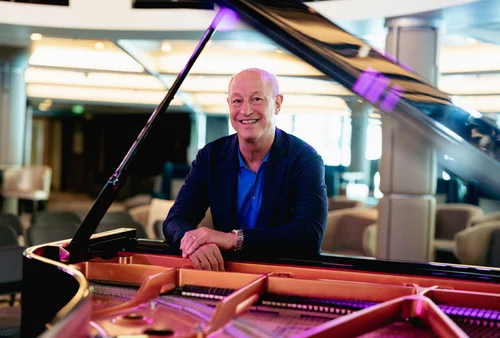
“Maybe I would have been more famous had I joined Woody’s band in 1976, but I could not possibly have had a more fulfilled life,” says Shelly Berg.
(Photo: Gabriella Gabriellaa)“I would love for playing the piano and writing music to be my day job,” Shelly Berg says, having never stopped doing those things in 18 transformative years as dean of the Frost School of Music at the University of Miami. In that time, he’s recorded five albums under his own name and garnered six Grammy nominations as a composer, producer and/or arranger. Berg looks refreshed and rather youthful for someone who just celebrated his 70th birthday. He smiles warmly, via video from his second home in Marina Del Rey in Southern California, soon to be his primary residence once he retires from his duties at Frost after this academic year.
Berg has taught at the collegiate level for 44 years — 10 years at San Jacinto College in Houston, and then 16 years at the Thornton School of Music at the University of Southern California, before switching coasts for the warmer Atlantic waters of southern Florida. His former piano students include Gerald Clayton, Taylor Eigsti and Emmet Cohen, the jazz influencer who has featured Berg on his popular video series Emmet’s Place. His teaching acumen has long been recognized, as early as 1999 when he was profiled by the Los Angeles Times as one of their “Educators for the Millennium” followed by accolades from Los Angeles Jazz Society, the Ronald McDonald House, the International Association of Jazz Educators and DownBeat magazine, which honored Berg in 2011 with a Jazz Education Achievement Award and is now inducting him into the DownBeat Hall of Fame for Jazz Education. All for a jazz pianist who has never had a formal jazz piano lesson or taken a collegiate jazz course.
Shelton Glen Berg grew up in Cleveland, Ohio. Very early on he demonstrated an unusual musical aptitude. Before age 10, he was studying at the Cleveland Institute and had composed his first work for children’s choir and orchestra.
Berg’s father, a siding salesman who moonlighted as a jazz trumpeter, knew enough piano to show his son a few chords, and before long Berg was accompanying his father to jam sessions, including one hosted by saxophonist Arnett Cobb in Houston, where Berg’s family had moved when he was 15.
Berg enrolled at the University of Houston as a classical piano major, but he was already deep into his jazz education gigging six nights a week — and at Cobb’s weekly jam session at the White House Motel, where he “got schooled by Arnett Cobb, who yelled at me repeatedly.” Berg recalls, “I had played with all the guys in Woody Herman’s band, Buddy Rich’s band, Stan Kenton’s band ... Count Basie’s band, they’d all come and hang out at the jam session.” Berg was even invited to join Herman’s band on tour but decided to stay in school.
Berg remained at UH for graduate school, teaching college students for the first time as a teaching assistant in music theory. “After being a TA,” he explains, “I knew how much I loved to teach, because you can see when those light bulbs go off that you’re changing people’s lives.”
At 23, Berg began his higher education career at San Jacinto College in Houston, where he began to hone his own philosophies about teaching jazz. “I was looking at every [jazz book] that was out there, and they kept talking about modes,” he says. “And then I wrote my first article for the Jazz Educators Journal, which was called ‘Tonal, Not Modal,’ which asked: Why is everybody teaching modes when we’re playing tonal music?” That article formed the basis for his first of many books in jazz education.
While at San Jacinto, he started an annual jazz festival that allowed him to invite guest artists to perform with his school jazz band. One was trombonist Bill Watrous, who encouraged the pianist to move to Los Angeles.
In 1991, Berg accepted an assistant professorship at USC’s Thornton School of Music. In that decade he would become the head of the jazz studies program.
And he began to develop some outside-the-box ideas for jazz education. He sought to establish a curriculum that could fuse the music training he learned in college with the musicianship skills he had honed outside of school, such as reading and playing chords, learning tunes and solos by ear, improvising and more. When he suggested this to Thornton’s curriculum committee, Berg recalls, “The head of classical instrumental performance said to me, in the middle of the committee meeting, ‘I’ve never had to improvise a note in my life, and I don’t see why anybody would.”
Berg ultimately found an audience for his viewpoints at the University of Miami, where he became dean of The Frost School of Music.
It didn’t take long for Berg to implement his ideas. “By my third year, every freshman classical student that came in the school was taking the Experiential Music Curriculum, where we put you in the middle of ‘classical garage bands’ for ear training and theory, and you’re [playing] and writing and hearing it back and improvising. And our students know that they’re getting skills that their peers at almost every other school are not getting.”
Those skills include work on television specials, major label albums, film scores, working with everyone from Pharrell to John Williams.
“Maybe I would have been more famous had I joined Woody’s band in 1976, but I could not possibly have had a more fulfilled life.” DB
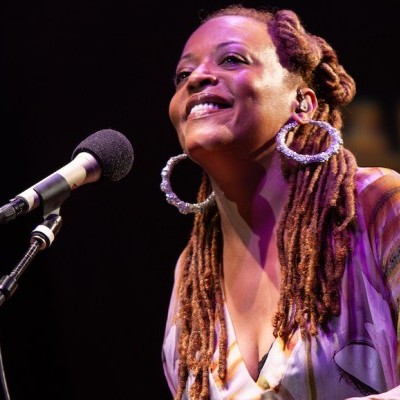
Wilson’s ability to connect to audiences helped her to win two Grammy awards and multiple other accolades. She was named an NEA Jazz Master in 2022.
Sep 3, 2026 10:44 AM
Cassandra Wilson, a singer, songwriter and producer who was one of the most acclaimed and successful jazz vocalists of…
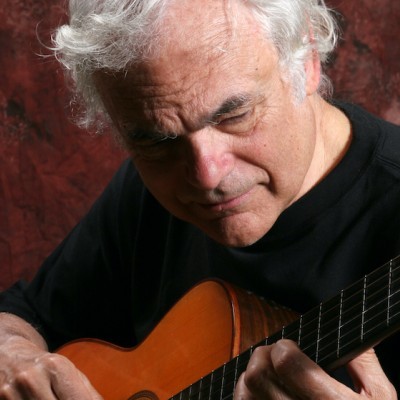
Bertoncini was a specialist and advocate for the nylon-string acoustic guitar, turning down high-profile opportunities that were unsuited to the sound and techniques that he used with that instrument.
Sep 1, 2026 11:06 AM
Gene Bertoncini, an esteemed jazz guitarist, composer, arranger and educator, died Aug. 29 at the Lillian Booth Actors…
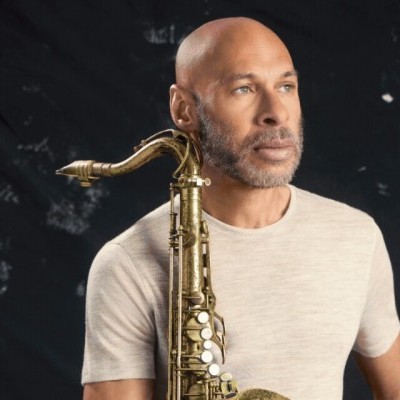
A solo concert by saxophonist Joshua Redman will close the first night of the Hyde Park Jazz Festival on Sept. 26.
Sep 22, 2026 12:26 PM
The Hyde Park Jazz Festival will take place for the 20th time on the final weekend of September 2026. Beginning half…
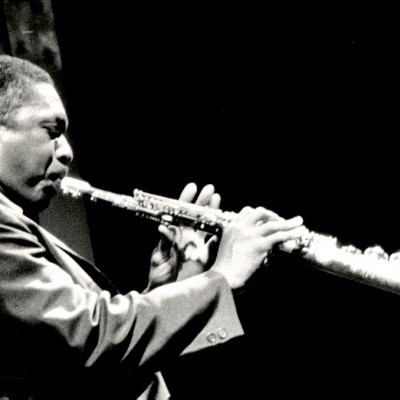
“It was just that suddenly … I could hear it,” Ravi Coltrane said of an epiphany he experienced during his late teens regarding his father’s music. “And it was almost like a calling, like something saying, ‘Hey, man, come on. It’s time to get serious.’ And the first time you really tune in and dial in and focus like that, it can be very life-changing.”
Sep 22, 2026 1:39 PM
Editor’s Note: Tomorrow, Sept. 23, is the 100th anniversary of John Coltrane’s birth. In honor of the tenor and…
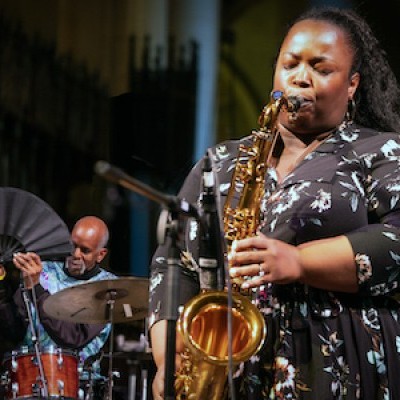
Camille Thurman took to the stage alongside bassist Kenny Davis and drummer Tommy Campbell for a rendition of Johnny Mercer’s “I’m An Old Cowhand” that recalled Rollins’ epochal 1957 trio outing Way Out West.
Oct 6, 2026 1:33 PM
As emcee Mark Ruffin noted at the commencement of an epic tribute to saxophonist Sonny Rollins at the Cathedral of…