Sep 3, 2026 10:44 AM
In Memoriam: Cassandra Wilson, 1955–2026
Cassandra Wilson, a singer, songwriter and producer who was one of the most acclaimed and successful jazz vocalists of…


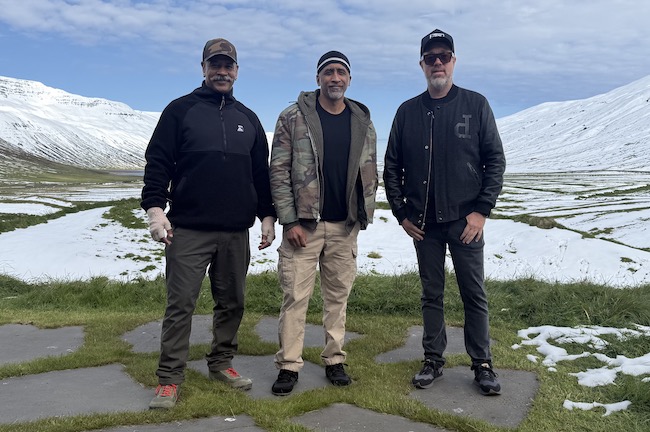
“I think that’s where we’re at now. Just us traveling to Iceland and being in this environment, it’s already changed whatever you think of, what you thought that song was going to be,” says Soulive’s Alan Evans.
(Photo: Kim Evans)Neal Evans is telling a story about opening for the Dave Matthews Band for the first time. “This is a good one,” he says, recalling that they rolled up to the staging area in an old Eagle tour bus. “[The crew] were like, ‘Whoa, I haven’t seen one of these in like …’” he chuckles at the memory.
“The stage production manager was this really gruff cat, and he [told us], ‘You have 45 minutes — if you go over one second, you’ll never ever play on stage with Dave Matthews again.’ He was not joking. And we were just like [shrugs], ‘Cool.’
“We get on stage. He [said], ‘You got a clock?’ And we were like, ‘Clock? No, we don’t have a clock.’ We do our set, and two seconds under [45 minutes], we finished. We got off stage, and [Dave Matthews and] his whole production team were like, ‘Yeeaah!’” They had no idea how close they came to losing the biggest gig of their career up to that point.
They — keyboardist Neal Evans, his brother Alan Evans on drums and guitarist Eric Krasno, collectively known for the past quarter of a century as Soulive — are spending a few hours together with DownBeat. They are glad to talk about Flowers, their first full-length album in 15 years, but it’s also an opportunity to revisit the story of their unique rise to unprecedented fame as an instrumental organ trio swept up in the jam band craze that ignited in the 1990s well into the 2000s, electrifying large crowds in the same touring circuits powered by Dave Matthews Band, The Grateful Dead and Phish, swimming in a deep well of hundreds of other groups. It’s also a chance to see how the three longtime friends and bandmates have grown, both collectively and individually, since their last interview for DownBeat — in 2003, when they found themselves on the cover of the February issue of that year.
At that time, the band was in the process of digitally recording all of their live shows for their third album for Blue Note, which was released the following year as the self-titled Soulive (Live) (2004). Back then Krasno and the Evans brothers were spending 150 days a year together on the road, so to them a documentation of their live performances was the best representation of who they were.
Today, the three spend far less time together. They are on video chat, each from their own home studios, separated by state lines and many miles: Neal Evans in Brooklyn, New York; Alan Evans in western Massachusetts; and Krasno across the country in Pasadena, California. The guitarist just returned from New Orleans, playing for a fundraising concert for Tulane University alongside Ivan Neville, Taj Mahal and Dawes, among others. He’s played with Lettuce (since before he joined Soulive), Derek Trucks, the Tedeschi Trucks Band and Robert Randolph, garnering eight Grammys along the way.
Neal is working on a project with producer/DJ Keith Shocklee (Public Enemy, the Bomb Squad), and he and Alan are co-producing an album for singer Lamar Williams Jr.
Alan remarks, “Kim, my wife, pointed out that this is the first thing that Neal and I have worked on together since before Soulive.”
“Oh, man, I didn’t even ... wow,” says Neal, surprised.
“Throughout the whole [time], we’ve all worked on separate things, but Neal and I literally never worked on anything together outside of, what year, like ’97 or ’98 or something like that?”
“’97, yeah ... I didn’t think about that,” affirms Neal.
They all have their own lives and careers far away from each other, but they have remained close, getting together occasionally to perform and record. But as the years advance, they can stack up in a hurry. Six have passed between their last recorded convening, a set of self-released EPs: Cinematics, Vol. 1 (2018) and Vol. 2 (2019). Once again the band has gotten back together, this time due to a fortuitous happenstance seized upon by Alan.
Near the Arctic Circle, on the remote peninsula of Tröllaskagi in Iceland, lies a resort built on a 15th century sheep farm. Guests can enjoy a number of amenities there: mountain biking or heli-skiing the rugged mountains, braving the frigid ocean waters via kayak or surfboard — or laying down tracks in a state-of-the-art recording studio converted from a century-old grocery store. Alan Evans had been to Flóki Studios several times as a producer and engineer. “I kind of developed a relationship with the people who run it, own it, whatever,” he explains. “It’s a multifaceted kind of organization that they have, based out of Crested Butte, Colorado. They reached out to us about playing a festival [in Colorado] at the end of January. I just thought, if they want us to play this festival, wouldn’t it be amazing if we recorded an album for them and it would come out the day of the festival? And they went for it.”
Alan continues, “It’s straight-up one of the most beautiful places I’ve ever been. Anywhere. I was really hoping that someday we could get over there, do something, and the opportunity presented itself. I just kind of threw a Hail Mary, wasn’t really expecting them to go for it. And they did.”
Incredible opportunities might be the raison d’etre of this band. Soulive’s rapid ascent in the early 2000s would lead many to believe that beyond being talented and energetic performers they were extremely shrewd marketers to accrue their large, loyal following. These guys must have really knew what they were doing.
“Yeah, we really didn’t, man,” says Alan.
Neal adds, “I mean, we just did what we thought. There was…”
“No blueprint,” says Krasno, finishing Neal’s thought. He remembers first hearing the Evans brothers in the late 1990s, when they were playing for the band Moon Boot Lover. “I remember just being blown away by these two, the way they locked in together and the way that they grooved and the pocket and [with] Neal, I had never seen anyone really rock bass with the left hand the way that he [did].”
Krasno continues: “And the way Al was playing drums; just crazy pocket, but he could feel so much space. So many dynamics in what they were doing, and I just remember being completely blown away. Fast-forward years later, that band broke up, and I came to see them as Soulive. And they played a gig.”
“Yeah, one gig,” interjects Neal. “We had one gig.”
Krasno responds, “You could say they did one gig without me, but not really because I ended up sitting in and playing.” Not long after, Neal and Alan called Krasno to come over to jam with them. Krasno remembers, “That day was when we created Get Down with the first EP, which kind of became our first album, I guess.”
From there, the trio started touring heavily. “It was just such a different landscape,” Krasno offers. “There was very much a thing in the northeast where there were all these clubs. You could like kind of just do this circuit in the northeast and keep doing it, you know? So, [Neal and Al] had relationships with all these clubs, and we were able to grow a fan base very quickly.”
“It was just different because that was the way musicians made it, you gigged and toured,” says Neal. “Some of the first gigs were playing like a Friday night with a major touring band opening up in front of a sold-out crowd, just because of these kinds of friendships that we had [made].”
Alan adds, “It was also a taper culture. It had reached this kind of zenith, because the taper culture has been around since the Grateful Dead, but at the point where we were, late ’90s, early 2000s, it was easier for people to come in with gear and be kind of invisible. So, there was a lot of sharing of information over these networks. It made it so that our music went kind of — I don’t want to say viral — but in certain communities, it just spread really fast.”
By the turn of the millennium, Soulive’s notoriety caught the attention of Bruce Lundvall at Blue Note, who at the time was looking to expand the label to include music that could operate in spaces beyond traditional jazz. (Lundvall would soon sign another crossover artist, a promising young singer named Norah Jones.)
“That really took things international,” says Krasno. “The first time we ever went to Japan, we had a thousand people at our shows, and it was funny because we worked so hard building brick by brick in the States, and then all of a sudden, [with] the promo of Toshiba EMI, and Blue Note, we got to Japan, [where] we were bigger than anywhere else. ... And I remember we didn’t touch any gear while we were there, it was all first class, everything. And then we got back, and I remember our first gig back ... in our van, loading our own gear, and be like, “Oh, was that even real? What just happened, and how are we back to this again?’”
Neal remembers when he realized how big their band had become, walking by Tower Records on Broadway in Manhattan. “They had these massive billboards on the side ... it was Britney Spears, Soulive and then Mariah Carey. So that was amazing. But then to go to Japan, and we walked into Tower Records, and we had a section with cardboard cutouts of us, life-size things. We were like, ‘What in the world is going on here?’”
Not bad for a band that didn’t know what they were doing. In addition to not getting fired from the Dave Matthews tour, Soulive would open for other well-known artists from Common to John Mayer, from the Roots to the Rolling Stones, with chances to record and perform with many others: Matthews, John Scofield, Chaka Khan, Aaron Neville, Questlove, Reggie Watts.
But constant touring was a grind, and ultimately the band stopped doing it, realizing there is more to life. Krasno moved to Pasadena to raise his family and do more session work in nearby Los Angeles. Neal, who as a student of Jaki Byard at Manhattan School of Music would put in 12 hours a day on piano, now barely touches the instrument. “For the past few years, I just play bass,” he confesses. Playing roots in his left hand since first learning piano at age 8, Neal finally picked up an actual bass and realized his hands somehow could play the same basslines he has known on keys all this time.
“I will attest to this ’cause Neal was just up here,” says Alan. “Yeah, bro, it literally made no damn sense, man.”
He confesses that throughout his entire career, he has never practiced the drums very much. “The amount of time that I put into actually practicing is like probably one or two percent of my entire life,” he says. “It just bores me to tears. But whenever I do [play], I feel good.” It’s a similar situation with the band. “We don’t tour every day like we used to. But when we get together, it’s like instantaneous. We might as well have been on the road right there.”
The trio spent six days at Flóki, nearly the longest they have ever spent on a single project. Much of what they recorded they worked out as they went. Krasno says, “We did come into it with a bunch of ideas that we sent around, but really we let a lot of it happen in the room, too. ... What I love about playing with this group of musicians is about the spontaneous decisions that we make in the moment that play off of each other. A lot of that happened making this record, where we just trusted each other. And I think that maybe the years of playing together, the trust [we] built influences how we play.”
Unlike the expansive, all-live album they recorded in 2003, this new offering sports 10 concise, well-constructed tracks, many of which contain a good deal of layering of extra sounds and textures, including some very Peter Gabriel-esque vocal tracks from singer Van Hunt on “Flowers At Your Feet.” It almost sounds like an indie album at times.
“All three of us, we record constantly on so many different things,” Krasno says, regarding the layering. “We tried not to overdo it because, you know, obviously we want to perform this music, too. But we didn’t think about it much. It was just kind of like, ‘Hey, right here would be great to layer a harmony, or right here it might be nice to have a rhythm part with a lead on top.’ So, it’s really kind of just based in the moment, based in the song.”
“All of us grew up listening to songs,” answers Neal. “It’s different when we’re going out as a live band, and we could play a 15-minute song, and that’s like cake just because we have that skill set. But we also have the skill set and understanding of music and song, structure and working with different artists, and it’s just kind of how we’ve evolved.”
“It was all just being in that space, too,” suggests Krasno. “When you’re looking at mountains and glaciers and water, and it was very peaceful. All of a sudden you can’t really deny your surroundings inspiring how you play.”
One of their tunes has a more Stateside feel to it. “Baby Jupiter” is named after the New York club Soulive used to play at every Wednesday from 1:30 to 4 a.m. Alan remarks in the album press release that track represents “the younger versions of ourselves, played by guys who actually know what they’re doing now.”
What do they know now that they didn’t then?
“You just get to a point where you kind of realize the things that actually matter,” Alan says. “You can spend hours on eight bars of a section of a tune or a solo or just getting a sound. … The people who listen to your music or come to see you play, they don’t notice or care about that stuff. What they do care about is how it makes them feel. And that’s what I’ve come to realize: If you create something that people feel good about, you’re good.”
“You’re fighting to keep what [your initial idea] was instead of just allowing the natural process to take it to where it’s naturally going to end up being,” continues Alan. “I think that’s where we’re at now. Just us traveling to Iceland and being in this environment, it’s already changed whatever you think of, what you thought that song was going to be. So just allow it to happen.” He is talking about their album, but perhaps those sentiments have always been a mantra for their band of old souls continuing to live and evolve, from Manhattan Island to the outer reaches of an Icelandic peninsula. DB
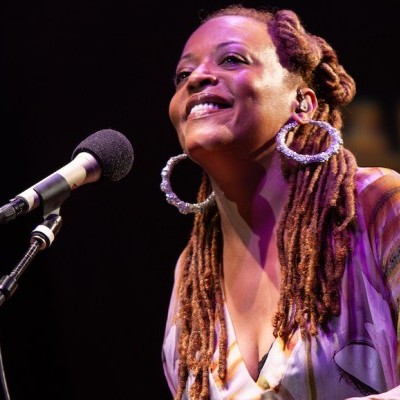
Wilson’s ability to connect to audiences helped her to win two Grammy awards and multiple other accolades. She was named an NEA Jazz Master in 2022.
Sep 3, 2026 10:44 AM
Cassandra Wilson, a singer, songwriter and producer who was one of the most acclaimed and successful jazz vocalists of…
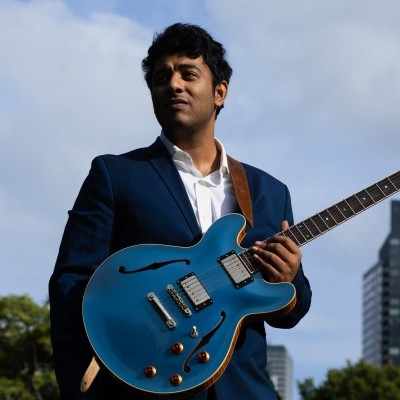
“The love from the jazz and music community restored my faith in humanity,” Walia wrote in an online post upon his release from detention at an ICE facility.
Aug 18, 2026 2:15 PM
Indian jazz guitarist and composer Pritesh Walia has been released after being unexpectedly detained by ICE and taken…
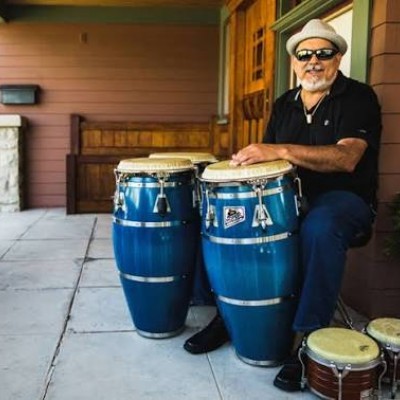
Percussionist Poncho Sanchez was among the artists scheduled to perform at the now-canceled inaugural LA Jazz Festival.
Aug 11, 2026 12:53 PM
The inaugural LA Jazz Festival, originally scheduled to run Aug. 7–23 with dozens of events across Los Angeles’…
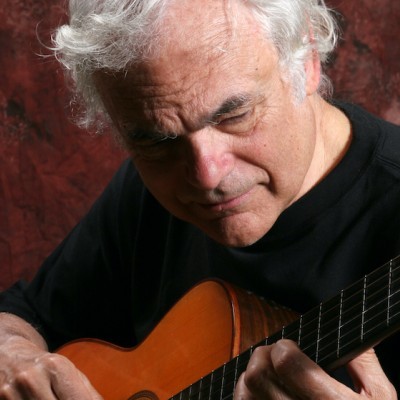
Bertoncini was a specialist and advocate for the nylon-string acoustic guitar, turning down high-profile opportunities that were unsuited to the sound and techniques that he used with that instrument.
Sep 1, 2026 11:06 AM
Gene Bertoncini, an esteemed jazz guitarist, composer, arranger and educator, died Aug. 29 at the Lillian Booth Actors…
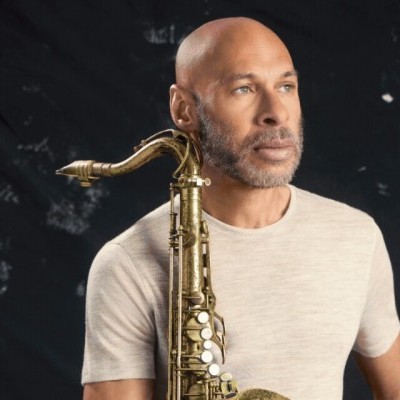
A solo concert by saxophonist Joshua Redman will close the first night of the Hyde Park Jazz Festival on Sept. 26.
Sep 22, 2026 12:26 PM
The Hyde Park Jazz Festival will take place for the 20th time on the final weekend of September 2026. Beginning half…