Sep 3, 2026 10:44 AM
In Memoriam: Cassandra Wilson, 1955–2026
Cassandra Wilson, a singer, songwriter and producer who was one of the most acclaimed and successful jazz vocalists of…


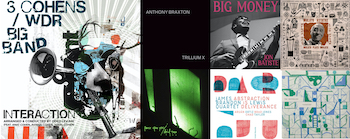
Throughout 2025, DownBeat published seven 5-star reviews for new records that were deemed masterpieces by our critics. Here are those reviews!
Anthony Braxton
Trillium X
PMP
★★★★★
(August)
Working diligently in his own expressive margin zone, the impossible-to-categorize Anthony Braxton’s sweeping Trillium Opera Complex — birthed in the ’80s — has reached a new apex with the release of a powerful live and studio recording of his epic, four-hour Trillium X (PMP; 453:37). Although this is the sixth opera in his ongoing cycle, the precise and persuasive realization of Trillium X by the Prague Music Performance Orchestra (PMP), conducted by longtime Braxton ally Roland Dahinden, marks a triumphant moment.
In time for Braxton’s 80th birthday, a special eight-CD box includes both the 2023 world premiere in Prague and a studio recording made in Darmstadt, Germany. The document is the finest manifestation yet of Braxton’s operatic adventure, a decade after he finished writing the opera in 2014.
Scale matters here. Braxton follows the example of his vast canvas-making heroes Richard Wagner, of the four-opera Ring Cycle fame, and Stockhausen, whose bigger-is-better Licht opera series clocked in at 29 hours. For audiences, committing to the full experience of X can be transformative. With the right mind frame, the listener’s sum experience of Braxton’s epic becomes a time- and mind-expanding hypnotic realm, writ large.
Musically, X operates in a postmodern language in between tonality and atonality, in a style loosely inspired by serialist Alban Berg, whose operas Wozzeck and Lulu were part of Braxton’s obsession with opera around age 40. In X, the uniformly impressive and committed singers often deliver their serpentine texts in a kind of singspiel speech-song format. The general ambience of intellectual and cerebral intensity is periodically punctuated by comic relief dollops of common or bizarre speech: “if this is a sheep, I’m George Washington,” “wassup, babe!?” and “in the future, everyone will love the bagpipe industry … I’m open to radiance, but first things first.”
Insider winks also appear, as with the well-placed phrase “X marks the spot,” “all things considered, I think the director did a great job” and “what we have here is a case of idiomatic certainty.” Braxton’s underrated sense of humor is intact and slyly deployed throughout X.
As a narrative structure, X follows a twisting and decidedly non-linear path, with witty asides folded into an elaborate libretto. The “storyline” shapeshifts from a pirate ship at sea, led by captain Helen (expertly sung by Eva Esterkova), to a clash with robot malefactors subverting the financial complex (foreshadowing AI cyber misdeeds?). Act III conveys a triple wedding between bank robbers, and IV slips sideways from the White House warmaking forces to an orgy site. Various meltdowns ensue along the way.
In some ways, the opera’s scheme of blending surreal sci-fi textures, free associative flow, metaphysical language and surprise pop-cultural punchlines evokes such parallels as Robert Heinlein’s classic proto-AI-referential novel The Moon is a Harsh Mistress and Robert Ashley’s wildly experimental and language-playful operas Perfect Lives and Now Eleanor’s Idea. But Braxton’s signature imprint, as music maker and renegade thinker, is never far from the surface.
Jazz, as such, sneaks in from the wings, with a brief saxophonic improv burst early in Act II, the insertion of pianist Hildegard Kleeb performing an extant Braxton composition and, in the “Three Sisters” third act, a sudden appearance of a fleeting, slightly tipsy big band segment. This last recalls the deconstructed big-band adventurism of Braxton’s Creative Orchestra Music project dating back to the 1970s. In another cross-reference, a woozy variation on the “Wedding March” from Lohengrin, closing Act III, tips a tipsy hat to Wagner.
X’s sprawling sensory landscape reaches an oddly graceful endpoint, as an atonal wash of sound eases into a brooding cyclical theme for low strings, passed to a solo clarinet fading into the cosmic sunset. The 21-note theme loops back to the opera’s introduction, akin to the last-to-first sentence framing James Joyce’s Finnegans Wake.
X is a dream-logical world unto itself, a place to get lost in for a handful of hours, like Wagner, but strictly according to Braxton-ian rules of order and exploration. —Joseph Woodard
Ordering info: pmpmusic5.bandcamp.com
James Brandon Lewis Quartet
Abstraction Is Deliverance
Intakt
★★★★★
(August)
Moody, contemplative and gorgeously expressive, Abstraction Is Deliverance is the work of a quartet that deserves its place in the front rank of contemporary creative music.
With the exception of the title piece — the album’s most aggressive performance, featuring high-level interplay and an extremely powerful saxophone component — this is a dark-hued work that’s both eloquent and emotive. Displaying roots that extend from modalism to melodicism that echoes the impressionism of Debussy and Ravel, the band’s fifth outing stakes its place among the best recordings of this decade.
The opening “Ware” illuminates the lineage from Newk and Trane to the titular David S. Ware with a fervid rhythmic underpinning and Lewis’ meditative lead, while “Remember Rosalind” layers a winsome melody over Chad Taylor’s slowly churning accompaniment.
The oft-recorded “Left Alone” drifts on Taylor’s reiterative foundation and Brad Jones’ resonant toms, providing fertile ground for Lewis’ rich exposition of the Billie Holiday/Mal Waldron melody.
Above all, this is a band that appreciates texture. “Multicellular Beings” and “Per 7” are both prime examples of how these four can shift their traditional roles to build performances that seem so purpose-built that listeners may mistake them for through-composed work.
Over the course of its five recordings, Lewis’ quartet has grown into the one of the most eloquent improvising groups in recent history. They appear to be transforming their 41-year-old Swiss boutique label the way John Coltrane did for Impulse! in the ’60s. —James Hale
Ordering info: intaktrec.ch
Jon Batiste
Big Money
Verve/Interscope
★★★★★
(August Editor’s Pick Online)
This is something a critic usually saves for the end of a review, but let’s say right now, I love this freakin’ album. With Big Money, Jon Batiste hits the ears with a perfect little package of pure joy, fantastic wordplay, amazing musicianship and subtle soul all bundled in a stripped-down set of nine tunes that groove, bop and flow with perfection. If you’re looking for the jazz voice of Batiste, it’s in there somewhere, but this recording features the soul, blues and New Orleans grit of Batiste’s musical palette. The album delivers with a big, booty-shaking beat on tunes like “Big Money” — featuring the Womack Sisters (Sam Cooke’s granddaughters) and Nick Waterhouse killing it on guitar — and “Pinnacle.” Then, there’s the infectious pop of the opening tune, “Lean On My Love,” a beautiful duet with vocalist Andra Day. It features Batiste as an artist full of open-hearted love, as he shows on several tunes on the set, like the beautiful “Do It All Over Again.” As for that New Orleans grit, try “Petrichor,” an ode to the planet, where Batiste preaches about how “They’re burning the planet down/ No more second lining in the street,” but does it with Southern style that makes it go down easy and stick. But let’s get back to that big heart. There are two tunes on this recording that really let you inside. First, “Maybe,” with just Batiste and a piano, musing about what it all means with the only answer being the word “maybe” trailing off: “Maybe I’m just wasting my time/ Or maybe this is part of some strange design/ Maybe.” And then, there’s the song that brought a tear to this grizzled old writer’s eye. “Lonely Avenue” was written by New Orleans’ own Doc Pomus and recorded by Ray Charles back in 1958. Batiste reprises this chestnut in duet with the 81-year-old songwriting legend Randy Newman. It’s just Batiste and Newman squeezing this tune out at a gut-wrenchingly slow tempo. It’s late-night, after-hours heartbreak at its best. It’s important to note that this entire album was recorded in a week, with many tunes laid down in one take. “Lonely Avenue” was recorded on a handheld recorder at Newman’s piano. The process may be low key, but the results are high art. In addition to the music, also check out the videos for “Big Money,” “Lonely Avenue” and “Lean On My Love.” They’re terrific, too, with “Lean On My Love” shot at Victory Bible Church in Altadena, California, where the wildfires took down so much of that community. —Frank Alkyer
Ordering info: store.ververecords.com
Mulatu Astake
Mulatu Plays Mulatu
Strut
★★★★★
(October)
I regret not having heard of 81-year-old Mulatu Astatke earlier in his 50-year career but rejoice at discovering him now. Eminent in Ethiopia — not the most avidly promoted of jazz scenes — Astatke is a composer-performer here revisiting and retooling his long-established repertoire as beguiling miniature jazz symphonies for a chamber orchestra-sized ensemble mixing traditional horn-of-Africa sounds with solid blowing by a British band ably directed by James Arben.
The pentatonic krar lyre, one-string bowed massengo and end-blown washint flute are key to Astatke’s palette, used alongside the Western reeds, brass, traps, viols, keyboards and vibes (his main instrument, employed with self-effacing languor as on “Netsanet”). Each piece, carefully plotted and lovingly produced, contains intimate detailing as well as unusually open and/or deftly inflated passages.
Astatke has found that cyclical Ethiopian rhythm patterns track with Afro-Caribbean clavé and emphatically syncopated beats. The drumming alone fascinates. But it underlies Blue Note-style jams (“Zelesenga Dewel”), militant marches (“Kulun”), undefinable exoticism (“The Way To Nice”), free sax breaks (“Yekatit”) and echoes of such diverse masters as Ellington, Sun Ra, James Brown, Raymond Scott, Gil Evans, Eddie Palmieri, Roy Ayers and Horace Tapscott — all marked by Mulatu Astatke’s distinct personal touch. Welcome, Maestro. —Howard Mandel
Ordering info: strut-records.co.uk
David Torn
peace upon you
Torn Music
★★★★★
(October)
Recent efforts like Sunny Five’s Candid remind just how valuable a team player David Torn is. Dude invariably delivers motifs that enhance an ensemble’s direction, even if they shift the design scheme in play. Something similar happens when he works alone. On the digital-only peace upon you (Torn Music; 73:10), the wily guitarist is a master of mood whose expressionistic tendencies often create impressionistic rewards; details are always on his mind. These six improvised stringtronica ruminations are all about textural plurality. Fuzz-laden phrases accommodate craggy acoustic musings and shrill asides weave through hushed panoramas. The looping/sampling aesthetic he’s refined through the years reaches an apex here, brimming with the “wordless poetry” he strives for. Some victories are about cleverly opening a door; this one is about strolling through and redecorating the room. —Jim Macnie
Ordering info: davidmtorn.bandcamp.com
3 Cohens/WDR Big Band
Interaction
Anzic
★★★★★
(March Editor’s Pick Online)
There is such an incredible amount of interaction going on throughout this album that the title is a slam dunk. First, there’s the interaction between the 3 Cohens — clarinetist Anat, trumpeter Avishai and saxophonist Yuval — just a sister and her two brothers drawing on a lifetime of laughing, playing, sharing meals and simply being family together. They finish each other’s musical statements. They blend their instruments into beautiful threads like a homemade patchwork quilt.
Add in their interaction with the famed WDR Big Band, an organization known for its inventive collaborations with everyone from Steve Gadd and Dave Stryker to Joe Zawinul and Patti Austin. Under the conduction of Bob Mintzer, the Cologne, Germany-based ensemble has earned its way to the top of the big band pantheon in today’s landscape.
This album presents musicianship of the highest order. The live set (performed to a packed auditorium in 2022 at the Kölner Philharmonie) kicks off with a wickedly swinging “Shufla de Shufla” (Aramaic for “best of the best”) that shows off Avishai’s massive skill and versatility as a trumpeter, into a masterful solo by Yuval and off to Anat’s silk-soaked blues clarinet lines. This particular interaction spills over to include WDR’s pianist, Billy Test, who is up to the challenge of bringing this conversation to a tipping point. All three Cohens bring tunes to the program. Avishai penned “Shufla de Shufla” and the sweetly mournful “Naked Truth Pt. 2.” Yuval wrote the bouncy “Catch Of The Day (For A&M).” And Anat brings in the great show closer “Footsteps & Smiles,” previously heard on her album Triple Helix. But adding to the interaction, just as producer George Martin was often considered “the 5th Beatle,” we have someone who could be called “the 4th Cohen.” Composer and arranger Oded Lev-Ari grew up with the Cohen siblings and has been part of their inner orbit from the beginning. Here, Lev-Ari arranged all of the tunes for big band, went early to rehearse with the WDR and stepped in to conduct the concert. His tune “Trills & Thrills” brings an entirely different element to the proceedings: a sense of the grandeur of modern big band writing. The program features two classics as well: Nick LaRocca’s “Tiger Rag” and Gerry Mulligan’s “Festive Minor.” The sum total of these interactions? A rare opportunity to hear amazing soloists, maybe the best big band on the planet and the breadth of what happens when large ensemble music and family sit down for an evening-length, full-course “meal.” Bon appetit! —Frank Alkyer
Ordering info: anzicrecords.com
The Westerlies
Paradise
Westerlies Music
★★★★★
(June Editor’s Pick Online)
Paradise, the exceptional new recording by The Westerlies brass quartet, comes at a perfect time in history. The music — sublime, precise and deeply spiritual — serves as a balm for the soul during a worrisome era. While the headlines scream of the starving of Palestinians in Gaza, the killing of Jews in Washington, D.C., the upheaval of international trade wars and the persistent sowing of divisiveness, The Westerlies turn their mighty clarion sound to the Sacred Harp music of the American South dating back to the mid-1800s. They have reshaped, recast and elevated this choral music — named for The Sacred Harp, a shape-note songbook from 1844 — into something that’s beautifully soothing and timeless. Let’s start with two stellar guest spots on this 10-track program. The first, thrilling take is the title song, performed by folk vocalist Sam Amidon, who is no stranger to this music as the son of a family of Sacred Harp singers. His voice carries a calm, almost pleading tone that oozes honesty, backed by the quiet majesty of the quartet. It builds to a heart-filling crescendo before coming to a cliff-dropping stop. It’s a wonderful effect. The second is “Weeping Mary,” sung by the sweet, sentimental vocalist Aoife O’Donovan. She slides beautifully into the horn arrangement. The horns play a key role on both of these tunes as well as on the rest of the set. Consisting of trumpeters Riley Mulherkar and Chloe Rowlands along with trombonists Andy Clausen and Addison Maye-Saxon, The Westerlies have the kind of innate cohesiveness that’s only a gained by playing together over a long period of time, and in this case across eight studio albums. Along with the album’s renderings of classic Sacred Harp works, trombonist Clausen adds two of his own pieces: “The 5:10 To Ronkonkoma” and “The Royal Band.” Rowlands contributes “Kerhonkson,” and Mulherkar offers “The Evening Trumpet.” These composers have clearly done their homework, as their music weaves beautifully into the tapestry of these songs of grace. With the input of engineer Philip Weinrobe, the sound of Paradise is fantastic, each part beautifully sculpted and expertly mixed into a very natural, raw recording where every breath can be heard and the band’s interplay is clearly audible. This is music of great simplicity, thoughtfulness and beauty. It is not easy-listening; it’s amazing listening. —Frank Alkyer
Ordering info: westerliesmusic.com
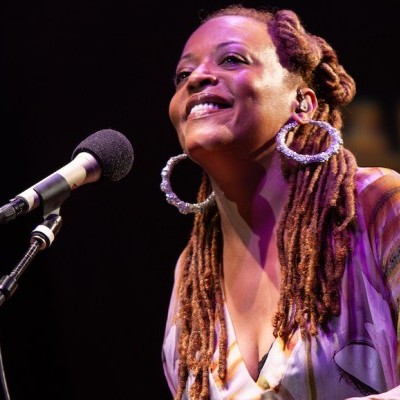
Wilson’s ability to connect to audiences helped her to win two Grammy awards and multiple other accolades. She was named an NEA Jazz Master in 2022.
Sep 3, 2026 10:44 AM
Cassandra Wilson, a singer, songwriter and producer who was one of the most acclaimed and successful jazz vocalists of…
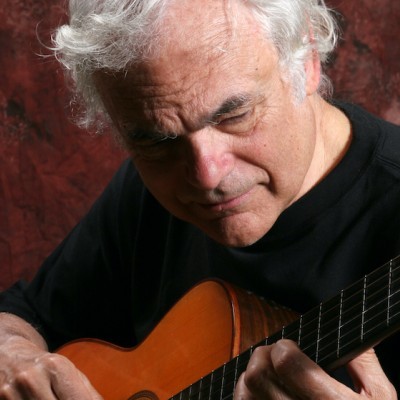
Bertoncini was a specialist and advocate for the nylon-string acoustic guitar, turning down high-profile opportunities that were unsuited to the sound and techniques that he used with that instrument.
Sep 1, 2026 11:06 AM
Gene Bertoncini, an esteemed jazz guitarist, composer, arranger and educator, died Aug. 29 at the Lillian Booth Actors…
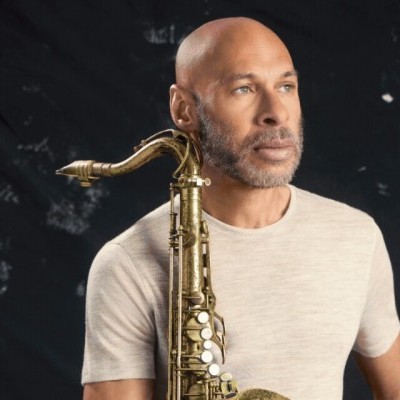
A solo concert by saxophonist Joshua Redman will close the first night of the Hyde Park Jazz Festival on Sept. 26.
Sep 22, 2026 12:26 PM
The Hyde Park Jazz Festival will take place for the 20th time on the final weekend of September 2026. Beginning half…
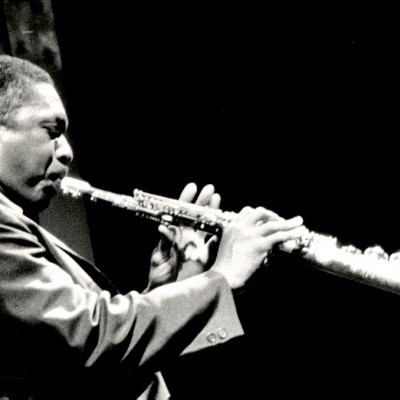
“It was just that suddenly … I could hear it,” Ravi Coltrane said of an epiphany he experienced during his late teens regarding his father’s music. “And it was almost like a calling, like something saying, ‘Hey, man, come on. It’s time to get serious.’ And the first time you really tune in and dial in and focus like that, it can be very life-changing.”
Sep 22, 2026 1:39 PM
Editor’s Note: Tomorrow, Sept. 23, is the 100th anniversary of John Coltrane’s birth. In honor of the tenor and…
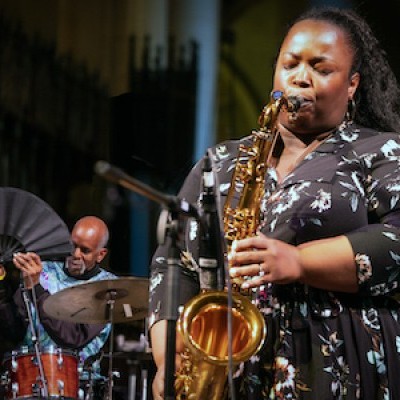
Camille Thurman took to the stage alongside bassist Kenny Davis and drummer Tommy Campbell for a rendition of Johnny Mercer’s “I’m An Old Cowhand” that recalled Rollins’ epochal 1957 trio outing Way Out West.
Oct 6, 2026 1:33 PM
As emcee Mark Ruffin noted at the commencement of an epic tribute to saxophonist Sonny Rollins at the Cathedral of…