Sep 3, 2026 10:44 AM
In Memoriam: Cassandra Wilson, 1955–2026
Cassandra Wilson, a singer, songwriter and producer who was one of the most acclaimed and successful jazz vocalists of…


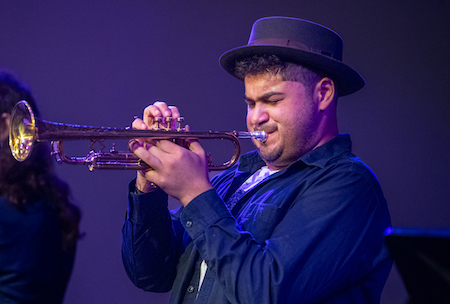
“I feel like most of my music is more classical music than jazz,” Adam O’Farrill says. It’s both and more.
(Photo: Steven Sussman)Adam O’Farrill carries the weight of expectations lightly. The 31-year-old trumpeter, composer and bandleader pays little heed to family determinists who expect him to match the estimable achievements of his father, Arturo, and grandfather, Chico. And he outright discounts the cultural nativists who expect him to reject the cosmopolitanism those forebears instilled in him.
“I’m a New Yorker,” he said between spoonfuls of oatmeal at a diner near his childhood home in Brooklyn. “I grew up around a lot of different people, a lot of different cultures, and that includes my Cuban background, my Mexican background, my Jewish background, my Irish background. And I feel lucky to be multiracial because this country tends to look at everything in black-and-white, and I feel that being multiracial shields me a little bit from that black-and-white perception.”
Compared with his father — who noted that he metaphorically had to “put on a poncho and sombrero” to get his foot in the door — O’Farrill has arguably been less pressured to conform to a stereotype. And he has fashioned an esthetic accordingly, eschewing strokes of black-and-white for bursts of color, texture, tone and timbre assembled with a pluralistic sensibility.
To be clear, O’Farrill’s esthetic does not shun the Latin influence. Though he is not writing mambos, the dexterity and drive of the Latin montuno — even when filtered through his genre-defying mindset — is more than suggested in motifs like the oddly accented ostinato in 7/4 time that propels “Curves And Convolutions,” the opening tune on Elephant (Out of Your Head), his magnificent quartet album released in March. The album’s closing track — an open-hearted rendering of Ryuichi Sakamoto’s “Bibo No Aozora” — likewise evinces the Latin influence. “That probably unconsciously comes from when I spent time in Cuba,” O’Farrill said.
No matter how the Latin influence is expressed in his music, it is merely grist for O’Farrill’s imagination: a fertile playing field in which visual images yield sonic counterparts realized in cinematic style. If that style tends toward the surreal, it is no accident; O’Farrill likens his approach to that of director David Lynch and, according to his father, he has toyed with the idea of becoming a filmmaker himself.
The style is evident all over “Sea Triptych,” a series of dreamlike soundscapes off Elephant that emerge as corollaries of scenes coaxed from his subconscious. In the triptych’s first two sequences, watery images come into focus as O’Farrill’s trumpet glides effortlessly atop the waves near Havana’s famous esplanade (“Along The Malecon”) and on Lake Merriewold in upstate New York (“The Three Of Us, Floating”). It is the calm before the storm.
The storm comes in the form of “Iris Murdoch,” in which angry currents thrash the rocky shore of a seaside English village. Inspired by the character dynamics of Murdoch’s novel The Sea, The Sea, “It’s nature and man being on the same plain and fighting with each other,” O’Farrill said. “I wanted to have a moment of that with the band, very prickly and combative.”
The interplay is combative but controlled, with O’Farrill the composer yielding center stage to O’Farrill the player. Allowing himself to stretch as an improviser, he readily conjures seemingly new techniques without which one suspects that he could not give adequate voice to the surfeit of ideas and emotions emanating from one of the most ingenious minds and most capacious hearts in jazz. But to tag him as a “jazz player” would contradict his self-image. “I feel like most of my music is more classical music than jazz,” he said, with good reason. Though he can negotiate changes with alacrity, his is more a linear approach given to theme-and-development as an organizing principle.
O’Farrill’s classicism hit a kind of peak last year with the release of For These Streets, an octet outing that presents freeform improvisers like Mary Halvorson, Patricia Brennan and Tomas Fujiwara in a tightly formatted interpretation of 1930s musical voices. Uncompromisingly modern, it harks back to the compositions of O’Farrill’s grandfather, who took what the grandson deemed a “symphonic approach.”
“I was definitely influenced by his sense of creating a melodic pathway,” he said, citing Chico masterworks like The Aztec Suite and The Afro-Cuban Jazz Suite. “That was a big thing I was trying to do with this music. I may be old school in that regard, but there’s something very old school in me.”
Arturo seconded the old-school sentiment, with context. “We’re proud jazz musicians,” he said of the O’Farrills. “But it’s just an entry point. Adam is smart enough to see that the conversation is always expanding and growing. His art is informed by the world. Both Chico and I tried to expand the conversation beyond the category we were thrust into. For Adam that’s less of a challenge because he’s always been cast into very many different settings.” Arturo compared Adam’s work in bands led by others — Halvorson, Brennan, Hiromi and Vijay Iyer — to his early-career experience with Carla Bley. “That was my introduction to ‘Hey, there’s a bigger world out there than what I know.’”
Adam O’Farrill practices an expansive art, not just as an end in itself but as a tool to counter the forces, now ascendant, who seek to reduce artistic identity to a set of preconceived qualities and force artists they perceive as noncompliant into a poncho-and-sombrero-wearing cultural ghetto. Scooping up the last of his oatmeal, he ventured a word on the shaping of an image in such perilous times.
“It’s the responsibility of Latin artists,” he said, “to challenge people’s understanding of what that can be.” DB
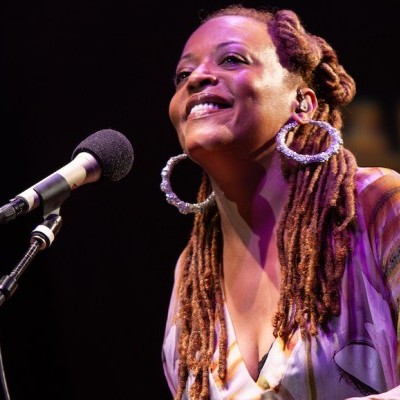
Wilson’s ability to connect to audiences helped her to win two Grammy awards and multiple other accolades. She was named an NEA Jazz Master in 2022.
Sep 3, 2026 10:44 AM
Cassandra Wilson, a singer, songwriter and producer who was one of the most acclaimed and successful jazz vocalists of…
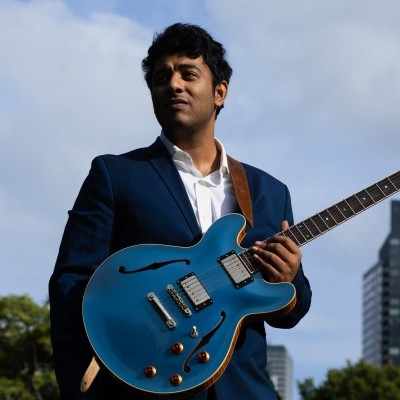
“The love from the jazz and music community restored my faith in humanity,” Walia wrote in an online post upon his release from detention at an ICE facility.
Aug 18, 2026 2:15 PM
Indian jazz guitarist and composer Pritesh Walia has been released after being unexpectedly detained by ICE and taken…
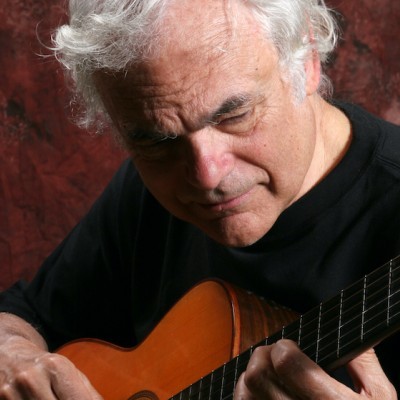
Bertoncini was a specialist and advocate for the nylon-string acoustic guitar, turning down high-profile opportunities that were unsuited to the sound and techniques that he used with that instrument.
Sep 1, 2026 11:06 AM
Gene Bertoncini, an esteemed jazz guitarist, composer, arranger and educator, died Aug. 29 at the Lillian Booth Actors…
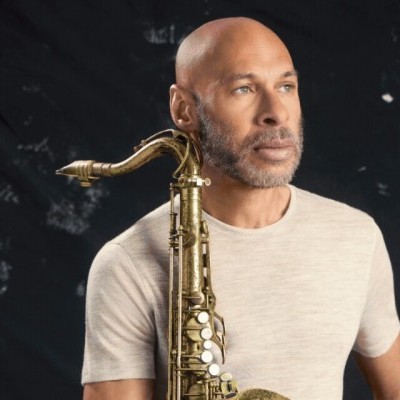
A solo concert by saxophonist Joshua Redman will close the first night of the Hyde Park Jazz Festival on Sept. 26.
Sep 22, 2026 12:26 PM
The Hyde Park Jazz Festival will take place for the 20th time on the final weekend of September 2026. Beginning half…
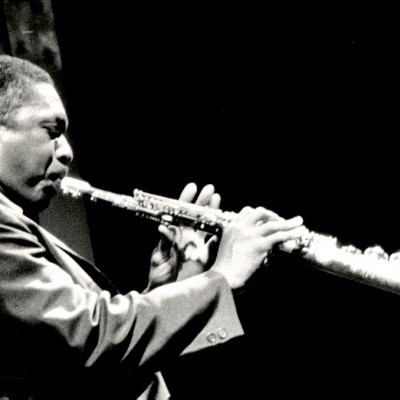
“It was just that suddenly … I could hear it,” Ravi Coltrane said of an epiphany he experienced during his late teens regarding his father’s music. “And it was almost like a calling, like something saying, ‘Hey, man, come on. It’s time to get serious.’ And the first time you really tune in and dial in and focus like that, it can be very life-changing.”
Sep 22, 2026 1:39 PM
Editor’s Note: Tomorrow, Sept. 23, is the 100th anniversary of John Coltrane’s birth. In honor of the tenor and…