Sep 3, 2026 10:44 AM
In Memoriam: Cassandra Wilson, 1955–2026
Cassandra Wilson, a singer, songwriter and producer who was one of the most acclaimed and successful jazz vocalists of…


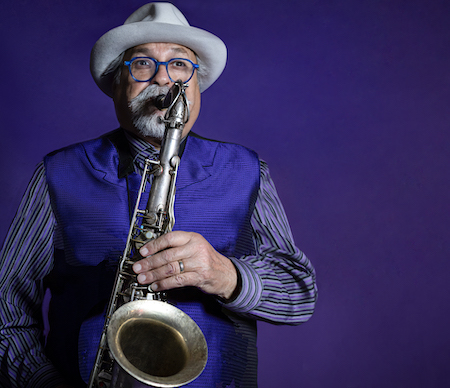
Joe Lovano’s Paramount Quartet will record live at New York’s Village Vanguard for ECM records on Aug. 26–27.
(Photo: Michael Jackson)One of Joe Lovano’s buzz terms is “the moment of now” and with seemingly infinite patience — despite a schedule that would, on paper, exhaust the average person — he occupies the present with impressive equilibrium. It’s what makes Lovano’s music peculiarly vivid and resistant to any hint of being by rote or dialing it in.
Listen to his myriad recordings — a short list includes 25 with Blue Note alone between 1990 and 2016; his duos with Hank Jones; face-offs with the great drummers Elvin, Blackwell, DeJohnette, Idris Muhammad, Billy Hart, Lewis Nash — there’s always “music within the music,” as he puts it about his polyrhythmic, polytonal concept.
Lovano feels all tempos within every tempo, yet paradoxically — given the anticipatory chromatic barrage heralding his sonic gambits — a chill, groove-compliant composure pervades. The combination renders Lovano’s delivery uncommonly hip and tour-de-force, but never over-egged or egregious.
Case in point, at a March 2025 master class at Paul Maslin’s PM Woodwind store in Evanston, Illinois, the Cleveland-born saxophonist called “Donna Lee” for a duo demo with bassist Marlene Rosenberg. Confronted with a room full of saxophonists, many top pros, the assumption was this would be an uptempo roast, but Lovano took the bebop warhorse at a medium clip, digging into measured implications, responding to Rosenberg’s ideas en route. As he commented about the melody played slower, “It sounds like a Coleman Hawkins solo.”
The following night Lovano debuted his Paramount Quartet at Evanston’s SPACE with veteran bassist Asante Santi Debriano, Living Colour drummer Will Calhoun and guitar prodigy Julian Lage. The group, which had just eponymously recorded in the South of France for ECM, navigated fresh pieces from the session including Lovano’s “The Call,” “Fanfare For Unity,” “Congregation” and a spellbinding rendition of Wayne Shorter’s “Lady Day.”
Given a competing ECM release in 2025, Homage (a sophomore session with Polish pianist Marcin Wasilewski’s trio), succeeding Daily Bread (his second album with Trio Tapestry, featuring Carmen Castaldi and Marilyn Crispell), Lovano fans have waited well over a year to sample Paramount Quartet’s debut, which in the tradition of much of his work for the prolific German label (stretching back to Psalm with Paul Motian in 1982) proves luminous, succinct and quite stunning.
DownBeat caught up with Lovano by phone, after his weekend’s participation (sans saxophone) at the SFJAZZ Gala; a week at New York’s Village Vanguard with Crispell, Andrew Cyrille and Ben Street; and touring the U.S. with Coltrane 100 in an ensemble that includes Melissa Aldana, Nduduzo Makhathini, Linda May Han Oh and Jeff “Tain” Watts.
The rollicking conversation has been edited for space and continuity.
Michael Jackson: The gala in San Fran was a testimonial for George Benson as well as Ashley Kahn’s tribute to the centennials of Miles and Coltrane?
Joe Lovano: Gary Bartz was there representing Miles, and I told a story about my dad jamming with Coltrane in the ’50s. The SFJAZZ Collective played. It was amazing. And George, who’s an elderly gentleman now, sang “Moody’s Mood For Love,” played his ass off, told some great stories.
Jackson: Red Holloway told me a story about a Jack McDuff gig with George. Apparently McDuff finally got upgraded on a flight and got blowback for lighting a big joint in first class! Does that remind you of your early days with McDuff?
Lovano: [laughs] Well, my first record date was with Dr. Lonnie Smith, Afro-desia [Groove Merchant, 1975], and George was on that session. We hung at his pad in Englewood. … He played us takes from Breezin’, which had yet to come out. … I was with McDuff, on the Chitlin’ Circuit, same time I was with Lonnie. Jack had a four-sax section. I was on baritone and soprano, Dave Young and Bill Cody on tenors, Willie Smith on alto, who’d later arrange for my album 52nd Street Themes [Blue Note, 2000].
Jackson: Next to your father — tonsorial artist and big-toned tenorist Tony Lovano — and Cleveland’s Ernie Krivda, Indy’s Dave Young was your mentor, and then, when in 1976 you joined Woody Herman’s band, Frank Tiberi. You mentioned at PM Woodwind that Frank, at 97, is finally getting his Coltrane recordings released.
Lovano: The Tiberi Tapes! He’s got 60 hours of early Coltrane from Philly, and Impulse! has just released two tunes: “Giant Steps” and “Satellite.” Frank’s an incredible musician, and mentor, a beautiful voice on the saxophone who also played bassoon and double reeds. George Garzone and I played on his Tiberian Mode [1999, NY Jam Records].
Jackson: Your own mentoring proclivities have not been insignificant.
Lovano: I’ve been Berklee’s Gary Burton Chair in Jazz Performance since 9/11/01 — my first day. Since then, so many folks have emerged on the scene, played in bands with me: esperanza spalding, Lawrence Fields, Leo Genovese, Kendrick Scott, Walter Smith III. Prior to that, I was faculty, when Rufus Reid was in charge in the ’80s, at William Paterson. I had folks like Eric Alexander and Tony Malaby. Thad Jones and Mel Lewis started that program.
Jackson: Did Mel ever deploy his Chinese cymbal behind you with his orchestra at the Vanguard?
Lovano: [laughs] Every time we played! Dizzy [Gillespie] gave him that. Diz would carry that Chinese cymbal everywhere, and he’d have every drummer play it at some point.
Jackson: Legend has it Mel only tipped on that cymbal behind the strongest soloist.
Lovano: He was one of the greatest big band drummers, yet always treated it like a quartet behind the soloist. He was so unique, following from Shelly Manne and other cats he was into.
Jackson: You didn’t get to play much with Thad as he’d left for Copenhagen during your tenure but you got to play a bunch with Hank Jones.
Lovano: Playing with Hank was a highpoint in my life.
Jackson: Different piano adversaries — Hank, Gonzalo Rubalcaba, Chucho Valdés, McCoy Tyner — what have been the challenges with each?
Lovano: Each has their own sound/touch/feeling/dynamics. You have to focus on “the moment of now.” None of them play at you, they play with you, create music together. For me, it isn’t a matter of, “It’s easier to play with Herbie because. …” You have to listen, shape music, not just play at the same time. Coming up with Paul Motian and Mel Lewis gave me ideas and confidence about creating music within the music, which is what I’m trying to do with my current band The Paramount Quartet.
Jackson: Julian Lage seems to have assimilated, then streamlined, the edgy guitarists of your past, like Abercrombie and Scofield.
Lovano: I’ve shared the stage with a beautiful line of creative guitarists, starting with Bill DeArango, who, when 52nd Street ended, returned to Cleveland, opened a music store, mentored everyone. Jim Hall was at the root of the music. He inspired Abercrombie, Scofield and Bill Frisell, who I worked with in trio with Paul [Motian] from 1981 until Paul’s passing in 2011, then Jakob Bro, now Julian.
Jackson: Shame we couldn’t locate Julian for the group photo at SPACE. Where did he go?
Lovano: Who knows? Idris Muhammad, after the gig, liked a bubble bath with cigar.
Jackson: Salient during Paramount’s set, live and on the album, is a beguiling performance of Wayne Shorter’s gorgeous, seldom-heard “Lady Day,” with its shifting harmonic colors.
Lovano: Julian is an initiator of ideas with a beautifully expressive approach to ballads. I first heard “Lady Day” on Wayne’s The Soothsayer and played it in Orvieto in 2023. Mike Gibbs made an arrangement for me. I wanted to play it with Paramount because Will played with Wayne. He also played with Pharoah Sanders, has some different roots. I’ve been influenced by all these drummers who supported me, back to Joe Dukes “The Dixie Bomber,” with Jack McDuff.
Jackson: You and Asante go back to the ’80s …
Lovano: He has inner feeling, is an amazing soloist, really tells stories. The guys were excited to record for ECM, having followed the label back to Dave Holland’s Conference Of The Birds [1973].
Jackson: The pivot to the glorious, macroporous gloom-school of ECM from the heady, urban excitement of Blue Notes like Quartets: Live At The Village Vanguard [1995] has been marked. How has working with Manfred Eicher been, who you’ve known for decades? Was he present at the Paramount session?
Lovano: Yes, and his presence was felt. After our first take [possibly “Congregation”] he didn’t think it was the right tune to start with. For Manfred, a session is not one tune at a time; he wants a performance, a oneness from piece to piece. I knew this, so it didn’t fluster me to change the order. When we came back to it we played with a different attitude that fit the flow. He is a master of sound and sequence.
Jackson: That flow includes unpredictable changes of horn between tenor, tarogato and G mezzo soprano. The latter icily enters over arco bass on “The Call.” Tim Garland and Jon Irabagon have being following your lead experimenting with new horns. When did the mezzo enter your arsenal?
Lovano: I ordered it from Peter Jessen in Copenhagen when I was playing with Jakob Bro in 2008. It took him a year-and-a-half to make; my serial number is 02! The mezzo is a fourth away from concert pitch. The top of the horn meets the bottom range of the alto. When I collected it in 2010, I was touring with McCoy [Tyner]. The first thing I played on it was “Sama Layuca,” McCoy’s piece that is a real champ. [sings the melody] Do-do-do-do-dee-dah … He didn’t see the horn until I really laid on that melody and then looked up — “Oh, yeah! Wow! What’s that?”
Jackson: Your originals often have an Ornettish impishness. “Amsterdam” is like a naughty nursery rhyme: You blow together, then asymmetrically against Julian’s guitar, Will’s martial beats keeping an eye on things, creating mischief, too.
Lovano: I first visited Amsterdam with Woody Herman. We played the Concertgebouw, and I wandered off into the streets after the show, the red light district, the whole scene. I saw a sign for the Bimhuis. There were four bassists playing a concert of the hippest music you can imagine. Next day on the band bus everyone’s talking about what they’d done, and I said, “I heard a four bass-player band.” They couldn’t believe it.
Jackson: I just had the privilege of spending [Dutch drum legend] Han Bennink’s 84th birthday with him.
Lovano: Oh, really? I love that cat! We did a bunch of gigs opposite the Clusone Trio — Paul [Motian] and Bill [Frisell] and myself. We played that little town in Italy, Clusone, that Han, Michael Moore and cellist Ernst Reijseger named their band after. There was a huge clock right there on the stage that rang every 15 minutes. After the first ring we played to that clock. Paul left space for it. I’ll never forget, it was so funny.
Jackson: I can only imagine Han’s antics with that clock.
Lovano: Oh, definitely, he might have put his ladder up and climbed it! [laughs]
Jackson: You’ve had successful liaisons with Europeans. Your quartet with Marcin delivered the enigmatic splendor of Homage last year, the first ECM album recorded at Rudy Van Gelder’s New Jersey studio [engineered by Maureen Sickler]. Of the handful of musicians I associate with your poetic sensibility and use of routinely stellar rhythm sections, from all over, Charles Lloyd comes to mind.
Lovano: Charles has been an influential character, figure and musician from the earliest times — Of Course, Of Course with Gábor Szabó and Ron Carter, an early Tony Williams date [from 1965]; his quartet with Keith [Jarrett]. … We first met at the Lausanne Festival. Charles came to the soundcheck to say hello to Paul [Motian], carrying Michel Petrucciani — who had inspired Charles to come back on the scene after a break. Charles also plays some tarogato these days. We kind of switched because right at the time I moved to ECM, he moved to Blue Note. A beautiful spirit, and his embrace over the years has been really special.
Jackson: Did you two play table tennis? Apparently he always wins but doesn’t like to talk about who the winner is.
Lovano: I never did. [laughs] But I’d, maybe, play pool with him.
Jackson: Talking of tenors-of-our-time, your comadre, Melissa Aldana, tore it up at International Jazz Day in Chicago. The vehicle was, rather benignly, “Summertime,” but it was the “Coltrane version.”
Lovano: Ah, beautiful. I played the first IJD: We addressed the General Assembly of the United Nations. It was far out! I met Melissa and her saxophonist father in Chile in the early ’90s. She got a scholarship and joined my Berklee ensemble in 2007. It’s been great to see her emerge. She’s a serious young lady. We’ve toured with Coltrane 100, working deep cuts including the rarely touched “Kulu Sé Mama” with Nduduzo [Makhathini] vocalizing; things from Meditations; “Expression” from Trane’s last recording and “Peace On Earth.” I’m looking forward to upcoming gigs.
Jackson: Those gigs include the Detroit Jazz Festival, where you’ll serve as artist-in-residence.
Lovano: Yes, I’ll be there with Soundprints with Dave Douglas, Coltrane 100 and Paramount Quartet. My roots with Detroit go back to hits at Club Mozambique with Lonnie Smith and Jazz West next door: I’d drive three hours from Cleveland to play there from 2 a.m. to 6 a.m., Saturday and Sunday mornings.
Jackson: With that said, in your 70s, are there rules for the road these days, any lobby call too early?
Lovano: [laughs] We have some early lobby calls ahead. I’m touring Trio Tapestry, then working with a pianist from Milan, Antonio Faraò, in “Quartet Explorations” with Ira Coleman and Johnathan Blake, before another tour with Paramount. … In the meantime, I have to get back out to my yard work — I do a lot of crazy stuff between solos, man. DB
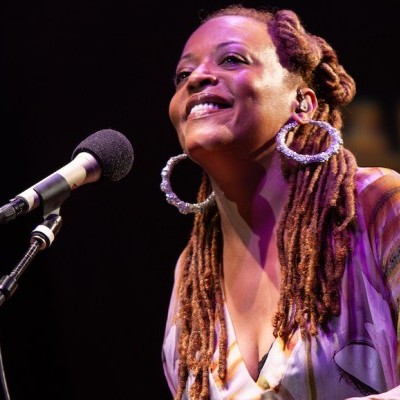
Wilson’s ability to connect to audiences helped her to win two Grammy awards and multiple other accolades. She was named an NEA Jazz Master in 2022.
Sep 3, 2026 10:44 AM
Cassandra Wilson, a singer, songwriter and producer who was one of the most acclaimed and successful jazz vocalists of…
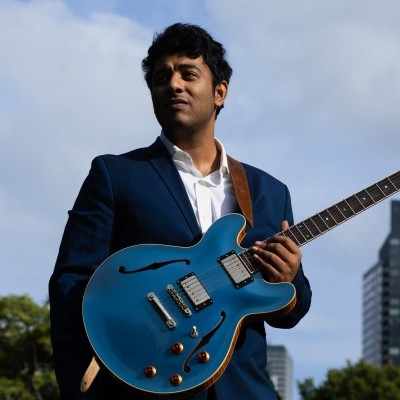
“The love from the jazz and music community restored my faith in humanity,” Walia wrote in an online post upon his release from detention at an ICE facility.
Aug 18, 2026 2:15 PM
Indian jazz guitarist and composer Pritesh Walia has been released after being unexpectedly detained by ICE and taken…
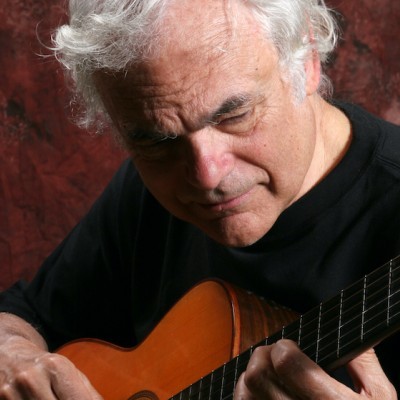
Bertoncini was a specialist and advocate for the nylon-string acoustic guitar, turning down high-profile opportunities that were unsuited to the sound and techniques that he used with that instrument.
Sep 1, 2026 11:06 AM
Gene Bertoncini, an esteemed jazz guitarist, composer, arranger and educator, died Aug. 29 at the Lillian Booth Actors…
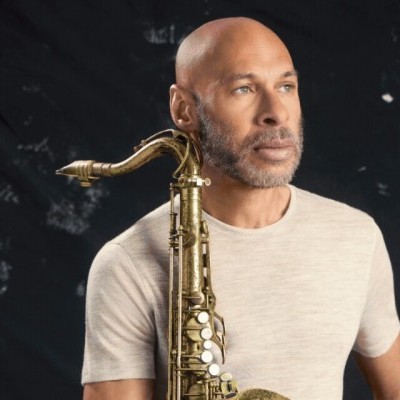
A solo concert by saxophonist Joshua Redman will close the first night of the Hyde Park Jazz Festival on Sept. 26.
Sep 22, 2026 12:26 PM
The Hyde Park Jazz Festival will take place for the 20th time on the final weekend of September 2026. Beginning half…
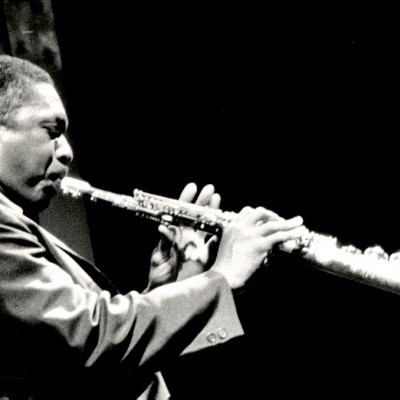
“It was just that suddenly … I could hear it,” Ravi Coltrane said of an epiphany he experienced during his late teens regarding his father’s music. “And it was almost like a calling, like something saying, ‘Hey, man, come on. It’s time to get serious.’ And the first time you really tune in and dial in and focus like that, it can be very life-changing.”
Sep 22, 2026 1:39 PM
Editor’s Note: Tomorrow, Sept. 23, is the 100th anniversary of John Coltrane’s birth. In honor of the tenor and…