Sep 3, 2026 10:44 AM
In Memoriam: Cassandra Wilson, 1955–2026
Cassandra Wilson, a singer, songwriter and producer who was one of the most acclaimed and successful jazz vocalists of…


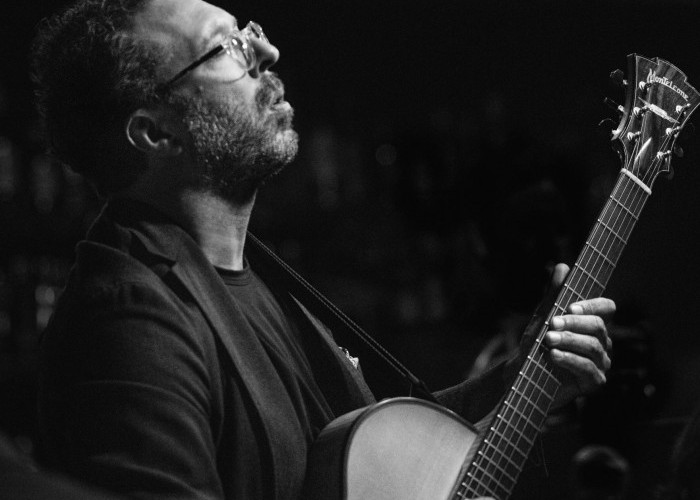
“This is what I want to hear in guitar playing,” Anthony Wilson said of Ben Monder. “This is why we’re out here. It’s the reason of doing the whole thing. I bow down.”
(Photo: Brian Bixby)Anthony Wilson has had an abundantly diverse career since bursting into notoriety in 1997 with his eponymous, Grammy-nominated debut as a guitarist and arranger. In addition to his critically acclaimed nonet albums, Wilson was Diana Krall’s longtime guitarist, also becoming a singer starting with his 2016 folk-inspired album Frogtown (Goat Hill). He returned to the nonet format in 2025 with the release of House Of The Singing Blossoms (Sam First). This is Wilson’s second Blindfold Test; the first was in 2007 at the Monterey Jazz Festival alongside his father, trumpeter and bandleader Gerald Wilson.
Julian Lage
“Ocala” (Scenes From Above, Blue Note, 2026) Lage, guitar; John Medeski, organ; Jorge Roeder, bass; Kenny Wollesen, drums.
I think it’s Julian. Maybe the new project with Medeski, Kenny Wollesen and ... it might be Jorge. But it’s distinctively Julian. Maybe as well as he’s ever been recorded — you can hear his touch and his way of making the guitar resonate, which is very distinctive, and I love him; I love the tune, I love the composition. And Kenny is a drummer that just knows how to deliver you something that’s on this kind of beautiful silver platter. I just like the restraint and the efficiency and the economy of it.
Jimmy Smith/Wes Montgomery
“13 (Death March)” (Jimmy & Wes: The Dynamic Duo, Verve, 1966) Montgomery, guitar; Smith, organ; Oliver Nelson, arranger and conductor, Richard Davis, bass; Grady Tate, drums.
Well, that’s a classic. I forget the name of the tune, but it’s Jimmy and Wes with Oliver Nelson. So, so good. I’m trying to think about something to say ... because you can just sort of throw up your hands — in the playing of course, in Wes Montgomery’s solos and the way his melodies just carry him through. But then I was thinking about the orchestration ... how beautiful these textures were with the flutes and the brass and how clean they were. Oliver Nelson, we think of “Stolen Moments,” you know, those tight, minor chords that have some kind of compact- ness and density, and that’s all in there. It gives Jimmy and Wes such a perfect space to exist in.
Alan Ferber Nonet
“Luteous Pangolin” (The Compass, Fresh Sound New Talent, 2008) Ferber, arranger and conductor, trombone; David Smith, trumpet; Will Vinson, alto saxophone, John Ellis, tenor saxophone; Douglas Yates, bass clarinet; Bruce Saunders, guitar; Bryn Roberts, piano; Alexis Cuadrado, bass; Mark Ferber, drums.
So nice. So good. I think it’s Alan Ferber. I mean, what beautiful writing. Alan’s purity of sound in the middle of that section — at the highest registers, he’s just so controlled. And Mark Ferber on drums, it’s just amazing what he does. It’s truly amazing. I’m so glad I met them. When I was kind of starting to do my own stuff here in L.A., I was just lucky that our paths crossed. It was not too long before Mark was getting ready to leave and go to New York, but we had a few years where we all would just get together in West L.A. where they were living and play. Bruce [Saunders], that’s right. What a beautiful solo, just careening around. There’s all this incredible writing bookending this beautiful context for a player to do a solo.
Miles Okazaki
“Skippy” (Work–The Complete Recordings Of Thelonious Monk, Independent Release, 2018) Okazaki, guitar.
I have no context with this player. Nothing, but I loved it. It was absolutely incredible. I didn’t feel like it was super old. I felt it was more contemporaneous. ... Quite a beautiful mastery of the material, moving about in the language that exists in the composition, but I couldn’t even begin to take a guess. [afterwards] Miles is a super interesting player. A great thinker, super deep on a lot of levels, thinks a lot about rhythm, harmony, interconnectedness of all of this stuff. I met him when he was in the Monk Competition. These days, people play very smoothly and with a lot of sustain, and they usually use some reverb or delay to kind of enhance that. He was straight through an amp, no effect. And I thought, ooh, that’s kind of interesting. He’s got an old guitar and he’s doing something different, but it’s also coming from a modern place.
Andrew Renfroe
“Big Country” (Pop Logic, Independent Release, 2025) Renfroe, guitar; Braxton Cook, alto saxophone; Taber Gable, piano; Joshua Crumbly, bass; Jonathan Pinson, drums.
I would take a shot in the dark and say maybe it’s Andrew Renfroe on guitar. Andrew is such a good player. One thing I really love that he does is that he will get into a place where he plays exclusively above the 10th or 11th fret of the instrument. And he’s found a way tonally to do it with the effects that he uses, which aren’t over the top. Not long before Russell Malone passed, Russell and I talked and he said, “Hey, man, who do you like on guitar these days?” I said, “Well, I really like Andrew Refroe,” and he said, “Man, he’s a bad motherfucker.” And he really is.
Ben Monder
“Where Or When” (Planetarium, Sunnyside, 2024) Monder, guitar.
So fucking good, man. It’s really inspiring. I think it’s Ben Monder. And probably no one else could do that. I mean, it’s sublime guitar playing. And I consider his solo work on standards to be kind of a companion to Ted Green’s solo guitar album. You’re getting a sense of somebody who’s living so deeply in the harmony of the song, that the reharmonization is more like where the song becomes your really close friend rather than this thing outside what you’re trying to put something on. [Monder] is living with certain concepts around counterpoint, around finger independence, how he has to distribute the voices on the guitar. There’s a lot of machinery going into this. But there’s also this beautiful understand- ing of the harmonic relationships that you can move around with such facility. This is what I want to hear in guitar playing. This is why we’re out here. It’s the reason of doing the whole thing. I bow down.
Mary Halvorson
“About Ghosts” (About Ghosts, Nonesuch, 2025) Halvorson, guitar; Immanuel Wilkins, alto saxophone; Brian Settles, tenor saxophone; Adam O’Farrill, trumpet; Jacob Garchik, trombone; Patrica Brennan, vibraphone; Nick Dunston, bass; Tomas Fujiwara, drums.
Mary Halvorson. It was a process of elimination. One thing I find most interesting is that she uses that kind of very dry tone. She’s playing on an archtop guitar, but the way that she does use effects, it’s almost like it’s totally different than the way anybody else is using effects. She’s using it to create little playful musical gestures rather than cloak the tone of the guitar ... to kind of enhance the playfulness of her own playing. And then she’s placing her guitar within the ensemble in the writing in a really cool way ... which sometimes felt a little Ellingtonian.
Kenny Burrell
“I’m Glad There Is You” (Lucky So And So, Concord, 2001) Burrell, guitar and vocals; Onaje Allan Gumbs, piano; Rufus Reid, bass; Akira Tana, drums.
Highest respect, highest praise always for Kenny. I’m just very grateful that at the time when I was like an early teenager, it was my mom who said, you should listen to Kenny Burrell. She had the Ellington Forever records, and then the one from the Village Vanguard with Roy Haynes and Richard Davis. And I really locked on to Kenny. But what I have always been so attracted to in Kenny Burrell [is] how in touch with his voice he was as a player, and of course as a singer. You know, I’m not a singer, and I’ve looked for models around players that I like that sing to me in a way that feels true. And they’re usually not singerly. They’re not doing a lot of affectations or a lot of embellishments. They just find a way to kind of sing in their voice, and it works. And [Kenny] was one of my models. And then that solo, filled with all of these beautiful Kenny Burrell-isms that we’ve come to know — there’s certain things that he does and there’s always that beautiful blues character to it. And such truth and authenticity. I know Kenny and know what a really authentic, true person he is. And I was thinking about [calling] him today. DB
The “Blindfold Test” is a listening test that challenges the featured artist to discuss and identify the music and musicians who performed on selected recordings. The artist is then asked to rate each tune using a 5-star system. No information is given to the artist prior to the test.
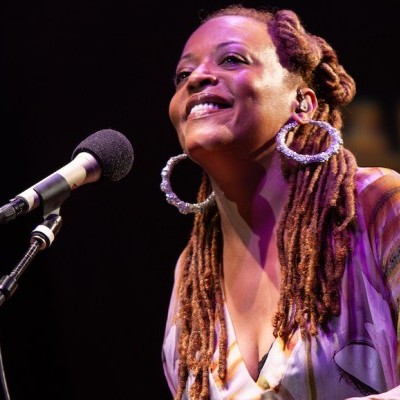
Wilson’s ability to connect to audiences helped her to win two Grammy awards and multiple other accolades. She was named an NEA Jazz Master in 2022.
Sep 3, 2026 10:44 AM
Cassandra Wilson, a singer, songwriter and producer who was one of the most acclaimed and successful jazz vocalists of…
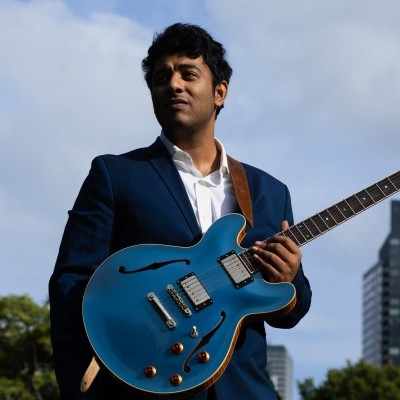
“The love from the jazz and music community restored my faith in humanity,” Walia wrote in an online post upon his release from detention at an ICE facility.
Aug 18, 2026 2:15 PM
Indian jazz guitarist and composer Pritesh Walia has been released after being unexpectedly detained by ICE and taken…
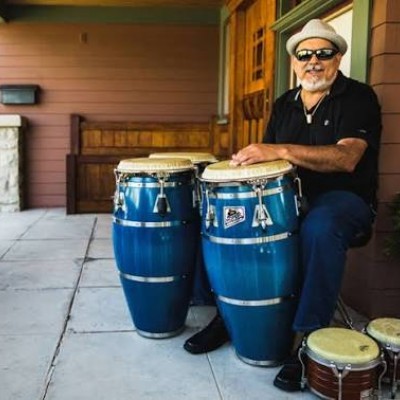
Percussionist Poncho Sanchez was among the artists scheduled to perform at the now-canceled inaugural LA Jazz Festival.
Aug 11, 2026 12:53 PM
The inaugural LA Jazz Festival, originally scheduled to run Aug. 7–23 with dozens of events across Los Angeles’…
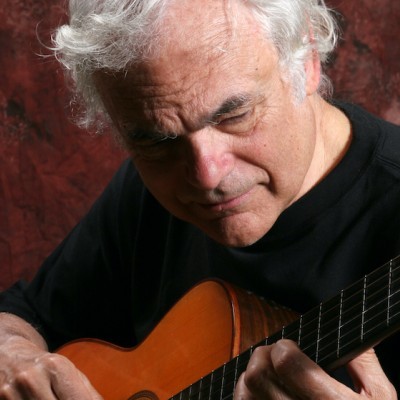
Bertoncini was a specialist and advocate for the nylon-string acoustic guitar, turning down high-profile opportunities that were unsuited to the sound and techniques that he used with that instrument.
Sep 1, 2026 11:06 AM
Gene Bertoncini, an esteemed jazz guitarist, composer, arranger and educator, died Aug. 29 at the Lillian Booth Actors…
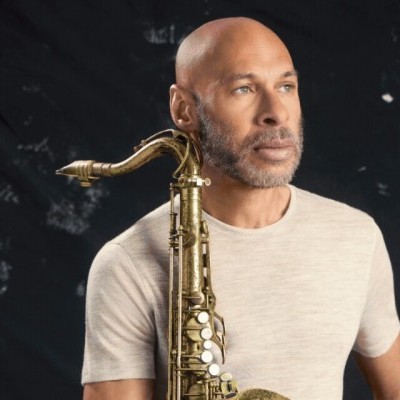
A solo concert by saxophonist Joshua Redman will close the first night of the Hyde Park Jazz Festival on Sept. 26.
Sep 22, 2026 12:26 PM
The Hyde Park Jazz Festival will take place for the 20th time on the final weekend of September 2026. Beginning half…