Sep 3, 2026 10:44 AM
In Memoriam: Cassandra Wilson, 1955–2026
Cassandra Wilson, a singer, songwriter and producer who was one of the most acclaimed and successful jazz vocalists of…



Lee Ritenour, right, with journalist Ashley Kahn, center, and pianist Greg Burk, who translated for the Italian audience.
(Photo: Karen Righi)Genial and relaxed at 73, guitarist Lee Ritenour took time while on tour in Europe this summer to participate in his first Blindfold Test. The public event took place as part of the Umbria Jazz Festival in Perugia, Italy, Ritenour playing his Sadowsky electric nylon guitar, unplugged, while he spoke about the following selected tracks.
George Benson
“Dinorah, Dinorah” (Give Me The Night, Warner Bros/Qwest, 1980) Benson, electric guitar, scat; Jerry Hey, trumpet; Kim Hutchcroft, Larry Williams, saxophones; Greg Phillinganes, electric piano; Claire Fischer, piano, synthesizer, electric piano; Herbie Hancock, synthesizer; Louis Johnson, bass; John Robinson, drums; Paulinho da Costa, percussion.
That’s one of our closest friends, the composer Ivan Lins — his song “Dinorah, Dinorah,” and that was George Benson’s version, Quincy Jones producing. I didn’t play on this track, but I was there that day. It was such an honor to be part of Quincy’s family. There’s a funny story about this album. I lived very close to the studio Quincy used and he called me one night. I was sleeping and he said, “Lee, you gotta come down to the studio now!” I said, “Who is this?” “It’s Q. The second engineer accidentally erased part of George’s guitar solo on ‘Give Me The Night’ and you gotta fix it.” It took maybe one hour and then Quincy said, “Whew, OK. Lee, never tell George this happened. Promise me.” The end of the story is 20 years later, I’m walking in an airport with George. We were on the same bill, and I said, “George, I gotta story to tell you.” He listened, and said, “It was a hit, so it’s all good.”
Joe Pass
“’Round Midnight” (Virtuoso, Pablo, 1974) Pass, electric guitar.
Wow. Great. Incredible performer. I wanted to say at one point Joe Pass. The command of the guitar first of all was fantastic, and the chord substitutions on that classic melody. But Joe was not an acoustic guitar player. It sounds like that period when Joe did his solo acoustic guitar album. My dad used to take me to hear him play when I was a teenager, and I loved Joe Pass.
Julian Lage
“Fairbanks” (View With A Room, Blue Note, 2022). Lage, Bill Frisell, electric guitars; Jorge Roeder, bass; Dave King, drums.
It’s a wonderful composition and arrangement and player. I don’t think it’s Julian Lage but it sounds like him, or someone from this more contemporary era. I think I was one of the players, along with Metheny and a couple of others, who bridged to this period when our compositions and arrangements became part of the records as much as the improvisation. This is an example where the tune is as important as the actual playing. [afterward] Ah, with Bill Frisell! That was throwing me off a little bit. Julian’s a little cleaner, and Bill’s a little rougher, and they’re both incredible.
Stuff
“Reflections Of A Divine Love” (Stuff, Warner Bros., 1976) Cornell Dupree, Eric Gale, guitars; Richard Tee, piano; Gordon Edwards, bass; Clarence Penn, Steve Gadd, drums.
Very nice track. Is this guitarist Eric Gale, Richard Tee and Stuff? This was an incredible group of primarily New York musicians in the ’70s and ’80s who played on everybody’s records. I loved Cornell Dupree and Eric Gale’s playing like crazy. It was a very small world in those days. In Los Angeles, it was me, Harvey Mason, Dave Grusin and another wave of players. If those guys recorded with a particular artist like Paul Simon, Paul would then come out to Los Angeles and then he would hire us sometimes to do the same song. Aretha Franklin did the same thing. We were very respectful of each other but very competitive.
Pasquale Grasso
“And So I Love You” (Fervency, Sony/Masterworks, 2024) Grasso, electric guitar; Keith Barra, bass; Ari Roland, drums.
An incredible player. I can’t remember the name of the tune but it’s a great standard. I’m thinking Barney Kessel but sometimes Barney was not as clean as this. I don’t think it’s Jim Hall, either. The guitar player is definitely a jazz player, doing jazz choruses and less concerned about the overall production, more concerned about the actual playing.
John McLaughlin
“Song For My Mother” (My Goal’s Beyond, Douglas, 1971) McLaughlin, guitar; Airto Moreira, percussion.
I’m thinking Paco de Lucia and Al Di Meola? It could be somebody else in that territory. [afterwards] Right, right, right. A very different John McLaughlin in that first era. When we first heard his group Mahavishnu with the great Billy Cobham on drums and Jan Hammer, they came to Los Angeles to play at The Roxy, and I was in the front row. I think I was about 19. They were loud and aggressive and everyone was a virtuoso on their instrument.
The Poll Winners
“On Green Dolphin Street” (The Poll Winners, Contemporary, 1957) Barney Kessel, electric guitar; Ray Brown, bass; Shelly Manne, drums.
Great playing, playing a great standard. Again, I’ve heard this record, and I’m going back again to Barney Kessel. In the early days of his career, he was also a studio musician playing on movie and TV soundtracks. A lot of the great jazz players came out of the L.A. studio scene. At night they would play jazz clubs but not make any money, and during the day they would work on these films.
Larry Carlton
“Room 335” (Larry Carlton, MCA, 1978) Carlton, electric guitars; Greg Mathieson, keyboards; Abraham Laboriel, bass; Jeff Porcaro, drums; Paulinho da Costa, percussion.
Is that Larry Carlton? That’s with the rhythm section that eventually became Joni Mitchell’s band. Larry and I grew up within 10 minutes of each other. 335 was the name of Larry’s home studio and also the Gibson model he and I both used to play. Larry worked quite a bit with Steely Dan, and I used to get called for more Steely Dan stuff than I could do. [Donald and Walter] were completely crazy and unbelievable geniuses, and they would sometimes record the same song with seven different guitar parts by seven different players. Larry, myself, Steve Lukather, Jay Graydon. Then, the record would come out and the conversation was, “Did you make the cut? Are you on the record?” DB
The “Blindfold Test” is a listening test that challenges the featured artist to discuss and identify the music and musicians who performed on selected recordings. The artist is then asked to rate each tune using a 5-star system. No information is given to the artist prior to the test.
Wilson’s ability to connect to audiences helped her to win two Grammy awards and multiple other accolades. She was named an NEA Jazz Master in 2022.
Sep 3, 2026 10:44 AM
Cassandra Wilson, a singer, songwriter and producer who was one of the most acclaimed and successful jazz vocalists of…
Bertoncini was a specialist and advocate for the nylon-string acoustic guitar, turning down high-profile opportunities that were unsuited to the sound and techniques that he used with that instrument.
Sep 1, 2026 11:06 AM
Gene Bertoncini, an esteemed jazz guitarist, composer, arranger and educator, died Aug. 29 at the Lillian Booth Actors…
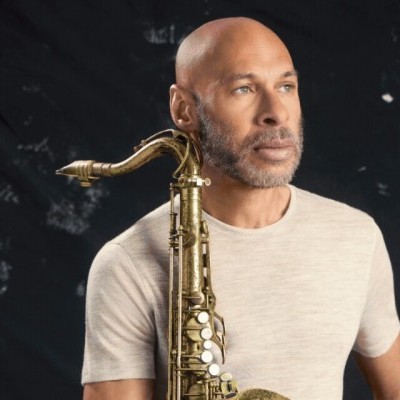
A solo concert by saxophonist Joshua Redman will close the first night of the Hyde Park Jazz Festival on Sept. 26.
Sep 22, 2026 12:26 PM
The Hyde Park Jazz Festival will take place for the 20th time on the final weekend of September 2026. Beginning half…
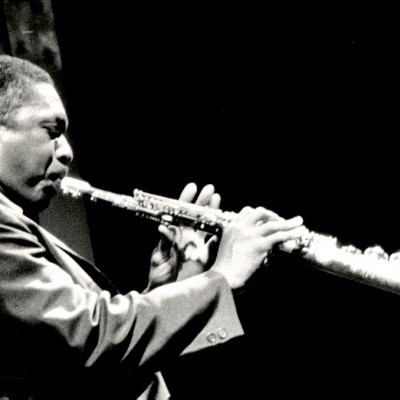
“It was just that suddenly … I could hear it,” Ravi Coltrane said of an epiphany he experienced during his late teens regarding his father’s music. “And it was almost like a calling, like something saying, ‘Hey, man, come on. It’s time to get serious.’ And the first time you really tune in and dial in and focus like that, it can be very life-changing.”
Sep 22, 2026 1:39 PM
Editor’s Note: Tomorrow, Sept. 23, is the 100th anniversary of John Coltrane’s birth. In honor of the tenor and…
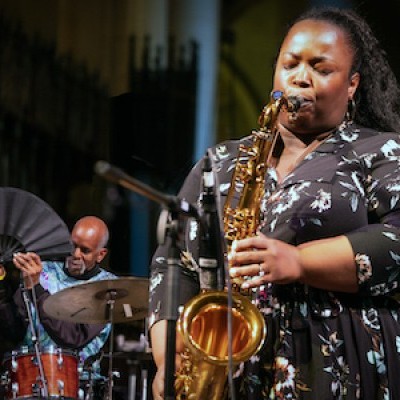
Camille Thurman took to the stage alongside bassist Kenny Davis and drummer Tommy Campbell for a rendition of Johnny Mercer’s “I’m An Old Cowhand” that recalled Rollins’ epochal 1957 trio outing Way Out West.
Oct 6, 2026 1:33 PM
As emcee Mark Ruffin noted at the commencement of an epic tribute to saxophonist Sonny Rollins at the Cathedral of…