Sep 3, 2026 10:44 AM
In Memoriam: Cassandra Wilson, 1955–2026
Cassandra Wilson, a singer, songwriter and producer who was one of the most acclaimed and successful jazz vocalists of…


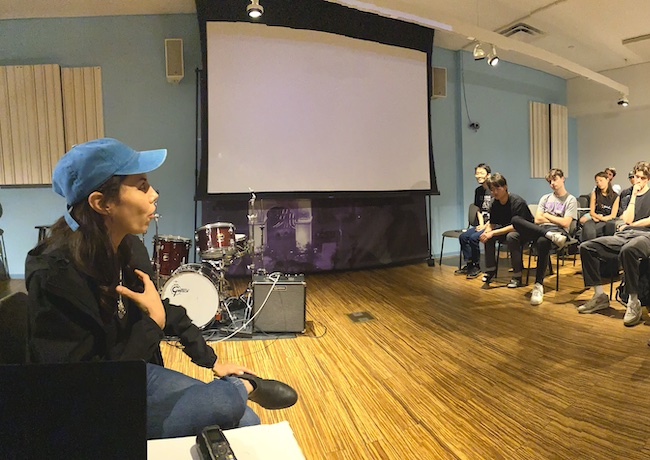
“Joe Henderson, to me, is what it means to have a huge sound even though we know that his volume was very soft,” Aldana said during her live Blindfold Test.
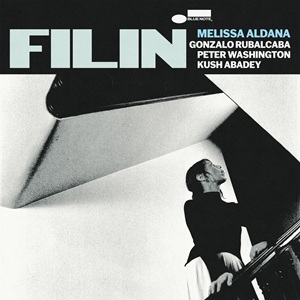
(Photo: Ashley Kahn)There’s a new album out from saxophonist Melissa Aldana, Filin (Blue Note), that leans on the gentle side of her tenor voice and features Central and South American ballads of the past century. This was her first DownBeat Blindfold Test, conducted live at New York University’s Jazz Studies Program last September with about 30 students bearing witness.
Billy Hart Quartet
“Some Enchanted Evening” (One Is The Other, ECM, 2013) Mark Turner, tenor saxophone; Ethan Iverson, piano; Ben Street, bass; Hart, drums.
It’s just one note, and I know already. Mark Turner is one of the people I check out the most. I’m in love with his playing. He’s just been a huge influence. He defines a period of my life, my early to late 20s listening to [Kurt Rosenwinkel’s] The Remedy, hard-core: so much beauty. Also, Mark is one of the people that extended the upper register of the horn — playing lines up there — which is something I hadn’t heard that much back then.
Ben Webster
“Poutin’” (King Of The Tenors, Verve, 1953) Webster, tenor saxophone; Oscar Peterson, piano; Ray Brown, bass; J.C. Heard, drums.
The time period is the ’40s, ’50s. It’s somebody that loves Ben Webster: his use of intervals, how he can go from the bottom of the saxophone to the high end with a clarity that’s incredible. The groaning reminds me a lot of Eddie “Lockjaw” Davis. It’s so crazy how with that vibrato — from Ben Webster, Coleman Hawkins, Lester Young and Chu Berry — you can hear how there’s millions of saxophone players that evolved from that sound. You can’t play tenor sax without understanding where these people were coming from and how they were playing.
Miguel Zenón & Luis Perdomo
“Silencio” (El Arte del Bolero, Vol. 2, Miel Music, 2023) Zenón, tenor saxophone; Perdomo, piano.
Miguel’s a very important figure for Latin American musicians, and he’s somebody I grew up listening to. He’s always been an example of playing in a band and developing a sound with the same musicians, which has a lot to do with the way he created his band. I just saw him at the Village Vanguard two weeks ago and you’ve seen him: It’s crazy! Intense! He was like, “Do you have your saxophone?” I said, “Yeah, but I’m good,” and just walked away. Then something in me said, “What is your problem? Miguel Zenón invited you [to sit in] and you said no?” So I went back. “Of course I would love to play with you.” We played “My Little Suede Shoes.”
McCoy Tyner/Joe Henderson
“We’ll Be Together Again” (Forces Of Nature, Blue Note, 1966) Henderson, tenor saxophone; Tyner, piano; Harold Grimes, bass; Jack DeJohnette, drums.
I don’t want to stop listening to it. One note, the way that he articulates it, and you know that is Joe. He has a very particular way of playing arpeggios. Joe, to me, is what it means to have a huge sound even though we know that his volume was very soft. It’s about the overtones and what’s around your sound. He also has a sense of humor, like, “Catch me if you can. I’m too hip for you to catch me.” I just love Joe Henderson. Is this late ’60s?
Nicole Glover
“Blues For Mel” (Plays, Savant, 2024) Glover, tenor saxophone; Steve Nelson, vibraphone; Tyrone Allen II, bass; Kayvon Gordon, drums.
This is more of a modern player. Is this Nicole Glover? I can hear the things she loves through the talks we have had. I hear some Charlie Rouse in there. Not a lot of people of our generation have checked him out. She doesn’t have the same intonation as him, but something about her vibrato and the tag, how she plays the notes. Also I can hear that she loves late-’50s, early-’60s Sonny. Every time we hang out, we talk about practicing, how she’s developing and working on different ideas.
Michael Brecker
“Song For Bilbao” (Live By The Sea Jazz Festival, Tokyo, YouTube video, 1997) Brecker, tenor saxophone; Pat Metheny, guitar; Joey Calderazzo, piano; Dave Holland, bass; Jack DeJohnette, drums.
[immediately] I had a dream of you putting a Michael Brecker tune into the Blindfold Test. My dad is a saxophone player and he had posters all over the house of Michael, all of his CDs, so organized, and boxes of handwritten transcriptions of his solos. I grew up watching this video and another one, Live In Barcelona in 1988, with the Brecker Brothers. Michael’s so funky but so tasty. If anybody else tries to be a copy of him, it sounds corny. But when Michael plays it’s so soulful you just can’t mess with that.
Steve Lacy/Charlie Rouse
“Ask Me Now” (That’s The Way I Feel Now, A&M, 1984) Lacy, soprano saxophone; Rouse, tenor saxophone.
This was “Ask Me Now.” I never heard a tenor and soprano recording together. I was just thinking this is such a tricky song to play duo. There’s this beautiful melody that is as important as the harmony, so as a saxophone player I always wonder when I’m playing a solo, “How can I outline the chord changes and still keep the beauty of the melody without getting in the middle of …” [sings arpeggios]. He’s playing a lot of great ideas. That [tenor player] was definitely somebody who loves Zoot Sims, the way he’s playing on the bottom of the saxophone. [afterwards] Wow. I thought it was Charlie Rouse for a second. And Steve Lacy. It’s beautiful.
Zoh Amba
“Interbeing” (Sun, Smalltown Supersound, 2025) Amba, tenor saxophone; Lex Korton, piano; Caroline Morton, bass; Miguel Marcel Russel, percussion.
Zoh Amba. It sounds like a modern recording, the quality, and of the younger musicians, she’s the one that sounds like that. I may be pronouncing her name wrong — I haven’t done my deep dive into her yet. This reminds me of Albert Ayler. In his playing there’s freedom but there’s still melody and there’s still a story in the music, and that’s what I love. If I can close my eyes and have the emotional connection with the sound, then it sticks to me.
Branford Marsalis Quartet
“Cheek To Cheek” (Contemporary Jazz, Blue Note, 2000) Marsalis, tenor saxophone; Joey Calderazzo, piano; Eric Revis, bass; Jeff Watts, drums.
This is one of my favorites of Branford: Contemporary Jazz, “Cheek To Cheek.” A classic. I remember being 13, in my bedroom in Santiago, waking up early before going to school. I would have tea, some bread and avocado — that’s a very Chilean thing to do — then put on my computer and using [the app] Transcribe I would slow down this solo and repeat it many times. I remember being astounded when Branford’s doing the double-lip. To this day I never got that solo together all the way. I hope at some point I get a chance to have a deep dive into saxophones with Branford. DB
The “Blindfold Test” is a listening test that challenges the featured artist to discuss and identify the music and musicians who performed on selected recordings. The artist is then asked to rate each tune using a 5-star system. No information is given to the artist prior to the test.
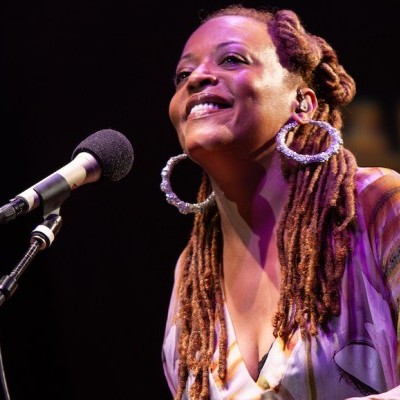
Wilson’s ability to connect to audiences helped her to win two Grammy awards and multiple other accolades. She was named an NEA Jazz Master in 2022.
Sep 3, 2026 10:44 AM
Cassandra Wilson, a singer, songwriter and producer who was one of the most acclaimed and successful jazz vocalists of…
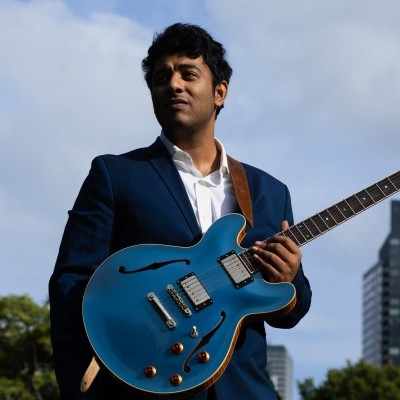
“The love from the jazz and music community restored my faith in humanity,” Walia wrote in an online post upon his release from detention at an ICE facility.
Aug 18, 2026 2:15 PM
Indian jazz guitarist and composer Pritesh Walia has been released after being unexpectedly detained by ICE and taken…
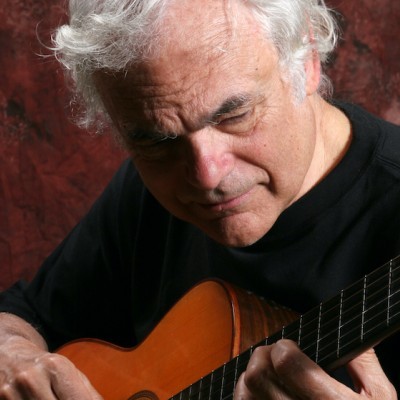
Bertoncini was a specialist and advocate for the nylon-string acoustic guitar, turning down high-profile opportunities that were unsuited to the sound and techniques that he used with that instrument.
Sep 1, 2026 11:06 AM
Gene Bertoncini, an esteemed jazz guitarist, composer, arranger and educator, died Aug. 29 at the Lillian Booth Actors…
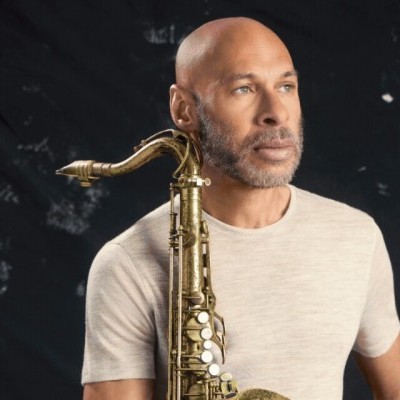
A solo concert by saxophonist Joshua Redman will close the first night of the Hyde Park Jazz Festival on Sept. 26.
Sep 22, 2026 12:26 PM
The Hyde Park Jazz Festival will take place for the 20th time on the final weekend of September 2026. Beginning half…
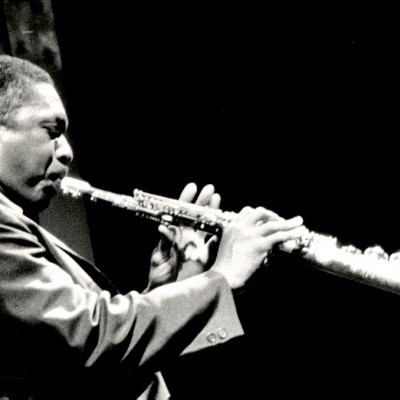
“It was just that suddenly … I could hear it,” Ravi Coltrane said of an epiphany he experienced during his late teens regarding his father’s music. “And it was almost like a calling, like something saying, ‘Hey, man, come on. It’s time to get serious.’ And the first time you really tune in and dial in and focus like that, it can be very life-changing.”
Sep 22, 2026 1:39 PM
Editor’s Note: Tomorrow, Sept. 23, is the 100th anniversary of John Coltrane’s birth. In honor of the tenor and…