Sep 3, 2026 10:44 AM
In Memoriam: Cassandra Wilson, 1955–2026
Cassandra Wilson, a singer, songwriter and producer who was one of the most acclaimed and successful jazz vocalists of…


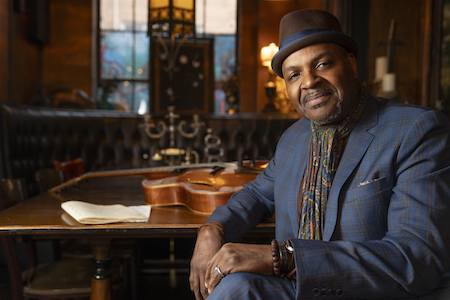
“The first time I was with him, I felt, ‘You must be on the right track to have people like this endorse you,’” Bobby Broom said of his mentor, the late Sonny Rollins.
(Photo: Sandy Morris)As guitarist Bobby Broom spoke from his Chicago home office in April, promoting jazz’s legacy was on his mind for two big reasons. In a week, he would perform onstage as part of the globally streamed all-star UNESCO International Jazz Day event at the city’s Lyric Opera House. At the same time, he was eagerly awaiting the finished copies of his new album, one that celebrates the saxophonist who shaped this music’s trajectory and was also a personal mentor.
Broom’s Notes Of Thanks (Steele Records) is an homage to Sonny Rollins, who died May 25 at age 95, a few weeks after the album’s release and the interview for this article. Most of the tracks are Rollins compositions, and many of them are not as familiar as they should be — even to the saxophonist’s ardent fans. Broom’s playing, with inventive lyrical flights and imaginative quotations, sometimes echoes the saxophonist’s approach. This recording also made Broom look far back into his own life, back to when he first performed with Rollins at New York’s Carnegie Hall in 1978. At that time, Broom was in high school.
“It was a wondrous thing,” Broom said about that concert. “On some level, I understood the gravity of it. But I wasn’t looking at that experience in any kind of historical way. How can you when you’re 17?”
Since that experience, Broom went on to record with numerous prominent musicians (ranging from Kenny Burrell to Dr. John) and lead his own acclaimed groups, including the longstanding trio — with drummer Kobie Watkins and bassist Dennis Carroll — that appears on Notes Of Thanks. Through it all, Rollins has remained an overarching presence. Broom joined his band in 1981 and stayed until 1987; then rejoined from 2005 to 2010, a period that ended about a year before the saxophonist’s retirement. Broom contends that Rollins’ repertoire made as much of an impact as his improvisational brilliance.
“I can get emotional about how close I feel to these songs,” Broom said. “They are so meaningful to me, much like I know they are to Sonny. Even if it’s subconscious, just the feeling I get from the song — that makes me want to interpret it.”
For this album, those interpretations combine Rollins’ studied pieces from the 1950s and 1960s (“Alfie’s Theme” and “Valse Hot”) along with his overlooked works from the 1980s (“Allison” and “Kim”). Broom’s thoughtful selection from this catalog shows how much beauty can be found within its extensive range.
“Sonny has a vast body of work that I don’t know if people have really investigated,” Broom said. “I attribute that to how history works. Someone becomes popular for something they did 50 years ago, time stopped, it gets frozen and the artist is recognized for that and some of their fan base is stuck on that period but time keeps going.”
One of Rollins’ innovations was using the saxophone trio format on such albums as Way Out West and Freedom Suite in the late 1950s. While Broom also leads a trio here, that instrumental configuration was not central for this album. He was more focused on how best to serve the songs while allowing Watkins and Carroll to play their parts as they envisioned them. The group’s original ideas include a funk rhythm on “Doxy.” He also sought how to interpret the sound of Rollins’ single-note instrument to his own chordal one.
“The way that I approach it is when I feel the need for harmonic support, then I try to provide that,” Broom said. “For instance, ‘Kim.’ That’s not a melody that I would necessarily want to play without the support of some harmony. So if there was a piano or another chordal instrument, then I could play the melody single-line and feel OK about that. But in the context of the trio, I felt that I wanted to provide some support for it. But then, maybe on ‘Freedom Suite Part 1,’ I was subconsciously referencing what I remember from the original recording. And the original presentation of that composition is what it is: the melody line, the rhythmic support of bass and drums. So I didn’t need to make chords on each one of those notes. On ‘Paul’s Pal,’ no one said, ‘Kobe, play a calypso beat.’ At the recording he was just playing this calypso beat and we thought, ‘Oh, cool. That’s what this is.’ The song sounds like it could be a calypso song, so it’s nature.”
Carroll wrote the only piece on the album that is not a Rollins composition, “Me Time.” Broom said he included it because of its distinctive character and because he enjoys throwing in an outlier, like with his 2009 Thelonious Monk tribute, Bobby Broom Plays For Monk.
“Monk didn’t write ‘Lulu’s Back In Town,’ but he played the heck out of it,” Broom said. “When I heard ‘Me Time,’ we both said it has a quality, mysterious or something that is reminiscent of something we may associate with Sonny. It’s a great tune, and I want to record it.”
Luthier Dan Koentopp also had a role in making Notes Of Thanks sound so vivid. For the past few years, Broom has been playing a Koentopp Chicagoan guitar, and along with its exquisite tone, Broom said it has enhanced his perspective on what Rollins played.
“Koentopp is handmade, like a Stradivarius-level instrument — it has such nuance for me as I hear it,” Broom said. “It has so much depth it makes me want to accentuate certain things, too — certain finger things with pull-offs, when you hear the finger and the string, you get that tactile sensation much like keys on the saxophone. It’s the physical aspects of the instrument that I love hearing.”
Along with Broom’s active performance schedule, he is also associate professor of jazz guitar and jazz studies at Northern Illinois University in DeKalb, Illinois. As one who worked with giants like Rollins and Jackie McLean, he is in an ideal position to transmit their lessons to his classrooms. But during his different times with Rollins, the legend’s mentorship was more about affirmation rather than transmitting traditional lessons.
“Day to day, I wasn’t checking in if this is right, but in conversation Sonny would say something and I would go, ‘Right, that’s what I know,’” Broom said. “That was another kind of validation: ‘You’re on the right track, keep on doing what you’re doing.’ The first time I was with him, I felt, ‘You must be on the right track to have people like this endorse you.’ So then the next tenure with him was something similar, but after I had established some things. We all at the core have some of the same ideas about certain things, and this is what we impart to students.”
While Broom was preparing Notes Of Thanks, he was also reading Aidan Levy’s definitive Rollins biography, Saxophone Colossus, which made him think more about how Rollins entered his life. The book reveals the probability that pianist Al Haig suggested Rollins check out the teenage Broom. Shared geography was another connection. Like Rollins, Broom spent his earliest years in Harlem before moving to Manhattan’s Upper West Side. All of which makes this album another closing of the circle.
“Sonny knew I was from Harlem, so did Jackie,” Broom said. “I think there was something to that. I’ve thought that for a little while: ‘Here’s this little homeboy who loves the music, sounds like he’s been practicing some of the right things, so, good!’” DB
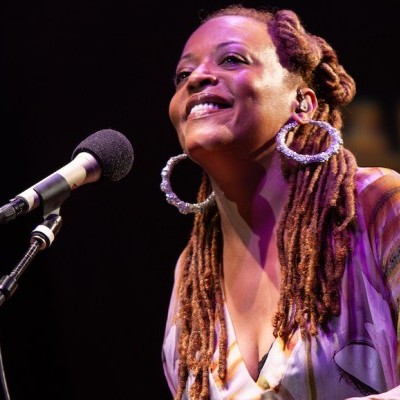
Wilson’s ability to connect to audiences helped her to win two Grammy awards and multiple other accolades. She was named an NEA Jazz Master in 2022.
Sep 3, 2026 10:44 AM
Cassandra Wilson, a singer, songwriter and producer who was one of the most acclaimed and successful jazz vocalists of…
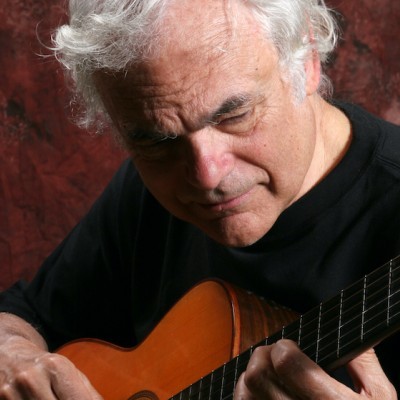
Bertoncini was a specialist and advocate for the nylon-string acoustic guitar, turning down high-profile opportunities that were unsuited to the sound and techniques that he used with that instrument.
Sep 1, 2026 11:06 AM
Gene Bertoncini, an esteemed jazz guitarist, composer, arranger and educator, died Aug. 29 at the Lillian Booth Actors…
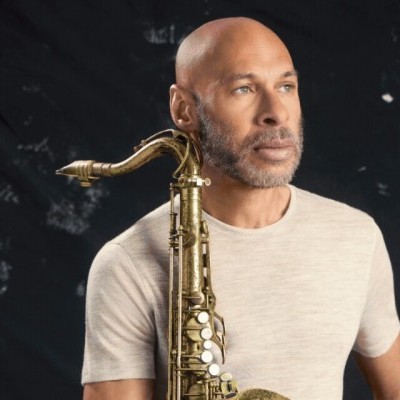
A solo concert by saxophonist Joshua Redman will close the first night of the Hyde Park Jazz Festival on Sept. 26.
Sep 22, 2026 12:26 PM
The Hyde Park Jazz Festival will take place for the 20th time on the final weekend of September 2026. Beginning half…
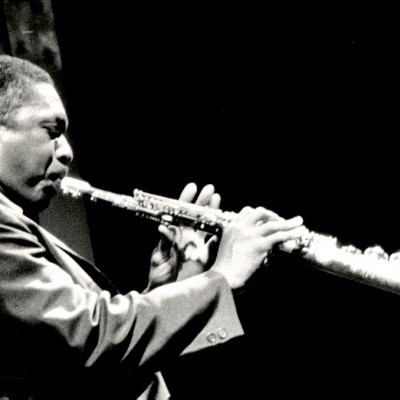
“It was just that suddenly … I could hear it,” Ravi Coltrane said of an epiphany he experienced during his late teens regarding his father’s music. “And it was almost like a calling, like something saying, ‘Hey, man, come on. It’s time to get serious.’ And the first time you really tune in and dial in and focus like that, it can be very life-changing.”
Sep 22, 2026 1:39 PM
Editor’s Note: Tomorrow, Sept. 23, is the 100th anniversary of John Coltrane’s birth. In honor of the tenor and…
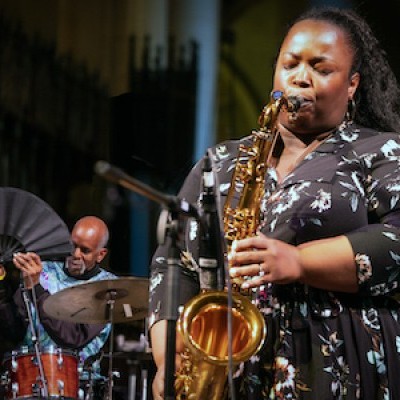
Camille Thurman took to the stage alongside bassist Kenny Davis and drummer Tommy Campbell for a rendition of Johnny Mercer’s “I’m An Old Cowhand” that recalled Rollins’ epochal 1957 trio outing Way Out West.
Oct 6, 2026 1:33 PM
As emcee Mark Ruffin noted at the commencement of an epic tribute to saxophonist Sonny Rollins at the Cathedral of…