Sep 3, 2026 10:44 AM
In Memoriam: Cassandra Wilson, 1955–2026
Cassandra Wilson, a singer, songwriter and producer who was one of the most acclaimed and successful jazz vocalists of…


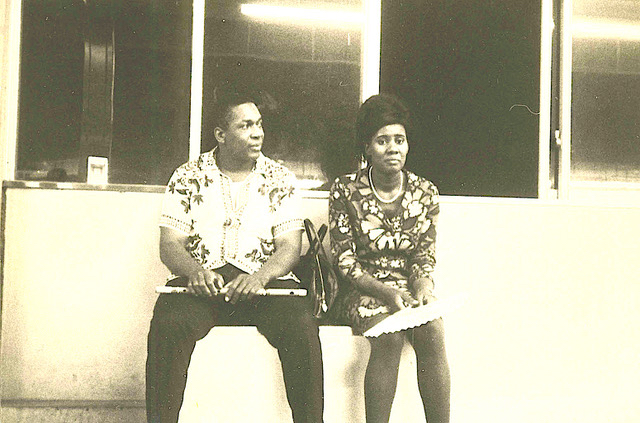
John and Alice Coltrane in a casual moment.
(Photo: Courtesy of the Coltrane Family)After two decades, phase one of the historic restoration effort revitalizing The John & Alice Coltrane Home in Dix Hills, New York, is nearing completion. Named a National Treasure in 2018 by the National Trust for Historic Preservation, the landmark property will reopen to the public in 2026 as an interactive museum, recording studio and meditation space, offering an ambitious calendar of events and related programming.
“Through workshops, residencies and performances, we’ll bring artists and community together across generations,” said Steve Fulgoni, founder and president of the Friends of The Coltrane Home, a nonprofit organization.
Fostering deep connections is part of the Coltranes’ legacy, one that played an important role in their shared life at the Dix Hills residence. As young working parents, they moved their family of three from New York City out to Long Island in 1964, seeking an environment that would nourish communal creativity and spiritual development. In a matter of years, the ranch-style house and its 3.4 acres of native greenery would welcome three more children, serve as an incubator for John’s 1965 masterwork A Love Supreme (Impulse!) and spark Alice’s series of era-defining Impulse! releases from the late 1960s through the early 1970s.
“In an age of digital isolation, the Home will remind us of the power of presence, mentorship and shared human experience,” said Fulgoni.
With phase one in its final stages, the Home’s stewards look toward inviting the public into this sacred space with the goal of promoting community-driven artistic expansion. “Community service is the essential part of it, especially for young people,” said Kathleen Hennessy, vice president of Friends of the Coltrane Home. “There’ll be music playing throughout the house … opportunities for people to learn, play music, explore meditation and self-expression.” She added, “It’s not supposed to be behind a velvet rope. We’re going to let people come in and sit on the furniture and listen to the music.”
Poised to soft open in September 2026, to coincide with John’s centennial, the museum provides a hybrid experience comprising exact replicas and enhanced updates, as well as an archive — donated, in part, by board member Yasuhiro Fujioka — that the organization is in the process of digitizing. Visitors will have the opportunity to explore all levels of the home, using its restored staircase or its forthcoming system of elevators and lifts. “We are committed to everybody being able to access the parts of the house that are the most important,” said Hennessy.
One such space is the modest-sized guest bedroom where John composed A Love Supreme. It overlooks the home’s yard and meditation trail, with plenty of light pouring in through the top-floor windows.
The restoration also honors Alice’s intention for vibrant colors to energize the Home. The couple’s master bedroom features their original carpet, striking in morning glory purple, and a rainbow-paned rose window leans against the wall of Alice’s meditation room, awaiting replacement. “She felt very strongly about the power of colors,” said Hennessy. “They were used throughout the house and they will be back when the house is restored.”
Beyond its myriad immersive and interactive elements, what separates The Coltrane Home from other historic museums is the inclusion of Alice’s studio, primarily restored to support young, emerging artists — as well as mid-career and elder artists on a case-by-case basis — and to serve the Home’s multidisciplinary artist-in-residence series. Additionally, the space will resume its Live from Alice Coltrane’s Studio series that began during the pandemic. “That will range from small musical performances to talks about the legacy,” said Hennessy, sharing the Home’s plans to reach those who may not be able to visit in person.
Reopening Alice’s studio as a state-of-the-art space for recording, engineering and performance resonates deeply with harpist and composer Brandee Younger, who serves as a Coltrane Home board member. “Alice didn’t project the image of a business trailblazer, but she absolutely was one,” said Younger, discussing the Coltranes’ plans to build their own studio and launch their own label amid their ongoing frustrations with critics misunderstanding John’s work.
“Although John passed away [in 1967] before they could complete that vision together,” she continued, “Alice carried it forward. She finished the studio and the music, and she ultimately negotiated what I see as a groundbreaking deal with Impulse! Records.” Instead of releasing John’s music on their own label, Alice brokered a record deal with Impulse! that allowed her to record and produce her own music as a leader under her own name.
“Producing one’s own album was something unheard of for Black artists in that era, whether in jazz or any other genre,” said Younger, who herself is a native Long Islander. “As a young Black harp student, Alice Coltrane was one of the few role models I had who showed me that someone who looked like me could play the music I loved and bring the harp into unexpected genres, and the fact that she lived right here made it all the more meaningful.”
The Coltranes’ resistance to racist and discriminatory practices has informed the restoration since its inception. Artistic Director Michelle Sita Coltrane considers the project critical in preserving and advancing the joint legacy of her parents, who overcame “barriers of inequity, systemic racism and more through their higher connection and belief that their music is the language of the heart, transcending all barriers.”
Currently, the project’s most urgent challenges include funding and logistics. A historic restoration is distinct from other types of renovations, requiring complex fundraising strategies, visionary planning and lots of elbow grease. Restoring the outer brick façade, for example, which received funding from two separate grants, required that the original bricks be removed, each washed and restored, then replaced in the exact style and layout as they’d appeared. “It’s why a lot of times these projects are long and difficult and require substantial funding,” said Hennessy.
Fortunately, plainclothes superheroes abound. Because community is intrinsic to the Coltranes’ legacy, the Home has partnered with area businesses like Huntington Township’s HGLV Architects, plus local and national organizations that have offered critical funding and brick and mortar support, including Half Hollow Hills Community Library, whose new auditorium hosts performances and series workshops.
The African-American Cultural Heritage Action Fund (AACHAF) has been supporting the Dix Hills restoration effort for years, which now runs in tandem with renovations at the Coltranes’ Philadelphia home. The Coltrane Estate recently finalized the latter’s reacquisition with support from NTHP and assistance from AACHAF, which has adopted the site’s restoration as the inaugural project for its new Descendant and Family Stewardship program. “The work that they’re doing is so vital,” said Hennessy, who added, “We want to acknowledge the years of advocacy and efforts in the neighborhood on behalf of the Coltrane House in Philadelphia preceding our stewardship.”
Whether they show up as community partners, music lovers or working artists, it’s the people who empower the effort in the face of financial challenges and logistical dead-ends. The Home’s stewards look forward to introducing a new generation to late-era John Coltrane, inviting young artists to record in Alice’s studio and connecting with visitors in the Dix Hills community and around the world.
“[The restoration is] not just about history,” said Younger. “It’s about making that history live for the next generation, especially for Black children and families in Suffolk County and beyond. This house is a beacon of cultural and historical significance, and it’s so dear to my heart.” DB
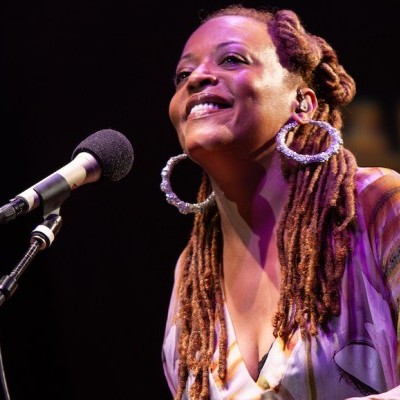
Wilson’s ability to connect to audiences helped her to win two Grammy awards and multiple other accolades. She was named an NEA Jazz Master in 2022.
Sep 3, 2026 10:44 AM
Cassandra Wilson, a singer, songwriter and producer who was one of the most acclaimed and successful jazz vocalists of…
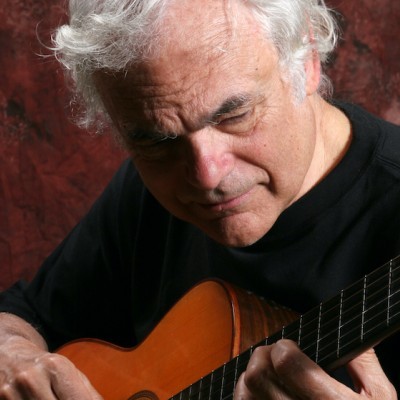
Bertoncini was a specialist and advocate for the nylon-string acoustic guitar, turning down high-profile opportunities that were unsuited to the sound and techniques that he used with that instrument.
Sep 1, 2026 11:06 AM
Gene Bertoncini, an esteemed jazz guitarist, composer, arranger and educator, died Aug. 29 at the Lillian Booth Actors…
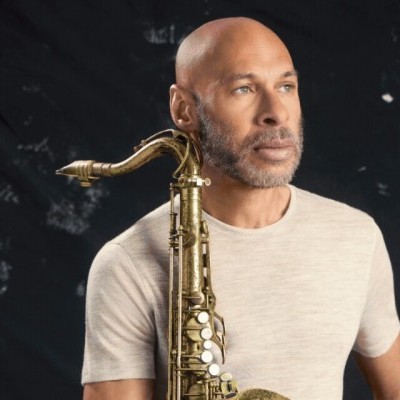
A solo concert by saxophonist Joshua Redman will close the first night of the Hyde Park Jazz Festival on Sept. 26.
Sep 22, 2026 12:26 PM
The Hyde Park Jazz Festival will take place for the 20th time on the final weekend of September 2026. Beginning half…
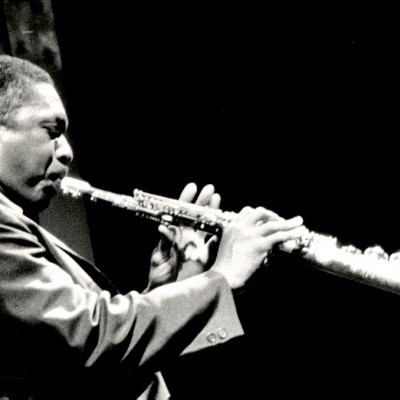
“It was just that suddenly … I could hear it,” Ravi Coltrane said of an epiphany he experienced during his late teens regarding his father’s music. “And it was almost like a calling, like something saying, ‘Hey, man, come on. It’s time to get serious.’ And the first time you really tune in and dial in and focus like that, it can be very life-changing.”
Sep 22, 2026 1:39 PM
Editor’s Note: Tomorrow, Sept. 23, is the 100th anniversary of John Coltrane’s birth. In honor of the tenor and…
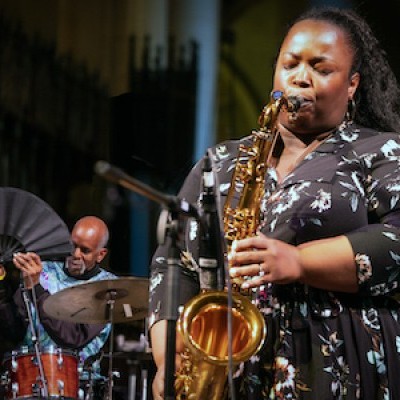
Camille Thurman took to the stage alongside bassist Kenny Davis and drummer Tommy Campbell for a rendition of Johnny Mercer’s “I’m An Old Cowhand” that recalled Rollins’ epochal 1957 trio outing Way Out West.
Oct 6, 2026 1:33 PM
As emcee Mark Ruffin noted at the commencement of an epic tribute to saxophonist Sonny Rollins at the Cathedral of…