Sep 3, 2026 10:44 AM
In Memoriam: Cassandra Wilson, 1955–2026
Cassandra Wilson, a singer, songwriter and producer who was one of the most acclaimed and successful jazz vocalists of…


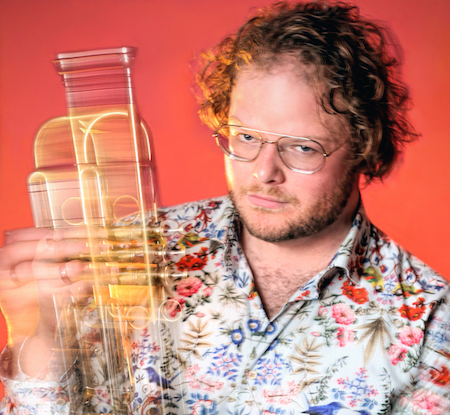
Bernhard he has chops to burn, but the quality of his writing indicates a fully rounded musician.
(Photo: Michael Jackson)When Connor Bernhard first walked into a photo shoot, there was a bit of skepticism. There hasn’t been a flame-haired trumpet star since Red Rodney or Brad Goode (who’s still very active).
Bernhard is not as well known yet. The question becomes, does he have the goods? But with a Roy Hargrove recording playing in the background, Bernhard puts everything in place. Recognizing Hargrove’s sound, he plays along, note-for-note. “That’s the duo with Mulgrew Miller,” he said, referring to Hargrove’s 2006 date at Merkin Hall. Yup.
Bernard pays heartfelt tribute to Hargrove on “Lament For Roy” from his sophomore self-release, Pathways. He talked about the influence of Hargrove’s RH Factor, his horn arrangements on D’Angelo’s Voodoo and his musicality. “Roy truly sang through the instrument and didn’t feel the need to play every note known to man, not because he couldn’t,” Bernhard said.
Bernhard he has chops to burn, but the quality of his writing indicates a fully rounded musician. Case in point: the epic “Bourdain’s Final Tour” from Altitude, his cracking 2020 debut.
“I wrote that on the boat when I first learned Anthony Bourdain had died,” recalled Bernhard. The vessel in question was one of several he skippers on the Chicago River, where he transports tourists on architectural tours. “The ostinato bass line suggests continuous travel, movement, the journey.” But then the track opens into an extended free section. “That’s about taking flight, being prepared for the unpredictable, plus the mental health struggles Bourdain battled. His life seemed glamorous but he hid his loneliness.”
Bernhard’s tunes aren’t all elegies. One that he dedicated to Claudio Roditi reflects the late Brazilian trumpeter’s sunny, unpretentious approach. “There was no diarrhea of notes with Claudio” he said. “His music was bright, melodious, danceable.”
Bernhard absorbed secrets to the lilt and intricacies of groove through such colleagues as trombonist/singer Mark Bettcher and, more formatively, legendary educator Ron Carter at Northern Illinois University. “Ron stressed music should instill enjoyment, yet was serious about the tenets of swing, jazz history all the way back through blues, gospel and West African drum circles, the honoring of its progenitors.”
Bernhard’s own music is infectiously buoyant, preferencing a 3-over-4 or 4-over-3 sensibility, as evidenced on “Jackalope,” the 12/8 opener to Pathways, which imagines the lopsided gait of the folkloric pronghorned jackrabbit. Inner triplet rhythms occur on the track “Struttin’,” too.
Another challenging head on the new album is the bruising postbopper “Altitude,” which doesn’t feature on the album of the same name. “It’s a running joke,” he said. “A composition called ‘Pathways’ will be on my next album but not on this one!”
Though his two quintet records were released five years apart, Bernhard called on pianist Julius Tucker for both sessions (check Tucker’s nimble solo on “Moo The Moose,” named for the Bernhard family dog) and drummer Clif Wallace.
“I was blown away by Julius’ happy-go-lucky attitude,” he said. “Clif swings harder than most, listens more and really interacts with a soloist.”
Guitarist Jeff Swanson serves as crucial accomplice, given that Bernhard is also a serious guitarist (his first instrument from age 7). “Jeff studied with Fareed Haque a few years ahead of me and has that technical proficiency,” Bernhard said. “He hangs with intense harmony and hard swing.”
Bernhard’s lessons with Haque would last three or four hours, then he’d be left to chew on what he’d learned for several months; concurrently, he learned a lot from trumpeter Art Davis at NIU, eventually completing his studies under trumpeter Victor Garcia at Chicago’s Roosevelt University.
Turning to teaching himself of late, Bernhard has been associate band director at Oswego High School in Aurora, Illinois, for the past two years. His merchant mariner obligations aren’t as demanding during the school year, he noted. “Evenings With Linnea,” incidentally, references the name of one of the boats he captains. He wrote the plaintive ballad, a feature for Evan Salvacion Levine’s dancing bass, while practicing aboard ship after completing cleanup, safety and mechanical drills with his crew, bouncing his sound off downtown skyscrapers along the Chicago River.
While growing up in Wisconsin, Bernhard was mesmerized watching the ferryboat cross the Door Peninsula. As a neurodivergent kid, he could soon recognize any vessel by the sound of its exhaust. Now he’ll routinely combine skills steering water taxis and boats up to 100 tons by day, then throw down evening sets at clubs like the popular Windy City jazz venue Andy’s.
Despite his talent for composition, Bernhard is not averse to revamping tested repertoire, which on Pathways includes Bobby Timmons’ “Dat Dere,” the existential country classic “Wichita Lineman” and the 1930 standard “Three Little Words.” The latter he learned in knee pants from a Jamey Aebersold play-along volume kicking around the basement, the legacy of his father’s days as a saxophone player before he became a lawyer to support the family.
“Apparently, when I was too tiny to remember, I used to insist, grunting and pointing, that my dad practice his saxophone for me, which he eventually had to let go as a serious proposition.”
Meantime the son balances several careers, yet there’s no questioning his musical ambitions. Freelancing prolifically, Bernhard works with, among others, the Clif Wallace Big Band, The Shout Section and the funk band Zoo Funk You, as well as a nonet called New Nostalgia led by saxophonist Neil Carson. “Neil’s a meticulous arranger: we do a reharmonization of Tracey Chapman’s ‘Fast Car’ that you would barely recognize,” he insisted. “It’s ingenious.”
The steady group he intends to record with next, this time focusing on his guitar playing, is The Chicago Experiment: an organ trio featuring Andrew “Larry” Lawrence and drummer Zack Marks.
Back in the photo studio, more music drops. Without checking personnel, Bernhard thinks the alto player might be Eric Dolphy. It turns out to be the relatively obscure Sonny Red. Nevertheless Bernhard, a surefire Blindfold Test candidate, nails the trumpet player — “Kenny Dorham: that unfettered, no nonsense style,” he announced, after jamming along.
Bernhard describes his curly hair as blonde: “dirty blonde, but it gets a little redder in the sun,” he admitted, “reflecting my Irish [and Lithuanian/French/German] ancestry.”
Whatever. At 33, we won’t say he’s “grounded,” given his floating lifestyle. But he’s a star on the rise, a self-made triple threat with his trumpet, guitar and composing chops. Full steam ahead! DB
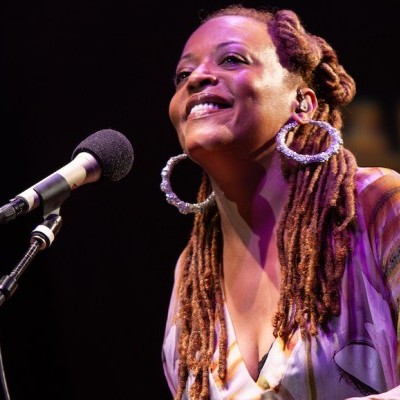
Wilson’s ability to connect to audiences helped her to win two Grammy awards and multiple other accolades. She was named an NEA Jazz Master in 2022.
Sep 3, 2026 10:44 AM
Cassandra Wilson, a singer, songwriter and producer who was one of the most acclaimed and successful jazz vocalists of…
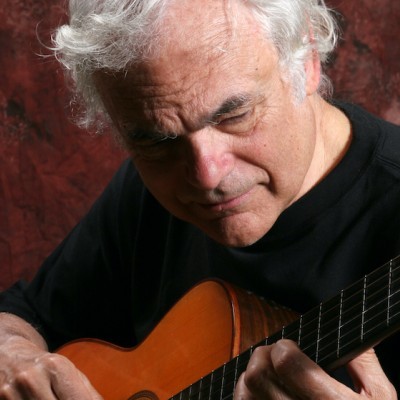
Bertoncini was a specialist and advocate for the nylon-string acoustic guitar, turning down high-profile opportunities that were unsuited to the sound and techniques that he used with that instrument.
Sep 1, 2026 11:06 AM
Gene Bertoncini, an esteemed jazz guitarist, composer, arranger and educator, died Aug. 29 at the Lillian Booth Actors…
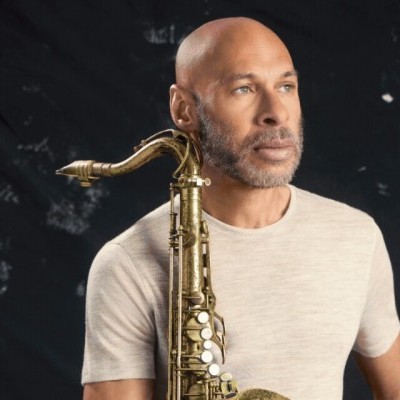
A solo concert by saxophonist Joshua Redman will close the first night of the Hyde Park Jazz Festival on Sept. 26.
Sep 22, 2026 12:26 PM
The Hyde Park Jazz Festival will take place for the 20th time on the final weekend of September 2026. Beginning half…
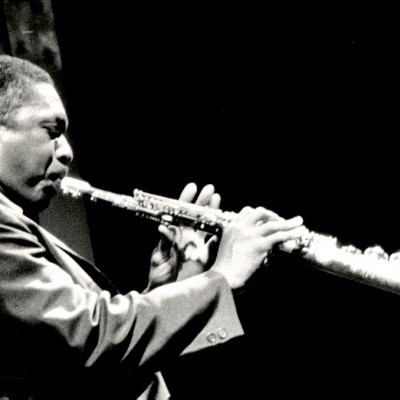
“It was just that suddenly … I could hear it,” Ravi Coltrane said of an epiphany he experienced during his late teens regarding his father’s music. “And it was almost like a calling, like something saying, ‘Hey, man, come on. It’s time to get serious.’ And the first time you really tune in and dial in and focus like that, it can be very life-changing.”
Sep 22, 2026 1:39 PM
Editor’s Note: Tomorrow, Sept. 23, is the 100th anniversary of John Coltrane’s birth. In honor of the tenor and…
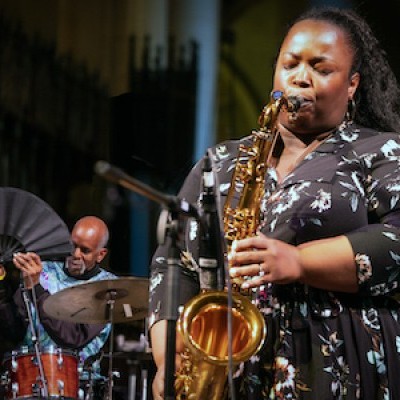
Camille Thurman took to the stage alongside bassist Kenny Davis and drummer Tommy Campbell for a rendition of Johnny Mercer’s “I’m An Old Cowhand” that recalled Rollins’ epochal 1957 trio outing Way Out West.
Oct 6, 2026 1:33 PM
As emcee Mark Ruffin noted at the commencement of an epic tribute to saxophonist Sonny Rollins at the Cathedral of…