Sep 3, 2026 10:44 AM
In Memoriam: Cassandra Wilson, 1955–2026
Cassandra Wilson, a singer, songwriter and producer who was one of the most acclaimed and successful jazz vocalists of…


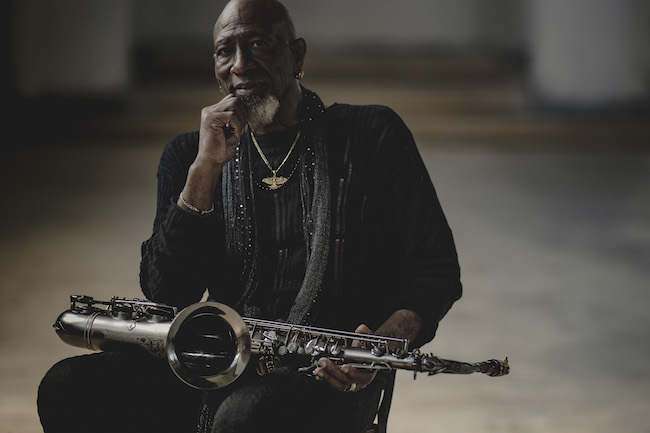
“It’s a positive record for me because I was trying to give some inspiration, more so than anything,” says Dave McMurray of his new album.
(Photo: Joe Vaughan)Detroit saxophonist Dave McMurray still has deeply felt youthful memories of making the pilgrimage to Baker’s Keyboard Lounge on Livernois Avenue near Eight Mile Road. The world’s oldest jazz club (established in 1934 and named a protected historic landmark in 2016), it’s where he saw everyone from Dexter Gordon and Pharoah Sanders to Yusef Lateef and McCoy Tyner back in the ’70s. “I hung out there a lot as a young man,” he recalled. “Of course, I had to. That was where every jazz group was.”
Today McMurray laughs while recounting his tale of once sitting in at the intimate 99-seat Motor City jazz club with legendary tenorist Sanders when he was still an aspiring player on the scene.
“I had seen Pharoah once before at Baker’s, but this time I had my tenor with me, and I took a seat right under him in the front row. I listened to one set and was blown away. Then between sets, something just told me, ‘Ask if you can sit in. All he can say is no.’ So I came up to him and said, ‘My name’s Dave McMurray. Can I play?’ He didn’t say anything, but he nodded. So I went back to my seat, took my horn out, came on stage and then we started to play. At some point as we were playing, he looked at me and he nodded again, which I took to mean it was my turn to solo. And I went for it. And Pharoah was right with me. That was the greatest experience in the world. I walked away from that and was on a cloud. Afterwards, he didn’t give me no advice, no words of wisdom or anything like that. Just another nod.”
McMurray’s free-spirited excursions on his horn since that fateful meeting have been steeped in the bold-toned tenor tradition of elders like Sanders, Sonny Rollins and Yusef Lateef. He brings that same unabashed quality to bear on his fourth Blue Note recording, I Love Life Even When I’m Hurting. Co-produced by bassist and Blue Note President Don Was, the saxophonist’s latest is primarily a paean to his hometown but also an affirmation to keep on keepin’ on.
“The last couple of years have been difficult,” he explained. “There’s been a few deaths of close friends in my little circle. And when one of our friends passed, it was like one of those questionable things where people said, ‘I think he gave up.’ And I’m like, ‘What?! How?! I don’t know, man. I love life, even when I’m hurting.’ And then in my mind I said, ‘Wow, I have to remember that because I mean it.’ And a month later, I wrote a song, and that’s what it was. And at that point I wasn’t thinking of it being necessarily the title song of an album, but I think it was a good anchor for what I was feeling at the time.”
Not that I Love Life Even When I’m Hurting is a downer in any way. “It’s a positive record for me because I was trying to give some inspiration, more so than anything,” said McMurray. “And that’s why I did that first song, ‘This Life,’ with just the sax and me reciting that poem.”
I know despair don’t care, but be strong
Here’s hoping another day
There’s a smile waiting for me somewhere
There’s a joke flying around for me
to laugh at
It’s music being played that has the heat
to warm my heart
It’s a kind word I can borrow from someone, even if it’s not for me and just in the air
I sing a song that angels can’t sing. I live now, and I pray for their vision over me
It’s my duty to live, it’s my pleasure to love. I love life, even when I’m hurting
McMurray is joined on his latest recording by the same Detroit crew that played on his past five albums: bassist Ibrahim Jones, drummer Jeff Canady, keyboardist Maurice O’Neal and guitarist Wayne Gerard. Was plays bass on half the recording, including the Afrobeat-flavored “The Jungaleers”; the soulful “Find Your Peace (4 Tani),” dedicated to drummer Tani Tabbal; the soothing ballad “Just A Thought,” dedicated to McMurray’s wife and daughter; and the dramatic, suite-like “I Love Life.” The saxophonist is also featured on flute on a calypso-tinged version of Yusef Lateef’s “The Plum Blossom,” originally recorded on 1962’s Eastern Sounds.
Guest vocalist Kem, another Detroit native, gives a star turn on a spine-tingling recreation of Al Jarreau’s transcendent anthem “We Got By,” the title track of the singer’s stunning 1975 debut album. McMurray engages freely in some spirited call-and-response with Kem in this callback to the late Milwaukee-born Jarreau while also delivering perhaps his most impassioned tenor solo on the record.
McMurray’s heightened improvisations and unrestrained playing, like his sax-playing contemporary Kamasi Washington, often tip into the spiritual zone. As he said, “When I’m playing, I feel like I’m giving it to people. I’m not trying to pander to an audience, but I am trying to get you with me. I am trying to take you where I go and just experience what I’m experiencing. So I’ve never inhibited myself on stage. My attitude about playing is genuine. It’s always been, ‘I’m going to play crazy, and I want you to like it. I want to follow me. I want for you to get into it. And once I got you, I will keep you and take you with me on my journey.’ And later when people tell me that they felt it, that is the biggest compliment to me.”
The saxophonist first made his mark on the Detroit scene during the late ’70s as a member of Griot Galaxy, an avant-garde group led by saxophonist-poet Faruq Z. Bey. “It was kind of our version of the AACM,” said McMurray. “Faruq wrote all the music, and when I first met him, it was the craziest music I had ever heard. I just didn’t get it at first. But it became a thing in Detroit because it was visual and entertaining. I mean, we had the face-painting and the whole shot. So when we played, people who didn’t even like avant-garde music would get into it because they would be amazed at what would be going on.”
That avant ensemble, which also included bassist Jaribu Shahid and drummer Tani Tabbal, recorded one record in 1981 (Kins) before McMurray joined Was (Not Was), co-led by bassist Don (Fagenson) Was and his eccentric songwriting partner David (Weiss) Was. “It was an odd group,” he recalled. “One guy wrote these very odd lyrics and the other guy did the music. At the time I met them, I was doing a lot of sessions, mostly commercials and stuff. And I thought they wanted that style of playing from me. But instead, they encouraged me to just play crazy all the time. I remember Don saying to me, ‘I want you to go wherever you go, like you do with Griot Galaxy.’ And I’m like, ‘Oh, OK. Cool!’”
The saxophonist’s edgy playing made him a standout in the mutant disco/funk band that deftly combined danceable rhythms with surreal/humorous lyrics, as on tunes like “Out Come The Freaks” and “Carry Me Back To Old Morocco” from their 1981 self-titled debut, “Shake Your Head (Let’s Go To Bed),” “Zaz Turned Blue” (sung by Mel Torme) and “Knocked Down, Made Small (Treated Like A Rubber Ball)” from 1983’s Born To Laugh At Tornadoes, and their hit single “Walk The Dinosaur” from 1988’s What’s Up, Dog?
McMurray has maintained a longstanding friendship and working relationship with that band’s co-founder Don Was, who was appointed to succeed Bruce Lundvall as president of Blue Note Records in 2012. Was subsequently signed his Detroit homey to the prestigious jazz label. McMurray debuted with 2018’s Music Is Life, then followed up with two separate volumes of Grateful Deadications in 2021 and 2023.
It was the bassist-producer-record company executive Was who initially turned the saxophonist on to the music of the Grateful Dead during his brief stint in 2018 with The Wolf Brothers, a trio led by the Dead’s guitarist-singer Bob Weir and featuring Was on acoustic bass and Jay Lane on drums.
“I didn’t really know anything about The Grateful Dead,” McMurray confessed. “And Don called me one day and said, ‘Hey, we’re coming to town. You want to play?’ I was like, ‘Hell yeah!’ And he said, ‘Just listen to these songs. I don’t know what it’s going to be because Bob runs the show, but listen to the songs and you’ll get the idea.’ So I pulled up a bunch of Grateful Dead tunes on YouTube and a couple of them had Branford Marsalis’ sax on it [from a 1990–’91 tour]. And at first I was confused by it. I was, like, ‘Wow! What are you guys doing? I mean, where’s the verse?’ You know, I was just trying to get the niche of it. So I listened to those Dead tunes all that day while playing along to them, and when I sat in with The Wolf Brothers that night, it went great. It was so open, and nothing was expected. If it was a normal tune and was supposed to go to this or that change or go to the verse, it wouldn’t necessarily go there. It’d just go somewhere else. And everybody was cool with that.”
McMurray was surprised the next day that legions of dedicated Dead tapers had already posted clips online of his jamming with The Wolf Brothers the night before. “This was all new to me,” he recalled. “So it just turned into a whole different experience for me, and I kind of got into it.”
McMurray subsequently reimagined 10 Dead tunes on 2021’s Grateful Deadication, including a marathon take on “Dark Star.” As he recalled of that session, “We just did one song after the next, and I tried finding my way in through the melody. That’s how I was finding the niche in this music. The melody is the key. So I would find songs with the good melodies and try to adapt them and see how far I can stretch them or do what I do with them. So it was a really good experience.”
He repeated the process two years later with Grateful Deadication 2, which included such Dead classics as “China Cat Sunflower,” “Truckin’” and “Scarlet Begonias.” And the reception in concert has been ecstatic.
“The audience for this Grateful Dead music is so great,” he said. “When I started playing in front of those audiences full of Grateful Dead fans, people would be standing up, which is already totally different than a jazz club, of course. And if I feel like playing a song called ‘The Eleven,’ which is in 11/4, they start dancing. And I’m like, ‘What?!’ You know, we’re up there playing this crazy music, taking long sax solos, and they’re all going with it. It’s a different kind of reaction and just a different energy. So when I play gigs now, I can play crazy, I can swing, I can do whatever I want to do and it all kind of works.”
I Love Life Even When I’m Hurting includes just one Dead track, Jerry Garcia’s philosophical “The Wheel,” about the cyclical nature of life. McMurray unleashes some of his most powerful blowing on this track, aided by some echo-laden overdubbing on tenor. “I kept my original sax track and then I was like, ‘Wait a minute, let me just put some kind of psychedelic thing on it. Let me get into this echo thing like I used to do back in the day. Let me go to Eddie Harris’ Silver Cycles, that [1969] album where he was doing this crazy-ass echo thing.’ That’s a kind of weird way of thinking, but I do think like that.”
The saxophonist is currently out on tour with Was’ P-Funk-inspired Pan-Detroit Ensemble in support of their recent Mack Avenue release, Groove In The Face Of Adversity. See page 14 of the January 2026 issue of DownBeat for more on that project. DB
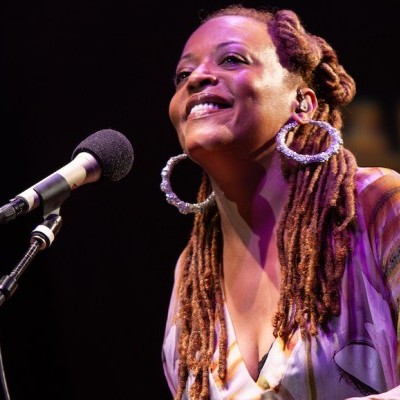
Wilson’s ability to connect to audiences helped her to win two Grammy awards and multiple other accolades. She was named an NEA Jazz Master in 2022.
Sep 3, 2026 10:44 AM
Cassandra Wilson, a singer, songwriter and producer who was one of the most acclaimed and successful jazz vocalists of…
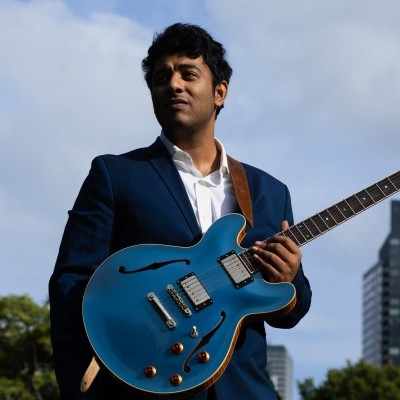
“The love from the jazz and music community restored my faith in humanity,” Walia wrote in an online post upon his release from detention at an ICE facility.
Aug 18, 2026 2:15 PM
Indian jazz guitarist and composer Pritesh Walia has been released after being unexpectedly detained by ICE and taken…
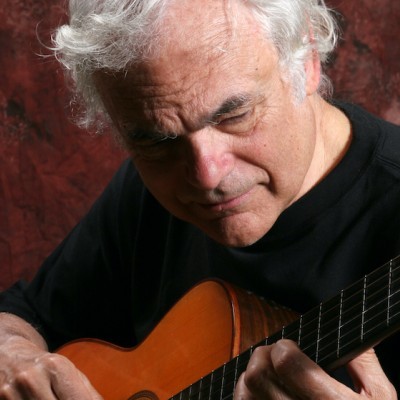
Bertoncini was a specialist and advocate for the nylon-string acoustic guitar, turning down high-profile opportunities that were unsuited to the sound and techniques that he used with that instrument.
Sep 1, 2026 11:06 AM
Gene Bertoncini, an esteemed jazz guitarist, composer, arranger and educator, died Aug. 29 at the Lillian Booth Actors…
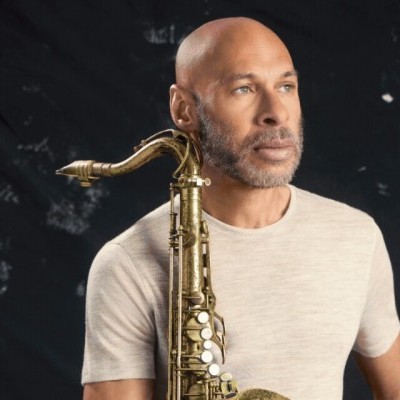
A solo concert by saxophonist Joshua Redman will close the first night of the Hyde Park Jazz Festival on Sept. 26.
Sep 22, 2026 12:26 PM
The Hyde Park Jazz Festival will take place for the 20th time on the final weekend of September 2026. Beginning half…
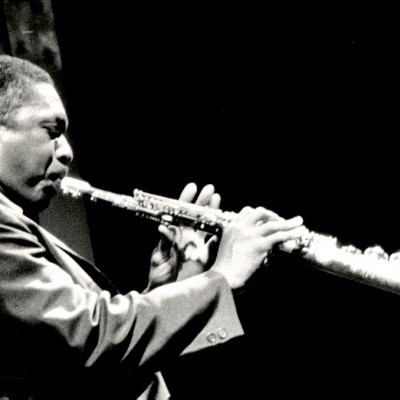
“It was just that suddenly … I could hear it,” Ravi Coltrane said of an epiphany he experienced during his late teens regarding his father’s music. “And it was almost like a calling, like something saying, ‘Hey, man, come on. It’s time to get serious.’ And the first time you really tune in and dial in and focus like that, it can be very life-changing.”
Sep 22, 2026 1:39 PM
Editor’s Note: Tomorrow, Sept. 23, is the 100th anniversary of John Coltrane’s birth. In honor of the tenor and…