Sep 3, 2026 10:44 AM
In Memoriam: Cassandra Wilson, 1955–2026
Cassandra Wilson, a singer, songwriter and producer who was one of the most acclaimed and successful jazz vocalists of…


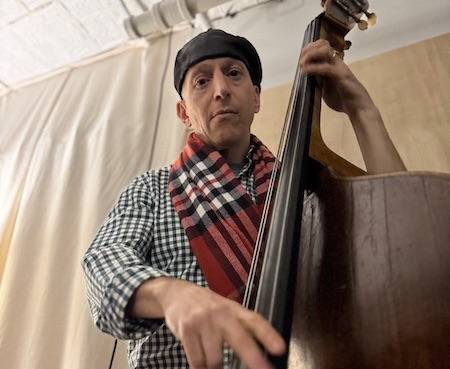
“I will always believe that all humans have the capacity to love unconditionally,” says bassist and activist David Ambrosio. “It’s our divine nature. We’ve just lost our way.”
(Photo: Courtesy David Ambrosio)Bassist David Ambrosio begs a few questions by calling his ambitious project Civil Disobedience. His group’s new album is, after all, an instrumental jazz recording, with skilled and sensitive players (he’s joined by Donny McCaslin, Ingrid Jenson, Bruce Barth and veteran drummer Victor Lewis, who plays boldly despite health limitations) taking on lesser-known tunes from the 1960s Blue Note Records canon, many of which were released years after their recording.
Overt aspects of protest come through on such tunes as James Spaulding’s “A Time To Go,” considered an MLK tribute, and Harold Land’s “Poor People’s March,” touching on the late-’60s “Poor’s People’s Campaign” to gain economic justice for poverty-stricken families in the United States. But no words or slogans of revolt are to be found, or any emphatic agenda as is put forth on such classic jazz albums as We Insist! Max Roach’s Freedom Now Suite or in the m.o. of Charlie Haden/Carla Bley’s Liberation Music Orchestra project.
Rather, the message is in the underscoring spirit of the music, having to do with protest, in some sense, but also an inherently progressive inclination: civil disobedience and a questioning spirit as an approach to life and music-making.
As Ambrosio explains in his articulate liner note, “This uniquely modern music unintentionally flew under the radar at a powerful time in the history of this country, and the message contained within could not be heard at their most influential time. It was at that moment I understood that the idea of initiating a project to play this music would hold significant value. I chose to name the project Civil Disobedience to honor this method of nonviolent action for social change.”
In a recent interview, Ambrosio suggested that the rebel spirit may have seeped into his being by osmosis. “I was born in April of 1968,” he says, “so maybe somehow that energy got me when I came into the world, who knows?”
Ambrosio is sensitive to intersections of history, and he points out that “when I debuted this band in 2018 at the Jazz Standard in New York, it was the 50th year anniversary of the poignant moments in U.S. history that some of these compositions connect to, as well as my 50th-year anniversary. In my mind, it was a project for a special moment of historical parallels and personal discovery.
“As the political and social situation in America continued to reflect and even amplify issues of the past, the project seemed like a calling for me. I have about a 15-year history of community activism in New York, and it became more than just a project of great music. It was my opportunity to find the intersection of those two paths in my life, and to share it as joyfully as I can with others.
“I’m not sure where exactly I’m going to draw from for the next stage of this project, but it seems clear the need for protest music is not waning in our society.”
Apart from such curated material as Bobby Hutcherson’s “For Duke P.” and the Land and Spaulding tracks, the album places special focus on drummer-composer Joe Chambers, whose music supplies two of the five tracks: “Irina” and “Ankara.” Ambrosio says, “To me, Joe Chambers is one the great drummers in jazz history, and one who is not often considered when talking about the great drummers in jazz. And that is true about him as a composer as well. There are likely a number of reasons why that is, but I mostly picked this material based on what I was drawn to musically in the compositions of this period.
“Certainly, there are many examples of avant-garde jazz in the late ’60s when the music was becoming more free. But these compositions really struck me, as they were still adhering to traditional structures, harmony and that swing feel and sound of Blue Note at that time, but really expanding them without abandoning them.”
Ambrosio, who studied both classical and jazz, has been a busy sideman in New York for years, being involved with George Schuller’s Circle Wide, Jazz at Lincoln Center’s BMI/New York Jazz Orchestra, Kenny Werner and Joe Lovano, to name a few. One of Ambrosio’s most intriguing projects was a “chordless” trio with saxophonist Loren Stillman and drummer Russ Meisner, two of the many musicians who have been central in the bassist’s diverse orbit. Among their recordings is the fine 2018 album Four For The Road.
“These musical relationships go back decades,” says Ambrosio. “I think all these musicians and projects have the same aesthetic as this current project, where we’re just trying to find the expansion and freedom in the tradition that we all love so much. It’s all an even playing field that’s not dictated by a particular boundary of style or language. The thread is what feels good, what flows and what is conveyed emotionally, but the roots are always present. I believe there is the connection between this project and my more original projects, as this music spoke to that playing approach that I love so much.”
Through all of this, Ambrosio admits to having had “a period where I felt very out of the scene and my creative life. Some of it had to do with personal challenges I was facing, and I consequently felt more invested in activism and volunteer work at that time.” He acknowledged a tendency to go on “deep dives,” such as a decade-long “immersion into Afro-Cuban bàtá drumming and spiritual practice,” and earning his second bachelor’s degree in biology.
“But somehow,” he says, “no matter how far I go out, I always land back at being a jazz musician and performer. I guess it’s my home base — no pun intended. In the last two years, the creative projects have just become more and more abundant, and it doesn’t seem like it’s slowing down any time soon, which I’m really happy about. It feels like the right time for it. Perhaps the next intersection for discovery is with science and improvisation. I’ve been thinking about that one for a while.”
With Civil Disobedience, Ambrosio is back in the deep end of musical dedication — to his ideals and to a historical and social consciousness. As he asserts, “I hope this project inspires conversation and connection between people and the vision for a society centered in love, peace and freedom. Whether our record or the original recordings, I hope that 50 years from now people can listen to these compositions and enjoy them as a reflection of a past era in society that no longer exists.
“I’m probably the worst idealist anyone will ever meet, but I will always believe that all humans have the capacity to love unconditionally. It’s our divine nature. We’ve just lost our way.” DB
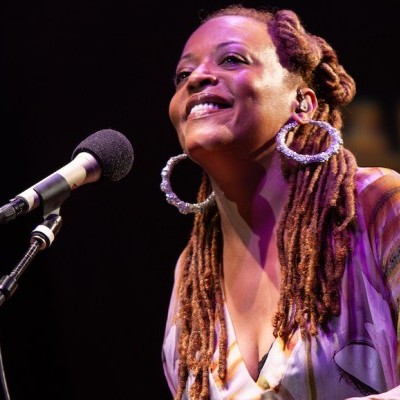
Wilson’s ability to connect to audiences helped her to win two Grammy awards and multiple other accolades. She was named an NEA Jazz Master in 2022.
Sep 3, 2026 10:44 AM
Cassandra Wilson, a singer, songwriter and producer who was one of the most acclaimed and successful jazz vocalists of…
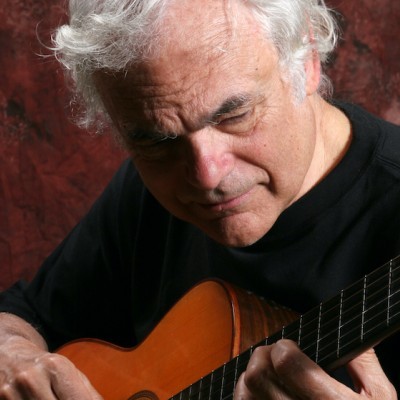
Bertoncini was a specialist and advocate for the nylon-string acoustic guitar, turning down high-profile opportunities that were unsuited to the sound and techniques that he used with that instrument.
Sep 1, 2026 11:06 AM
Gene Bertoncini, an esteemed jazz guitarist, composer, arranger and educator, died Aug. 29 at the Lillian Booth Actors…
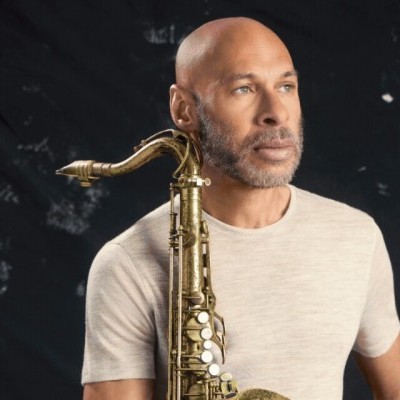
A solo concert by saxophonist Joshua Redman will close the first night of the Hyde Park Jazz Festival on Sept. 26.
Sep 22, 2026 12:26 PM
The Hyde Park Jazz Festival will take place for the 20th time on the final weekend of September 2026. Beginning half…
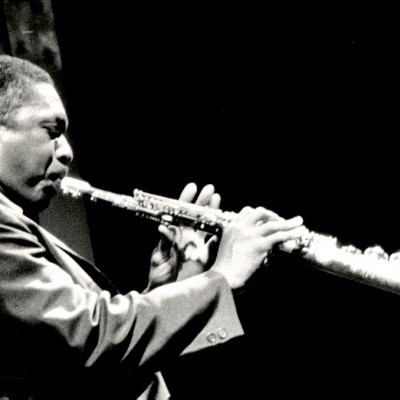
“It was just that suddenly … I could hear it,” Ravi Coltrane said of an epiphany he experienced during his late teens regarding his father’s music. “And it was almost like a calling, like something saying, ‘Hey, man, come on. It’s time to get serious.’ And the first time you really tune in and dial in and focus like that, it can be very life-changing.”
Sep 22, 2026 1:39 PM
Editor’s Note: Tomorrow, Sept. 23, is the 100th anniversary of John Coltrane’s birth. In honor of the tenor and…
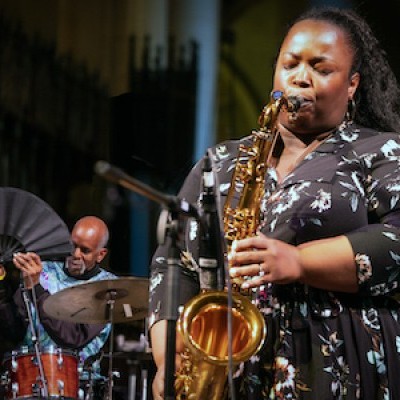
Camille Thurman took to the stage alongside bassist Kenny Davis and drummer Tommy Campbell for a rendition of Johnny Mercer’s “I’m An Old Cowhand” that recalled Rollins’ epochal 1957 trio outing Way Out West.
Oct 6, 2026 1:33 PM
As emcee Mark Ruffin noted at the commencement of an epic tribute to saxophonist Sonny Rollins at the Cathedral of…