Sep 3, 2026 10:44 AM
In Memoriam: Cassandra Wilson, 1955–2026
Cassandra Wilson, a singer, songwriter and producer who was one of the most acclaimed and successful jazz vocalists of…


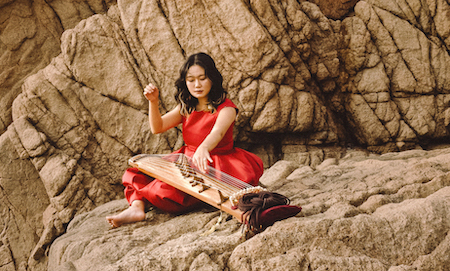
Viola artist Mat Manieri says DoYeon Kim’s approach to music is “at once delicate, and then punk rock — no fear.”
(Photo: Hyun Park)Every country has its own musical culture, and every musical culture has a different approach to the question of improvisation. Some forms don’t allow for it at all; Western classical music is entirely score-dependent, and it’s up to the performer to find a way to inject their own personality into a performance while still playing every note as written.
DoYeon Kim grew up learning Korean court music, which is rigorously structured to the point of ritual. “Before I moved to America, when I was in Korea, I normally heard that I need to mimic my teacher. And when I was mimicking, I felt like, but there’s something else, you know, thinking about ... our tradition. My instrument was made in 6 B.C., so 2,000 years ago, and some of the music I play is from 200, 300 years ago. So there, I felt a little disconnected, but still like, this is our legacy. We need to keep this tradition. It’s really hard to make my own way. It’s more [about preserving] this music.”
Kim’s instrument is the gayageum (pronounced “kayak-um”). It’s a Korean zither, traditionally featuring 12 strings, though it can have as many as 25. The player plucks the strings with the right hand, while pressing, shaking and vibrating the strings with the left — her term for this is “cooking” the notes.
“Everything’s direct from my hand,” she says. “Of course I use a bow, but I’m plucking and flicking the strings directly from my hand. I’m pushing directly. So I feel really connected and very close [to the instrument]. So I think that’s what’s really attractive about this. When I felt that, I felt so attracted when I was first learning.”
In 2013, Kim arrived from Seoul to attend New England Conservatory in Boston. It was the only institution that would allow her to study as a player: “They all recommended me to become a musicologist or ethnomusicologist, like a scholar. But I wanted to be a performer ... only NEC allowed me to audition with my instrument.”
The sound of the gayageum, particularly how Kim plays it, is immediately intriguing to a Western ear. It doesn’t have the metallic twang of a Japanese koto; its silk strings allow for a greater sonic roundness. It’s like a harp strung with iridescent ribbons. But Kim plays the instrument with great percussive force, not only using her hands, but also bows and mallets. She makes the gayageum boom and roar.
This was inspired in part by her attempts to make the instrument fit into Western musical concepts; at New England Conservatory, she would listen to horn players, or electric instruments, and attempt to imitate them on gayageum. “I wasn’t used to using a bow. But I tried so many different types of bow and even tuning systems. So while doing that ... I was able to extend my expression. Oh, and then actually, it’s not sometimes some technique — like, how I bang into my gayageum, it’s really not good for my instrument. But I always talk to the gayageum, [saying], ‘I’m sorry, in this life, you are like this. So in the next life, you will become me, and I will be your gayageum.’”
At NEC, Kim studied with guitarist/bassist Joe Morris, who brought her into the worlds of avant-garde jazz composition and improvisation, giving her scores by Ornette Coleman and Anthony Braxton to study and telling her that her urge to stretch beyond the limitations of the score — which was impermissible in the music she’d grown up playing — was a valid one. “He was the first person who told me that it is OK. Like, this is also music. I think I always thought I needed to fix something wrong. But he showed me, and let me extend the concept of the music.”
Her debut album as a leader, Wellspring (Tao Forms), features viola player Mat Maneri, bassist Henry Fraser and drummer Tyshawn Sorey, each of them well-versed in stretching musical boundaries. Maneri, a longtime associate of Joe Morris and no stranger himself to presenting jazz listeners with unexpected tones and harmonies, says, “I very much enjoyed our first time playing together in her apartment in Brooklyn. She had the enthusiasm and joy that I sorely miss. It caught me off guard, and it informed the direction we were to take.”
He describes her approach as “at once delicate, and then punk rock — no fear,” and says the group came together quickly in the studio. “I followed the written music, and then it was a matter of finding a unified breath. I think we found that, through the subtle intonations and fierce percussive eruptions. It was an improviser’s perfect playground. Nothing off bounds, yet serious and full of empathy.”
“Mat Maneri, his relationship with the note is so special,” Kim says. “It’s very close to — for me, it’s so familiar how he’s also cooking the note. He’s definitely cooking the note. He has some special sound. And during the recording, I asked Mat Maneri, can you make me cry? And then right away he played something that made me cry.”
Kim and Sorey played a duo when he appeared at NEC as a guest artist, and during the Wellspring session, she was fascinated by his ability to envision the entire piece while staying alive in the moment. “Like, we [would] play [the] ‘A’ section, and people normally focus on the ‘A’ section. But he’s thinking about big picture ... not the tree, but the forest. So he’s kind of already expecting how this is going to build out, where he wants to reach out.”
The ferocity of Kim’s playing, and her impassioned vocals on “Walking In The Dream,” “Linear System” and “Calculus Of Our Souls” (the latter two a single 22-minute work in two parts), make it impossible to dismiss her music as kitsch or exotica. She is an avant-gardist in the truest sense, a pioneer bringing her instrument into entirely new sonic worlds. DB
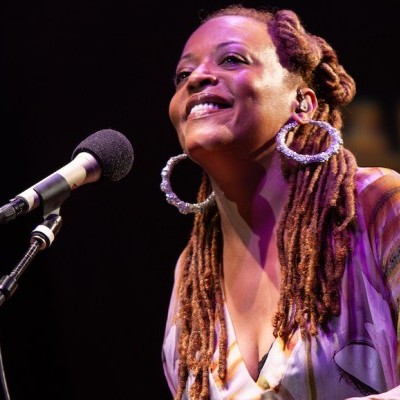
Wilson’s ability to connect to audiences helped her to win two Grammy awards and multiple other accolades. She was named an NEA Jazz Master in 2022.
Sep 3, 2026 10:44 AM
Cassandra Wilson, a singer, songwriter and producer who was one of the most acclaimed and successful jazz vocalists of…
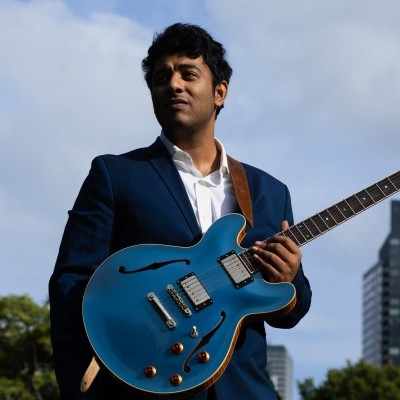
“The love from the jazz and music community restored my faith in humanity,” Walia wrote in an online post upon his release from detention at an ICE facility.
Aug 18, 2026 2:15 PM
Indian jazz guitarist and composer Pritesh Walia has been released after being unexpectedly detained by ICE and taken…
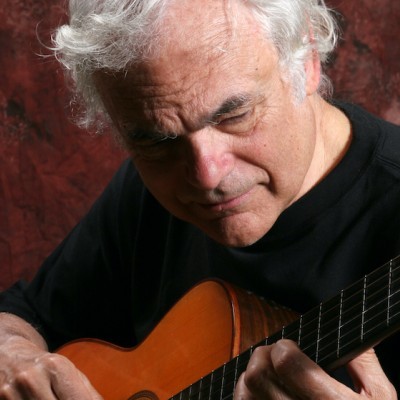
Bertoncini was a specialist and advocate for the nylon-string acoustic guitar, turning down high-profile opportunities that were unsuited to the sound and techniques that he used with that instrument.
Sep 1, 2026 11:06 AM
Gene Bertoncini, an esteemed jazz guitarist, composer, arranger and educator, died Aug. 29 at the Lillian Booth Actors…
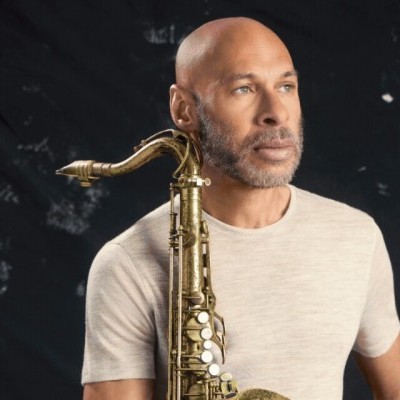
A solo concert by saxophonist Joshua Redman will close the first night of the Hyde Park Jazz Festival on Sept. 26.
Sep 22, 2026 12:26 PM
The Hyde Park Jazz Festival will take place for the 20th time on the final weekend of September 2026. Beginning half…
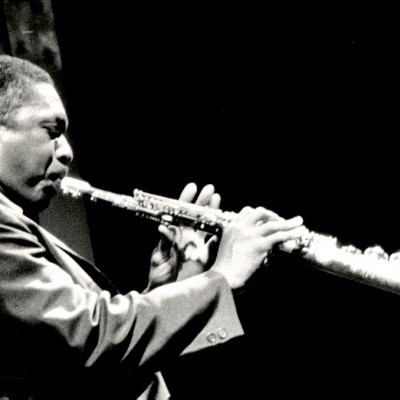
“It was just that suddenly … I could hear it,” Ravi Coltrane said of an epiphany he experienced during his late teens regarding his father’s music. “And it was almost like a calling, like something saying, ‘Hey, man, come on. It’s time to get serious.’ And the first time you really tune in and dial in and focus like that, it can be very life-changing.”
Sep 22, 2026 1:39 PM
Editor’s Note: Tomorrow, Sept. 23, is the 100th anniversary of John Coltrane’s birth. In honor of the tenor and…