Sep 3, 2026 10:44 AM
In Memoriam: Cassandra Wilson, 1955–2026
Cassandra Wilson, a singer, songwriter and producer who was one of the most acclaimed and successful jazz vocalists of…


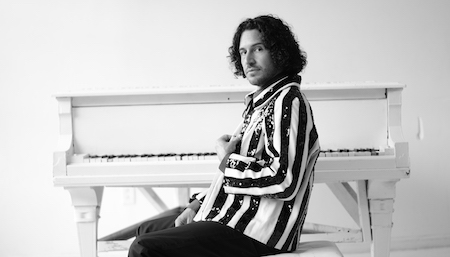
“We have figured out our show, and people seem to be really connecting with it,” Emmet Cohen says of his band’s current tour, a tribute to Miles Davis and John Coltrane. “The audiences are large and exuberant. It feels like we’re doing what we’re meant to be doing.”
(Photo: Kevin Alexander)The first thing people notice about Emmet Cohen, the thing his legions of fans cite most frequently, is his smile: broad, uninhibited, genuine. He flashes it frequently when he plays. Among jazz musicians of a certain mindset, smiling is frowned upon. Cohen couldn’t care less.
“There are enough examples of the masters of this art form smiling,” he says, “from Louis Armstrong and Fats Waller to Dizzy Gillespie and ‘Smiling’ Billy Higgins, that anyone who wants to express joy should feel comfortable doing so. Herbie Hancock on stage with a keytar in his hand … there are endless examples.
“It’s about staying true to who you are as a person,” he reflects. “If you find others being upset with something you’re doing, that’s usually a vulnerability in their ability to be comfortable with who they are.”
He was smiling plenty when he appeared recently at Jimmy’s, a surprisingly large, well-appointed jazz venue in downtown Portsmouth, New Hampshire. He was beginning the latest leg of his U.S. tour, a centennial-year tribute to Miles Davis and John Coltrane with his all-star quintet: Jeremy Pelt on trumpet, Tivon Pennicott on tenor, Reuben Rogers on bass and Joe Farnsworth on drums.
Cohen told the packed house that the band was “coming in hot” after a week at Birdland in New York during which they played 10 shows in five days. They hit the ground running with a high-energy “Surrey With The Fringe On Top” full of tricky shifts in time and feel, then covered other songs from various Miles and Trane eras, everything from “Autumn Leaves” to “They Say It’s Wonderful” to “Amandla.” They ended the set with a medley including “Milestones,” “All Blues,” “So What” and “Giant Steps.” As leader, Cohen generously showcased the horn players, as was only fitting for such a tribute. When he did solo, he displayed staggering technique but, as usual, wielded it judiciously in the service of poetic expression.
Pennicott, who is a few years older than the 35-year-old Cohen, met the pianist in 2008 in Miami, where they played a few gigs together during Cohen’s freshman year at the University of Miami’s Frost School of Music; Pennicott had recently graduated. They reconnected in New York in the late 2010s. They played together at Cohen’s steady organ gig at the uptown jazz mecca Smoke, with trumpeter Benny Bennack III and drummer Joe Saylor.
“We created a sound that was so free-flowing, we could change keys and tempos at any time. Everybody had huge ears. We got to a point where we would just go into any song at any moment. It was such a freeing experience for all of us.”
When the quintet played Birdland, Pennicott said, they were trying to channel the kind of freedom that Miles’ Second Quintet had during their legendary Plugged Nickel engagement in Chicago.
“They were just so free in how they would play. What you heard in Portsmouth — we don’t really know what’s gonna happen. Emmet just starts an intro … and we just go. He has a powerful group that can go anywhere, that’s rooted in the tradition, and there’s no worries about our creating. That’s what I love about this. Emmet is like, ‘You know what? I feel like doing this!’ And he knows and trusts his band.”
Cohen is thrilled with the way the new quintet had gelled, he said via video chat from Santa Barbara, California. He was in the middle of the West Coast leg of the tour — Southern and Central California, San Francisco, Seattle and Portland. “We have figured out our show, and people seem to be really connecting with it. The audiences are large and exuberant. It feels like we’re doing what we’re meant to be doing.”
His approach to Miles and Coltrane is to play the repertoire, avoid imitation and encourage the band members to fully express themselves. “The most truthful version (of Miles and Coltrane) is one that connects to their spiritual nature,” he said.
Some of those moments are captured in Cohen’s new quintet album, Universal Truth (Mack Avenue), which features Davis and Coltrane standards as well as a suite of Cohen originals (Cohen’s regular New York bassist Yasushi Nakamura substitutes for Rogers). Elder statesmen Ron Carter and George Coleman make guest appearances on several tracks. Cohen’s intent, he has written, is to “honor the lineage of this music, connect the generations, and create something that feels both current and deeply personal.”
On his website, Cohen prominently quotes Art Blakey, in all-caps for added emphasis: “JAZZ WASHES AWAY THE DUST OF EVERYDAY LIFE.” That’s the spirit Cohen tries to project in the weekly livestream Live from Emmet’s Place, which became a global jazz phenomenon during the COVID-19 pandemic and unexpectedly put his career into overdrive. Since its launch in 2020, the webcast has amassed more than 100 million views across various social media platforms, 64 million-plus on YouTube alone. It catapulted Cohen into the stratosphere of jazz, enabling him to sell out concert halls and clubs all over the world. Last December, he was voted the No. 1 pianist in the DownBeat Readers Poll.
Emmet’s Place also boosted the careers of many other New York musicians in his orbit. They include such young, like-minded jazz artists as original trio members Russell Hall and Kyle Poole, Patrick Bartley, Bruce Harris, Philip Norris, vocalists like Veronica Swift and Cyrille Aimee, and many others who embrace the same joyful, neo-traditionalist approach in which the love of playing the classics — and expanding them to incorporate modern approaches and individual expression — is seen as a virtue.
Cohen could easily have become a classical pianist. A prodigy, he studied classical piano from ages 3 to 18. When he plays jazz, his classical training is evident in many ways: in his dynamic range, tone production, rhythmic precision, in the evenness of even the speediest of his well-tempered runs, in his formidable hand independence. It’s also present in his ability to evoke the whole history of the piano — not just jazz piano going back to ragtime and stride, but also occasionally the vocabulary of classical piano’s greatest composers and virtuosi.
He calls his father, George, a genial retired psychologist, and his mother, Marla, an artist, “super supportive,” saying he “never really felt pressured to live a life that they wanted for me.”
“I think he’s being a little kind,” George said, admitting to being a stage father. “I think there was implicit pressure.” He cites his own background as a “frustrated” but professional singer — he once appeared in a production of the musical The Fantasticks that toured Europe, among other credits. There also was a family history of jazz talent: George’s first cousin was an exceptionally skillful jazz pianist named Greg Kogan, who played with the Buddy Rich and Lionel Hampton bands. Moreover, Greg’s father, Maurice, played saxophone in Broadway pit orchestras and had the nickname “Hawk” because he sounded like Coleman Hawkins. Emmet was so taken with the congruities between himself and the Kogans that he made that the theme of the essays he submitted with his college applications.
With that family background, George was on the lookout for early signs of musical talent, he said. He related an oft-repeated family story of how he first discovered Emmet’s proclivity for music.
“Starting when he was 1, I used to put on classical music. The speakers were in the ceiling, and I would point to them and say ‘Rachmaninoff,’ or ‘Mozart,’ or whoever it was. One day, when he was 2½, I put on Pachelbel. And before I could get to him, he came in and pointed at the speakers and said, ‘Pachelbel!’ So, I got very excited, and I called Marla in, and I said, ‘Bingo,’ you know? I knew it, right?”
Shortly after that incident, George and Marla brought Emmet to a piano teacher who taught the Suzuki method, in which children learn the repertoire by ear for the first few years. “She said, ‘We have a problem. He’s interested, but his hands are too small.’ We brought him back in six months, and she said, ‘Great, it’s perfect.’” He took classical lessons without pause until age 18. “So, maybe it was true that we never put pressure on him to take any particular path, but as far as I was concerned, music was his path. And I bombarded him with music in the house.”
George sat with him each time he practiced and was also not above bribing the young boy. In one famous incident, he promised Emmet the hot video console of the day — a Sega Dreamcast — if he could learn “Für Elise” and play it with no mistakes. “That’s the fastest I ever learned anything,” Cohen said.
Among his earliest pieces were Mozart minuets. He loved Chopin and Bartók and acquired an affinity for Bach. “Bach just always made a lot of sense to me,” he mused. “The language of it is very particular. ... I found a lot of similarities to bebop. How the voice-leading and counterpoint interact. The similarities in tension-and-release. How the V chord leads to different tonal centers.”
He perceives an improvisational aspect to Bach’s writing. “There might be a string of eighth notes that get you from one chord to the next. The way he would write it, there were seemingly endless possibilities of how to get from one thing to another.” All of it suggested the exploratory freedom of jazz improvisation.
Cohen cites Christian McBride as one of several key mentors in his development as a musician. Like the Cohen family, the eminent bassist, bandleader and radio personality is a resident of Montclair, New Jersey. McBride met the 11-year-old Cohen shortly after the family moved there, when Emmet joined a workshop at Montclair’s Jazz House Kids Foundation, run by McBride and his wife, Melissa Walker.
“We knew back in the day that Emmet had it,” McBride said. “He was very serious about the music. When you see such serious students, you give them exceptional care. He had a hunger; he wanted to learn the tunes, meet the musicians and be deep on the inside of what was going on in the jazz community.”
Ultimately, McBride gave the young pianist a spot in his trio called Tip City, a piano/guitar/bass outfit that he launched in 2017 “to just play some good tunes and some good swinging straightahead.” He chose Dan Wilson as the guitarist. “You know, when something was swinging really hard, they would say that was tipping,” McBride said. “I learned the phrase ‘Tip City’ from Mulgrew Miller and James Williams. If they heard a band that was really swinging, they would just say, ‘Tip City!’ So, I thought, who do I know who tips really well? And I thought of Emmet.”
In middle school and high school, Cohen kept up with his classical studies. Every Saturday, George would drive him to Manhattan to attend the Manhattan School of Music’s pre-college program, where he studied with Dr. Peter Vinograde. At the same time, he began supplementing his classical studies with jazz lessons from another teacher at MSM, Jeremy Manasia.
“He’s a great jazz pianist,” Cohen said. “When I was in high school, I would go to his house in Manhattan. I’d take the bus in from Montclair, and I’d sit with him for three hours sometimes. Jeremy was playing me all this Barry Harris and Bud Powell and Sonny Clark and Brad Mehldau and Monk and Trane. … And I was just like, ‘Whoa!’ All these light bulbs went off. I couldn’t wait to go home and practice.”
Cohen explains his decision to forego classical music for jazz this way: “I never truly felt like a successful classical pianist. It was always really challenging to execute these pieces at the highest level. It took a tremendous amount of focused time on one passage. I mean, you have to be crazy, or so obsessive and particular, to be at the top of your game as a classical musician. I have so much respect for the people [who do it]. … I realized that I just couldn’t keep up.
“And it wasn’t resonating with my personality type. I’m an extrovert, and I love to spend time around people and be social. To be a classical pianist, you almost have to be all of the opposite things. You have to be alone.”
When he applied to college, Cohen had offers from every conservatory he applied to, including Juilliard. He settled on Frost primarily because of Shelly Berg, the dean, who wooed him to Miami.
According to George Cohen, his son was afraid that certain other schools would try to exert too much control over him. “Whereas Shelly Berg promised him that he would help him with business and let him work everywhere while he studied. I’m very grateful for what Shelly has done.”
“I spent four years taking one-on-one lessons from Shelly,” Cohen said. “He’s sort of a Yoda figure in jazz education. He recognized my power and potential. He wanted to help me access what was inside of me. I hadn’t had a teacher like that before.”
“Emmet was a great jazz pianist at 17,” Berg said. “When he first arrived, I said to him, ‘You’re a terrific pianist, and, yes, we’ll do some nuts-and-bolts, and anything else you want to learn how to do better. But we’re really heading toward one day. It’s the day that you play one note, and I start crying.’
“And that day came. It’s interesting, because he knew that was a goal. And many times before that, he would turn around during a lesson to see if I was crying. And I would just sort of look at him like [he shakes his head and shrugs] — ‘Nope.’ Then, when it happened, he didn’t turn around to check. He knew it had happened. He stood up from the keyboard, turned around and hugged me. He knew I’d be crying. I’m just so proud of him.”
In addition to his prodigious keyboard talent, Cohen’s open nature and focus on human connection has been responsible for his popular success. It also led him to his latest project: He has developed a course to enable musicians to think holistically about their music careers.
“Students need to hear that their creativity doesn’t have to stop at their instrument,” he said. “I want to bridge the gap between artistry and entrepreneurship, and help them brainstorm how to make something that’s bigger than just their music, album or project. I learned about that through trial-and-error, by doing it in a way that features the other musicians, not just yourself. When you’re generous to others, the blessings come back to you tenfold. I kept Emmet’s Place free because I wanted people to see it. The money came in anyway.”
His desire to share his joy in making music has something to do with the old-school principle of “playing pretty for the people,” which, perhaps paradoxically, is often associated with Charlie Parker, whose phenomenal technical mastery did not detract from the infectious joy in his playing.
That’s Cohen’s approach, too. “I very much like to play for the people. Just like many of my jazz heroes who loved people and wanted to make them happy.” DB
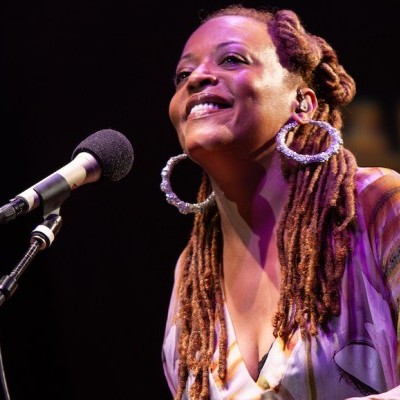
Wilson’s ability to connect to audiences helped her to win two Grammy awards and multiple other accolades. She was named an NEA Jazz Master in 2022.
Sep 3, 2026 10:44 AM
Cassandra Wilson, a singer, songwriter and producer who was one of the most acclaimed and successful jazz vocalists of…
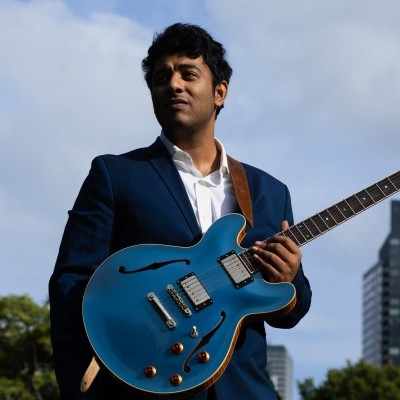
“The love from the jazz and music community restored my faith in humanity,” Walia wrote in an online post upon his release from detention at an ICE facility.
Aug 18, 2026 2:15 PM
Indian jazz guitarist and composer Pritesh Walia has been released after being unexpectedly detained by ICE and taken…
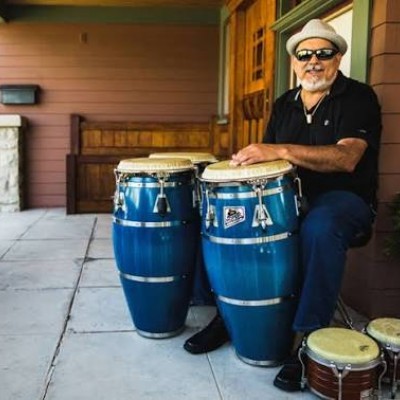
Percussionist Poncho Sanchez was among the artists scheduled to perform at the now-canceled inaugural LA Jazz Festival.
Aug 11, 2026 12:53 PM
The inaugural LA Jazz Festival, originally scheduled to run Aug. 7–23 with dozens of events across Los Angeles’…
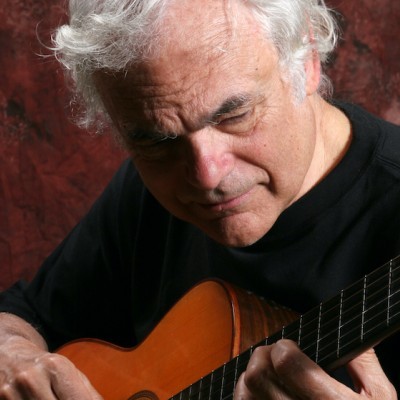
Bertoncini was a specialist and advocate for the nylon-string acoustic guitar, turning down high-profile opportunities that were unsuited to the sound and techniques that he used with that instrument.
Sep 1, 2026 11:06 AM
Gene Bertoncini, an esteemed jazz guitarist, composer, arranger and educator, died Aug. 29 at the Lillian Booth Actors…
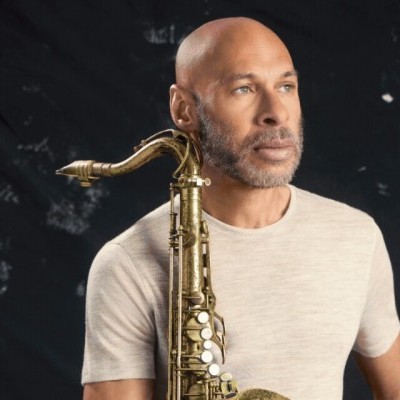
A solo concert by saxophonist Joshua Redman will close the first night of the Hyde Park Jazz Festival on Sept. 26.
Sep 22, 2026 12:26 PM
The Hyde Park Jazz Festival will take place for the 20th time on the final weekend of September 2026. Beginning half…