Sep 3, 2026 10:44 AM
In Memoriam: Cassandra Wilson, 1955–2026
Cassandra Wilson, a singer, songwriter and producer who was one of the most acclaimed and successful jazz vocalists of…


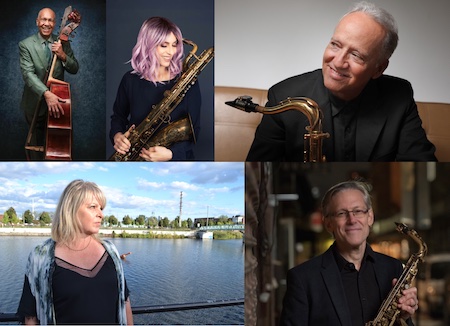
Lovers of the big band experience, clockwise from top left, John Clayton, Leigh Pilzer, Ted Nash, David Pietro and Christine Jensen.
(Photo: (clockwise) John Abbot, Suzette Niess, Christopher Drukker, G. Scott McLeod, Jimmy Katz)The popularity of big band music might have peaked in the 1930s and ’40s, but despite the many changes on the jazz scene brought about by bebop, fusion and other influential genres, large-ensemble jazz continues to have appeal for listeners and players alike.
In fact, groups such as the Maria Schneider Orchestra, Darcy James Argue’s Secret Society, Christian McBride’s Big Band, the Jazz at Lincoln Center Orchestra and up-and-coming bands like the Jihye Lee Orchestra, Ingrid Laubrock’s Orchestra and the Royal Krunk Jazz Orkestra underscore the continued contribution — and evolution — of big bands on today’s jazz scene. DownBeat recently spoke with several big band leaders as well as musicians who play in contemporary large ensembles to discuss their continued appeal and the elements that contribute to a big band’s success.
John Clayton
Renowned bassist, composer, arranger and co-leader of the Clayton-Hamilton Jazz Orchestra for the past four decades, John Clayton was initiated into the big band tradition when he joined the Count Basie Orchestra in the late 1970s.
“Like many musicians, my first experience with big bands was in high school,” he recalled. “After graduating from Indiana University, I played with Monty Alexander’s Trio, then joined Basie. Those were wonderful years and a great training ground for me. It introduced me to that amazing level of community that can exist in a big band. That’s when I began doing a lot of writing for the band. I’d never taken writing classes or lessons, I just dove into the deep end of the pool. The guys in the band stomached my sad-ass charts until I got a handle on things.”
Clayton then played with the Amsterdam Philharmonic Orchestra before moving to Los Angeles in 1985 and starting the Clayton-Hamilton Orchestra with drummer Jeff Hamilton — his best friend from college — and John’s brother, Jeff Clayton (1954–2020).
“Jeff had lived in L.A. the whole time and knew the best people to call,” said Clayton. “It was my responsibility to write the music and Jeff’s to handle the finances. So as I liked to remind Jeff, he didn’t have a damn thing to do for a long time! But we just celebrated the orchestra’s 40th year, and my main focus next year is writing for Clayton-Hamilton. We have fun with the things we’re playing, but it’s not expanding quickly enough for me. We always have to keep fresh music coming in. Over the next couple years, we’re going to do that.
“Big band has always been a really meaningful part of my heart and my love for music. When you’re part of a big band or starting one, you need to have a concept, and what it’s going to be stylistically. Basically, you’ve got to really love it, period. That’s the common denominator. You find players that are like-minded. Then it feels more like a family than a collection of musicians reading black dots on paper. Number one, it’s the music — you’re not getting paid a lot of money in a big band. Everyone in the band is congregating because of the music.”
Leigh Pilzer
Baritone saxophonist Leigh Pilzer leads two seven-piece ensembles in the Washington D.C. area and is also a member of the DIVA Jazz Orchestra and the Smithsonian Jazz Masterworks Orchestra. She played piano in her high school jazz band, then switched to cello. But her love of big bands didn’t really blossom until she was enrolled in community college and met jazz pianist, composer and arranger Bill Potts.
“Bill took me to hear the Basie Band, and it clicked that I needed to do that,” explained Pilzer. “But instead of a clean switch to bass from cello, I decided to play saxophone and started on alto. Chuck Redd, who Bill was also mentoring. hooked me up with the community college big band, and I started by subbing on baritone sax. It was love at first honk. And I ended up going to Berklee.”
After graduation, Pilzer earned master’s degrees in jazz studies and saxophone performance at the University of Maryland and a doctorate degree from George Mason. After hearing the DIVA Jazz Orchestra several times live, Pilzer decided that was the band she wanted to join.
“Basically, I stalked the band,” she said. “I knew I’d be a good fit in their style, so I sent a demo to them, and whenever I was on a CD, I’d send them a copy. I’d go see them live when I could. A band leader can’t hire you if they don’t know you exist. Finally, they called me for a gig, but I wasn’t available. I thought they’d never call again, but they did, and my first gig with them was on bari. But I didn’t play bari again for quite some time. Instead, I bounced around the sax section subbing as needed. So that became part of my value with Diva. I was reliable, I’d work on the music, I’d show up on time and they could pop me in anywhere in the section. And now on every gig with DIVA, I play bari.
“If you find a band that would be a great fit, and if you get a call to play for them, remember — treat every gig you do as important,” concludes Pilzer. “When you get the music for the gig — do your homework. And one last piece of advice. Three words: Bring a pencil.”
Christine Jensen
Saxophonist, composer and bandleader Christine Jensen has achieved critical acclaim for both her quartet and her Jazz Orchestra recordings Treelines (2011), Habitat (2014) and Harbour (2024). Both Treelines and Harbour won the Juno Award for Contemporary Album of the Year. She earned her bachelor’s and master’s of music degrees at McGill University in Montreal and now teaches at the Eastman School of Music in Rochester, New York. Born and raised in Nanaimo on Vancouver Island in British Columbia, Jensen and her sisters Ingrid and Janet all played music from an early age.
“In addition to playing in school bands, there was a local big band with a lot of seasoned musicians that played classics like ‘Pennsylvania 6-5000’ at the Moose Lodge,” recalls Jensen. “They asked me to play baritone sax, and being part of that great big band musical machine was so much fun, it really fueled a passion in me.”
After high school, Jensen attended McGill, where she played in large ensembles as well as with community big bands, developing her chops in the sax section and as a section leader.
“It wasn’t something you did for money — it was for the love of the music and being able to play together and make that group sound,” said Jensen. “I knew I had this music in my head I needed to get out there, and that spurred me on. I started running my own big band in 2005 with Montreal musicians — working on my own music.”
Over the course of her acclaimed Jazz Orchestra recordings, Jensen has relied on a core group of Montreal musicians, adding special guests such as her sister Ingrid on trumpet. Now that she’s teaching at Eastman, Jensen also gets to work with students in a big band setting.
“I love to share with my students the process I’ve gone through and work to put together a very high-level band with them,” she explained. “All I ask is that they bring in their very best game and accept the challenge of making improvements as we go. I just hope I’m challenging them and that at the end of the day we’re playing repertoire well. It’s very different for me because it’s sourcing repertoire outside my own music. So I bring the skills I’ve learned to the students and try to keep an open sensibility of contemporary themes, as well as working on the tradition and the beauty of it all.”
Dave Pietro
Saxophonist Dave Pietro has released a string of well-crafted small group recordings as a leader, but his resume as a member of outstanding big bands is impressive — and extensive. That resume includes a lengthy membership in the Maria Schneider Orchestra, as well as Darcy James Argue’s Secret Society, the Gil Evans Project and regular appearances with the Vanguard Jazz Orchestra. Pietro played with the Toshiko Akiyoshi Jazz Orchestra for more than two decades, and has also performed in the bands of Maynard Ferguson, Lionel Hampton and Woody Herman.
Pietro grew up hearing his father’s collection of big band records, and he’s been a fan ever since. He played in high school bands and the University of New Hampshire band before transferring to North Texas State (now the University of North Texas) and playing and recording with the famed One O’Clock Lab Band there.
“The sound of all these human beings playing together in a big band is just glorious,” said Pietro. ”Then you add the excitement of hearing the individual voices of musicians come through in solos. As human beings, both of those things are vitally important to us. We need to feel part of a musical community, and we need to be heard as individuals and express ourselves on a personal level. When I can be part of a community like that — that’s when I’m happiest.”
Over the course of several decades, Pietro has noticed changing trends in the number of young musicians interested in big bands — as well as changes in the way solos are approached.
“I teach at NYU, and many of our students here are not as interested in playing in big bands,” he said. “It’s too bad because if you’re a horn player, getting into a big band is a great way to network. But there are also many young players interested in doing it. I just played a gig in New Jersey with Helen Sung’s big band, and the average age in the trumpet section was in the mid-20s and they were mostly female. So young players keep coming.
“These days, I play in bands where there is a lot of room for solo interpretation, and other bands that are mostly about execution of the notes on the page. I enjoy the challenges of both.”
Ted Nash
Alto saxophonist Ted Nash is best known for his 25-plus year tenure in the Lincoln Center Jazz Orchestra, but his resume also includes work with the bands of Lionel Hampton, Louie Bellson, Quincy Jones, Don Ellis, Gerry Mulligan and the Mel Lewis Jazz Orchestra. Nash won two Grammy Awards for his big band recording Presidential Suite and has composed music for two other big band albums, Chakra and Portrait In Seven Shades with the LCJO.
He also has more than a dozen small group recordings to his credit, but big bands have always attracted him.
“When I started playing professionally, big bands were kind of a love-hate relationship,” he recalled. “When you’re younger you go through identity crises — you think, ‘I want to be a soloist, I want to be a star, I want exposure.’ But as you get older you begin to realize — and I certainly have — that big bands are jazz’s orchestral tradition. Over time, we’ve lost something in the way that musicians play together as an ensemble, like the sense of playing in balance, being in agreement and listening to each other.
“Now we’re keeping that tradition alive and finding new ways to use the jazz orchestra to be expressive. I think it’s a very exciting time for big bands.”
Over the course of his musical career, Nash has expanded his palette from playing in big bands led by others and recording smaller ensembles under his own name to leading his own big bands. In the beginning, he found that leadership role challenging.
“Leading a big band can be daunting,” he explains. “You’re standing up in front of your peers, many of them great composers and musicians, and you’re asking them to play your music.
“At first, you’re a little insecure. Why are they here? Why am I so lucky to have these musicians playing my music? Then you realize that by playing in big bands we develop the ability to respect other’s music and offer our services in ways that keep this music alive. Big bands represent a sense of community and harmoniousness. We have to drop our egos at the door, learn how to be flexible and how to respect each other.” DB
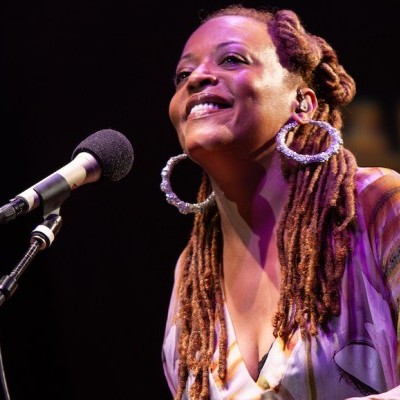
Wilson’s ability to connect to audiences helped her to win two Grammy awards and multiple other accolades. She was named an NEA Jazz Master in 2022.
Sep 3, 2026 10:44 AM
Cassandra Wilson, a singer, songwriter and producer who was one of the most acclaimed and successful jazz vocalists of…
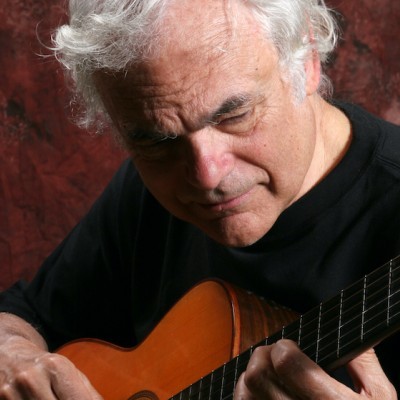
Bertoncini was a specialist and advocate for the nylon-string acoustic guitar, turning down high-profile opportunities that were unsuited to the sound and techniques that he used with that instrument.
Sep 1, 2026 11:06 AM
Gene Bertoncini, an esteemed jazz guitarist, composer, arranger and educator, died Aug. 29 at the Lillian Booth Actors…
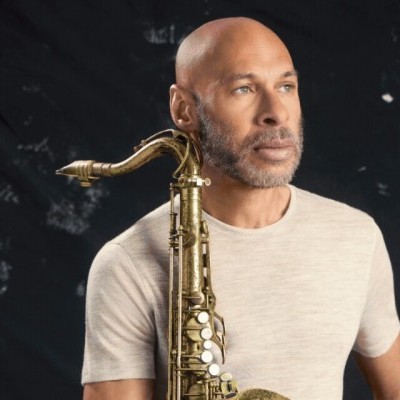
A solo concert by saxophonist Joshua Redman will close the first night of the Hyde Park Jazz Festival on Sept. 26.
Sep 22, 2026 12:26 PM
The Hyde Park Jazz Festival will take place for the 20th time on the final weekend of September 2026. Beginning half…
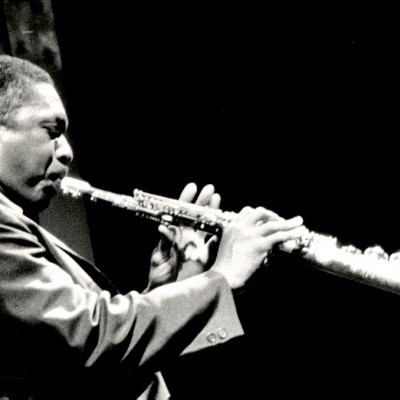
“It was just that suddenly … I could hear it,” Ravi Coltrane said of an epiphany he experienced during his late teens regarding his father’s music. “And it was almost like a calling, like something saying, ‘Hey, man, come on. It’s time to get serious.’ And the first time you really tune in and dial in and focus like that, it can be very life-changing.”
Sep 22, 2026 1:39 PM
Editor’s Note: Tomorrow, Sept. 23, is the 100th anniversary of John Coltrane’s birth. In honor of the tenor and…
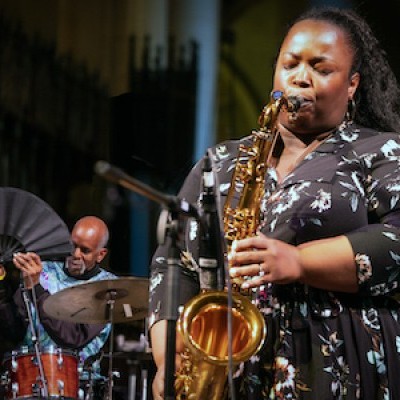
Camille Thurman took to the stage alongside bassist Kenny Davis and drummer Tommy Campbell for a rendition of Johnny Mercer’s “I’m An Old Cowhand” that recalled Rollins’ epochal 1957 trio outing Way Out West.
Oct 6, 2026 1:33 PM
As emcee Mark Ruffin noted at the commencement of an epic tribute to saxophonist Sonny Rollins at the Cathedral of…