Sep 3, 2026 10:44 AM
In Memoriam: Cassandra Wilson, 1955–2026
Cassandra Wilson, a singer, songwriter and producer who was one of the most acclaimed and successful jazz vocalists of…


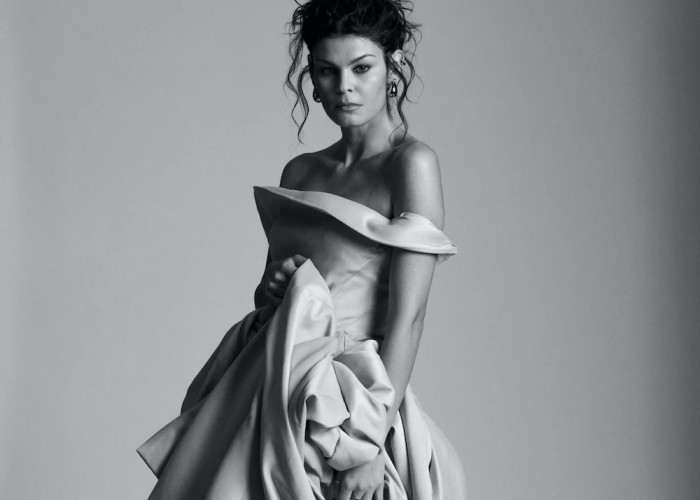
“There was something about her tone and sound and phrasing — an intimacy, a vulnerability, an honesty,” says Joshua Redman, who produced Cavassa’s record after she toured with his band.
(Photo: Roeg Cohen)Gabrielle Cavassa is an avowed perfectionist. So when she failed to place despite becoming a finalist in the 2018 Sarah Vaughan International Jazz Vocal Competition, she deemed it a defeat.
But Cavassa is also a woman of resource and resolve, and in the perceived setback she found the inspiration to make a long-contemplated change — abandoning the singular pursuit of life as a singer of standards.
“Having lost the competition,” she said, “I was like, ‘You know what? They don’t want me. I’m going to do my own thing.’”
Turning down a producer’s offer of a safe but unsatisfying recording contract, she allied with drummer Jamison Ross to co-produce a self-titled album packed with provocative originals and novel covers. The move, though risky, set her on a new path and led to growing recognition in the jazz world, on her own terms. She has never looked back.
“The record for me was really a rejection of jazz as a convention,” she said, “a rejection of what I felt I was supposed to be doing. It was an embracing of self. And it was very ironic to me that I feel I was really embraced by the jazz community following the record, which was intended to reject it.”
Ironic or not, the community’s embrace has been wholehearted. When she took another shot at the Vaughan competition, in the 2020 edition, she emerged as a co-winner: only the second person in the contest’s 13-year history to notch a victory in a return effort, according to its founder, John Schreiber. (Samara Joy was the other.)
Cavassa’s strategy of self-discovery had apparently paid dividends. A video of the competition’s finals — an event postponed until June 2021 because of COVID — reveals that Cavassa, at age 26, already possessed the quality of personal expression that Schreiber felt promised a long career.
“Some singers who participate in the competition are still finding their voice,” said Schreiber, president and CEO of the New Jersey Performing Arts Center, where the competition is held. “She came with a voice. She did not perform in a way that was reminiscent of Sarah [Vaughan] or any of the other iconic vocalists. Her voice is unique, authentic. She’ll be around.”
With the victory and the record, her name made its way into the jazz ecosphere. As it did, saxophonist Joshua Redman got wind of her. “She came to my attention in a way no other musician with whom I’ve had a profound and lasting musical relationship has,” he said, explaining that his manager, who hardly ever offered musical recommendations, did so after hearing her perform. Redman checked out her record and was hooked.
“Stylistically, aesthetically, it was not necessarily the kind of record that would normally draw my attention,” Redman said. “But there was something about her tone and sound and phrasing — an intimacy, a vulnerability, an honesty. We started talking about making a record together.”
Though they communicated electronically, he didn’t hear her sing live until they met to record tracks for his album, the 2023 Blue Note release Where Are We. Extensive touring followed, as did his follow-up recording Words Fall Short, on which Cavassa also makes an appearance. All of which has led to the current moment and the release of her Blue Note debut, Diavola.
True to her ethos, the album eschews conventional jazz-singer fare. Co-produced by Redman, who also appears on the album, it is driven by what he admiringly described as a “contrarian impulse.” Its writing maintains, even sharpens, the edge she brought to her first album; likewise, the interpretations she brings to the covers, a disparate list that includes tunes associated with figures like Barry Manilow and Mario Lanza as well as 1960s-vintage material from Brazil and Italy. The choices reflect, at the very least, a wide-ranging sensibility.
At the same time, the musical environments in which she operates tend toward the spare, all the better to highlight the nuances in which she traffics to dramatic effect. And no better example of that dynamic exists than the title track’s opening gambit — a sharply executed intervallic leap and chorus, released without accompaniment. With nothing standing between the listener and Cavassa’s voice, the urgency of her delivery has maximum impact.
“Diavola,” she sings, attacking each syllable with a clarity worthy of the opera singer she chose not to be. “I told you I love you I lied/ He calls me his angel but I’m/ Diavola.”
The track, she said, “was probably the greatest challenge for me of the whole record.” As the thematic center of creation for her diabolical alter ego [diavola means devil in Italian], “it was so hard for me to conceptualize.” She was crafting lyrics in the studio between takes. “I’m such a perfectionist, which is what I’m battling in the narrative of this record and the narrative of this song. It was hard for me to let her be.”
Part of the challenge was her extramusical ambition for the tune. It was not just an artistic creation; she assigned to it an almost therapeutic function: “I invented this character to try to explore some emotions it was hard for me, Gabby, to deal with but Diavola could deal with, like rage and jealousy and things I feel are negative. Diavola can be all these things.”
With its multiple layers of function and meaning, “Diavola” required more editing than the album’s other tunes. Instrumental backing was excised from the opening, creating the illusion of a capella performance. Overdubs were requested of pianist Paul Cornish, yielding harmonic ambiguity that added narrative dimension. Ultimately, Cavassa said, the tune “was produced as much after the fact as in the studio” — marking it as an outlier.
The album’s other outlier — it was the only track not laid down in the February 2026 session at Dreamland Recording Studios near Woodstock, New York — was “Be My Love.” Takes with the full band hadn’t panned out, Cavassa said, so Redman suggested a reimagining, radical even for Cavassa, in which the sole accompaniment would be a harmonically static drone-like bed fashioned by guitarist Jeff Parker. A demo was recorded in co-producer Don Was’ home studio. It worked and became the final take.
“It was a really magical moment,” she said. “Jeff tapped into something that’s so beyond, that requires so much restraint and so much trust. In that moment I was so moved by the soundscape, and we weren’t able to recreate it. So we just went with the demo.”
Cavassa described the track as the album’s “pinnacle,” a kind of thematic tipping point. “In the story of the Diavola, it’s her moment, not of desperation but of motive. She really wants to be loved, and I think that’s not working for her. And you can hear that in the song.”
The subtlety of Cavassa’s treatment alone qualifies as a high point. Backed only by Parker’s drone and free to roam wherever her improvisatory instincts might take her, she does not opt for the heroic gesture. Instead, she builds her story through the accretion of small turns: a shift in phrasing, a tweak in texture, the caressing of a lyric or the wrinkling rather than wholesale warping of time. These moments, rendered with abundant self-possession, tell a tale as grand as any the melodramatic Lanza ever told.
“For an ability to hear the finest, almost microscopic details and differences,” Redman said, “she’s as great as any musician I’ve ever met.”
Those qualities, he said, were obvious from the first stop on tour for Where Are We. The concept was a simple one: perform a tune appropriate to the city in which they were appearing. The first stop was Warsaw, Poland, and the chosen tune was the Manilow hit “Could It Be Magic,” which was built on the chord changes of “Prelude in C Minor” by Frederic Chopin, a Polish native.
The tune made it onto her album. And unlike many of the arrangements on it, this one, hatched on the Redman tour, affords Cavassa an opportunity to integrate with a jazz unit operating at full tilt. She responds with a keenly attuned, delicately shaded reading that seamlessly connects Cornish’s arpeggiated flights and Redman’s contrapuntal musings while advancing the plot.
“Blending with other instruments is one of her superpowers,” Redman said. “Night after night, one of the things I honestly learned from her is the balance between delivering the song the way it should be delivered and adding to the essence with some intention and creating something new.”
The unit functioned so well that the tune became a staple in cities outside Poland, he said, adding that her contribution was so strong that the tune effectively became hers, though she was hesitant to accept proprietorship.
“More than any other tune on the tour, that one stuck,” Redman said. “It had this thing. It was great for the band, great for her. For a long time, she didn’t want to use it on her record. She felt it belonged to the project with our band. But I was relentless. I just felt like she owned that song in a very particular way.”
The resistance Redman encountered — a deceptively potent mix of humility and what he termed “incredibly strong opinions” — mirrors a quiet determination she has evinced since her earliest days. “Obsessive” is how she described her self-education, whether as the scrappy schoolkid in the Southern California town of Escondido or the ardent clubgoer in San Francisco, where she attended college and toiled as a bartender. Having lived now in New Orleans the better part of a decade, she continues her research.
She has delved into the sound worlds of many singers. “First and foremost,” she said, “will always be Billie Holiday. That was a really important discovery for me because she was a gateway into the rest of music. I loved her so much. Every person on her records I would look up and read the back of the record and do my research from there.”
Holiday’s albums introduced Cavassa to non-singers who influenced her lyrical approach, notably saxophonists like Lester Young and Ben Webster. Later, Stan Getz entered her consciousness, not least for his forays into bossa nova. Cavassa’s explorations in that idiom, represented on two tunes on her album, demonstrate an innate ability to dive deeply into the music of another culture and surface with something valuable of her own.
The tunes contrast in mood. “Bossy Nova,” a Cavassa original written as an affirmation in a moment of self-doubt, communicates in uncharacteristically bright terms: “Sunshine on my behind/ I wouldn’t care if they missed me.” “To Say Goodbye,” by the bossa nova master Edu Lobo, proffers a darker message: “Goodbye/ It’s all over now.” What they share is an authentic feel for the gentle samba, rare for one not steeped in Braziliana from birth.
Even more authentic, perhaps, is the touch she brings to Italianate material. Addressing it, in fact, was a kind of creative, if not psychological, imperative. The album’s title character personified, she said, an aspect of her personality who shared her ethnic heritage and was thus a “distinctly Italian” creation: “I needed her to be Italian. She’s a part of me.”
The two songs performed in the Italian language, both ’60s relics, inevitably dwell in that emotional realm. “Angelo” — its somber tone established by Larry Grenadier’s arco bass, punctuated by small ensemble peaks and some very deep valleys — finds expression in, yes, a distinctly Italian sort of justice Diavola dispenses to “Angelo, Angelo, angelo mio” (“Angelo, Angelo, my angel”).
Less demonstrative in tone but similarly unforgiving in tenor, “La Notte Dell’Addio” (“The Night Of Goodbye”) deftly conveys the pain of a protagonist left in the lurch to roam her brutally sunlit “casa vuota” (“empty home”). Set against a wisp of piano accompaniment, Cavassa’s crystalline voice compels and, suddenly, cracks ever so slightly — an understated flourish that wraps up the album and this act in her theater of self-discovery. DB
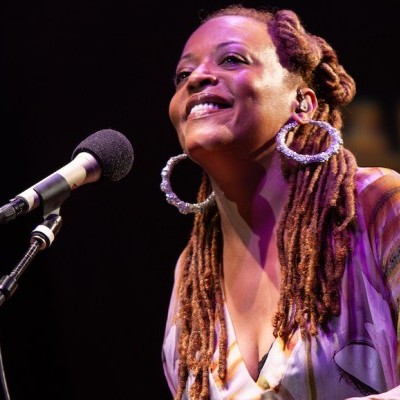
Wilson’s ability to connect to audiences helped her to win two Grammy awards and multiple other accolades. She was named an NEA Jazz Master in 2022.
Sep 3, 2026 10:44 AM
Cassandra Wilson, a singer, songwriter and producer who was one of the most acclaimed and successful jazz vocalists of…
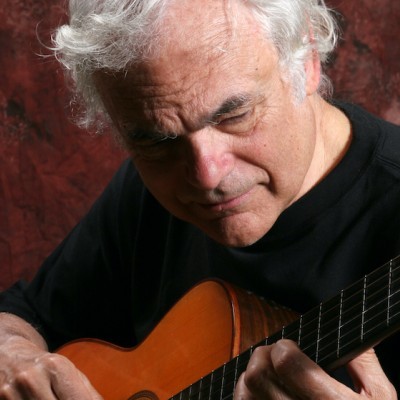
Bertoncini was a specialist and advocate for the nylon-string acoustic guitar, turning down high-profile opportunities that were unsuited to the sound and techniques that he used with that instrument.
Sep 1, 2026 11:06 AM
Gene Bertoncini, an esteemed jazz guitarist, composer, arranger and educator, died Aug. 29 at the Lillian Booth Actors…
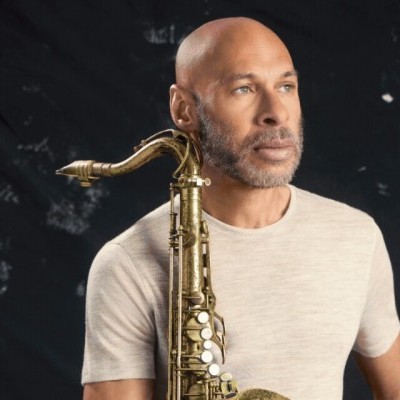
A solo concert by saxophonist Joshua Redman will close the first night of the Hyde Park Jazz Festival on Sept. 26.
Sep 22, 2026 12:26 PM
The Hyde Park Jazz Festival will take place for the 20th time on the final weekend of September 2026. Beginning half…
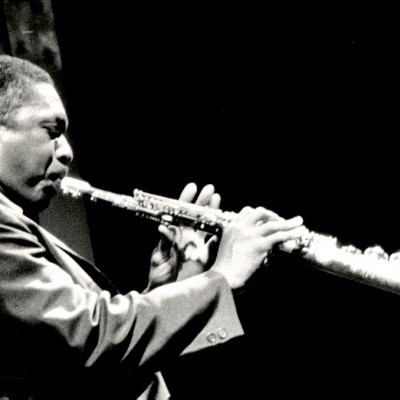
“It was just that suddenly … I could hear it,” Ravi Coltrane said of an epiphany he experienced during his late teens regarding his father’s music. “And it was almost like a calling, like something saying, ‘Hey, man, come on. It’s time to get serious.’ And the first time you really tune in and dial in and focus like that, it can be very life-changing.”
Sep 22, 2026 1:39 PM
Editor’s Note: Tomorrow, Sept. 23, is the 100th anniversary of John Coltrane’s birth. In honor of the tenor and…
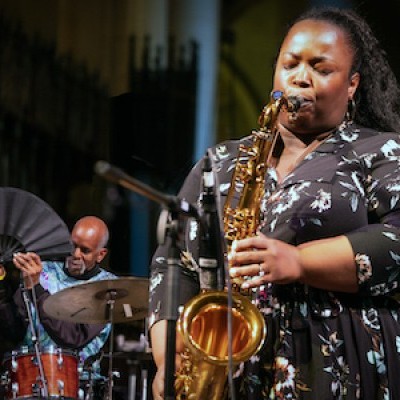
Camille Thurman took to the stage alongside bassist Kenny Davis and drummer Tommy Campbell for a rendition of Johnny Mercer’s “I’m An Old Cowhand” that recalled Rollins’ epochal 1957 trio outing Way Out West.
Oct 6, 2026 1:33 PM
As emcee Mark Ruffin noted at the commencement of an epic tribute to saxophonist Sonny Rollins at the Cathedral of…