Sep 3, 2026 10:44 AM
In Memoriam: Cassandra Wilson, 1955–2026
Cassandra Wilson, a singer, songwriter and producer who was one of the most acclaimed and successful jazz vocalists of…


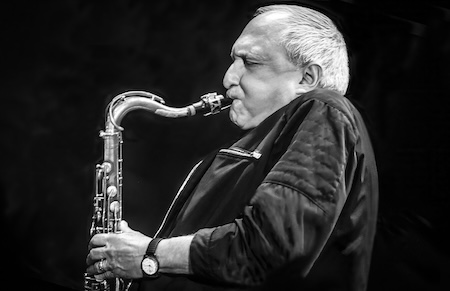
“He was such a beautiful guy,” George Garzone says of the late tenor saxophonist Michael Brecker. He pays tribute to Brecker on his new recording, Themes For Good Friends.
(Photo: Michael Jackson)Mighty Italian-American tenori di forza are a thing. Tenor saxophonists, that is. Sal Nistico, Sam Butera, Don Menza, Frank Tiberi, Jerry Bergonzi, Ralph Lalama, Marco Pignataro, Jerry Weldon, Joe Lovano. Big-hearted and big-toned, like those open-chest opera stars. Music is a social component in Italian families and it certainly played its part in the upbringing of one of America’s most quietly influential and revered tenor titans, George Garzone.
“Growing up, I’d go to church and Sunday School and finish music lessons at Uncle Rocco’s pizza joint by noon,” Garzone tells DownBeat, matter-of-factly, over the phone from his home base in Boston. Rocco was also a tenor player, though he had a penchant for singing “Your Cheating Heart” (during his divorce) on the wedding gigs he’d make with Garzone’s Uncle Joe on drums, cousins Bobby and Richie on piano and saxophone. “Music was all around. I was taken on club dates with the family band at age 12. They’d sit me down just to listen, then by 13 I was playing clarinet with them, learning young what a mature sound was all about.” One of Rocco’s pals was multi-reedist and esteemed educator Joe Viola, and thusly Garzone gained early entrance to Berklee College of Music. Ultimately, he himself would teach, for upwards of 50 years and counting, influencing a Who’s Who of sax slingers and other instrumentalists, preaching his theory The Cross Intervallic Triadic Approach.
In the 1970s, initial vinyl releases on the Ap-Gu-Ga label, a portmanteau of bassist Richard Appleman, late drummer Bob Gullotti and Garzone, heralded The Fringe, a still extant group (54 years on), currently including drummer Francisco Mela and long-serving bassist John Lockwood. This intense trio continues, unabated, a late open-improv set Monday nights at the Lilypad in Cambridge, Massachusetts, Garzone’s terra firma. Much of his output is on indie labels. For example, a strong run with Mike Manieri’s NYC Records when vibist and important collaborator Manieri initially commissioned a Stan Getz tribute album from him. Alone (1995), something of a ballads compilation but less mellifluous than Garzone’s first influence Getz, included a bruising take on “What Is This Thing …” and other indications of questing energy, the sonic curiosity that got him bounced from the family function band.
The Boston barnstormer took few prisoners with blistering blowing on later releases; check overdubbed alto against tenor on The Fringe In NY (“Ultra Tempo” on that is high combustibles strapped to a rabid greyhound), or try “Garganzola” from Quintonic (a double-barrelled face-off with fellow Bostonian Bergonzi).
Dipping into Garzone’s discography of about 20 rare leader/The Fringe dates reliably reveals stirring moments, teeming with fresh ideas, full-tilt exploration and polyphony, balanced with calmer, Coltrane-infused lyricism. The internet describes his triadic methodology as a means of “enabling the improvisor to create freely without having to concern themselves with what is going on harmonically.” Are those his words?
“They are!” Garzone responds. “I’m at the blackboard at NEC, not like a rocket scientist, and I’m thinking, ‘Wait a minute, a major triad is a minor triad upside down, and a minor triad is a major triad inverted, and augmented is major third, and diminished is all minor third,’ so when you mix them without being repetitive, you’re borrowing from the 12-tone row, so it doesn’t really matter what you play because eventually there’ll be one note, if you practice the way I suggest, that works against and also releases the chord.”
Playing augmented triads freely, less symmetrically, Garzone discovered the less he thought about it the more the music would resolve. George Russell’s Lydian Chromatic concept had opened his mind when he contributed to Russell’s The African Game (Blue Note, 1984). “That project was based on the evolution of man, where he swims out of the Amazon as an amoeba,” Garzone recalls with incredulous admiration. Another Garzone fave is the flat nine. “It’s the new one minor, coming from the flat three, if you’re in D minor running it — F–G–A–B natural–C sharp — the whole-tone scale coming to the flat nine of D minor — E flat — this helps augment the minor sound. That flat nine, not normally convincing, is the new one.”
Doesn’t Bergonzi have similar ideas? “Being sandwiched between Jerry and Lovano is religious for me, spiritual [they sometimes gig as The Three Tenors]. Jerry’s got a pentatonic thing he plays that’s great, it’s not repetitive. The thing I’m doing is more chromatic. I invented a term for it: ‘Randomnivity.’ It permeates through playing; the less organized you are, the more it works.”
Garzone first articulated his ideas on manuscript over the changes to “Have You Met Miss Jones” on the 1995 album Four’s And Two’s (NYC) when he plays relentless lines behind Lovano’s melody statement. “Miss Jones,” with its major-third root movement through three tonal centers, foreshadowed what became “Coltrane changes” via “Giant Steps.”
The surprise was to see “Giant Steps” listed on the playlist of Garzone’s latest album, Themes For Good Friends, his first for Luxembourg’s Jojo Records, run by guitarist Simon Belelty, who asked bassist Santi DeBriano to seek out Garzone. “I’ve known Garzone since 1978 in NEC days,” Debriano remembers via email. “I covered for Rich Appleman on the fifth anniversary of The Fringe at Michael’s Pub. I was made aware of the mastery of Garzone — I’ve never forgotten that night.”
Justifying his emancipating musical conceits, Garzone’s “Giant Steps” duo with Jeff “Tain” Watts is no slavish harmonic crochet but a punctuated bounce egged on by Watts, who he recalls drumming on the carpet as a Berklee student. “This is the first time I attempted this. It’s gotten better in the two years since. Chancy, but I think I pulled it off,” states Garzone. “I tell my students to swing on one and three — there’s more security than two and four — on the downbeat like the old cats, Warne Marsh, Lee Konitz, Lester Young. Don’t swing like a barn door.
“Back in ’75, I’d hear these kids with a (rhythmic) hiccup,” adds Garzone the teacher. “Don’t sleep on what’s gonna make you money, I’d tell them.”
There’s a trace of irony in that statement, as his association with the Boston scene may have cost him work. “They think we’re too free here,” he surmises about club owners in New York, while giving preference to Spike Wilner’s musician-owned Manhattan joints Smalls and newly popular JazzCultural.
More appreciated internationally, Garzone has been the annual guest of the Copenhagen Jazz Festival since 1995. “I wasn’t going to go this year, because of this political shit about Scandinavia and Greenland; I didn’t think, as an American, I’d be welcome, but Jakob Bro insisted. I owed it to Danish musicians I’m nurturing over there.”
Themes For Good Friends seems more about tributes than Garzone’s actual friends. Fred Lacey’s “Theme For Ernie” was written for alto saxophonist Ernie Henry, who died in 1957 when Garzone was 7. His own composition, “The Mingus I Knew” from the album, is about an artist he met a few times.
“I went to the Vanguard in ’69, ’70 to hear Thad Jones/Mel Lewis. It was crammed so tight you couldn’t even turn round,” Garzone says. “I complained about this guy smoking a cigar behind me. It turned out to be Mingus. He made sure to honk that stogie right in my face.”
Garzone would later open for Mingus at a Greenwich Library concert in Massachusetts.
“Backstage I told Mingus I’d written a tune for him — he glared and looked like he wanted to kill me again.”
So it was Mingus’ music with which Garzone was more au fait. You can hear whiffs of “Peggy’s Blue Skylight” in his tribute, plus tempo shifts — a Mingus trait.
Garzone’s memories of Michael Brecker were different. He pays tribute to the tenor titan on the album’s closing tune, “To Michael Brecker.”
“He was such a beautiful guy. We played a four-tenor thing at Newport in ’97. First thing, he walked to the back of the bus where I was sitting on a bench seat with Jack DeJohnette, wondering if I’d survive this gig, and introduced himself.”
A decade later, on Jan. 13, Garzone was watching a New England Patriots game when Lovano called with news about Brecker’s passing. “I went straight down and pitched it like a hymn, a national anthem for everybody, for one of the best sax players on the planet.”
Michael’s older brother, the prolific trumpeter Randy Brecker, now 80, joins Garzone to dropshadow the soulful dirge. Watts’ plosive mallets conjure drooping farewell fanfare fireworks in the chasm of Van Gelder’s epic studio.
“There’s no inferred time to it, it’s not a moving eighth note thing, it’s to be played as if someone was going to sing it,” said Garzone. It’s a moving climax to a varied, virile set that makes Themes For Good Friends stand up to anything Garzone has put out. As Randy Brecker put it: “George Garzone is at the top of every saxophonist’s list as an amazing, individualistic player and esteemed professor. It was an honor to be featured on his new album, made even sweeter by the tune dedicated to my brother, who also was a big fan.” DB
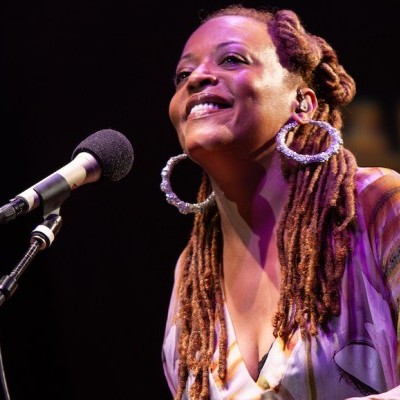
Wilson’s ability to connect to audiences helped her to win two Grammy awards and multiple other accolades. She was named an NEA Jazz Master in 2022.
Sep 3, 2026 10:44 AM
Cassandra Wilson, a singer, songwriter and producer who was one of the most acclaimed and successful jazz vocalists of…
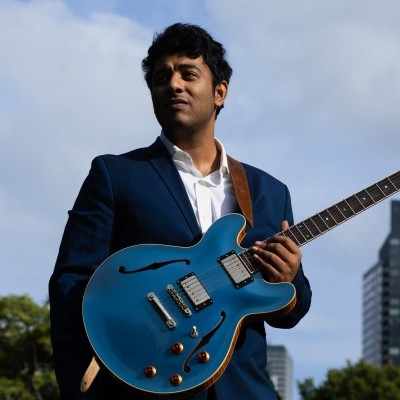
“The love from the jazz and music community restored my faith in humanity,” Walia wrote in an online post upon his release from detention at an ICE facility.
Aug 18, 2026 2:15 PM
Indian jazz guitarist and composer Pritesh Walia has been released after being unexpectedly detained by ICE and taken…
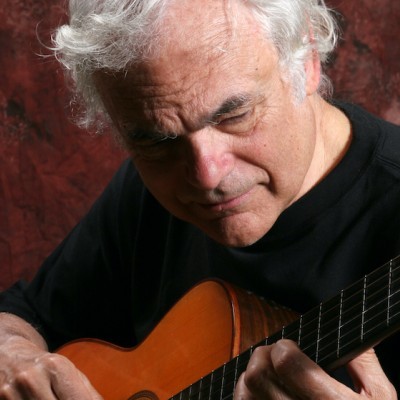
Bertoncini was a specialist and advocate for the nylon-string acoustic guitar, turning down high-profile opportunities that were unsuited to the sound and techniques that he used with that instrument.
Sep 1, 2026 11:06 AM
Gene Bertoncini, an esteemed jazz guitarist, composer, arranger and educator, died Aug. 29 at the Lillian Booth Actors…
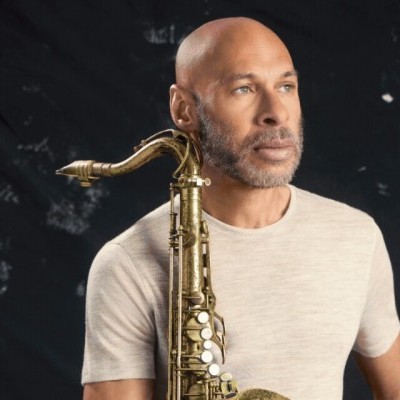
A solo concert by saxophonist Joshua Redman will close the first night of the Hyde Park Jazz Festival on Sept. 26.
Sep 22, 2026 12:26 PM
The Hyde Park Jazz Festival will take place for the 20th time on the final weekend of September 2026. Beginning half…
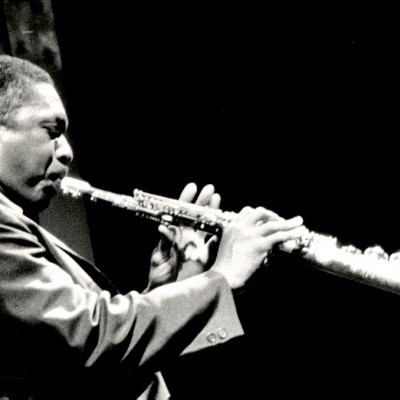
“It was just that suddenly … I could hear it,” Ravi Coltrane said of an epiphany he experienced during his late teens regarding his father’s music. “And it was almost like a calling, like something saying, ‘Hey, man, come on. It’s time to get serious.’ And the first time you really tune in and dial in and focus like that, it can be very life-changing.”
Sep 22, 2026 1:39 PM
Editor’s Note: Tomorrow, Sept. 23, is the 100th anniversary of John Coltrane’s birth. In honor of the tenor and…