Sep 3, 2026 10:44 AM
In Memoriam: Cassandra Wilson, 1955–2026
Cassandra Wilson, a singer, songwriter and producer who was one of the most acclaimed and successful jazz vocalists of…


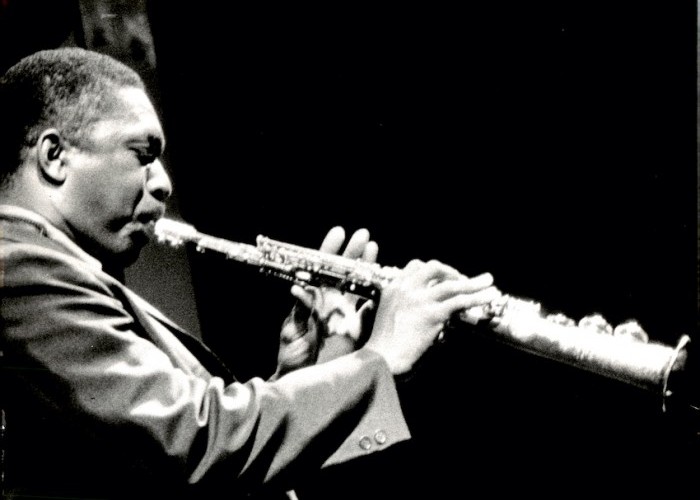
“It was just that suddenly … I could hear it,” Ravi Coltrane said of an epiphany he experienced during his late teens regarding his father’s music. “And it was almost like a calling, like something saying, ‘Hey, man, come on. It’s time to get serious.’ And the first time you really tune in and dial in and focus like that, it can be very life-changing.”
(Photo: Joe Alper)Editor’s Note: Tomorrow, Sept. 23, is the 100th anniversary of John Coltrane’s birth. In honor of the tenor and soprano saxophonist’s extraordinary artistic vision and expansive legacy, DownBeat offers the following look back by longtime contributor Bill Milkowski.
ONE HUNDRED YEARS after his birth on Sept. 23, 1926, in Hamlet, North Carolina, the searching, searing sound of John Coltrane continues to register with profound impact on generations of musicians and jazz fans alike.
His music continues to be revered and explored, whether it’s new adaptations of his 1965 masterwork A Love Supreme (which to date has been recorded in its entirety by Wynton Marsalis & The Lincoln Center Jazz Orchestra, the Branford Marsalis Quartet, Carlos Santana & John McLaughlin, the Elvin Jones Special Quartet, Conrad Herwig, Henry Kaiser, Dave Wilson, the Turtle Island String Quartet, Mathias Heise & The Danish Radio Big Band and the Berlin-based trance/tribal synth-pop group Dissidenten, among others) or the numerous covers of classic Coltrane compositions like “Giant Steps,” “Impressions,” “Countdown,” “Naima,” “Mr. P.C.,” “Blue Train,” “Central Park West” or the haunting protest song “Alabama” that still show up on new recordings each year.
In short, Trane remains one of the most transformative artists in jazz, his influence felt over time by everyone from young disciples like saxophonists Isaiah Collier, Kamasi Washington, Jaleel Shaw, Immanuel Wilkins and James Brandon Lewis to elder saxophone statesmen like Charles Lloyd, Billy Harper, David Murray, Kenny Garrett, Bob Mintzer, Dave Liebman, Joe Lovano and his son, Ravi Coltrane. Even electric guitar renegades like Nels Cline, Henry Kaiser and Allan Holdsworth have been deeply affected by John Coltrane.
To commemorate his centennial, the Coltrane estate is overseeing an ambitious year-long global celebration that includes the September release of The Tiberi Tapes on Impulse! (a set of private live recordings captured between 1961 and 1965 in clubs across New York and Philadelphia by saxophonist and Trane aficionado Frank Tiberi). “The Tiberi Tapes have literally been the stuff of legend in the world of John Coltrane, until now,” said Jamie Krents, president–CEO of UMe and Verve Label Group. “We’re thrilled to finally get to share these recordings of Coltrane’s musical evolution with the world.”
The celebration continues with the Los Angeles premiere of Coltrane 100: Legacy, a symphonic show at the Hollywood Bowl on Trane’s birthday with new arrangements of Coltrane’s popular and groundbreaking works newly reinterpreted, expanded and reimagined for orchestra. The Hollywood Bowl performance features alto saxophonist Lakecia Benjamin, who won acclaim for her 2020 album of John and Alice Coltrane compositions (Pursuance: The Coltranes on Ropeadope), backed by her touring band and a 16-piece orchestra. Wynton Marsalis closes the evening in his final performance at the Hollywood Bowl at the helm of the Jazz at Lincoln Center Orchestra.
Other labels, including Craft Recordings and Rhino Records, are also planning to release newly curated collections of Coltrane’s works on vinyl. Clearly, more than 58 years after his passing in 1967, Coltrane remains one of the most vital and influential figures in modern jazz and continues to reach new listeners through this deluge of recordings and performances. The St. John Coltrane African Orthodox Church in San Francisco (established in 1969) will also be acknowledging the Coltrane centennial with its own special healing, sacred listening and meditation program under the credo: “We honor Saint John Coltrane as a spiritual guide, artist and prophetic musical voice whose work points toward divine love and higher consciousness.”
But it wasn’t always the case that Coltrane was so widely revered. In a review in the Nov. 23, 1961, issue of DownBeat, associate editor John Tynan took a strong and public stance against what the John Coltrane Quartet (augmented that night by Eric Dolphy) was playing. Tynan described their performance at Hollywood’s Renaissance Club as “a horrifying demonstration of what appears to be a growing anti-jazz trend exemplified by these foremost proponents [Coltrane and Dolphy] of what is termed avant-garde music.” He went on to say: “I heard a good rhythm section go to waste behind the nihilistic exercises of the two horns. Coltrane and Dolphy seem bent on pursuing an anarchistic course that can but be termed anti-jazz.”
That controversial review sparked outrage and debate between members of the avant-garde and so-called traditionalists. Meanwhile, Coltrane had by then amassed an impressive list of recordings as a leader on Prestige (Coltrane, Soultrane), Blue Note (Blue Train) and Atlantic (Giant Steps, Coltrane Jazz, Coltrane’s Sound and My Favorite Things) as well as celebrated sideman sessions with Miles Davis (including Cookin’, Relaxin’, Workin’, Steamin’ on Prestige; Milestones and Kind Of Blue on Columbia) and Thelonious Monk (Monk’s Music on Riverside) that certainly would’ve spoken to Tynan and the traditionalists. But by the time Trane signed with Impulse! in 1961, he was compelled to push the envelope beyond the straightahead. And his process of daring search and discovery would lead him to such landmark recordings as Africa/Brass, Impressions, Live At Birdland, Crescent and the aforementioned A Love Supreme.
Today Coltrane has attained an almost-mythic stature, universally hailed as one of the most transformative artists in the history of modern music. A true visionary, he indeed expanded the expressive possibilities of jazz while pursuing a spiritual journey. And his music continues to speak to listeners around the world.
Trane Testimonies
Pianist McCoy Tyner, a member of Coltrane’s revolutionary quartet, recalled meeting the saxophone great when he was playing in R&B bands around Philadelphia. “He played in one group called Daisy Mae and the Hep Cats,” he recalled in a 2009 interview conducted by this writer. “Daisy Mae was a singer who was popular around Philly. I never heard that particular band because that was a little before my time; I wasn’t of John’s generation, age-wise. But he went on the road with them before he went with Miles [in 1955]. And he walked the bar with his tenor, man! If you didn’t walk the bar in those bands, something was wrong. But you had to be careful, though. You had to make that jump between where the people were sitting at the bar and where the stage was. You actually had to make a leap from the stage. And if you fall, you keep playin’! So a lot of jazz guys played with certain bands like that because those guys had the gigs, man. They worked all the time.
“I played with an R&B band myself around town called the Houserockers, and on those gigs you’d see those kind of Killer Joe characters hanging out in the clubs. So I had my own tenure with that sound. That’s how you learn. That’s had John learned. Those are the roots of your jazz education. Blues are R&B … it’s all part of the roots, you know? I mean, if you don’t go for that, I don’t think you really understand how to get into the deeper things.”
Tyner continued, “I did a solo piano tribute album in 1972 that reflected my experiences with my dear friend John (Echoes Of A Friend, Milestone). I did tunes like ‘Naima,’ ‘The Promise’ and ‘My Favorite Things,’ which of course are closely associated with the John Coltrane Quartet. Being with such a major teacher as John left such a permanent influence on me. See, I knew John when I was a teenager. That’s when I met him, when I was 17. He was with Miles when I met him [in 1956]. And we really got acquainted with each other when he left Miles’ band the first time [April 1957] and returned to Philly to live with his mother, Alice.
“I used to go by there and play with John. She had an upright piano, and we’d play together at his home. And he’d also come by to my place and play with me, and we had some sessions. My piano was in my mother’s beauty shop … my mother was a beautician. So we used to have jam sessions at her beauty shop, having guys over from the neighborhood. They were kind of tough guys. They would throw out requests that they wanted to hear, and if you didn’t play ’em, look out! [laughs]
“But John came over and played a lot. He was 12 years older than me so he was like a big brother to me. And we’d make gigs together around Philly during that period. Cal Massey, who was a trumpeter and a composer, was a very good friend of John’s from North Philly, and I was in Cal’s band. So was [journeyman alto saxophonist Clarence “C” Sharpe] and Jimmy Garrison. There were quite a few guys around Philly in that band. So John and I became close during that period, before he went back with Miles. Then when he was getting ready to leave Miles’ band the second time [early 1960] he told me, ‘Look, I’m gonna leave Miles, I’m really gonna do it. And I want you to join my band.’”
Tyner eventually did, in the summer of 1960. As Trane told Nat Hentoff for the liner notes to Live At The Village Vanguard: “I’ve known him a long time, and I’ve always felt I wanted to play with him. Our ideas meet and blend. Working with McCoy is like wearing a nice-fitting glove.”
Saxophonist Dave Liebman remembers hearing Coltrane at Birdland in early 1962. He was 15 at the time and described the scene as a major epiphany.
“It wasn’t like I knew anything else that was going on at the time. I didn’t even know who Coltrane was, but it was a transforming moment, although I didn’t know it at the time. The honesty and the power, it made me speechless that night, for sure. And for the next 60 years I’m coming to the same conclusion, which is how strongly that affected me.
“Of course, I saw Trane many times after that. He played New York two or three times a year, and I’d go there as much as I could. I remember getting the subway back to Brooklyn at 3 in the morning after seeing him playing three sets at the Vanguard. But that first time was in February of ’62. It was at Birdland, opposite Bill Evans. Eric Dolphy was in Trane’s band at the time. And I had no idea who any of them were. I was there on a date with my girlfriend Julie. It was noisy Saturday night. First Bill Evans played, and I didn’t know who he was at all. And then these guys walk on stage, five of them, and they start playing. And my first thought hearing Trane was, ‘That’s the same instrument that I play at home? You can’t tell me that’s the same tenor saxophone I have on my bed that I practice one hour a day with. I gotta know all about this.’ It was a shock to me.
“Then they go into something else and my girlfriend says, ‘Oh, that’s from The Sound of Music,’ and I go, ‘These guys don’t play stuff like that. That’s some corny shit!’ And sure enough, it was ‘My Favorite Things,’ which they played every night that I saw them. I have a great Elvin story that I tell about ‘My Favorite Things.’ We were together in the ’80s, I did a couple of tours, so I had time to really talk to him. Also, I wasn’t so intimidated by him then as I was in the ’70s when I first played in his band. So one day we’re in the train, sipping some wine, and I say, ‘Elvin, I have a question to ask, which is kind of a silly question, but bear with me. How many times did you play ‘My Favorite Things’ with Trane? What I mean is, how did you play it every night and keep it fresh?’ And he goes, ‘Well, you know, that was quite a working band. We played 40 to 45 weeks a year, sometimes three sets, sometimes four sets a night. And we did play it every night. In fact, sometimes we played it twice a night.’ Then he leaned forward, he got right in my face and he goes, ‘I don’t know how many goddamn times we played it, but I’ll tell you one thing: We played it like there was no tomorrow. You understand what I’m saying?’ And I said, ‘Yes, sir!’”
Liebman continued, “So that night seeing Trane at Birdland in ’62 was definitely an epiphany for me. Eric Dolphy, who I didn’t know at all, was in the band and he actually sounded more logical to me for musical reasons. He still played eighth notes and he still played recognizable phraseology. He still had that jazz articulation. Trane was way past that by then.
“I remember telling my girlfriend, ‘I really like the alto player.’ I’m a novice, OK? I don’t know what’s weird and what’s not weird. But I’m just like, ‘That guy sounds a little more recognizable to me.’ But hearing Trane that night was my awakening that there’s something going on in his music, in his playing, and even more philosophically than musically. It was that thing of what you see is only a little bit of what there is. If you look behind the curtain, there’s a lot more going on. Because after digesting Trane for a couple of years in the ’60s, it was way beyond just the notes, as we know. Because he went a whole other direction. He brought the spiritual thing into his music. He’s really responsible for putting it on the map as a thing that’s OK to do, through pieces like ‘Dear Lord,’ ‘To Be,’ ‘Ogunde,’ ‘Peace On Earth.’ Even the titles dealt with larger issues.
“If you were a young musician in New York in the ’60s, you had to deal with Trane; you couldn’t avoid it. Why would you? You had to deal with Coltrane’s oeuvre, his work and his languid [phrasing]. So we were all enamored by that and really affected by it. Trane was everywhere and the immensity of what he did was on everybody’s mind.”
Saxophonist Michael Brecker, who would join Liebman and fellow saxophonist Joe Lovano in 1998 to form the Saxophone Summit, a group dedicated to the music of latter-day John Coltrane, recalled his first encounter with John Coltrane’s music in a 2004 interview at the Newport Jazz Festival:
“The first Coltrane album that I bought was Live At Birdland, which was a pretty bizarre record for a fledgling listener because the music was so intense and absolutely riveting. A lot of it was modal music with long solos, and I’d never heard drums play with that kind of intensity and crashing before. And Coltrane was playing in a style and with a sound that I was not accustomed to. I didn’t like the record at first, but I began listening to it every day until finally, after listening to it over a period of probably months, I began to understand what was going on. From there, I started buying other Coltrane records and became really interested in his music, to the degree that it became an enormous influence in the direction that I chose for a life’s endeavor. Coltrane’s music was both spiritual and certainly intellectual, technically highly developed, emotional and immensely creative and courageous. Put all those things together, plus the phenomenal quartet, which was one of those groups where the sum is greater than the whole, and the power of that group literally kind of propelled me into choosing music as a livelihood.”
Shortly after that epiphany, a couple of months into his senior year at Cheltenham High in Pennsylvania (where young Benjamin Netanyahu was his classmate), Brecker experienced a life-changing event when he attended a John Coltrane concert at Temple University on Nov. 11, 1966. Hearing Trane in full flight (with his wife, Alice Coltrane, on piano, Pharaoh Sanders on tenor, Sonny Johnson on bass and Rashied Ali on drums) was overwhelming for young Michael. As he later told author Michael Segell for his 2005 book The Devil’s Horn: The Story of the Saxophone, From Noisy Novelty to King of Cool: “His playing was highly emotional; it had a large spiritual, mystical quality to it and a gorgeous sound. His tone was unique: mysterious, dark, hard yet lushly beautiful. It took some getting used to. Every note of a Coltrane tune had weight and meaning. From a technical viewpoint it was outrageous; from an intellectual view it was deep, full of exciting, innovative ideas that hadn’t been done before. For me, as a high school musician, it was just outrageous and compelling. Through the music of John Coltrane, I had found a calling. And I remember feeling so grateful that I was playing the tenor saxophone.” (Nearly 50 years after that event and seven years after Brecker had passed away in 2007, producer Zev “The Jazz Detective” Feldman would team with Impulse! Records to release that concert in 2014 as Offering: Live At Temple University).
Guitar great John McLaughlin did three tributes to John Coltrane, the first being 1973’s Love Devotion Surrender, his fiery fusion collaboration with fellow guitarist Carlos Santana that contained their interpretation of Trane’s masterwork, A Love Supreme. McLaughlin’s 1994 album After The Rain would feature several tunes associated with Coltrane, including the title track. He and Santana would reprise their rendition of A Love Supreme on the DVD Invitation to Illumination, recorded live on July 1, 2011, at the Montreux Jazz Festival. And he continues to present his music, whether it’s with Shakti or his 4th Dimension Band, in the same spirit of “elation, elegance and exaltation” that Coltrane wrote about in his liner notes to A Love Supreme.
McLaughlin’s connection to Coltrane’s music runs deep, going back to his teen years growing up in South Yorkshire, England. “I was about 13 the first time I heard Miles and Coltrane, and from then on my life changed,” he said. “They were the prophets of the new music, as far as I was concerned. I remember hearing Trane on Kind Of Blue back in 1959 when I was 17, and that really swept me away. I mean, Cannonball and Trane were both in Miles’ band, and all these guys were all killing! That music spoke to me.
“I also loved to listen to Wes Montgomery and Tal Farlow, but that was the old school, so to speak. And I wondered why Miles and Trane didn’t have guitar players in their bands. used to wonder, ‘Why isn’t there somebody out there doing it on guitar like these guys are doing it on saxophones and trumpets?’ So I was trapped in this frustrating place. When you’re a guitar player and you listen to Coltrane all the time and you’re hearing him ripping up and down his instrument, playing those sheets of sound … just trying to get a conception for my own instrument that was anywhere near that level was tough.”
He continued, “I was 23 years old when I first heard A Love Supreme, and at that time I struggling with questions of existence that we all confront sooner or later. Some of us discard them or don’t bother to delve deeper, but that’s not my nature. I was asking big questions: What is the meaning of life? What is this word ‘God’? What is this spirit? It was then that Coltrane came along and single-handedly brought this dimension of spirituality into jazz. It was a pivotal experience to me. I did not feel the impact of the music immediately. In fact, I was confused listening to the recording.
“However, I began reading the back-cover poem that John wrote as a complement to the recording, and this text is profoundly moving. It’s a very heartfelt and profound expression from the soul of John Coltrane, where he writes about ‘elation, elegance and exaltation,’ which are all spiritual qualities. And I knew that the music corresponded exactly to the text, but I could not get it at first. So I began listening, almost every day. Months went by without me getting it, but thankfully, after about nine or 10 months, I was sitting and listening to it and from one moment to the next, I was swept away by the music, and I understood completely what the music was in the context of the text on the back side of the album cover. It was a revelation to me and I can safely say it changed my life. It was so encouraging to me in both my musical and spiritual quests. So A Love Supreme coincided with my search for meaning in life.”
The late guitarist Allan Holdsworth had attained the absolute pinnacle of what practically every plectorist was striving for: to liberate themselves from the percussive nature of the instrument and emulate the flowing legato lines of saxophone players. Holdsworth had already accomplished this back in the ’70s and continued pursuing his rich musical vision through the ’80s and ’90s, periodically turning out product that was cherished by hordes of guitar aficionados and fellow guitarists around the world, while going virtually unnoticed by the jazz press and jazz radio — an egregious oversight. And by constantly refining that legato aesthetic over the years, he came closer than any other guitarist to capturing the spirit of John Coltrane on his instrument. Indeed, Trane was Holdsworth’s guiding light from the very beginning.
“He completely turned my life upside down,” Holdsworth said of Coltrane’s profound influence on him at the age of 18. “I remember when I first heard those Miles Davis records that had Cannonball Adderley and John Coltrane on them. It was fascinating. Coltrane’s playing in particular was a major revelation. I loved Cannonball also, but when I listened to him I could hear where it came from, I could hear the path that he had taken.
“But when I heard Coltrane, I couldn’t hear connections with anything else. It was almost like he had found a way to get to the truth somehow, to bypass all of the things that as an improviser you have to deal with. He seemed to be actually improvising and playing over the same material, but in a very different way. That was the thing that really changed my life, just realizing that that was possible. I realized then that what I needed to do was to try and find a way to improvise over chord sequences without playing any bebop or without having it sound like it came from somewhere else. And it’s been an ongoing, everlasting quest.”
Finally, John’s son with Alice, Ravi Coltrane, has been confidently following in his father’s footsteps since his first release as a leader, 1998’s Moving Pictures. He tackled Trane’s challenging vehicle “26-2” on 2002’s Mad 6 and played his father’s somber “Alabama” on 2016’s In Movement, his cooperative ECM recording with bassist Matthew Garrison and drummer Jack DeJohnette. Now 60 years old, the longtime Brooklyn resident has confronted the imposing A Love Supreme on numerous occasions in concert. As he said for a 2025 DownBeat story on his father’s masterwork: “Early on, the only time I would play any of that music from A Love Supreme was with my mother, usually at her request. For me, it felt like the most appropriate time to play that music, because it is sacred music. And just coming to it for shits and giggles had always felt inappropriate. One needed to approach that music from the most serious perspective.
“I remember working with Elvin in 1991 at a workshop he was doing for young musicians in San Francisco, and at some point he engaged them in a session. And the tunes they were playing were simple tunes — blues and things like that. And at one point, one of the young guys, a tenor player, started quoting from A Love Supreme, like he wanted to jam on that. Elvin just put his hand up very gently and just said, ‘No.’ It was clear that there was a time and place for that music, and that certainly was not the right time or the place. That phase in my father’s band was so important and so meaningful for Elvin, and it still resonated with him throughout his whole life. So he never took any of that music lightly. So if he didn’t, I certainly can’t, and the rest of us shouldn’t, either.”
He continued, “The Impulse! records that were a part of my father’s musical journey, those were the first records I heard. It was more of the earlier things like Live At The Village Vanguard and Africa/Brass that were in the house, so I was kind of growing up with it. Then the music started to speak to me a little bit differently when I was about 18 or 19. This was also after I lost an older brother, John Jr. I felt there was a void in my life and my father’s music filled it in a way that was unexpected, was not planned.
“It was just that suddenly … I could hear it. And it was almost like a calling, like something saying, ‘Hey, man, come on. It’s time to get serious.’ And the first time you really tune in and dial in and focus like that, it can be very life-changing. Now, every time we’re on stage playing my father’s music, especially A Love Supreme, we can feel that connection. And when you’re with musicians that you trust and love, it comes out in the music. It becomes less daunting and more of like, ‘We’re on this journey together.’ And it’s quite beautiful. So it’s an honor to play that music. And the intention is never to try and recreate the record or emulate the John Coltrane Quartet. Those guys, their work and their music is like a beacon that shines on the rest of us. And hopefully it will illuminate our own sense of self, our own sense of what our musical journey is. It’s a beautiful light to bask in. And it’s a virtuous thing to be able to play this music.” DB
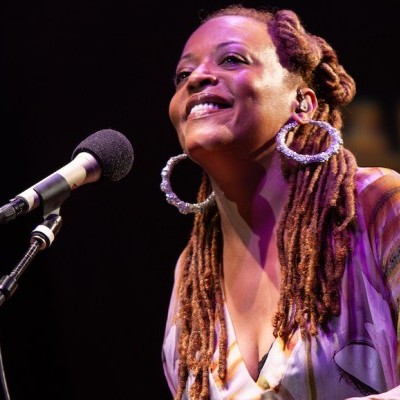
Wilson’s ability to connect to audiences helped her to win two Grammy awards and multiple other accolades. She was named an NEA Jazz Master in 2022.
Sep 3, 2026 10:44 AM
Cassandra Wilson, a singer, songwriter and producer who was one of the most acclaimed and successful jazz vocalists of…
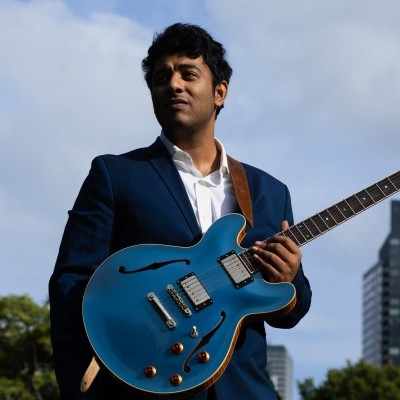
“The love from the jazz and music community restored my faith in humanity,” Walia wrote in an online post upon his release from detention at an ICE facility.
Aug 18, 2026 2:15 PM
Indian jazz guitarist and composer Pritesh Walia has been released after being unexpectedly detained by ICE and taken…
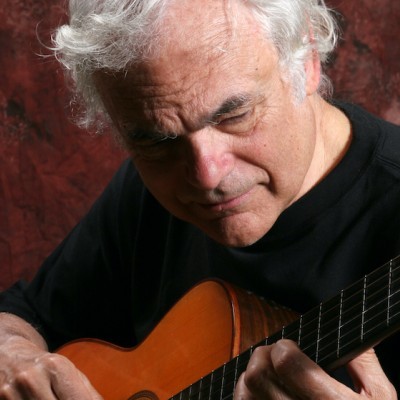
Bertoncini was a specialist and advocate for the nylon-string acoustic guitar, turning down high-profile opportunities that were unsuited to the sound and techniques that he used with that instrument.
Sep 1, 2026 11:06 AM
Gene Bertoncini, an esteemed jazz guitarist, composer, arranger and educator, died Aug. 29 at the Lillian Booth Actors…
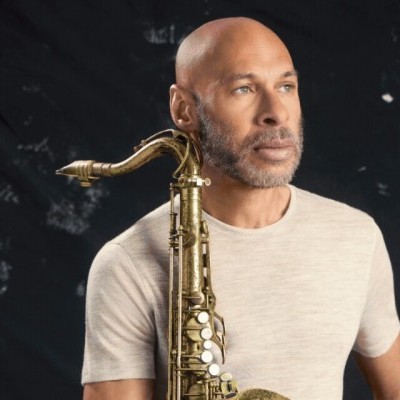
A solo concert by saxophonist Joshua Redman will close the first night of the Hyde Park Jazz Festival on Sept. 26.
Sep 22, 2026 12:26 PM
The Hyde Park Jazz Festival will take place for the 20th time on the final weekend of September 2026. Beginning half…
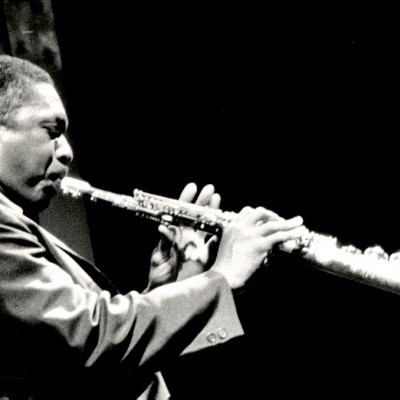
“It was just that suddenly … I could hear it,” Ravi Coltrane said of an epiphany he experienced during his late teens regarding his father’s music. “And it was almost like a calling, like something saying, ‘Hey, man, come on. It’s time to get serious.’ And the first time you really tune in and dial in and focus like that, it can be very life-changing.”
Sep 22, 2026 1:39 PM
Editor’s Note: Tomorrow, Sept. 23, is the 100th anniversary of John Coltrane’s birth. In honor of the tenor and…