Sep 3, 2026 10:44 AM
In Memoriam: Cassandra Wilson, 1955–2026
Cassandra Wilson, a singer, songwriter and producer who was one of the most acclaimed and successful jazz vocalists of…


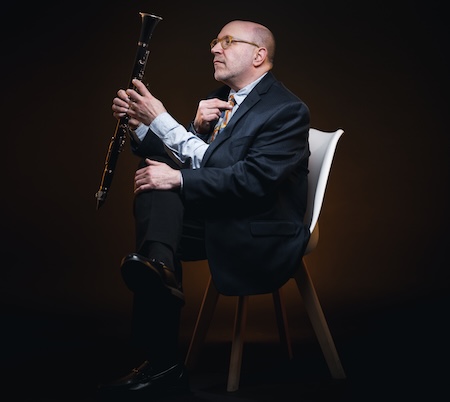
“One day, it just hit me — I wanted to record an album,” said clarinetist Harry Skoler, 18 months after a medical emergency sidetracked his music career.
(Photo: Francesco Gargiulli)In January 2018, shortly after Harry Skoler was appointed interim chair of the Woodwinds Department at Boston’s Berklee School of Music, he fell ill suddenly while conducting auditions for applicants. “It was before the first person came in; I was seated at the piano, and my heart started racing like crazy,” the clarinet virtuoso, composer and jazz educator said recently over tea and cookies in the living room of his comfortable home near the New Hampshire border.
He left the room and sat at a table where other Berklee staff gathered round him. At first he thought it was his heart; he had had a history of heart problems. “Let me just take some medicine, don’t call an ambulance, I remember saying.” Lucky for him his colleagues ignored that advice. “They rushed me to Brigham and Women’s [Hospital]. My blood pressure was very low, and I had already lost half the blood in my body. I had a ruptured stomach artery.”
That was only the beginning of Skoler’s ordeal. As he lay on the operating table, the doctors determined they needed to stop his anesthesia, for fear of stopping his heart before they repaired the burst artery.
“I was fully awake, suddenly, intubated, but I couldn’t move anything. I couldn’t tell them I was awake. I couldn’t ask them any questions. I went to take a breath, but my diaphragm was paralyzed. I kept saying the same sentence in my head, over and over: ‘I want to see tomorrow.’”
He ultimately made a full recovery and credits the doctors with saving his life. But the trauma changed him profoundly. “For the next year, I was shaky, I was terrified,” he said. He went back to serving as interim chair of the Woodwind Department but had no interest in music. “I was proud of the work that I did, but I didn’t want to listen to music; I didn’t want to play.”
About 18 months later, after regular therapy sessions, he had an epiphany. “All of a sudden, one day, it just hit me — I wanted to record an album.” It would be different from anything he had recorded earlier in his career.
Anyone who has heard Skoler’s early albums might be surprised to hear his recent work, especially since the medical trauma. He had suffered other traumas in his youth — especially a devastating episode from his teenage years involving the suicide of his best friend and subsequent efforts by his family to keep news of the tragedy from him. He channeled that and other traumas of his youth through his instrument for decades.
“I didn’t really regain my equilibrium until I reached my mid-50s,” he said. “That’s when I finally started to get a sense of peace. Or at least learn how to hold both, the dark things and the bright things at the same time, instead of trying to change one into the other.”
He recorded a string of albums in the 1990s that reveal a plaintive tone and beautiful technique; they are largely swing-based and influenced by an earlier generation of clarinet giants like his idol Benny Goodman. Following the medical trauma and his subsequent revelation, however, he began composing in earnest, driven by a burning desire to express himself and tell his story through his music. The material became denser, stranger and filled with moments of haunted inspiration.
Walter Smith III, the celebrated saxophonist and composer, in 2019 succeeded Skoler as department chair at Berklee. “I loved Walter’s playing, and I knew he produced,” Skoler said. “So I had a meeting with him. I gave him a really bad sales pitch! I said something like, ‘I know you’re busy, and maybe this isn’t what you want to do.’ And then I explained what I wanted to do. He looked at me and started laughing. He has a great laugh. He said, ‘I’d be honored to produce a record for you.’”
They started out of the gate with a bang — Living In Sound (Sunnyside), a tribute album to an early Skoler hero, Charles Mingus, that attracted international attention during the Mingus centennial year in 2022. “When we first talked about the Mingus thing, it was a 180 for him,” Smith said. “We surrounded him with musicians who were going to bring different things out of him. I would suggest a few people, and he would buy all of their records and listen to them for a week.” Smith recruited Kenny Barron on piano, Christian McBride on bass and other A-list players like Johnathan Blake, Nicholas Payton and Jazzmeia Horn, as well as a string quartet and a trio of brilliant arrangers: Ambrose Akinmusire, Darcy James Argue and Fabian Almazan.
The next album, 2024’s Red Brick Hill (Sunnyside), also produced by Smith, is a suite of original music in the form of a narrative about the death of his friend, recorded with an all-star band including vibraphonist Joel Ross, bassist Dezron Douglas and drummer Johnathan Blake.
Echoes, his latest album and first self-release, is “about the encounters that I had with my heroes that validated me as a human being.” Producer Smith brought back Douglas and Blake as well as guitarist Bill Frisell to anchor the band. Nine tracks are dedicated to great jazz musicians whom Skoler met as a younger man: Bill Evans, James Williams, Rahsaan Roland Kirk, Marian McPartland, Teddy Wilson, Benny Goodman, Jimmy
Giuffre, Lionel Hampton and Miles Davis. The CD package includes brief autobiographical sketches about these meetings, ranging from brief encounters to, in the case of Giuffre, the great clarinetist and saxophonist, a mentor relationship.
“All of these encounters had to do with validating me as a human being. … James Williams having lunch with me was life-changing; Benny Goodman walking off the stage and coming to talk to me when he wouldn’t grant anybody else an autograph was life-changing. They all helped me gain the confidence to be able to live and to play.”
Skoler studied reeds and composition with Giuffre at New England Conservatory in the 1980s; the two became friends. “Much of what I ended up using for the rest of my life came from Jimmy’s wisdom and brilliance,” he says. Once he asked Giuffre what expression was all about. “Jimmy said: ‘There’s a sea of feeling. Then you step into it.’” DB
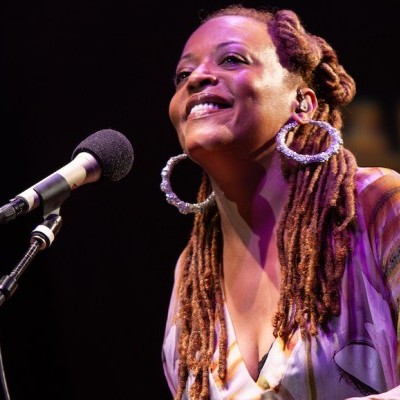
Wilson’s ability to connect to audiences helped her to win two Grammy awards and multiple other accolades. She was named an NEA Jazz Master in 2022.
Sep 3, 2026 10:44 AM
Cassandra Wilson, a singer, songwriter and producer who was one of the most acclaimed and successful jazz vocalists of…
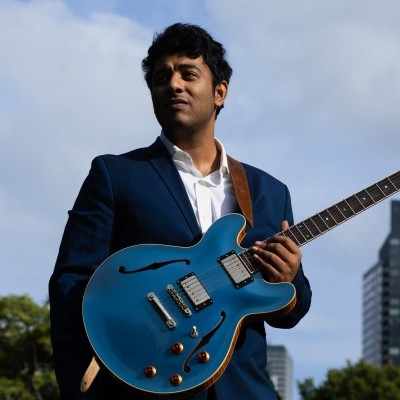
“The love from the jazz and music community restored my faith in humanity,” Walia wrote in an online post upon his release from detention at an ICE facility.
Aug 18, 2026 2:15 PM
Indian jazz guitarist and composer Pritesh Walia has been released after being unexpectedly detained by ICE and taken…
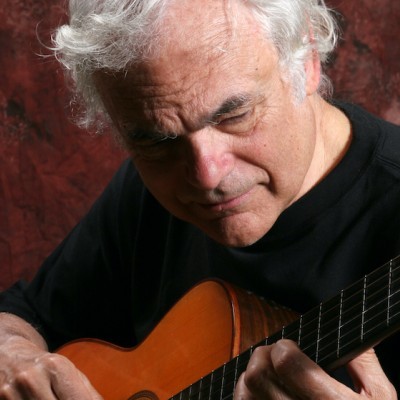
Bertoncini was a specialist and advocate for the nylon-string acoustic guitar, turning down high-profile opportunities that were unsuited to the sound and techniques that he used with that instrument.
Sep 1, 2026 11:06 AM
Gene Bertoncini, an esteemed jazz guitarist, composer, arranger and educator, died Aug. 29 at the Lillian Booth Actors…
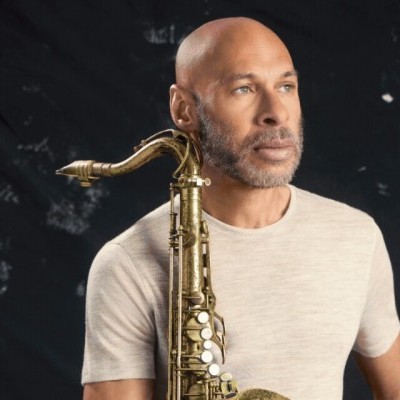
A solo concert by saxophonist Joshua Redman will close the first night of the Hyde Park Jazz Festival on Sept. 26.
Sep 22, 2026 12:26 PM
The Hyde Park Jazz Festival will take place for the 20th time on the final weekend of September 2026. Beginning half…
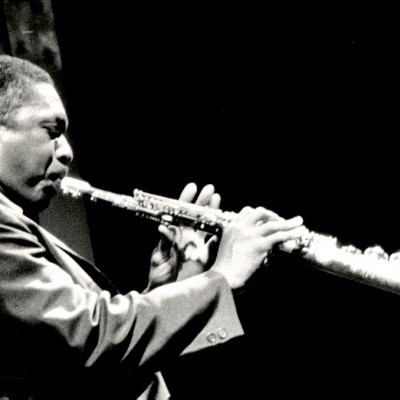
“It was just that suddenly … I could hear it,” Ravi Coltrane said of an epiphany he experienced during his late teens regarding his father’s music. “And it was almost like a calling, like something saying, ‘Hey, man, come on. It’s time to get serious.’ And the first time you really tune in and dial in and focus like that, it can be very life-changing.”
Sep 22, 2026 1:39 PM
Editor’s Note: Tomorrow, Sept. 23, is the 100th anniversary of John Coltrane’s birth. In honor of the tenor and…