Sep 3, 2026 10:44 AM
In Memoriam: Cassandra Wilson, 1955–2026
Cassandra Wilson, a singer, songwriter and producer who was one of the most acclaimed and successful jazz vocalists of…


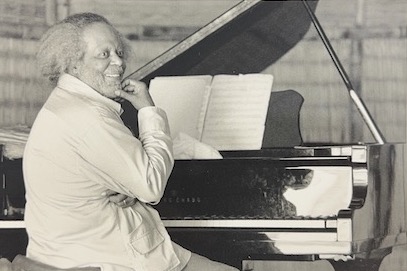
Jaki Byard teaching at the Mark Levine Workshop in 1991. “He could crack jokes, but when he sat down, it was serious fun,” says pianist Fred Hersch, a former student.
(Photo: Gypsy Zaboroskie)When Jaki Byard played the piano he commanded its entire history through his fingertips. He may not have been not the only jazz legend with such omniscience, but no other drew on that continuum in often hilarious forays within a single solo — and then started playing saxophone.
While Byard was resolutely individualistic, crucial bandleaders relied on his contributions. His numerous accomplished former students continue to adore him. This year, Byard’s stature became enhanced a bit more with his induction into the DownBeat Hall Of Fame, honored by the DownBeat Veterans Committee.
Byard’s lifelong calling began early. He was born (as John Arthur Byard) in Worcester, Massachusetts, on June 15, 1922, the son of a baritone horn player. As a child, he had some piano lessons but his true education came from seeing his heroes up close, particularly Earl “Fatha” Hines. His own professional gigs started when he was a teenager.
An Army stint briefly interrupted Byard’s burgeoning career but also gave him the chance to add instruments to his repertoire (including trombone). Upon returning, he freelanced and studied such modern composers as Arnold Schoenberg. During the 1960s, his versatility helped shape myriad landmark albums: Rahsaan Roland Kirk’s Rip, Rig And Panic, Charles Mingus’ Black Saint And The Sinner Lady and Eric Dolphy’s Far Cry, which included Byard’s tributes to a bebop hero, “Mrs. Parker Of K.C. (Bird’s Mother)” and “Ode To Charlie Parker.” At a time of divisive jazz factionalism Byard’s embrace of the music’s full scope — from stride to the avant-garde — mocked expectations. His intent was not ironic.
“I don’t play tongue-in-cheek, and I hate to hear people say this about me,” Byard told Dan Morgenstern for a DownBeat feature in the Oct. 21, 1965, issue. “I think hardly any of us can be completely ourselves, pianistically, what with all the people that have been before us, so I try to go into each phase of the piano with respect. If you’re going to do it, do it all the way.”
A dozen albums that Byard recorded as leader for Prestige in the 1960s emphasized how absorbing a century’s worth of idioms fueled his exciting compositions. A few were experiments without a fixed key (“Trendsition Zildjian” on Sunshine Of My Soul). Others were pure swing (“To My Wife” on Here’s Jaki) or ballads (“Hazy Eye” on The Jaki Byard Experience). Trumpeter Jimmy Owens, who worked on his On The Spot! album, said Byard’s complexity never got in the way of a good time.
“Playing off of those chords was a challenge,” Owens said. “The music had chords that moved in different ways than usual; they had melodies that hit different parts of the instrument, low, middle and high, and that’s what Jaki Byard was about: When he improvised his melodies were all over the place and that’s one of the things that made him great.”
Byard also co-led a piano duo album with Ran Blake, Improvisations, which was recorded at the time of their 1981 Italian concerts. Their idiosyncratic responses to each other on “Tea For Two” make this rendition of the standard so distinctive. Blake remembered Byard as a “fabulous genius” and recalled how his colleague was celebrated in Italy.
“We were both liked but when he did solos, he got thunderous applause,” Blake said. “I was tolerated but, really, Jaki was the standout star. It was such a miracle to be chosen to play with him.”
Perhaps Byard’s most formidable challenger was himself. His solo albums highlighted how his deep command of the music’s legacy fueled his evolving virtuosity. Juxtaposing arpeggios with single-note angular phrases became a trademark, yet he always found ways to make these shifts surprising. Byard mixed everything from standards and recent pop songs to his own thoughtful extended works. The quietly majestic title track of To Them–To Us in 1982 honors Duke Ellington, Paul Robeson and Mary Lou Williams while echoing contemporary artists through sudden tonal changes. Ten years later, he closed At Maybeck with his sprawling “Family Suite,” which travels from low-register rumblings to upbeat stride: from introspection to ebullience.
As a professor, Byard’s influence equaled his prominence as a musician. His most impactful years were at the New England Conservatory, beginning in 1969. Byard primarily taught arranging, composition and led the Apollo Stompers, a big band of NEC students that played at Boston’s Michael’s Pub. Sometimes he led the group on saxophone while a promising young musician would be on piano. Legions of his students went on to build names for themselves, including pianists Fred Hersch and Jason Moran, multireedist Marty Ehrlich and bassist/guitarist Jerome Harris.
“Jaki’s stuff was absolutely about swinging,” Harris said. “If you weren’t playing the changes, making the harmony structures, he’d say, ‘You’re lying! You’re lying like a dog!’”
Byard’s vivacity made his death especially shocking. On Feb. 11, 1999, his body was found in his Queens, New York, home with a bullet wound to the head. The case remains unsolved. Ultimately, this ending will never be the lasting memory of Byard. Hersch, among many others, will always focus on his determination to bring the best parts of life to music.
“Whatever was going on in his face, when he sat down, it was all locked in,” Hersch said. “He could crack jokes, but when he sat down, it was serious fun.” DB
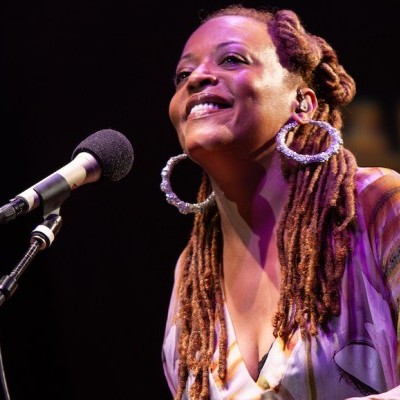
Wilson’s ability to connect to audiences helped her to win two Grammy awards and multiple other accolades. She was named an NEA Jazz Master in 2022.
Sep 3, 2026 10:44 AM
Cassandra Wilson, a singer, songwriter and producer who was one of the most acclaimed and successful jazz vocalists of…
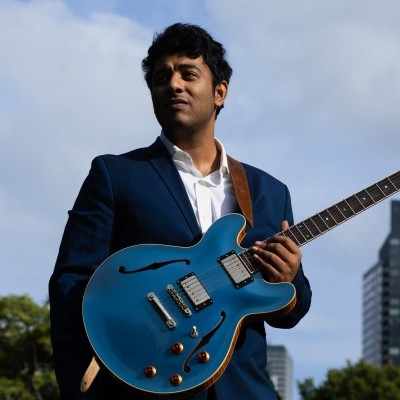
“The love from the jazz and music community restored my faith in humanity,” Walia wrote in an online post upon his release from detention at an ICE facility.
Aug 18, 2026 2:15 PM
Indian jazz guitarist and composer Pritesh Walia has been released after being unexpectedly detained by ICE and taken…
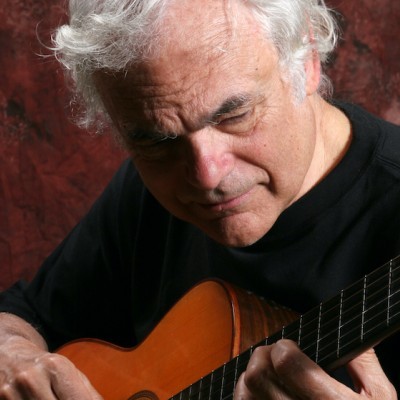
Bertoncini was a specialist and advocate for the nylon-string acoustic guitar, turning down high-profile opportunities that were unsuited to the sound and techniques that he used with that instrument.
Sep 1, 2026 11:06 AM
Gene Bertoncini, an esteemed jazz guitarist, composer, arranger and educator, died Aug. 29 at the Lillian Booth Actors…
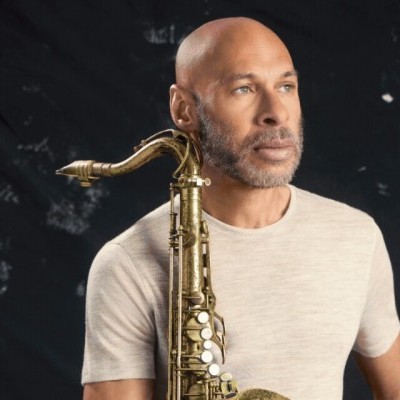
A solo concert by saxophonist Joshua Redman will close the first night of the Hyde Park Jazz Festival on Sept. 26.
Sep 22, 2026 12:26 PM
The Hyde Park Jazz Festival will take place for the 20th time on the final weekend of September 2026. Beginning half…
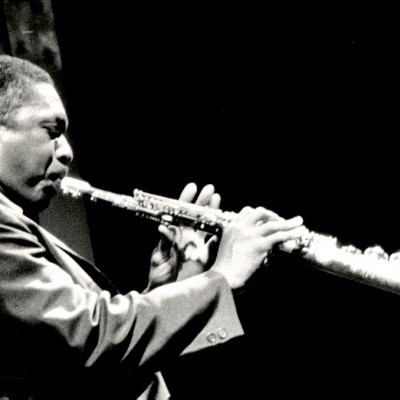
“It was just that suddenly … I could hear it,” Ravi Coltrane said of an epiphany he experienced during his late teens regarding his father’s music. “And it was almost like a calling, like something saying, ‘Hey, man, come on. It’s time to get serious.’ And the first time you really tune in and dial in and focus like that, it can be very life-changing.”
Sep 22, 2026 1:39 PM
Editor’s Note: Tomorrow, Sept. 23, is the 100th anniversary of John Coltrane’s birth. In honor of the tenor and…