Sep 3, 2026 10:44 AM
In Memoriam: Cassandra Wilson, 1955–2026
Cassandra Wilson, a singer, songwriter and producer who was one of the most acclaimed and successful jazz vocalists of…


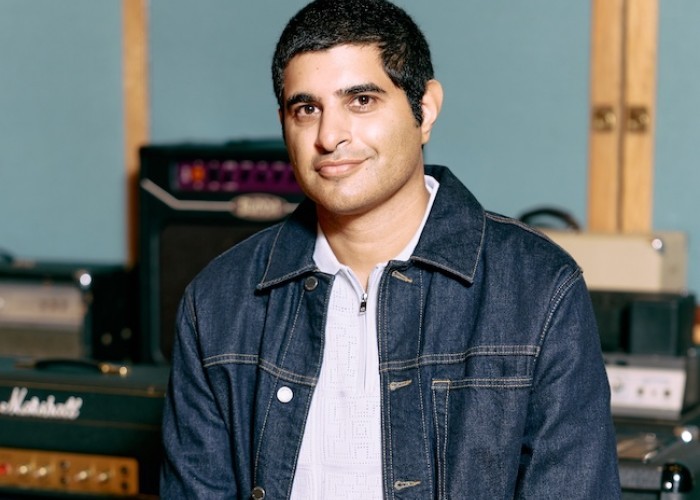
“Kabir loves helping people create projects,” says composer Ted Nash.
(Photo: Courtesy Kabir Sehgal)On Feb. 1, Kabir Sehgal received his 14th Grammy Award as producer of the audio-book Meditations: The Reflections Of His Holiness The Dalai Lama, for which he culled 10 tracks from the Dalai Lama’s plainspoken ruminations linking Buddhist precepts to universal concerns during his periodic visits to Atlanta to fulfill his obligations as Presidential Distinguished Professor at Emory University.
On a late-February Zoom call from his Atlanta home, Sehgal related that, as he listened, edited, crossfaded and tweaked the calming sonic backdrop with precisely calibrated dabs of reverb, he thought about “how to bring His Holiness’ message to new audiences” and decided to invite musicians — jazzfolk Ted Nash on flute and Joe Alterman on piano; sing- er-songwriters Rufus Wainwright and Maggie Rogers, soul singer Andra Day — to enfold themselves with the flow.
Introducing and inviting new audiences to meditation and “telling the stories of some great leaders who represented the better angels of our time” had been on Sehgal’s mind as he edited the Sunday School homilies of his father’s old friend, President Jimmy Carter, for the 2025 Grammy-winning audio-book Last Sundays in Plains: A Centennial Celebration, creating a complementary soundtrack of spirituals and hymns performed by Jonathan Batiste, Keb’ Mo’, LeeAnn Rimes, Darius Rucker and Nicole Zuraitis. The same impulse shaped his collaboration with famously raucous Atlanta emcee Lil Jon, who applied his soothing baritone to 11 Sehgal-authored texts on detachment and revisited remixed hits from the past — with Sehgal accompanying on guitar and weaving in jazz reedists Oran Etkin, Roxy Coss and Alexa Tarantino.
The discussion turned to Sehgal’s latest release, stars and static. The 10-track, 30-minute lo-fi digital meditation on “what we’re going through as a country” melds his field recordings of locales “emblematic of our country and important to me” with iconic American songs. The sounds of Naples, Italy, where Sehgal served as a Naval Reserve officer, signify on “Anchors Aweigh.” In Selma, Alabama, Congressman John Lewis, whose memoir Sehgal co-authored in 2017, reads President Barack Obama’s speech on the 50th anniversary of the brutal encounter between police and civil rights marchers by Selma’s Edmund Pettus bridge, cosigned by the ascendant strains of “We Shall Overcome.”
The tranquil ambiance of Sehgal’s recent albums is light-years removed from his first Grammy winner, Arturo O’Farrill’s 2014 The Offense Of The Drum: a kinetic, pan-American-oriented program with guests Edmar Castaneda, Donald Harrison and Vijay Iyer.
Sehgal was then a 30-something vice president of emerging markets at J.P. Morgan. In 2015, he helped global payments technology giant First Data Corp. execute that year’s biggest U.S. IPO; published his fourth book, Coined, a quirkily structured, layman-oriented exploration of the origin, form and function of money; and produced O’Farrill’s provocative Cuba: The Conversation Continued.
Having accrued life-altering wealth, Sehgal doubled down. By 2020, he’d generated 30 albums, including Grammy winners by O’Farrill, Ted Nash, Brian Lynch, John Daversa and Gustavo Casenave. Each articulated, directly or indirectly, Albert Murray’s manifesto in The Omni-Americans: “Ethnic differences are the very essence of cultural diversity and national creativity.”
Sehgal’s interest in Murray’s precepts developed through “ongoing conversations” with Wynton Marsalis after 2001, when Sehgal’s high school band finished third in Jazz at Lincoln Center’s Essentially Ellington competition. Marsalis was impressed by the tall teenager’s lucid remarks about “not only music, but things like markets and the economy,” and stayed in touch, intensifying the conversation in summer 2004 by inviting Sehgal — now a Dartmouth undergrad also writing speeches for John Kerry’s Presidential campaign — to tour with his band. Moving back and forth between the politics and the tour, he recalls, “I decided there was some commonality, and I coined the term ‘jazz is democracy in sound.’”
“Kabir loves helping people create projects,” said Nash, who worked closely with Sehgal on Presidential Suite: Eight Variations On Freedom, which won the Best Large Ensemble Grammy in 2016. Nash transcribed and notated the pitches and cadences of Presidents Roosevelt, Kennedy, Johnson and Reagan — as well as Churchill, Nehru and Mandela — as they delivered speeches connected with freedom. Sehgal contributed substantially to a fundraising campaign and recruited Andrew Young, Deepak Chopra and British statesman David Miliband, among others, to read excerpts from the speeches. “He gets behind projects he really believes in,” Nash said. “I’ve never met anybody quite like him.”
“Kabir has supported every chance I’ve taken,” said O’Farrill. “He’s a true patron of the arts. He really believes that conscience-led art-making is real art-making.”
Now Sehgal intends to continue “moving from catalyst and producer to more like the creator.”
“I’m fatigued after the last few years,” he said. “I’m wired to relax by thinking how to create things. It’s a productive form of leisure. I’ve been an Indian guy making Latin jazz music. But I feel calmest when I’m listening to Hindustani classical music. So I decided to start making meditative music. There are microtones, different rhythms, a different thought process.” The lo-fi approach, he added, “is me at the computer, playing the nylon string guitar, bass and drums, experimenting with sounds. The sounds are human-made, not spliced in.
“I do what I’m curious about. One project leads to the other. Every project takes 18 months to two years of your life. You’re not allowed that many more of them.” DB
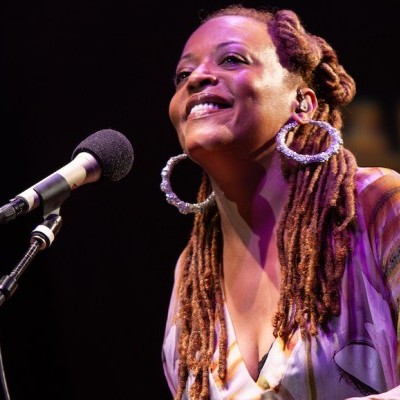
Wilson’s ability to connect to audiences helped her to win two Grammy awards and multiple other accolades. She was named an NEA Jazz Master in 2022.
Sep 3, 2026 10:44 AM
Cassandra Wilson, a singer, songwriter and producer who was one of the most acclaimed and successful jazz vocalists of…
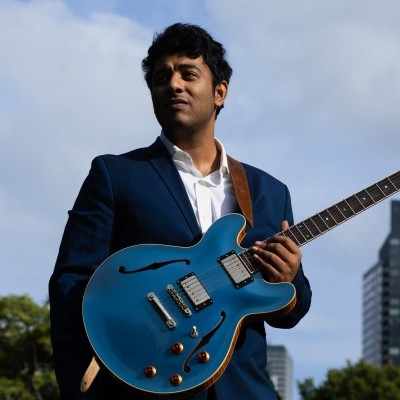
“The love from the jazz and music community restored my faith in humanity,” Walia wrote in an online post upon his release from detention at an ICE facility.
Aug 18, 2026 2:15 PM
Indian jazz guitarist and composer Pritesh Walia has been released after being unexpectedly detained by ICE and taken…
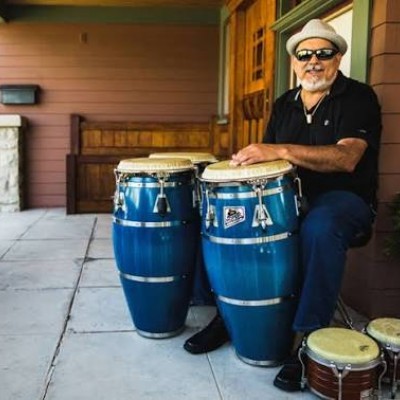
Percussionist Poncho Sanchez was among the artists scheduled to perform at the now-canceled inaugural LA Jazz Festival.
Aug 11, 2026 12:53 PM
The inaugural LA Jazz Festival, originally scheduled to run Aug. 7–23 with dozens of events across Los Angeles’…
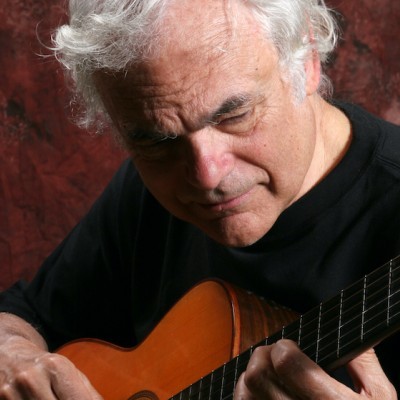
Bertoncini was a specialist and advocate for the nylon-string acoustic guitar, turning down high-profile opportunities that were unsuited to the sound and techniques that he used with that instrument.
Sep 1, 2026 11:06 AM
Gene Bertoncini, an esteemed jazz guitarist, composer, arranger and educator, died Aug. 29 at the Lillian Booth Actors…
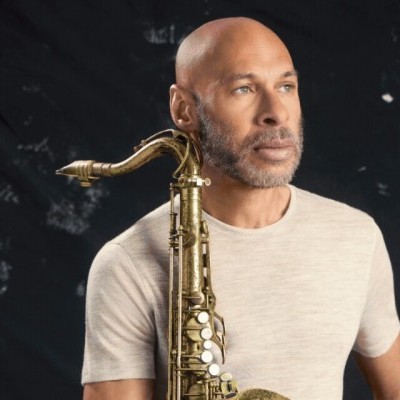
A solo concert by saxophonist Joshua Redman will close the first night of the Hyde Park Jazz Festival on Sept. 26.
Sep 22, 2026 12:26 PM
The Hyde Park Jazz Festival will take place for the 20th time on the final weekend of September 2026. Beginning half…