Sep 3, 2026 10:44 AM
In Memoriam: Cassandra Wilson, 1955–2026
Cassandra Wilson, a singer, songwriter and producer who was one of the most acclaimed and successful jazz vocalists of…


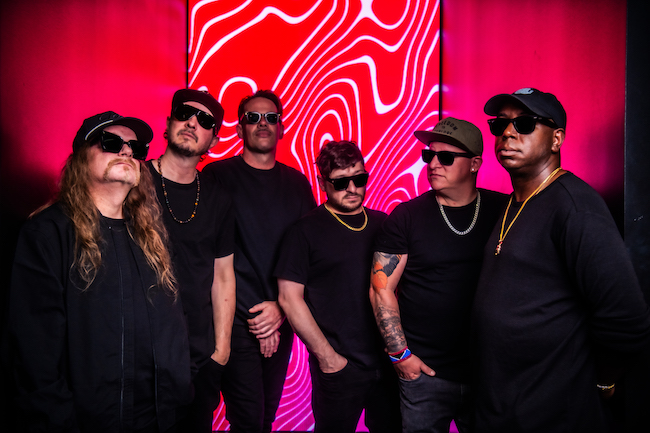
Lettuce, from left: Eric Coomes, Adam Deitch, Ryan Zoidis, Eric Bloom, Adam Smirnoff and Nigel Hall
(Photo: Sam Silkworth)They were Berklee misfits. Neither jazzy enough for the straightahead crowd at Boston’s highly prestigious College of Music nor heavy enough for the metal faction there, they found an outlet for their funky inclinations around the corner from Berklee at Wally’s Cafe, the hallowed jazz club on the South End founded in 1947 by Barbadian immigrant Joseph “Wally” Walcott.
It’s a venue that continues to serve as an incubator for local talent. “We are really all graduates, not just of Berklee, but the School of Wally’s Jazz Café,” said Lettuce guitarist Adam Smirnoff (aka Shmeeans). “We’re all Wally’s stepchildren, and there’s not words to tell what that place means to us.”
Longtime Lettuce fans already know the origin of the band’s moniker. As the story goes, they would show up at Wally’s, asking other bands: “Let us sit in. Let us play a tune during your break. Let us borrow your bass amp.” And so the eager group became known as “the let us band,” which morphed into Lettuce. Whether that name also applied to the amount of “devil’s lettuce” they were smoking back at the Berklee dorms is unknown. Regardless, the name stuck. And their dedication to the funk hasn’t waned over three decades.
It is extremely rare to find a band that has stayed together as long as Lettuce has. The original core members — guitarists Smirnoff and Eric Krasno (of Soulive fame, see page 28), drummer Adam Deitch, bassist Erick Coomes (aka Maverick), saxophonist Ryan Zoidis — met at a five-week summer program at Berklee back in 1992 when they were just 16. They shared dorm rooms, favorite records and jammed a lot, drawing on their foundational heroes — James Brown; Maceo Parker; Earth, Wind & Fire; Tower of Power; Herbie Hancock and The Meters. They returned to Berklee as full-time students in 1994 and gigged around Boston officially as Lettuce before graduating in 1998.
Following a four-week Wednesday night residency in January of 2001 at the late, lamented New York club Wetlands, where guests like trombonist Fred Wesley, turntablist DJ Logic and guitarist John Scofield would sit in with the band, Lettuce finally released its debut album in 2002, Outta Here, then followed up with 2004’s Live At The Blue Note Tokyo on Kufala Recordings. Among the 10 more studio albums and five live recordings they have released since, Lettuce’s fervent fanbase has indicated its favorites along the way on social media. One wag on Reddit mentioned that if he were a Major League Baseball player, his walk-up music would be the swaggering march “Blast Off” from 2008’s Rage! while another indicated that “Phyllis” from 2015’s Crush was perhaps the most transportive song ever.
More recently, Lettuce expanded its horizons with its most grandiose undertaking yet, Lettuce With The Colorado Symphony, recorded at Denver’s Boettcher Concert Hall in 2018 and released as a two-CD/three-LP set in February 2025.
The group’s recently released 11th studio recording, the aptly named Cook, comes with a recipe book in the vinyl album for pairing foods with their new signature brand Red Crush and Orange Crush organic natural wines, in partnership with the Colorado-based winery Aquila Cellars. “Music and food are very related,” said Lettuce drummer Deitch. “Use the wrong ingredients in either and you can ruin the sound and the meal.”
Lettuce also recently announced its partnership with the nonprofit organization Music is a Language to fund a full-tuition scholarship for a deserving student to attend the prestigious Berklee College of Music, where the one-time misfits turned successful entrepreneurs got their start.
DownBeat caught up with the two Adams shortly before the release of Cook.
Adam Deitch grew up in a musical household in Nyack, New York. Indeed, both his parents, Bob and Denise Deitch, played the drums. “My dad was more into Billy Cobham, Buddy Rich and Alphonse Mouzon. Mom was more like a straight-pocket player who was into Bernard Purdie. My dad eventually switched over to piano, and they did duo gigs all around the East Coast for 15 years, playing lounges, clubs, weddings, parties and bar mitzvahs. I sat in with them occasionally. That was my training.” So in a sense, Adam remained in the family business while developing his own thing, branching out in ways of which neither he nor he parents would have ever dreamed.
Concurrent with playing in Lettuce during its early years, Deitch also landed more lucrative high-profile gigs with the Average White Band (from 1998–2001) and John Scofield (from 2001–2004). As he recalled, “I remember asking Average White Band for a $300 raise so I could get $1,500 a week. They said no. The month after that, Scofield called to go on tour. And the money was way better. And literally every free moment I had during my three years with AWB and my three years with Sco, I was doing a Lettuce gig.”
He first met Scofield when the guitarist sat in with Lettuce at Wetlands. As he recalled, “Eric Krasno (guitarist and co-founder of Lettuce who eventually split off to form Soulive) knew that John was looking for a drummer for this new funk-oriented project, and that I would be a perfect fit. So he arranged for Sco to sit in with Lettuce. We were all psyched to play with him. We all knew he was coming, so we learned one of his old tunes. And at one point during the set, he cut the whole band off and said, ‘Just me and the drums.’ And of course, I was totally freaking out, because he’s one of my heroes. Anyway, that night he ended up cutting the whole band off three more times, turning around and saying, ‘Just me and drums.’ And each time we’d play together he was smiling. And he called me the next day.”
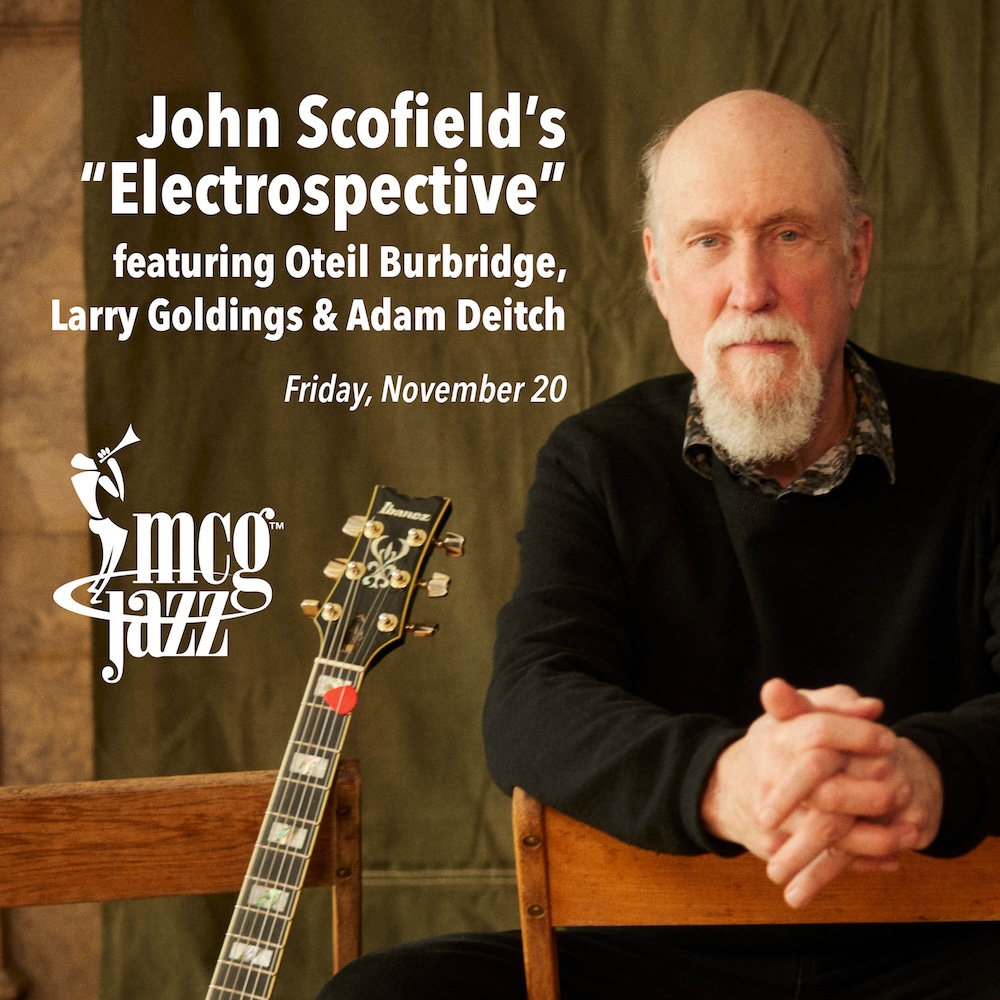
Deitch appeared on Scofield’s free-spirited funk-fusion outing Überjam in 2002. The guitarist returned the favor by appearing on two tracks of Lettuce’s 2002 debut, Outta Here. Deitch next played on Scofield’s 2003 album Up All Night. He returned to the Scofield fold on 2013’s Überjam Deux and has hinted at another reunion with the guitar great in the fall of 2026.
Lettuce remains steadfastly committed to the funk on Cook, paying tribute to James Brown on “Clav It Your Way” and “The Mac” (dedicated to J.B.’s longtime alto saxophonist Maceo Parker), The Meters on “The Matador” and the slamming title track, and Tower of Power on “Grewt Up” and “Keep On” (co-written by TOP founder Emilio Castillo), the latter featuring Erick “Maverick” Coomes bubbling bass lines which come directly out of the Rocco Prestia school of rapid-fire 16th-note pulse playing.
“One of the things that brought our band together was our love for Tower of Power,” said Smirnoff. “Obviously, we have many influences, but that love of TOP is a big part of what united us. I think when you love something with all of your heart, all of your passion, you just tend to gravitate towards other people with those same passions and love. And for us, we gravitated toward each other because of this.”
Added Deitch, “When I was with Average White Band we got to open for Tower so many times, and Dave Garibaldi and Rocco were both so cool to me,” Deitch recalled. “And Emilio would let me play him some of my early Lettuce demos that I had recorded in my dad’s basement. I would bring it to him and put the headphones right on Emilio after sound check and he’d go, ‘Sounds good, man. You gotta keep that going, man.’ He was super supportive. So I love those guys. I was 22 years old and they were doing what they needed to do, which was inspire the youth. And that’s what they did for me.”
Lettuce stretches the boundaries beyond the strictly-on-the-one funk formula on a few adventurous tunes on the new album, including with three spacey, rubato interludes strewn throughout the record, each dubbed “Sesshins.” As Deitch explained, “We have this album that was kind of quietly dropped in 2020 called Vibe. It’s 100% improvised. It’s basically 45 minutes of ‘Let’s get in the studio, press record and see what happens.’ So the ‘Sesshions’ on the new record are like an ode to that, for all the people that want to hear us just create in the moment.”
Added Smirnoff, “We’ve actually been doing that concept now for the past few records from a creative process. (Indeed, 2015’s Crush contains four brief “‘Ludes” throughout the album). “We come into these sessions with a lot solidified ideas or partially finished ideas, then we work with each other to record them or to add things to them. And then at the end these sessions we say, ‘OK, now that we’ve done something so structured, let’s do something unstructured.’ Because we want capture some of the essence of our live shows to try and balance that structure and non-structure at the same time. So often we’ll go into the studio and at the end, we’ll just play with no solidified ideas, we’ll let things happen. And those interludes are pieces of that.”
“We’re just trying to put all our influences — Tower of Power, the J.B. thing, The Meters, hip-hop and collective improv — into one thing that tastes good,” said Deitch.
Elsewhere on Cook, Lettuce also pushes into some new territory on Deitch’s atmospheric “7 Tribes,” which features some nice muted trumpet playing by Eric “Benny” Bloom. “I was looking at our catalog and seeing how it was mostly all blues scales and dominant stuff, so I thought, ‘Let’s bring in some other harmony and other scales.’ So I was going through some phrygian scales. Around the same time I was also really digging on this band Khruangbin (a trio from Houston, Texas, that blends global music with psychedelia, American soul, Thai rock and Iranian pop) and how they use some other harmony in their music. So I wrote that kind of Lebanese or Middle Eastern style funk tune and told the guys, ‘If we’re gonna play over this, it’s not going to be in your typical wheelhouse. You’re going to actually have to know the scale the tune is in and figure out what you’re going to play over it.’ And so that was a fun little exercise for us.”
The soul-jazz number “Breathe” features guitarist Smirnoff offering up a jazzy warm-toned solo replete with some mellow Wes/Benson-esque octaves work. “That’s a total ’90s hip-hop groove, which I grew up playing because I love that kind of shit,” said Deitch. “I just wanted the horn line to kind of mimic this rap that Sam Kininger, our old sax player, did over a track I recorded in the mid-’90s when I was in a band with Shmeeans and Maverick called Fat Bag. We were living in Yonkers, and I was making beats and trying to get my beat game up, because that was where hip-hop was then, and Sam ended up doing a jokey rap over one of them. And the rhythm of that rap became the horn line to ‘Breathe.’”
The misterioso number “Storms Coming” harkens back to some of the ’90s work of Wu-Tang Clan. “We did a bunch of touring with GZA, The Genius, one of the founding members of the Wu-Tang Clan,” said Deitch. “I’m trying to get him to rap on that one. But the idea was that it would be something dark and moody. A lot of our music is very uplifting, it’s super happy and brings you out of a bad mood type vibe. But ‘Storm’s Coming’ doesn’t have that immediate dopamine burst. It’s kind of like a brooding, almost horror movie vibe. And we need more stuff like that in our catalog.”
On the other side of the dynamic coin is “Gold Tooth,” a hard funk throwback to Zapp or P-Funk. “It’s also a throwback to the Lettuce tune ‘Outta Here,’ the title track of our first album,” Deitch added. “It’s that kind of groove where I’m just playing kick on the one and snare on the two, another kick on the three and another snare on the four. Sometimes all you need is the simplest groove on the drums like that and let the bass and the guitar and the horns do all the funky stuff. So by the drums being simple, the yin and yang of the tune changes. All the syncopation is within the guitar and the bass and the horns.”
Their cover of singer Keni Burke’s 1982 R&B hit “Rising To The Top” features some inspired vocals by New Orleans-based Nigel Hall, who also plays keyboards in Lettuce. Smirnoff offers up some Wah-Wah Watson styled guitar effects on that tune, a trick he also successfully pulled off on “Phyllis” from Crush. Said Deitch, “Growing up in New York, hip-hop radio was big, R&B radio was big — 98.7 KISS and 107.5 WBLS, along with some of the underground stations. And they would always play that tune ‘Rise To The Top.’ It’s an R&B staple that the ’80s hip-hop crowd could still get with it and it still made sense. So I have many fond memories associated with that tune from New York radio, which was like my lifeline to what was hip, what was going on.”
The title track to Cook contains a hidden reference to another ’90s hip-hop influence. As Deitch explained, “When I lived with our bass player Maverick at Berklee, he brought in all these rap records to check out. One day he brought home this Snoop Dogg record that nobody knew. Snoop had just moved from Death Row Records to No Limit Records, and his first record on this new label with Master P, who’s a New Orleans guy, had a track called ‘Tru Tank Dogs’ (from 1998’s Da Game Is To Be Sold, Not To Be Told) that had this beat on it that we used to love. We’d listen to it all the time. And so the beat to ‘Cook’ is actually an ode to ‘Tru Tank Dogs’ by Snoop Dogg on that No Limit album.”
Though the band may have its origins at the Berklee, the members of Lettuce are currently spread out across the country. Drummer Deitch, guitarist Smirnoff and trumpeter Bloom have all been living in Denver for the past 10 years while keyboardist-singer Hall lives in New Orleans, bassist Coomes lives in Long Beach, California, and saxophonist Zoidis lives in Portland, Maine. But whenever they return to the bandstand or go back into the studio, they come together like one big, happy, funky family.
“At the time that I started playing guitar, I went through something as a kid where I had like full alopecia, losing my hair,” said Smirnoff, who is well-versed in the whole lineage of funky rhythm guitarists. “You know, I stopped playing sports. I didn’t wanna take my hat off, ever. I was just going through something as a kid. And I feel like something about connecting with this music and meeting these guys really, really brought me to a better place in my life.”
They’ve been hitting it together, strictly on the one, for the past three decades. And there’s plenty more funk to come from these Lettuce lads. “I’ve always kind of looked at funk as a regional thing,” said Smirnoff. “Minneapolis funk had its own thing and the Jamaica Queens funk sound had its own thing. The East Bay with Tower of Power and Cold Blood and Mike Clark had its own thing and Detroit with Motown has its own thing. And New Orleans, my goodness, talk about having your own thing. And to me, that whole scene has been the most-well preserved, historically, in this country. You can still go there on Jazz Fest and feel it.” DB
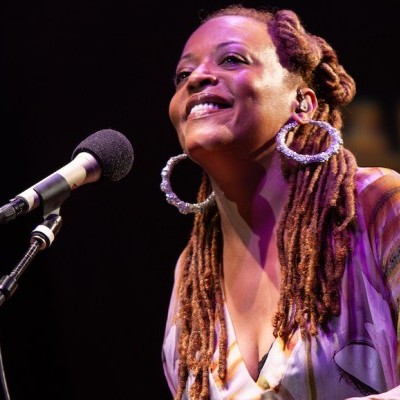
Wilson’s ability to connect to audiences helped her to win two Grammy awards and multiple other accolades. She was named an NEA Jazz Master in 2022.
Sep 3, 2026 10:44 AM
Cassandra Wilson, a singer, songwriter and producer who was one of the most acclaimed and successful jazz vocalists of…
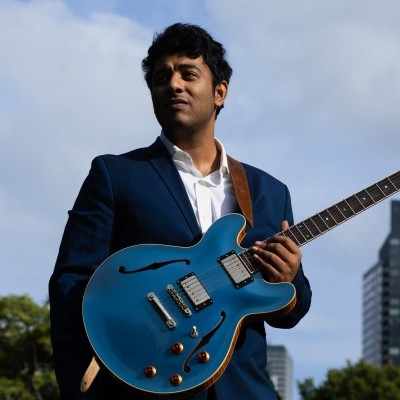
“The love from the jazz and music community restored my faith in humanity,” Walia wrote in an online post upon his release from detention at an ICE facility.
Aug 18, 2026 2:15 PM
Indian jazz guitarist and composer Pritesh Walia has been released after being unexpectedly detained by ICE and taken…
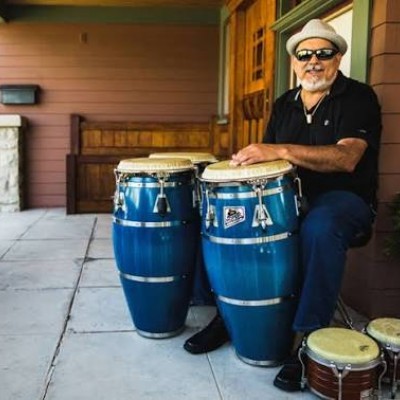
Percussionist Poncho Sanchez was among the artists scheduled to perform at the now-canceled inaugural LA Jazz Festival.
Aug 11, 2026 12:53 PM
The inaugural LA Jazz Festival, originally scheduled to run Aug. 7–23 with dozens of events across Los Angeles’…
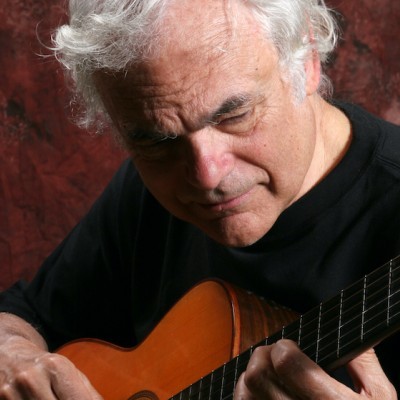
Bertoncini was a specialist and advocate for the nylon-string acoustic guitar, turning down high-profile opportunities that were unsuited to the sound and techniques that he used with that instrument.
Sep 1, 2026 11:06 AM
Gene Bertoncini, an esteemed jazz guitarist, composer, arranger and educator, died Aug. 29 at the Lillian Booth Actors…
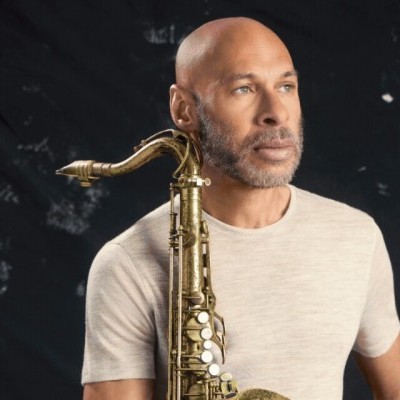
A solo concert by saxophonist Joshua Redman will close the first night of the Hyde Park Jazz Festival on Sept. 26.
Sep 22, 2026 12:26 PM
The Hyde Park Jazz Festival will take place for the 20th time on the final weekend of September 2026. Beginning half…