Sep 3, 2026 10:44 AM
In Memoriam: Cassandra Wilson, 1955–2026
Cassandra Wilson, a singer, songwriter and producer who was one of the most acclaimed and successful jazz vocalists of…


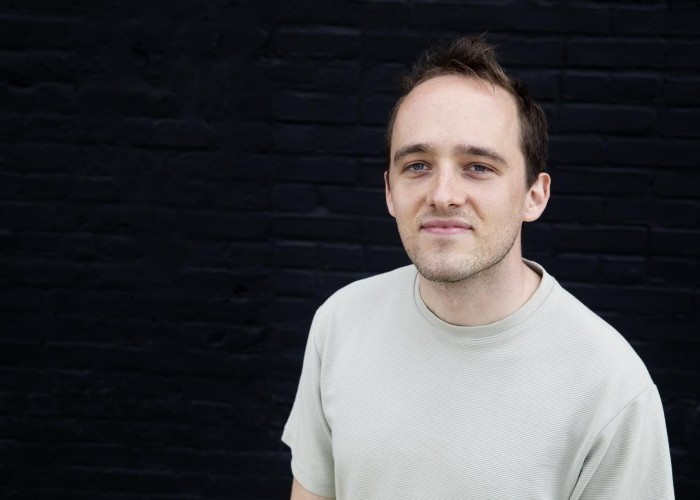
“I wanted to write songs that were abstract enough in their title and imagery that they could invite someone in to invent alongside the music,” says pianist and composer Lex Korten.
(Photo: Bill Douthart)“Touch grass” has become a go-to social media taunt, a reminder to the terminally online that there is a wide and beautiful world beyond the handheld screen. A similar sentiment animates the evocative music of Canopy, the debut album by pianist Lex Korten. There’s nothing quite so glib or direct in Korten’s enigmatic compositions, but each piece conjures its own alluring environment, an array of liminal, dreamtime spaces hinted at in titles like “Abyssal Sleep” or “A Sunshower Vignette.”
As Korten explained from his home in Manhattan’s Washington Heights neighborhood, “Understanding your body and its place in the living and moving world is not only a sacred or spiritual thing, but in this day and age it’s also a radical thing. We’re trapped by this fixation on the algorithmic and capitalistic influence all around us. It’s so easy to sink into that world and be reduced to binaries. I wrote this music imagining, in a very abstract way, the open-air freedom and sensory feeling that I wanted to explore.”
The music of Canopy is purposefully ambiguous, preferring the allusive to the explicit in both music and lyrics. Still, its insistence on sensorial experience is, Korten admits, a political statement in and of itself. Not surprising from a composer who has also maintained a lifelong passion for politics. “I’ve spent a lot of time writing songs about very literal subjects that involve the fabric of the modern world, as well as angsty, personal issues,” he described. “In this case I wanted to write songs that were abstract enough in their title and imagery that they could invite someone in to invent alongside the music.”
Though his emergence onto the scene roughly coincided with the onset of the pandemic, Korten emerged from lockdown as one of the most in-demand pianists of his generation. In 2025 alone he’s been featured on recordings by saxophonists Zoh Amba and Alex Hitchcock, trumpeter Milena Casado and vibraphonist Sasha Berliner. That follows work with the likes of Jaleel Shaw, Melissa Aldana, Caroline Davis, Morgan Guerin and Simon Moullier.
It’s a diverse group of bandleaders, reflecting the broad range of his tastes and influences. Yet his own music sounds like none of them. The closest antecedent, in philosophy if not in sound, would be Tyshawn Sorey. Most listeners would have first encountered Korten through Sorey’s 2020 album Unfiltered, a three-part epic stretching over two-and-a-half hours that made the passage of time a major component of the musical experience. On Canopy, Korten works in a similarly incisive way with the notion of navigating through space.
“Tyshawn is at the tip of the spear of people who are tearing apart our concept of form and reincarnating it in a profoundly living, breathing way,” Korten said. “I aspire to call him an influence. I don’t want to claim that my music is channeling what Tyshawn does, but I feel moved by the way his compositions are never complete. What better to offer to listeners than to put yourself on the precipice in front of them, always searching for a new layer of something that you’re familiar with.”
Korten conceived Canopy, he said, “in the negative space of all the things that I wish I had touched on in the other parts of my musical life.” To realize that elusive ambition, he assembled a unique ensemble, the main criterion for which was a willingness to take daunting leaps into the unknown. The quintet features Korten with vocalist Claire Dickson, alto saxophonist David Leon, guitarist Tal Yahalom and drummer Stephen Boegehold. Rather than adhering to their instruments’ usual roles, all contribute equally to summoning the album’s mesmerizing atmospherics and shimmering textures.
The challenges that Korten presented to his bandmates were echoes of those that he placed in his own path as he wrote the album. Despite his distrust of the virtual world, he borrowed a concept from smartphone apps by “gamifying” the compositional process. He placed a series of constraints on himself: writing away from the piano, or while riding the subway, or on material other than manuscript paper. He studiously avoided familiar surroundings, holing up for a time in the apartment of his aunt’s neighbor, where the piano was the only point of reference.
“It became my secret chamber, a safe bubble where I could build these ideas,” he said. “I think it’s necessary to have a practice space where no one can hear you so you can fumble around.”
Perhaps foreshadowing the mysterious landscapes that populate Canopy, jazz has always been something of a “secret world” for Korten. Growing up on Manhattan’s Upper West Side, he encountered no one else his age — no one at all, in fact, other than his piano teacher — who shared his fascination with jazz. Yet the historical figures he chose to write about in school were Thelonious Monk and Duke Ellington, the discoveries that excited him were the likes of Jaki Byard and Brad Mehldau.
That all changed when he moved to Ann Arbor at 18, expressly to study with pianist and composer Geri Allen. When she left the University of Michigan two years later, he came under the mentorship of Benny Green, who was teaching there, along with Detroit notables like Robert Hurst, Rodney Whitaker and Marcus Belgrave. Equally important was the circle of peers that he discovered for the first time.
Since returning to New York, he’s situated himself in the midst of another, thriving and ever-expanding community of venturesome musicians. In addition to the Canopy ensemble, he also leads a quartet with alto player Nicola Caminiti, bassist Harish Raghavan and drummer Miguel Russell, and is experimenting with various trio combinations. He’ll make his bandleading debut at Winter Jazzfest in January.
Korten’s myriad interests point him in varied, often divergent directions — but that’s the way he prefers it.
“When I was younger, post-college, a lot of people in New York would say, ‘Lex, it seems like you do a lot of this and a lot of that, but what’s the real you?’ I’m so happy that I didn’t succumb to having to live that way and stuck it out for a little longer, trying to really be myself. There really is room for that here.” DB
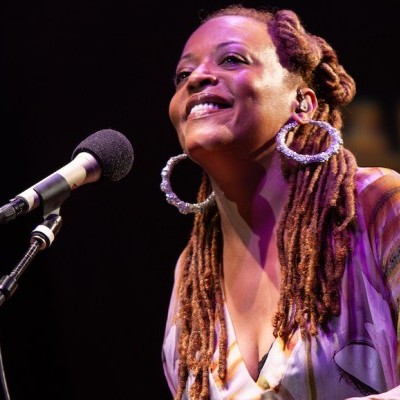
Wilson’s ability to connect to audiences helped her to win two Grammy awards and multiple other accolades. She was named an NEA Jazz Master in 2022.
Sep 3, 2026 10:44 AM
Cassandra Wilson, a singer, songwriter and producer who was one of the most acclaimed and successful jazz vocalists of…
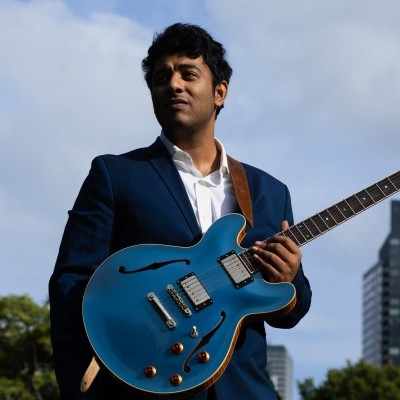
“The love from the jazz and music community restored my faith in humanity,” Walia wrote in an online post upon his release from detention at an ICE facility.
Aug 18, 2026 2:15 PM
Indian jazz guitarist and composer Pritesh Walia has been released after being unexpectedly detained by ICE and taken…
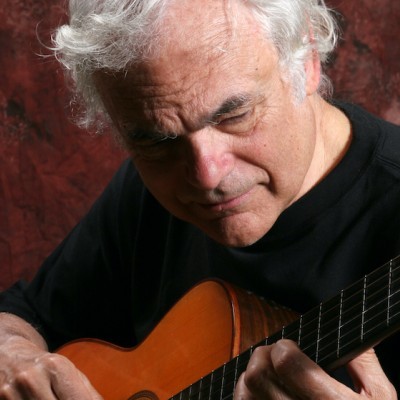
Bertoncini was a specialist and advocate for the nylon-string acoustic guitar, turning down high-profile opportunities that were unsuited to the sound and techniques that he used with that instrument.
Sep 1, 2026 11:06 AM
Gene Bertoncini, an esteemed jazz guitarist, composer, arranger and educator, died Aug. 29 at the Lillian Booth Actors…
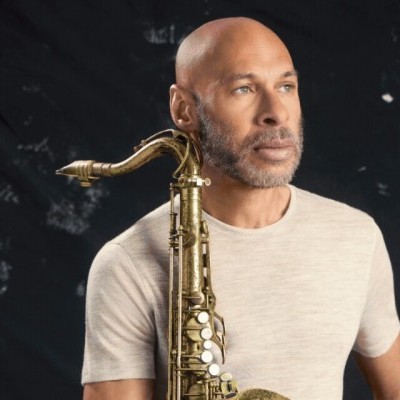
A solo concert by saxophonist Joshua Redman will close the first night of the Hyde Park Jazz Festival on Sept. 26.
Sep 22, 2026 12:26 PM
The Hyde Park Jazz Festival will take place for the 20th time on the final weekend of September 2026. Beginning half…
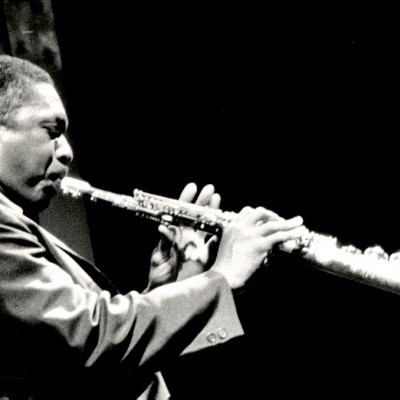
“It was just that suddenly … I could hear it,” Ravi Coltrane said of an epiphany he experienced during his late teens regarding his father’s music. “And it was almost like a calling, like something saying, ‘Hey, man, come on. It’s time to get serious.’ And the first time you really tune in and dial in and focus like that, it can be very life-changing.”
Sep 22, 2026 1:39 PM
Editor’s Note: Tomorrow, Sept. 23, is the 100th anniversary of John Coltrane’s birth. In honor of the tenor and…