Sep 3, 2026 10:44 AM
In Memoriam: Cassandra Wilson, 1955–2026
Cassandra Wilson, a singer, songwriter and producer who was one of the most acclaimed and successful jazz vocalists of…


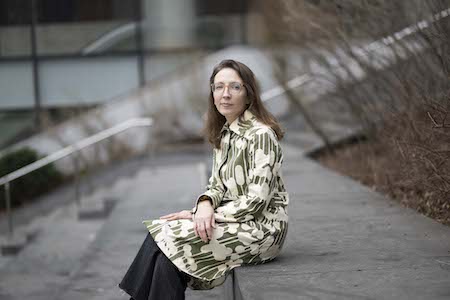
“I think it’s rare to find an improviser that all goes and nothing has to go at all,” says Ambrose Akinmusire of Mary Halvorson.
(Photo: Elena Olivia)The first time Mary Halvorson won a DownBeat Critics Poll category, taking Guitarist of the Year for 2017, she was seen as something of dark horse — not least by herself. “I don’t feel like I’m the best guitarist,” the 45-year-old Massachusetts native self-effacingly told DownBeat back then. The jazz critics obviously felt differently. Moreover, that year, they also gave Halvorson nods in three Rising Star categories: Composer, Jazz Group (for her trio) and Jazz Artist.
This year it’s safe to say that her star has risen, across that board and beyond. Halvorson marks her 10th consecutive time winning Guitarist of the Year, and that’s just for starters. She is also the critics’ choice for 2026’s Artist of the Year, as well as Group of the Year for her Amaryllis sextet with trumpeter Adam O’Farrill, trombonist Jacob Garchik, vibraphonist Patricia Brennan, bassist Nick Dunston and drummer Tomas Fujiwara. That band’s latest album, 2025’s About Ghosts, is in the No. 2 slot for Album of the Year. Halvorson is also runner-up for Composer of the Year.
Her latest undertaking, Canis Major — with trumpeter Dave Adewumi, bassist Henry Fraser and Fujiwara — puts her back in the top 10 of Rising Star Jazz Groups. Impressive, considering the quartet has yet to put out a record (they went into the studio in June). However, Canis Major has played around New York frequently, as well as touring Europe and the U.S., where the band made a splash at this year’s edition of the Big Ears festival in Knoxville, Tennessee.
Even as the accolades for Halvorson outdo themselves (no small accomplishment for an artist who won a MacArthur “genius” grant in 2019), the guitarist herself — speaking on the heels of Canis Major’s three-week European tour — remains as wide-eyed and humble about it as ever.
“There’s so many artists on those lists that I would’ve chosen above myself,” she insisted. “But I do know that I’m really grateful for it. I play music to make music, and then if you’re able to reach people with it on top of that, it feels like a bonus. Playing music that’s a little bit left of center, I never really expect to get recognition.”
Halvorson, unrecognized? Impossible. She has perhaps the most instantly recognizable guitar sound this side of Jimi Hendrix. Barbed, percussive notes that sometimes converge into abrasive, punkish chords; dissonant phrases with their own kind of off-kilter lyricism; and her trademark, severe, careening pitch bends (done with the assistance of a Line 6 floor pedal) that make her guitar tone seem to ricochet like a bullet around reinforced steel walls.
Is this a nod to microtonal music, or other genres that deal in alternate tonalities? Not at all, she said. “It’s funny, I often get people asking me what tuning my guitar is in. It’s standard tuning; in fact, I never don’t have my guitar in standard tuning. So it’s still very much in that system. The pitch bends are just little ornamentations on the notes, that’s how I see it.”
Her compositional style is also idiosyncratic. She builds richly melodic tunes on unique, angular structures that can on a whim shift key, tempo and time signature, thus creating a constant aura of suspense. It’s not so much that she defies conventional form as that she doesn’t bother with it at all.
“Mary’s music really gets to the heart of a personal sense of self-expression,” Fujiwara said. “There’s an immediacy to it; there’s an intensity to it; there’s a passion behind it that feels very personal, very true to herself. There are a lot of references, so it’s very rich in terms of the layers of musical language that she’s using, but it never feels like a tour through her different sonic inspirations. It’s this really interesting mix of influences that produces a singular sound.”
“I try to go as much on intuition as I can, and turn off my brain,” Halvorson said of her approach to writing. “I also try to not go in with any overarching structural ideas. I write very quickly, so I just start writing and then see what happens, and I kind of form the shapes and everything in the moment. And then after I’ve done that for a while, I step back — and then go in and fine-tune it.”
Halvorson also tailors her compositions to the musicians she intends to play them; thus her ensembles are as immediately recognizable as her playing. Between her early trio and Amaryllis, she also led a quartet, a septet, an octet and two quintets (the instrumental Mary Halvorson Quintet and Code Girl, featuring the vocals of Amirtha Kidambi). Amaryllis and Canis Major, however, represent the first time Halvorson has juggled two separate bands (albeit sharing drummer Fujiwara) at the same time.
“I haven’t led a group smaller than five people in many, many years,” she remarked. “I was kind of missing that small-group interaction and wanting to compose again for a small group, just to see what that would look like now. It’s also for practicality: Canis Major is the first time that I’ve had a group where everybody lives in New York in I don’t know how many years. So it’s a group that can play a lot.
“But I don’t intend for that to replace Amaryllis,” Halvorson added. “My intention is to really keep both groups going at the same time and see how that goes. So I’m still doing Amaryllis, and I’m gearing up for another chapter of that project.”
Indeed, the sextet has undergone a significant change in personnel: Patricia Brennan, the band’s vibraphonist from its self-titled 2022 debut through About Ghosts, has left to concentrate on her own burgeoning solo career. (It’s obviously paying dividends, with Brennan placing second behind Halvorson for Artist of the Year and edging out the guitarist for Album and Rising Star Group of the year). Rather than replace the inimitable musician with another vibraphonist, Halvorson has brought in Yvonne Rogers on piano and synthesizer to fill out Amaryllis.
“The first gig with Yvonne will be at the Blue Note in Tokyo, which we’re doing in August,” she said. “Adapting older pieces for piano instead of vibraphone has been really fun. I’m also writing some new music for that group, specifically for piano. I’ve never had a pianist in one of my bands before, which is kind of strange. And then having the option to also have synthesizer, it’s actually opened up quite a lot of possibilities in the music, and I think it’s going to be really cool.”
As one might expect, Canis Major is a much leaner outfit: With one horn and rhythm section there’s more space, less concern with dense harmony and counterpoint than the many-voiced Amaryllis. However, it retains Halvorson’s sense of melody, angularity and surprise turns. What’s more, in improvising, she and Adewumi often end up in counterpoint, anyway — but then again, sometimes they don’t.
“In both Amaryllis and Canis Major, she’s not predetermining solos,” Fujiwara said. “So everyone has to be ready to improvise on any tune, at any time, and we feel it out right in the moment. We’ve had times where two people jump in and take the lead; any number of things can happen. It’s really about the shape of a piece from beginning to end, and what are you contributing to that big picture.”
Yet Halvorson doesn’t restrict herself to her own “big pictures.” She is a serial collaborator. She initiated her career in Anthony Braxton’s bands, as well as a duo with violist Jessica Pavone, and logged serious time in bands led by O’Farrill and drummer Tom Rainey as well as Thumbscrew, a collective trio with Fujiwara and bassist Michael Formanek (currently on hold with Formanek having moved to Portugal), among others.
“I think each person brings a slightly different thing out of you,” she said. “Each probably pushes me into a slightly different zone than if I had been playing with somebody else.” Of the highest value, she adds, is “a welcomeness to experimentation, where I don’t feel like anything I’m gonna do is gonna be wrong, or too weird, or something like that.”
Among her other current endeavors are ongoing work in the quartet of cellist (and fellow MacArthur grantee) Tomeka Reid, drummer Ches Smith’s Clone Row and pianist Myra Melford’s Fire and Water Quintet, which is scheduled to record a new album in the fall. She also does occasional duo work with guitarist Marc Ribot (with whom she did a secret show at Big Ears, another much-talked-about moment at this year’s festival) and pianist Sylvie Courvoisier (their joint 2025 release Bone Bells was, alongside About Ghosts, one of last year’s most acclaimed). On the album Slo-Mo Neon Luminate Hoverings, released in June on Nonesuch Records, she documented a 47-minute tete-a-tete with trumpeter and longtime friend Ambrose Akinmusire.
“I think it’s rare to find an improviser that all goes and nothing has to go at all,” Akinmusire said. “It’s rare to feel like you don’t have to do anything and you can do anything. And that’s what I love about playing with Mary.”
With artistry that cuts such a deep and wide swath, the only real question as to Halvorson’s Artist of the Year honor — among all the others — is why it didn’t happen sooner. As she acknowledges, however, hers is a “left-of-center” music. It takes a leap from the straight-ahead jazz tradition, and it can be challenging at first contact. The rewards, however, are many.
“It’s potentially music that might take some time, might take a certain commitment for some listeners,” Fujiwara said. “But I also think it’s empathetic and inviting. And I think listeners can feel and hear that empathy, and that it’s directed toward them as well, and that that allows them to be patient and to connect to Mary’s music.” DB
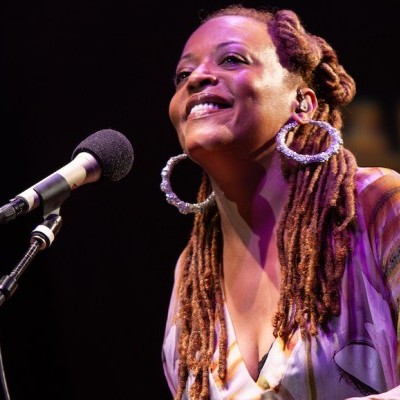
Wilson’s ability to connect to audiences helped her to win two Grammy awards and multiple other accolades. She was named an NEA Jazz Master in 2022.
Sep 3, 2026 10:44 AM
Cassandra Wilson, a singer, songwriter and producer who was one of the most acclaimed and successful jazz vocalists of…
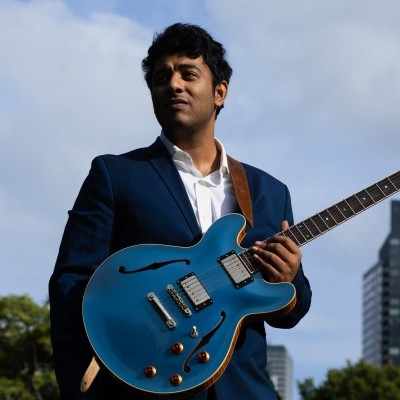
“The love from the jazz and music community restored my faith in humanity,” Walia wrote in an online post upon his release from detention at an ICE facility.
Aug 18, 2026 2:15 PM
Indian jazz guitarist and composer Pritesh Walia has been released after being unexpectedly detained by ICE and taken…
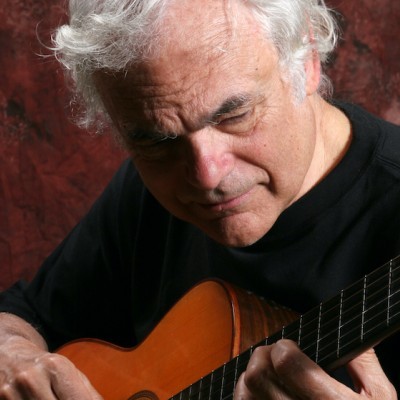
Bertoncini was a specialist and advocate for the nylon-string acoustic guitar, turning down high-profile opportunities that were unsuited to the sound and techniques that he used with that instrument.
Sep 1, 2026 11:06 AM
Gene Bertoncini, an esteemed jazz guitarist, composer, arranger and educator, died Aug. 29 at the Lillian Booth Actors…
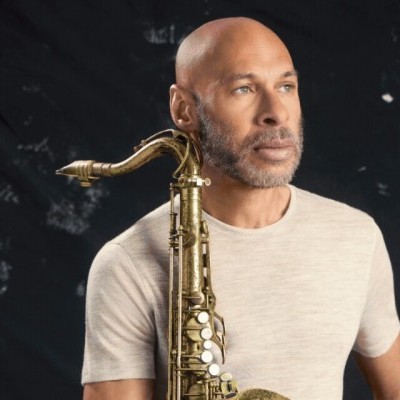
A solo concert by saxophonist Joshua Redman will close the first night of the Hyde Park Jazz Festival on Sept. 26.
Sep 22, 2026 12:26 PM
The Hyde Park Jazz Festival will take place for the 20th time on the final weekend of September 2026. Beginning half…
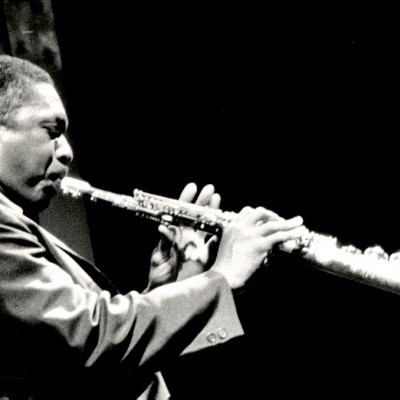
“It was just that suddenly … I could hear it,” Ravi Coltrane said of an epiphany he experienced during his late teens regarding his father’s music. “And it was almost like a calling, like something saying, ‘Hey, man, come on. It’s time to get serious.’ And the first time you really tune in and dial in and focus like that, it can be very life-changing.”
Sep 22, 2026 1:39 PM
Editor’s Note: Tomorrow, Sept. 23, is the 100th anniversary of John Coltrane’s birth. In honor of the tenor and…