Sep 3, 2026 10:44 AM
In Memoriam: Cassandra Wilson, 1955–2026
Cassandra Wilson, a singer, songwriter and producer who was one of the most acclaimed and successful jazz vocalists of…


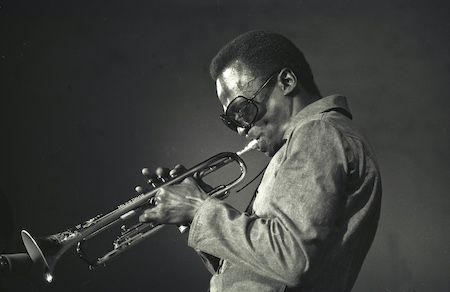
How best to mark Miles Davis’ centennial? By allowing the stories to flow, and cross-discussions to happen.
(Photo: Jack Vartoogian)Editor’s Note: The iconic trumpeter, composer and bandleader Miles Davis would have turned 100 today (May 26, 2026). In honor of his birthday, we present Miles at 100, the cover article of DownBeat’s May issue.
Still Kind of Blue was the name of a spirited, fast-paced roundtable discussion at this year’s Jazz Congress conference, which took place at Jazz at Lincoln Center in January.
Bassist/producer Marcus Miller, trumpeter/composer Terence Blanchard, drummer/nephew Vince Wilburn Jr., journalist/historian Lauren du Graf and New Yorker critic Richard Brody shared personal experiences and insights; this journalist had the honor to moderate. How best to mark the legendary trumpeter’s centennial? By allowing the stories to flow, and cross-discussions to happen. And they did. It took just one question, and off they went: How does Miles Davis’ legend differ from other historic figures in jazz? The following discussion has been edited for space.
Vince Wilburn Jr.: I was privy to see a side that a lot of people couldn’t witness. This man was the first to wake up in the morning and the last to go to sleep at night, and during the course of the day he would change clothes five or six times. I was like, “Chief, what are you doing?” He said, “I’m rehearsing my shit.”
He never liked to play any of the music he recorded in his career. He didn’t even have it in the house. He wouldn’t listen to Kind Of Blue or Sketches or any of those iconic albums. He always wanted to evolve and push the needle forward and he was always into sounds.
Back in the ’80s there was MTV, and I remember that it would be on in the house and the sound was turned down, but if there was something that caught his eye then he would turn the sound up. Like Scritti Politti, we did “Perfect Way” because he dug that video. Same with “Human Nature,” Michael Jackson. Cyndi Lauper, “Time After Time.” He would call the record label and have them send the records over to him. And he was into a [Guadaloupean gwoka] group called Kassav’. There was so much music that he was checking out.
Terence Blanchard: Two stories from when I was playing with Art Blakey in Perugia [at the Umbria Jazz Festival in 1983 and ’85]. I’m with Dizzy Gillespie in his dressing room and he started to play and I’m just tripping because, hey, I’m hanging with Dizzy. He stopped playing and out of nowhere he said, “Miles Davis could always play the prettiest notes.” That was a powerful statement for me to hear because in that one phrase it eliminated the whole notion of competition. It was truly about admiration for what Miles brought to the table, and I knew Miles was comfortable with what Dizzy himself had brought. For me, it’s all about celebrating our differences and not using them to keep us apart.
The other story: I’m back in Perugia and after we had played, I’m coming out of the hotel and these journalists walk up and say, “What do you think about what Miles Davis said?” “Well … first of all, what did he say?” He had said something that was very favorable about me. So we went to his show that night in Terni, right outside Perugia, and when he came off the stage Al Foster could see me looking at Miles with admiration. Al said, “Have you ever met Miles?” and I said, “No.” “Come on in, man, let me introduce you.” When I walked in the door, Miles just looked at me and called my name. That blew me away, that he was that aware of all of the young musicians who were on the scene. I remember he said, “Keep doing what you’re doing.” Keep doing what you’re doing, motherfucker.
Marcus Miller: I mean, we celebrate these people, use the word “legend” and you start to forget that they were human beings. Martin Luther King, Malcolm X. I remember [in 1981] he had been in retirement for five years, self-imposed, and we didn’t know whether he was coming back. All of a sudden I’m getting a call from him and he said, “Can you make this session in two hours?” That was probably for the best because if I had two weeks I would have freaked out all that time. I got my instrument on my back and I went to the legendary Columbia Studio B. He walked in the door, and I didn’t see him at first because I was looking up here [points to being 6-plus feet in height] and he was down here. By the time I got into Miles’ band he was already — “MILES DAVIS” — with quotes around the name. He was 5 foot 6. I’m asking myself, “Wow, he’s a human being?”
I’d been hearing stories about Miles my whole life: all the stories from my family, from musicians, the whole community. My dad played classical piano, and he had a cousin who played jazz piano — Wynton Kelly. So when I got the call I was 21, but my family wasn’t even impressed. I said, “Man, I’m playing with Miles Davis.” “Oh, yeah, like Cousin Wynton? Listen, what you want for dinner?”
Blanchard: What trumpet player do you know right now who really wants to play with a Harmon mute? Almost nobody, because he put such a stamp on that. When I was with Art Blakey I used to play “My Funny Valentine” as my feature because I loved Miles so much. So I wouldn’t play much of the melody and blah, blah, blah, blah, blah. Art pulled me aside and said, “You ain’t Miles. Find your own shit to do.”
Miller: Find your own shit.
Blanchard: When I met Miles that night with Al Foster, everything changed because I realized by just being in a room with him, I’m never going to be that. So there’s no need for me to chase that.
Miller: Because you met him, and he’s just a human being, and he’s being him. Miles learned that, too. He was like, “OK, I’ve been doing this bebop thing trying to sound like Dizzy and Fats Navarro …” He was busting his ass trying to play like those guys would play: high, fast. It was incredible, the level of musicianship.
Wilburn: He said he used to play so fast it made his lips bleed.
Miller: This is what you had to do to play on that level. He went away for a while to stop abusing certain substances, came back and said, “I’m going to be courageous enough to play what I feel.” He was hip, but he also had every man’s ear. That’s what allowed him to play only the beautiful notes. He left space. You know how much courage it takes to leave space when you’re playing an improvisation?
Blanchard: At a time when nobody was doing that.
Miller: He’d leave out a whole two bars before he’d play the next thing. I remember hanging out with my Uncle Big Willy in his music room. He’d have a bourbon, his chair and Kind Of Blue on. Miles would play four notes and then leave two bars of space, which gave Uncle Big Willy, who’s on his third round of bourbon, time to reply, “Come on Miles, talk to me! Aw shucks, now, come on!” That takes courage. It also requires you to have some badass background musicians so that when you’re waiting for that space that music is still cooking.
Blanchard: What about [starts singing “The Theme”] … ?
Miller: [sings along, all laugh] What he did do was he brought his humanity to music. He was always interested in the hip thing. Now “hip” has a kind of negative connotation these days because it means “shallow” to a lot of people. But back in the 1940s, hip was hip. Hip was harmonically sophisticated, rhythmically sophisticated and operating on a high level and still cool.
So, OK, in the ’50s, he becomes the hippest guy in jazz along with Art Blakey and Clifford Brown and those guys. Then he got tired of that. Who quits a style when they’re on the top? Who says I’m going to change up the whole thing? But when people say, “Man, Miles kept changing and I’m not with all the changes,” I always tell them he never changed because all he was doing his entire life was searching for that hipness.
I have a buddy who is a big fan of the music from the ’70s or the early ’80s, and whenever the artist he loves shows up with something different, something new, he’s insulted. He’s like, “MF, I bought each of the records that you made for the last 10 years twice because CDs came out and I rebought them. MF, you owe me.” And this is what a lot of listeners feel about artists who decide to change.
Richard Brody: We’re talking about legend. There’s a line in [Jean Luc] Godard’s Alphaville: “You will suffer a fate worse than death. You will become a legend.” It’s a funny thing to say. The name of this panel is Still Kind of Blue — Miles did Kind Of Blue at the age of 33. He still had another 30 years ahead of him. Just the same way that people kept on telling Godard, “Why don’t you remake Breathless?” and he finally said, “I hate that film, I wish I had never made it.”
I can only imagine what a musician, who has achieved the very pinnacle of success and acclaim in one style of music, experiences when he does something drastically different and a lot of the people who loved what he did before now were insulting him publicly.
I was a 16-year-old out of Long Island and came into the city, and what I saw was a concert at Carnegie Hall [on March 30, 1974] that is now commemorated on the Dark Magus album. Wooooh! I knew that he played with electric instruments but nothing prepared me for the immensity, the density, the strength of the sound in person. It filled Carnegie Hall like a gigantic sculpture.
The Dark Magus concert was not reviewed in the New York Times, and apparently it wasn’t reviewed in DownBeat. I couldn’t find anything. But when Miles did a concert later the same year, John Wilson wrote in the New York Times: “Given the sounds that Bubber Miley was able to get from his trumpet, I’m not sure that the wah-wah pedal actually adds anything to the instrument’s history.”
I started listening to jazz because of the modernists, Eric Dolphy and Ornette Coleman and John Coltrane in the later period, and I loved Miles’ music. When I attended that concert I realized, “This is as out there as Albert Ayler, as out there as Cecil Taylor. This is some of the most radical music ever made.” Not that his early music wasn’t profound and intensely moving. I still listen to that all the time. But Miles had broken through in a certain way that very few musicians ever had.
Wilburn: [Multi-instrumentalist James] Mtume said they were in Europe in ’73, and at one concert no one dug it. They wanted the old Miles and they were, like, throwing things at the stage. But the next night they played another city they got five standing ovations. Uncle Miles wasn’t concerned about what people dug. It was about what he and the band wanted to express.
Blanchard: Art Blakey used to say, never get a hit because it will haunt you the rest of your life.
Miller: Exactly. With Miles he was lucky enough, like you’re saying, Richard — he created brand new audiences every time he changed, and I think that made a big difference.
Wilburn: Everybody has a favorite period of Chief’s career. I grew up in Chicago, and my parents would have these parties and some of my dad’s friends would start drinking and argue, “Vince, you gotta turn that old acoustic shit out.” They wanted to hear the electric stuff. And my dad was like, “This is my house, I’ll play whatever I want to.” This was going on in the basement, and I could hear it upstairs.
Blanchard: There are different factions of Miles fans, fans of certain periods — which I find incredible because his legacy was one of never being in the same place.
Wilburn: They said, “Why does Miles have his back to the audience?” No, no, no, no, no. He was digging what was happening on stage and that’s why he would walk up to Marcus, to Darryl Jones, lean next to Bob Berg, to any of the band members to feel the vibe and get close to them. It was amazing.
Brody: When I saw him on stage, I could see exactly what you described. He was conducting, he was creating with the band.
It was very odd to be following the career through records if you weren’t seeing him in concert. I saw Dark Magus, and the records that came out next, which were Big Fun and Get Up With It, great though they are, it wasn’t Dark Magus. There was a disjunction between what was happening live and what was happening in his recording business.
I think that’s why he’s not given enough credit not as an orchestrator, an arranger and a creator of what is essentially jazz orchestral music. Every one of those quintets, it wasn’t just five great soloists. Each one of those bands has a unique sound world of its own. Obviously he spent a lot of time with Gil Evans back in the ’40s and ’50s, and nothing against Gil, but I consider the sound world that Miles Davis created for small and large groups to be more original and distinctive, a more comprehensive sound world. The Miles Davis sound is the sound of everybody together.
Lauren du Graf: The origin of the term “legend” in medieval times was a saint or a martyr whose story would be told every year on a holiday, and the reason these stories stick around is because they tell us something about who we are, who we want to be, and maybe who we don’t want to be. And we talk about the courage to change, that’s huge. How many of us have been personally inspired by some dimension of who Miles Davis was in our own life? Maybe we didn’t change our whole style of dressing. Maybe we did.
But I think about his defiance — like his defiance of a police officer while standing in front of a club just down the street from here [at Birdland in 1959] who wanted him to move along, when his name was on the marquee! He stood up to that and insisted time and again on being himself in a world that didn’t always want him to be who he was.
I think we also have to acknowledge the shadow side of the legend, too, the things we don’t necessarily want to repeat. We could talk about his relationships with women. He was a human being, one with many flaws and imperfections and in order to love him truly we cannot tuck those underneath the carpet. So I would say his legend lives on for me in a deeply inspiring way and a complicated way as well.
Miller: Miles Davis was a human being, and in my life I’ve had a lot of people who I’ve idolized, who were my mentors and who had some serious personality flaws. And this is not a question that I have the answer for. Now I’m confronted years later by some of my heroes who treated women in ways that none of us could ever condone and asking myself, “How do I reconcile the two sides?” And I don’t know if I can.
du Graf: I just finished reading Cicely Tyson’s memoir and watching the Betty Davis documentary and all the interviews with [Miles’ first wife] Frances [Davis] and with [his first partner] Irene, and reading [his last girlfriend] Jo Gelbard’s book as well. These are stories I cannot forget and I can’t move past in many ways. Miles wasn’t my mentor but he is my favorite musician. But I can’t hear the music in the same way because for those of us who have lived through domestic violence, we know the intense terror that imposes on a person, and that’s really hard.
At the same time I’ve written extensively about Shirley Horn, and her whole career trajectory owes everything to Miles. She was locally known in Washington, D.C., and he called her up — I’m not going to try to do his voice — “Come to New York.” He insisted that she open for him at the Village Vanguard when nobody knew her, and because of that Quincy Jones signed her to Mercury. We would not know Shirley if it weren’t for Miles.
His wives, too, have stories like this, and his ex-girlfriends. Betty Davis said that she was inspired to produce her own music because of his encouragement and his example. His genius definitely gave, and it took.
Miller: So, how do you reconcile?
du Graf: I don’t. I don’t.
Miller: OK, good. I’m in the same place.
Blanchard: I think a lot of us are.
Miller: He was complicated.
Blanchard: I’ve been asked that question, “How can you listen to this guy’s music?” We want to make these people perfect. One of the things I think we have to remember is back then in our community, therapy was not something we dealt with. I look at it now as being a godsend for a lot of us to help us push through a lot of these issues. We talk about it. We have words for it. When I listen to Lauren talk about him supporting women it lets us know how complex a person he was.
Wilburn: Gemini, double Gemini. … Don’t you feel we all learned to change from being around him? Don’t you feel we’ve all learned to change?
Miller: Yeah, we’ve all learned to try to summon as much courage as we can. That’s what makes his music everlasting. He wasn’t trying to be a genius. He was just being him: curious, courageous.
Blanchard: Wayne Shorter said, “Jazz means, ‘I dare you.’” If that doesn’t define Miles’ career more than anything, I don’t know what else does, because that dude was fearless. That’s the thing that Vince is talking about. The thing about Miles that I’ve always admired was the fact that he stayed curious. That’s the most important thing. When you think about it, Miles Davis set the tone for a lot of us.
Wilburn: I’ve always said, what other musician played with both Charlie Parker and Prince? There was only one musician. DB
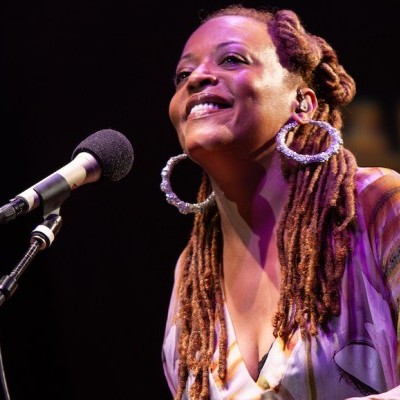
Wilson’s ability to connect to audiences helped her to win two Grammy awards and multiple other accolades. She was named an NEA Jazz Master in 2022.
Sep 3, 2026 10:44 AM
Cassandra Wilson, a singer, songwriter and producer who was one of the most acclaimed and successful jazz vocalists of…

Bertoncini was a specialist and advocate for the nylon-string acoustic guitar, turning down high-profile opportunities that were unsuited to the sound and techniques that he used with that instrument.
Sep 1, 2026 11:06 AM
Gene Bertoncini, an esteemed jazz guitarist, composer, arranger and educator, died Aug. 29 at the Lillian Booth Actors…
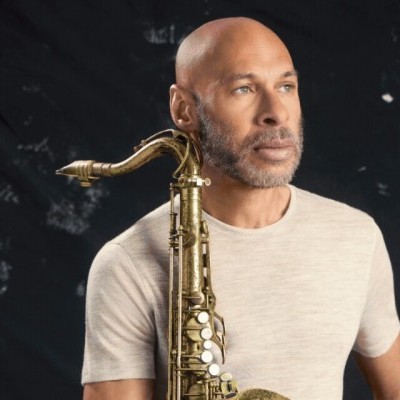
A solo concert by saxophonist Joshua Redman will close the first night of the Hyde Park Jazz Festival on Sept. 26.
Sep 22, 2026 12:26 PM
The Hyde Park Jazz Festival will take place for the 20th time on the final weekend of September 2026. Beginning half…
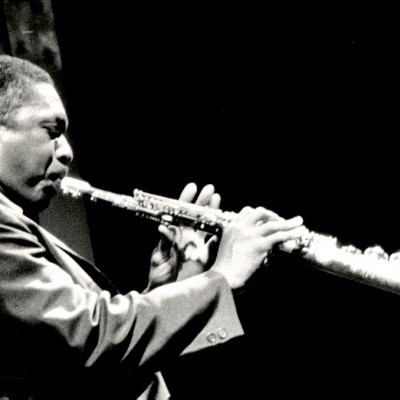
“It was just that suddenly … I could hear it,” Ravi Coltrane said of an epiphany he experienced during his late teens regarding his father’s music. “And it was almost like a calling, like something saying, ‘Hey, man, come on. It’s time to get serious.’ And the first time you really tune in and dial in and focus like that, it can be very life-changing.”
Sep 22, 2026 1:39 PM
Editor’s Note: Tomorrow, Sept. 23, is the 100th anniversary of John Coltrane’s birth. In honor of the tenor and…
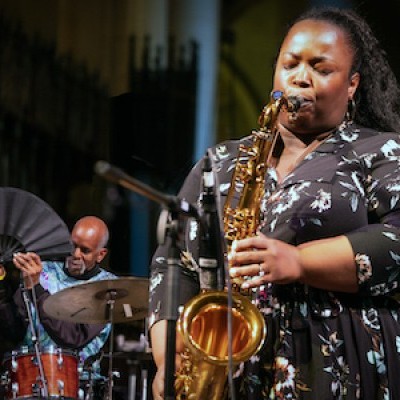
Camille Thurman took to the stage alongside bassist Kenny Davis and drummer Tommy Campbell for a rendition of Johnny Mercer’s “I’m An Old Cowhand” that recalled Rollins’ epochal 1957 trio outing Way Out West.
Oct 6, 2026 1:33 PM
As emcee Mark Ruffin noted at the commencement of an epic tribute to saxophonist Sonny Rollins at the Cathedral of…