Sep 3, 2026 10:44 AM
In Memoriam: Cassandra Wilson, 1955–2026
Cassandra Wilson, a singer, songwriter and producer who was one of the most acclaimed and successful jazz vocalists of…


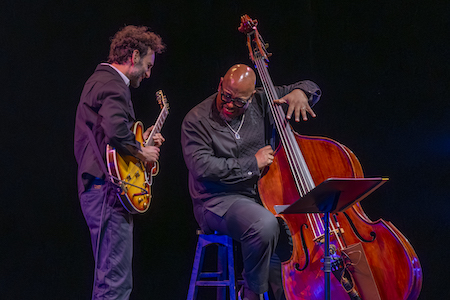
On the festival’s final night came a duo composed of two one-offs — guitarist Julian Lage and bassist Christian McBride.
(Photo: Victor Diaz Lamich)I had heard for years about the massive Festival International de Jazz de Montreal (FIJM), the world’s largest jazz festival, but this was the year I finally made it north of the border, at least for the final five days. The festival — 10 days, 350 shows, two-thirds of them free — takes over downtown Montreal with an impressive variety of jazz and adjacent music and a philosophy of “more is more.” FIJM is centered around the Place des Arts, a massive theater and arts complex that includes the largest concert hall in Canada, and five other halls of various sizes. Veteran and fledgling jazz artists also appear on another half dozen outdoor stages, as well as several jazz-oriented nightclubs in the vicinity.
This year’s edition presented major jazz figures like Diana Krall, Christian McBride, Charles Lloyd, Cécile McLorin Salvant and Joshua Redman, along with cutting-edge artists like Kassa Overall, Craig Taborn and Isaiah Collier. As with most modern festivals, Montreal also programs its share of pop and R&B artists, including Lionel Richie, Earth Wind & Fire and Canadian pop sensation Patrick Watson. A free set by the anonymous, costumed, Canadian duo called Angine de Poitrine, whose microtonal math-rock beats have gone viral, happened before I arrived (darn!), attracting tens of thousands and reportedly filling the main-stage area — two city blocks — to capacity.
But many of the best shows for devoted jazz fans happened indoors. After a hectic day of traveling, in the evening I was ready for something calm, reflective and beautiful. International chanteuse Stacey Kent did not disappoint. With her trio, including husband Jim Tomlinson on multi-reeds and the versatile Art Hirahara on piano, Kent sold out the Théâtre Maisonneuve, a nearly 1,500-seat concert hall in the Place des Arts. Having released many songs in French, she attracted many Montrealers, to whom she addressed many of her remarks in their native tongue.
Kent occupies a special niche among contemporary jazz singers with her pure, precise vocals, her way with a lyric and a devotion to some of the greatest songwriters — American and international — of the last 100 years. With her charming presence and the patient way she tells a story, she is like a modern amalgam of Edith Piaf, Elis Regina and Shirley Horn. Performing much of her recent album A Time For Love, she sang time-tested songs by Bacharach/David, Brian Wilson and Leonard Bernstein, as well as a few by Tomlinson and novelist/lyricist Kazuo Ishiguro. She achieved something nearly transcendent with her version of the surpassingly romantic “Carinhoso” by Pixinguinha, known as the Duke Ellington of Brazil.
The next day, the fine alto saxophonist, composer and bandleader Christine Jensen, a leading light of Canadian jazz, celebrated the John Coltrane centenary on an outdoor stage by leading a sextet with a three-horn front line through a satisfying set she called “Modes of Coltrane.” When an alto player leads a Coltrane tribute, she’d be well advised to bring an outstanding tenor player with her. Jensen had this covered with the inclusion of the exceptional André Leroux, one of Canada’s leading saxophonists. Moreover, Jensen’s style is happily compatible with this material, which ranged from “Moment’s Notice” to “Equinox.” The sextet brought to life the majesty and mystery of Trane’s classic quartet.
Nothing quite prepares one for the virtuoso trio of American banjoist Béla Fleck, Colombian harpist Edmar Castañeda and Mexican drummer Antonio Sánchez, which they call the BEATrio. In his remarks thanking the sold-out crowd in the Théâtre Maisonneuve, midway through their remarkable two-hour concert, Sánchez nailed it: “You could have stayed home and watched Netflix, but you came out to see the world’s weirdest jazz band.” It’s a statement that’s hard to disagree with.
Fleck and Castaneda have already stretched the boundaries of conventional banjo and harp playing. Adding the rhythmic powerhouse Sánchez, they performed a mesmerizing original program that encompassed elements of Latin jazz, rock, bluegrass, rock, post-bop jazz and stuff that currently has no name. Having missed their debut album last year, I wondered at the outset how they pull it off without a traditional bass player. Answer: Castañeda has a customized harp that includes special low strings whose signal is channeled into a bass amplifier. He is doing the work of two musicians — his left hand playing intricate bass lines and his right hand covering harp melodies, chords and textures.
As an extra bonus, Fleck played an extended solo from his reimagined version of Gershwin’s Rhapsody In Blue, released as an album in 2024. On paper, it shouldn’t work at all, but it works like crazy. Not a party trick; rather, an astonishingly beautiful, faithful interpretation.
The next night, American roots legend Taj Mahal and the seven-piece Phantom Blues Band took over Montreal’s gorgeous Maison Symphonique in another sold-out show. At 84, Taj appears to be experiencing some vision and mobility challenges and had to be helped on and off the stage by a band member, although it should be noted that the pair danced their way on and off the stage. Any suggestion of frailty, however, happily popped like a balloon the minute he began to sing. Taj proved that he is still a hell-raiser, singing with gusto and playing a half-dozen instruments in a career retrospective that included hits like “She Caught The Katy,” “Corinna,” “Move Up To The Country” and the beloved, Caribbean-flavored “Queen Bee.” He seemed to be having the time of his life.
Billy Childs, with his superb accompanists Matt Penman (bass) and Air Hoenig (drums), performed for two nights at the nearby Upstairs Bar and Grill. His acclaim as a composer for ensembles from trios to symphony orchestras tends to obscure his prodigious talents as a pianist. Childs performed several new songs from his most recent album, Triumvirate, bringing an orchestral composer’s sensibility to the jazz piano trio, including far more composed passages than is common in such ensembles. But when turned loose on classics like Monk’s “Ask Me Now” and Miles Davis’ “Flamenco Sketches” he generates a series of eloquent, in-the-pocket ideas, flawlessly executed. I wished that I could have attended all four shows.
Lest we forget in all the hoopla surrounding the centenaries of Miles Davis and John Coltrane, this year also marks the late Tony Bennett’s 100th birthday. In another sold-out affair at Théâtre Maisonneuve, guitarist/singer John Pizzarelli paid tribute to Bennett, ably assisted by pianist Isaiah J. Thompson and bassist Michael Karn. Pizzarelli put on a high-energy show that belied his warm, laid-back singing style and featured classic songs that Bennett made famous, e.g., “When In Rome,” “I Wanna Be Around” and “Young And Foolish.” He played both acoustic and electric guitars, sometimes pumping out Hot Club-style, cut-time rhythm guitar, sometimes playing Django-ish solos and scat-singing along. Thompson, a powerhouse piano player who skips merrily along a bluesy trail blazed by Montreal native Oscar Peterson, proved a sensational foil to the singer/guitarist.
On the festival’s final night came a duo composed of two one-offs — guitarist Julian Lage and bassist Christian McBride, whose musicianship is such that the underlying material is immaterial; they would create magic if they were playing “Baby Shark” (hmm, that might be interesting). The songs they chose, however, were all sublime to begin with, including “Monk’s Dream,” “I Hear A Rhapsody,” “Emily,” “Equinox” and a sprinkling of Lage originals. When they shredded, it was always tasty, nourishing and musical, speed in the service of lyricism. It was also great fun to watch these two maestros support each other’s flights of fancy with empathetic comping of the first order.
McBride informed the sold-out crowd that Lage was about to join Bob Dylan’s tour as his lead guitarist. “Now you’re gonna make some real money,” he said with a twinkle. “Don’t leave us jazz people behind!”
Near the end, FIJM’s co-founder, former director and éminence grise André Ménard came out on stage to announce that McBride is the 31st recipient of the festival’s Miles Davis Award, which “honors an internationally renowned jazz artist, their body of work and their contribution to the evolution of the genre.” In a short acceptance speech, McBride humbly expressed his sincere thanks to Montreal and the festival, then, as an aside, added, “And, please, let’s bring back the Expos!” DB
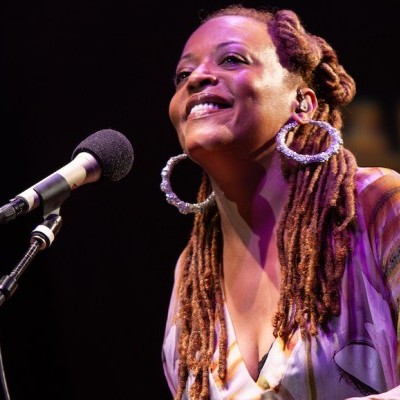
Wilson’s ability to connect to audiences helped her to win two Grammy awards and multiple other accolades. She was named an NEA Jazz Master in 2022.
Sep 3, 2026 10:44 AM
Cassandra Wilson, a singer, songwriter and producer who was one of the most acclaimed and successful jazz vocalists of…
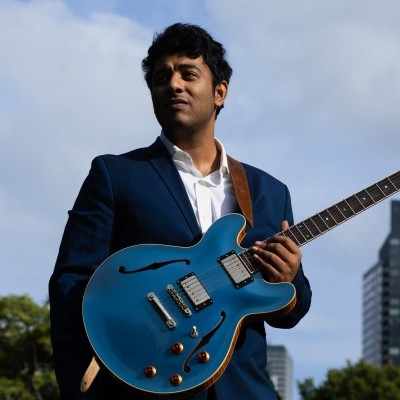
“The love from the jazz and music community restored my faith in humanity,” Walia wrote in an online post upon his release from detention at an ICE facility.
Aug 18, 2026 2:15 PM
Indian jazz guitarist and composer Pritesh Walia has been released after being unexpectedly detained by ICE and taken…
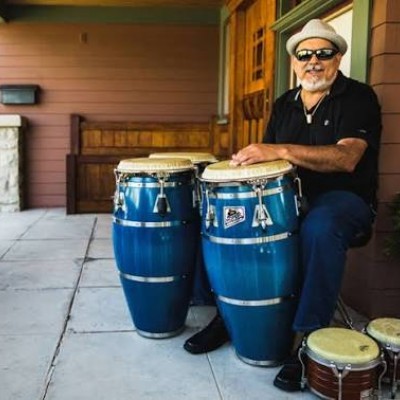
Percussionist Poncho Sanchez was among the artists scheduled to perform at the now-canceled inaugural LA Jazz Festival.
Aug 11, 2026 12:53 PM
The inaugural LA Jazz Festival, originally scheduled to run Aug. 7–23 with dozens of events across Los Angeles’…
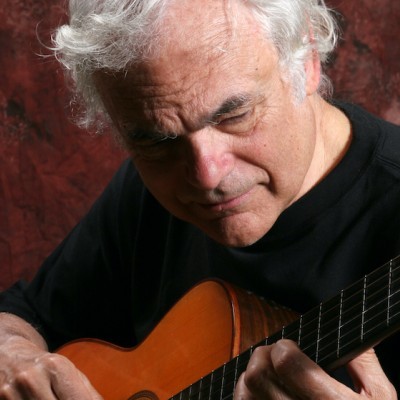
Bertoncini was a specialist and advocate for the nylon-string acoustic guitar, turning down high-profile opportunities that were unsuited to the sound and techniques that he used with that instrument.
Sep 1, 2026 11:06 AM
Gene Bertoncini, an esteemed jazz guitarist, composer, arranger and educator, died Aug. 29 at the Lillian Booth Actors…
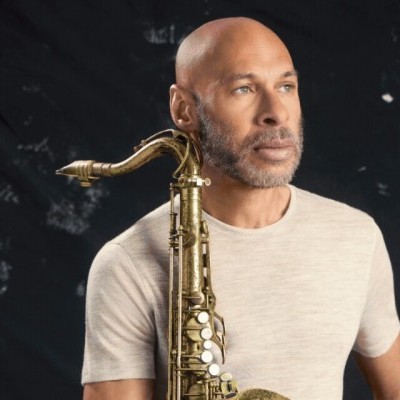
A solo concert by saxophonist Joshua Redman will close the first night of the Hyde Park Jazz Festival on Sept. 26.
Sep 22, 2026 12:26 PM
The Hyde Park Jazz Festival will take place for the 20th time on the final weekend of September 2026. Beginning half…