Jun 9, 2026 10:54 AM
In Memoriam: James Blood Ulmer, 1940–2026
With deep sorrow and profound love, we announce the passing of James Blood Ulmer, a boldly innovative guitarist,…


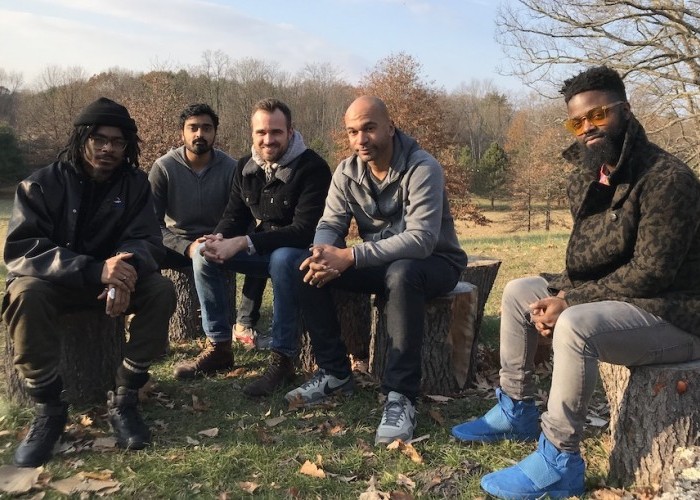
Joel Ross (left), Harish Raghavan, Matthew Stevens, Walter Smith III and Marcus Gilmore have a new album on Whirlwind.
(Photo: Paul Antonell)In Common, a newly formed quintet, had only a day-and-a-half to record its debut album. So, the co-leaders—tenor saxophonist Walter Smith III and guitarist Matthew Stevens—knew they couldn’t ask their three other bandmates to learn new material with odd meters, multiple sections or through-composed themes. On the other hand, they didn’t want to settle for just recording standards or merely blowing on short vamps.
This challenge threw the leaders back on some old-fashioned virtues: clear structures, rhythmic tension and strong melodies. The album’s seven original compositions (five by Smith and two by Stevens) all feature fluid, singable themes, juxtaposed with quirky rhythmic figures. Only two tracks are uptempo, and all 10 tracks (there’s also an improvised number, a standard and a reprise) clock in at less than six minutes. The resulting album, In Common—credited to Walter Smith III, Matthew Stevens, Joel Ross, Harish Raghavan and Marcus Gilmore—proves that such minimalist moves can yield a powerfully emotional experience.
“That was the challenge: to write something that was clear and accessible without dumbing things down,” Stevens, 36, said. “So, everything became very concise. It sounded like another era in a way, before long-playing records. We didn’t want to have three long improvisations on every track; to drone on like that would be to lose sight of the purpose of the record. For me, parameters like that can be liberating, because they let you know what you’re trying to do. They can bring out a different side of people’s playing. Each improvisation on this record feels like a continuation of what came before, not like this guy doing his thing and the next guy doing his thing.”
“We didn’t talk about it much,” Smith, 38, said. “But neither of us wrote much fast music. That’s fine with me; I’m sick of fast music. When I was younger, I remember all my favorite artists—Kenny Garrett, Michael Brecker, Joshua Redman—got to a point in their careers where they all did some slower music. At the time I didn’t understand it; I thought, ‘Why wouldn’t they do that fast, hard stuff?’ Now that I’m at the age they were, I get it. When I go to a concert now, I don’t want to analyze the music; I want to be moved. … When speed and long solos aren’t the point, what comes out is a different kind of beauty.”
If the format is traditional, the vocabulary is modern. Smith and Stevens are part of a group of musicians who attended Berklee College of Music, many of whom would go on to collaborate with one another, including Christian Scott aTunde Adjuah, Esperanza Spalding, Warren Wolf and Jeremy Pelt. Smith and Stevens long had wanted to do a project together, and when Stevens wound up with a pre-paid day at the Clubhouse studio in Rhinebeck, New York, last winter, the two men decided to take advantage of it. They quickly recruited two of their peers—drummer Gilmore and bassist Raghavan—and added the young vibes prodigy Ross.
“Even as I’m moving towards simple melodies, themes develop in a logical but not predictable way, ” Smith explained. “I’m trying to bring that into a modern, complex scenario. I want to remain open to nontraditional, even nontonal elements, and integrate them it into something the ear can accept. It’s easier when you have musicians like these, who share that sensibility. That’s why we called the band In Common.”
“This is not a record I could imagine making under my own name.” Stevens said. “The combined ownership relieves the pressure you feel on a solo record. That contributes to the relaxed, seeking feel of the music. It’s the antithesis of how I made my last solo record, which emphasized composition and sonic elements with a whole lot more pre-production and post-production.”
In Common isn’t intended to be a touring band, though the quintet is hoping to play a few dates to mark the album’s release. But Smith and Stevens hope to record multiple albums under the moniker, each time with different collaborators. If so, the band could become something akin to mid-’70s Steely Dan—an unchanging duo joined by a rotating cast. DB
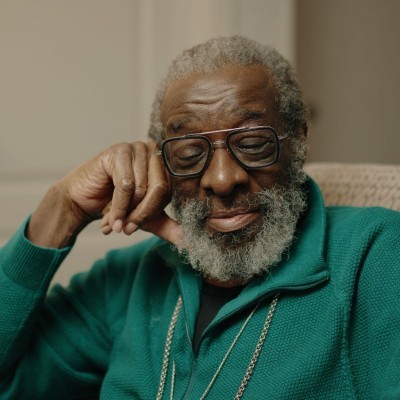
To the world, James Blood Ulmer was a legend, a visionary and a musical force whose sound was distinctive and unique. To his family, he was their teacher, their storyteller and a source of strength.
Jun 9, 2026 10:54 AM
With deep sorrow and profound love, we announce the passing of James Blood Ulmer, a boldly innovative guitarist,…

Clockwise from top left, Mary Halvorson, Patricia Brennan, Adam O’Farrill, Keith Jarrett’s At the Deer Head Inn: The Complete Recordings, Sheila Jordan and Jaki Byard.
Jul 16, 2026 1:34 PM
The DownBeat Critics Poll never ceases to amaze! And the 74th Edition offered plenty of accolades for poll veterans and…
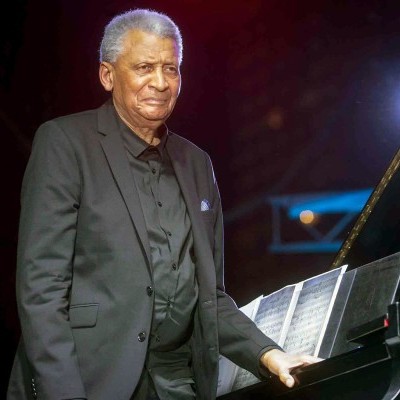
Ibrahim was an early jazz acolyte, studying the music via 78s he would buy from soldiers stationed in South Africa — who also gave him the nickname “Dollar.”
Jun 30, 2026 3:19 PM
Pianist Abdullah Ibrahim, the NEA Jazz Master from South Africa who helped fuse the folk music of his home country with…
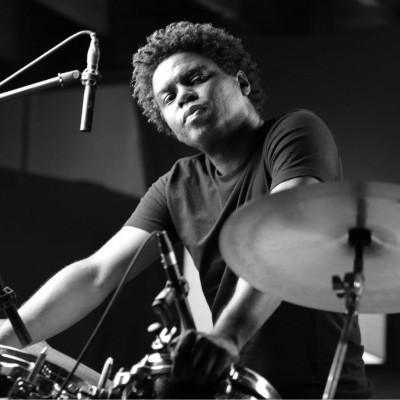
A drummer’s drummer, Rodney Holmes gigged with everyone from Joe Zawinul and Carlos Santana to Steve Kimock and the Brecker Brothers.
Jul 22, 2026 12:37 PM
Drummer Rodney Holmes, a powerful presence behind the kit who emerged as an in-demand player on the New York scene…
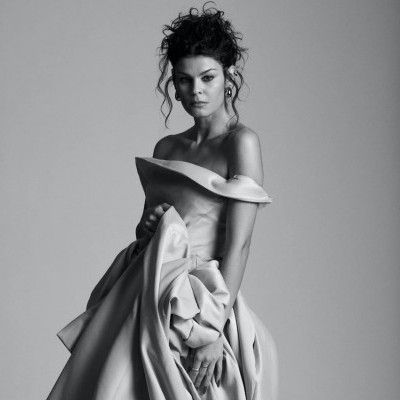
“There was something about her tone and sound and phrasing — an intimacy, a vulnerability, an honesty,” says Joshua Redman, who produced Cavassa’s record after she toured with his band.
Jun 16, 2026 1:27 AM
Gabrielle Cavassa is an avowed perfectionist. So when she failed to place despite becoming a finalist in the 2018 Sarah…