Sep 3, 2026 10:44 AM
In Memoriam: Cassandra Wilson, 1955–2026
Cassandra Wilson, a singer, songwriter and producer who was one of the most acclaimed and successful jazz vocalists of…


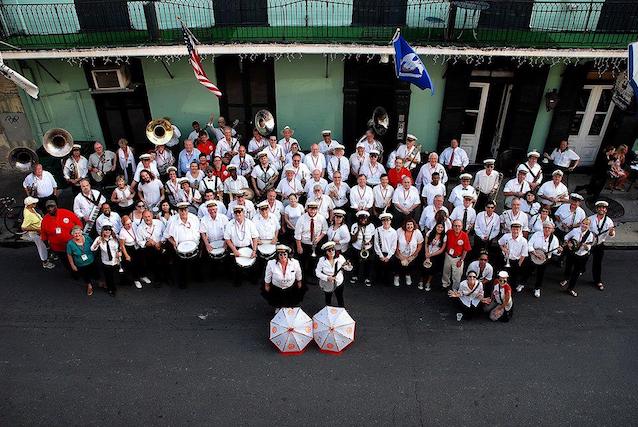
New Orleans Trad Jazz Camp
(Photo: Courtesy New Orleans Trad Jazz Camp)Jazz camps have exploded around the globe as a summertime tradition for working on your chops and making new friends. But camp isn’t just for school-aged kids and college students. Here are two camps that have adults jamming with and learning from top educators and established jazz artists: The New Orleans Trad Jazz Camp, profiled by DownBeat’s Crescent City correspondent Cree McCree; and the Samba Meets Jazz summer workshop, which pianist and DownBeat contributor Allen Morrison attended as a camper last August in Bar Harbor, Maine.
Jazz was born in New Orleans, where the city’s annual Trad Jazz Camp mines the motherlode at the source. “Yes,” enthuses camp founder and director Banu Gibson, speaking from her home in uptown New Orleans. “Hallelujah! You’re preaching to the choir.” But it wasn’t until 2010 that the camp was officially born. What took so long?
“Over the course of my career, I’d always talked about how we need to pass this on,” recalls Gibson, who wears many professional hats: vocalist, bandleader, banjo/guitar player, dancer, choreographer and director. “And after Katrina, I realized, this is really important. We need to keep this going, and do more for the weekend warriors who like to play early jazz, but never had a chance to learn more about it. Many are classical players who never get off the page and never improvise, so it can be a real challenge for them to explore.”
A number of other adult jazz camps across the country are connected to colleges that primarily teach jazz from the 1950s on, as if there was no “real” jazz before Monk, Coltrane and Miles. “That just makes me so annoyed,” notes Gibson. “They barely even give lip service to anything before 1950, as if trad jazz never existed.”
That won’t be a problem for trad jazz enthusiasts coming to the 16th anniversary edition of the New Orleans Trad Jazz Camp, scheduled for two sessions this year: June 14–20 and June 21–27. The schedule is bursting with only-in-New-Orleans moments that literally couldn’t happen anywhere else.
Based in the heart of the French Quarter at the Bourbon Orleans Hotel, where campers take over the famous “O” Bar to jam every night, attendees can also bar-hop throughout the Quarter with their instruments in tow. Preservation Hall, where the Pres Hall All-Stars play every Thursday night, is just a few blocks away. And Tuesday night there’s a traditional second line through the Quarter.
“We go over to the river and we shout out the names of anybody who’s passed,” says Gibson. “The second line that we always do probably moves people the most. We just constantly hear from our campers how special that was to them. I’ve seen grown men cry sitting there playing with tears rolling down their face.”
Other special events happen in the hotel ballroom. “People come down to get breakfast, and then somebody speaks,” says Gibson. “We’ve had Ricky Riccardi, research director of the Louis Armstrong House, give wonderful lectures on Louis Armstrong.” One year Gibson, a tap dancer herself, brought in another tap dancer to the ballroom, and they got 15 tables each doing different rhythms. “It was so glorious to hear,” recalls Gibson. “She would pound out rhythms on the table and then I brought in my tap floor and we did a tap routine together. There’s a big connection between early drummers and tap dancing rhythms. We also hired swing dancers to come in for lunch.”
Every Wednesday night the faculty plays, always a highlight of the week. “Everybody teaching at our camp is a gigging musician, so it’s not all academic,” notes Gibson. “They’ve all been in the trenches and they’re still doing it. I don’t mean to say that there’s anything wrong with just teaching music, but there’s a special thing about working with a musician who’s doing it full time.”
Other highlights include a special Thursday night-time performance for vocalists, while throughout the week there are workshops for people who want to take a deep dive into improvising. And thanks to a special arrangement with the famous Maison Bourbon bar, campers can play a couple of sets there at night, while during the afternoon they can perform at the Toulouse Theatre. The jam-packed schedule also includes fun outings like a musical river cruise, and a fancy dance in the hotel ballroom.
One of the biggest changes: “Not long after the camp first started, people started asking us where the kids were,” recalls Gibson. “Like, why didn’t we have any kids? And we said, well, they can’t afford this. So adult campers began to donate money to underwrite some scholarships. We now have, on average, around 100 adult campers, and at least 20 scholarship kids during the two weeks. They have to come with a chaperone and we’ve had kids as young as 13.
To be accepted into the program, kids have to send in a video submission. “We have a very strong California connection because of the San Diego and Sacramento camps. and other high schools that have early jazz programs in band,” notes Gibson. “They come on field trips to New Orleans, and we’ve picked up kids that way. This year, we’ve got kids coming in from New York, Boston, Rhode Island and Davenport, Iowa, as well as the California kids.”
Gibson expects around 100 adults for this year’s first camp, and another 40 for the second. “That’s because we just expanded to add a second week, and so we’re still trying to build it up,” explains Gibson. “For a lot of our campers, it’s like a musical Thanksgiving. So many of the same campers show up the same week and hang out and catch up, so the first camp fills up because of the social aspect. We have about 80% repeat campers, and once they all go, then the camp’s gonna go belly up if we don’t have a future plan.”
To that end, Gibson is currently putting together a foundation to ensure the New Orleans Trad Jazz Camp will continue to thrive.
“Right now, I do almost everything,” says Gibson, “and the joke is when I go, it goes. We want our camp to continue, and we’re gonna do everything we can to keep the legacy of New Orleans trad jazz alive. I’ve always believed that music is food for the soul, and traditional New Orleans jazz is a bona fide feast.” —Cree McCree
Young people who want to attend a summer jazz workshop have dozens of choices, but adults looking for an intensive, week-long retreat to study with jazz professionals have fewer options. That’s why I was glad to discover Samba Meets Jazz (SMJ) in Bar Harbor, Maine.
The program caters to a mix of musicians from beginners to serious hobbyists to working professionals. Whatever your skill level, the program immerses you in Brazilian, Latin and American jazz, offering experiences playing all three styles, coached by masters of each. You are as likely to play “Body And Soul” or “Groovin’ High” as a song by Jobim, Donato or Hermeto Pascoal.
Nilson Matta, the workshop’s artistic director since 2012, is a veteran Brazilian bassist and founding member of Trio da Paz, the eminent Brazilian jazz trio that includes guitarist Romero Lubambo and drummer Duduka da Fonseca, as well as The Brazilian Trio with da Fonseca and pianist Helio Alves. Matta’s credits include playing with such legends as Joe Henderson, João Bosco, Joao Gilberto, Don Pullen, Kenny Barron and Yo Yo Ma.
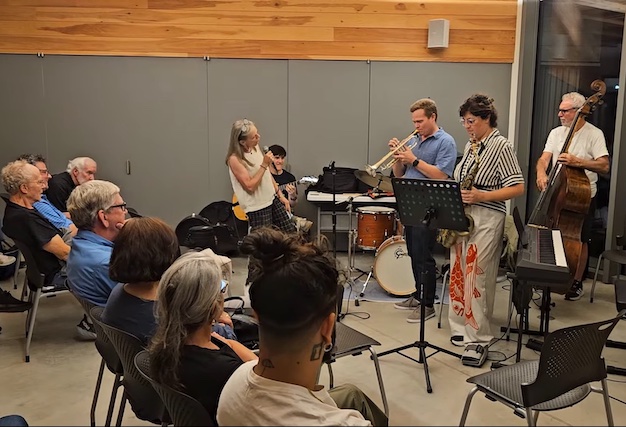
The workshop is usually held in the first week of August at the compact, sylvan campus of the College of the Atlantic, situated across the street from breathtaking Acadia National Park. Matta and co-founder Alice Schiller also run one-week workshops in Rio de Janeiro (February) and at a third international location in the spring (last year it was Paris).
“Although I was self-taught for a long time,” Matta told me, “after about 10 years of playing, I began studying classical music at the Federal University in Rio de Janeiro. Through that experience, I realized that you can learn the art of playing an instrument by observing master musicians and, most importantly, by playing with them.”
This became the camp’s educational philosophy. The all-star faculty doesn’t just coach the small student ensembles that are organized on Day 1; they also sit in with students, jam and present master classes throughout the week. As one student told me, explaining SMJ’s appeal: “Not all jazz camps give you the opportunity to play alongside some of your idols.” This one does.
As a jazz journalist, part-time pianist and Brazilian jazz lover, I first attended SMJ in 2014, returning twice since then, most recently last August. It’s a five-hour drive from my home in Boston to Bar Harbor, but I had plenty of music to listen to on the way. After I enrolled, Alice sent me three zip files containing some 50 charts we might play, marked ‘Jazz,’ ‘Latin’ and ‘Brazilian,’ from which I put together a playlist for the car. Some were standards like Wayne Shorter’s “Footprints,” Horace Silver’s “Song For My Father” and Tom Jobim’s “One Note Samba.” Others were deeper cuts like “Mambo Influenciado” by Chucho Valdes and “O Ovo” by Hermeto Pascoal.
In Bar Harbor, my fellow students, 41 in all, included instrumentalists, singers and tap students. The first group was divided, based on their experience level, into six ensembles of four to five players each. The international faculty rotated among the ensembles; they included Matta, guitarist Chico Pinheiro, Latin jazz pianist Edsel Gomez, drummers Rafael Barata (Brazil) and Marcelo Camacho (Cuba), tenor saxophonist Ada Rovatti and trumpeter/composer Mark Tipton. Singer and vocal coach Dominique Eade and tap dancer Felipe Galganni led separate classes for vocal and tap students.
The days were intense: Workshops began at 9 a.m., followed by a lunch break, then a full load of afternoon sessions and master classes. Each night, after dinner in the college cafeteria, there were jam sessions; one night there was a memorable faculty concert.
I was matched with an adept group of musicians: guitarist Bob Arpin from New Hampshire, who plays regularly with the NH Jazz Orchestra; bassist Dave Meer, a veteran of Broadway touring companies who had recently retired to Bar Harbor; and Bruce Bond, from Virginia, a serious student of Brazilian drumming with several research trips to Brazil to his credit. We hit it off from the start and got stronger as a unit each day.
Our focus was to prepare for the student concert scheduled for the last night of camp, where we would play one song in each style. When Friday night rolled around, we aced our three songs: “Take Five,” a lovely Brazilian tune called “E Nada Mais” and “A Night In Tunisia.”
Guitarist Bob, who had come with his wife, Bonnie, a violinist, told me he loved the camp “because I like to hear and meet a lot of different musicians. The faculty had a lot to offer, and the facilities and the food were excellent. We’re considering doing it again next summer.” Bonnie, whose background is in classical music, was similarly enthused, noting that the faculty “had a lot of patience with a jazz beginner.”
I also met Chris and Donna Maxfield, jazz enthusiasts and hobbyists from Florida, who have attended SMJ almost every year since it began. They are both pianists, but this year Donna decided to try singing for the first time. “It’s such a safe and joyful environment,” she said. “Not only are they the highest caliber teachers/musicians, but they’re also kind, encouraging and supportive. I had no confidence to sing, but they made me feel safe. They gave me the courage to share what was inside of me.”
These days, with video lessons always just a click away, many musicians are studying remotely. As helpful as those lessons can be, they simply can’t compare with the experience of eating, sleeping and breathing the music for a full week and studying with master musicians. I learned valuable lessons from all of them, but for me as a pianist, it was a particular blessing to work with Edsel, especially when he drilled me in the proper way to play a montuno, the Afro-Cuban piano vamp, until I finally got it under my fingers. Doing all that amid the breathtaking scenery of Bar Harbor was the icing on the cake. —Allen Morrison
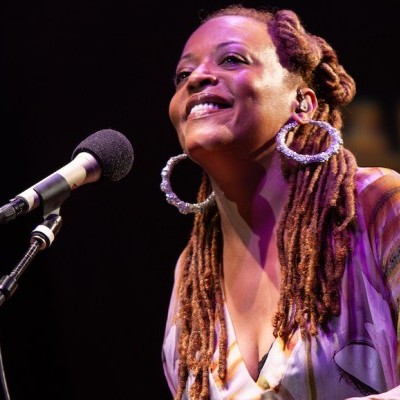
Wilson’s ability to connect to audiences helped her to win two Grammy awards and multiple other accolades. She was named an NEA Jazz Master in 2022.
Sep 3, 2026 10:44 AM
Cassandra Wilson, a singer, songwriter and producer who was one of the most acclaimed and successful jazz vocalists of…
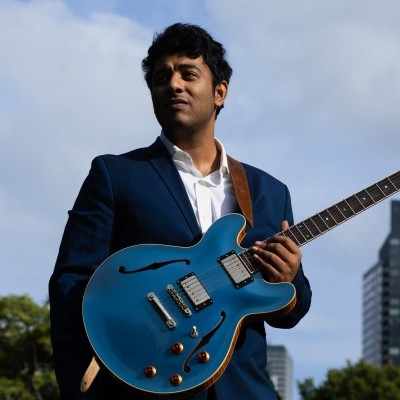
“The love from the jazz and music community restored my faith in humanity,” Walia wrote in an online post upon his release from detention at an ICE facility.
Aug 18, 2026 2:15 PM
Indian jazz guitarist and composer Pritesh Walia has been released after being unexpectedly detained by ICE and taken…
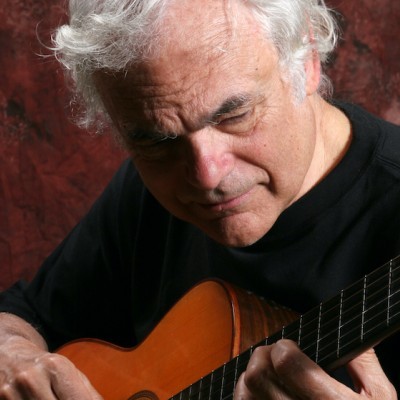
Bertoncini was a specialist and advocate for the nylon-string acoustic guitar, turning down high-profile opportunities that were unsuited to the sound and techniques that he used with that instrument.
Sep 1, 2026 11:06 AM
Gene Bertoncini, an esteemed jazz guitarist, composer, arranger and educator, died Aug. 29 at the Lillian Booth Actors…
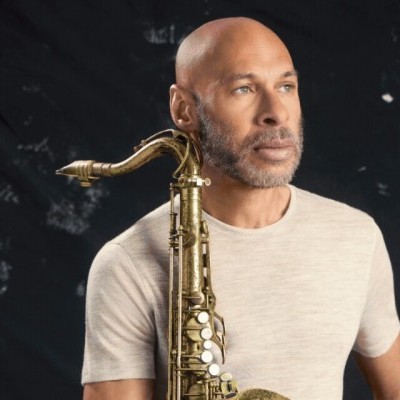
A solo concert by saxophonist Joshua Redman will close the first night of the Hyde Park Jazz Festival on Sept. 26.
Sep 22, 2026 12:26 PM
The Hyde Park Jazz Festival will take place for the 20th time on the final weekend of September 2026. Beginning half…
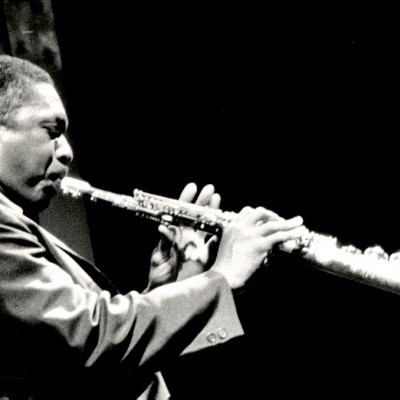
“It was just that suddenly … I could hear it,” Ravi Coltrane said of an epiphany he experienced during his late teens regarding his father’s music. “And it was almost like a calling, like something saying, ‘Hey, man, come on. It’s time to get serious.’ And the first time you really tune in and dial in and focus like that, it can be very life-changing.”
Sep 22, 2026 1:39 PM
Editor’s Note: Tomorrow, Sept. 23, is the 100th anniversary of John Coltrane’s birth. In honor of the tenor and…