Sep 3, 2026 10:44 AM
In Memoriam: Cassandra Wilson, 1955–2026
Cassandra Wilson, a singer, songwriter and producer who was one of the most acclaimed and successful jazz vocalists of…


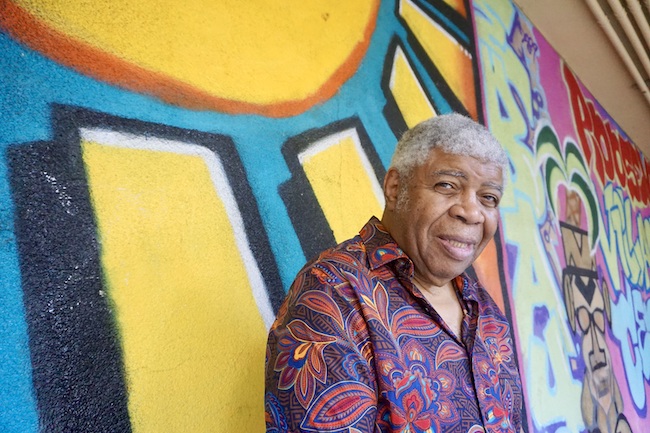
“I stand on the shoulders of some really great people who contributed to this world, musically, and I am passing it on to the next generation,” says multi-instrumentalist Roger Glenn.
(Photo: Beth Brann)Like his famous father, Tyree Glenn, who had the unusual double of trombone and vibes during his tenures with Cab Calloway, Duke Ellington and Louis Armstrong through the ’40s, ’50s and ’60s, Roger Glenn has the unusual double of flute and vibes. But he doesn’t stop there. The New York City native, who grew up in Englewood, New Jersey, before relocating to San Francisco in the mid-1970s, also plays a total of 16 (count ’em) other instruments.
And though he was totally immersed in the swinging sounds of his father’s music while growing up, courtesy of his close proximity to jazz royalty like Duke and Pops, Glenn eventually forged his own path in Latin jazz through apprenticeships with Mongo Santamaria, Cal Tjader and Dizzy Gillespie. Those deep-seated influences come to fruition on My Latin Heart (Patois Records), his first outing as a leader in 50 years, going back to 1975’s Reachin’ (Fantasy Records).
“Living in New York, you’re exposed to a lot of different music,” said the 80-year-old multi-instrumentalist and active studio musician. “My mother was really into Latin music and my parents used to go to The Palladium to see all the greats like Tito Puente and Machito. But my own first epiphany with Latin music happened when I was coming home from school one day when I was in 7th grade, and I came across this album lying in the gutter without a label on it. I took it home and played it and I was like, ‘Wow, this is some really interesting music.’ It just grabbed me.”
That record was 1957’s Cuban Jam Sessions In Miniature by Israel “Cachao” López y su Ritmo Caliente. The opening track, “Descarga Cubana,” kicked off with a distinctive tumbao bass line, followed in quick succession by a volley of congas, bongos, timbales and güiro. Young 13-year-old Glenn was hooked for life.
“Around this time, my father bought me a flute,” he recalled. “So I started playing with this little Latin group, and the first song I learned to play was Herbie Mann’s ‘Comin’ Home Baby’ (from 1961’s At The Village Gate on Atlantic Records). Because I could only play like three notes on the flute at that time. Oddly enough, that went full circle when years later, in 1983, I actually toured with Herbie Mann, playing vibes.”
Glenn has had a lot of those full-circle moments throughout his distinguished career. “As a kid I used to go see Mongo Santamaría at the Village Gate, and I ended up playing in his band. I also saw Cal Tjader at the Apollo Theater when he came to the East Coast, and I ended up playing on Cal’s Grammy-winning album from 1979, La Ondo Va Bien (Concord Jazz Picante).”
Glenn pays tribute to Tjader on “Cal’s Guajira,” an alluring cha-cha-cha from My Latin Heart. Elsewhere on this long overdue release, which also features guitarist and longtime associate Ray Obiedo (who played on Reachin’ 50 years ago), pianist David K. Matthews (currently the keyboardist for Santana), bassist David Belove, conguero Derek Rolando and drummer Paul Van Wageningen, the leader switches deftly from flute on the fiery opener, “Zambo’s Mambo,” to alto saxophone on “Brother Marshall,” then vibraphone on the aptly named mambo “Energizer,” before returning to flute on the romantic ballad “A Night Of Love.” The spirited closer, “Samba De Carnaval,” concludes on a lively note with an authentic batacuda percussion jam.
“I went down to Brazil the first time on a tour with Dizzy Gillespie,” Glenn recalled. “And I loved Brazilian music, so I was thrilled to be able to experience it first hand.
“My experiences have been all over the map, and that’s reflected on this album. And while I call it My Latin Heart, that’s just the tip of the iceberg in terms of my experiences. I could go on and on.”
Two other potent tunes from the album — the 6/8 “Congo Square” and the entrancing “Angola” with Yoruban vocals by guest bata players John Santos and Michael Spiro — deliver a kind of history lesson along with the churning grooves of the African diaspora.
“Those songs talk about the origins of the music,” said Glenn. “‘Congo Square’ is an example of the culture from Africa and the culture from Europe coming together to create something new. Jazz could not have been created in Africa and it could not have created in Europe. It took both of those cultural groups to get together and in a way that created the music of America. And that, to me, is a significant thing. And it’s why our music in the United States developed differently than music in Cuba or Brazil, for example.”
“I’ve had a rich life experience,” added Glenn, who also played in the U.S. Army band at Fort Dix, New Jersey, along with Grover Washington Jr. and Billy Cobham in the late 1960s. “I grew up around Donald Byrd because he was hanging out in Englewood, and I ended up playing on his 1973 Blue Note album Black Byrd, which was produced by Fonce and Larry Mizell, who I grew up with in Englewood. My neighbor down the block was Freddie Perren, who was the disco king in the ’70s who did albums by Gloria Gaynor and Peaches & Herb that I got to play on.
“I remember going with my father to Duke Ellington rehearsals and playing at Eubie Blake’s birthday party with Noble Sissle in attendance. And I remember seeing Dizzy, Pops and Erroll Garner coming over to our house for parties and just thinking of them as my father’s friends rather than jazz royalty. Knowing and growing up around all these people, I’ve really been blessed.”
Now fronting a band of younger musicians on My Latin Heart, Glenn said he is excited to see where they might take the music next. “Being 80, I’m older than a lot of these guys who used to come and hear me when I was playing at Cesar’s Latin Palace in San Francisco — when they were all underage. John Santos I knew when he was a little kid. Some of these other guys I used to see in San Francisco with school books when they were on their way to school. Sheila E. was in my band back then, and when we weren’t playing a set she’d have to go sit in the corner because she was underage.
“But you watch all these young people grow up and make their own statements,” he continued. “Each generation takes it to the next step. So, I stand on the shoulders of some really great people who contributed to this world, musically, and I am passing it on to the next generation.” DB
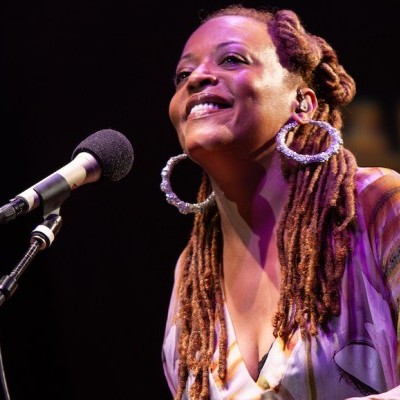
Wilson’s ability to connect to audiences helped her to win two Grammy awards and multiple other accolades. She was named an NEA Jazz Master in 2022.
Sep 3, 2026 10:44 AM
Cassandra Wilson, a singer, songwriter and producer who was one of the most acclaimed and successful jazz vocalists of…
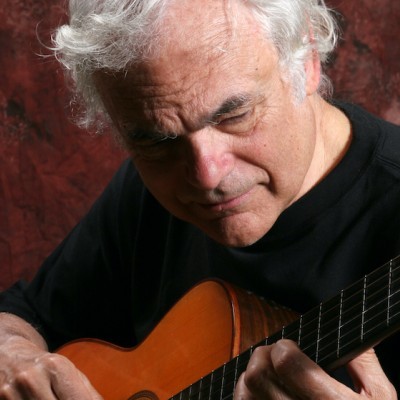
Bertoncini was a specialist and advocate for the nylon-string acoustic guitar, turning down high-profile opportunities that were unsuited to the sound and techniques that he used with that instrument.
Sep 1, 2026 11:06 AM
Gene Bertoncini, an esteemed jazz guitarist, composer, arranger and educator, died Aug. 29 at the Lillian Booth Actors…
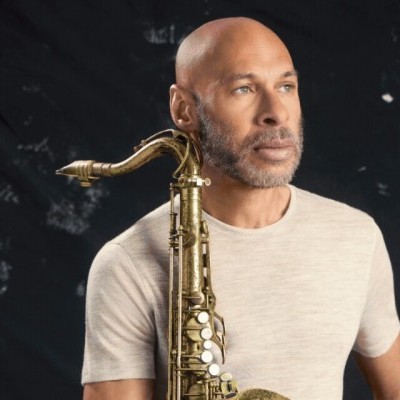
A solo concert by saxophonist Joshua Redman will close the first night of the Hyde Park Jazz Festival on Sept. 26.
Sep 22, 2026 12:26 PM
The Hyde Park Jazz Festival will take place for the 20th time on the final weekend of September 2026. Beginning half…
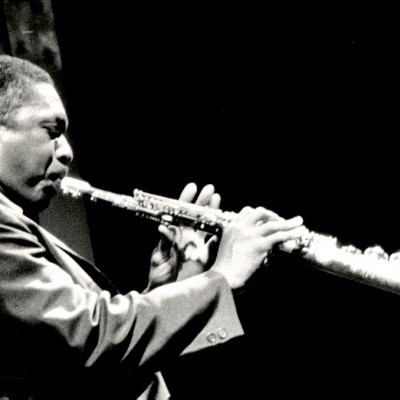
“It was just that suddenly … I could hear it,” Ravi Coltrane said of an epiphany he experienced during his late teens regarding his father’s music. “And it was almost like a calling, like something saying, ‘Hey, man, come on. It’s time to get serious.’ And the first time you really tune in and dial in and focus like that, it can be very life-changing.”
Sep 22, 2026 1:39 PM
Editor’s Note: Tomorrow, Sept. 23, is the 100th anniversary of John Coltrane’s birth. In honor of the tenor and…
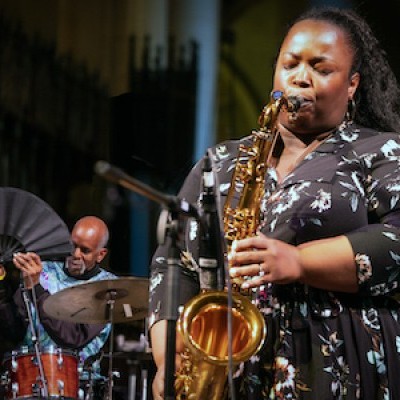
Camille Thurman took to the stage alongside bassist Kenny Davis and drummer Tommy Campbell for a rendition of Johnny Mercer’s “I’m An Old Cowhand” that recalled Rollins’ epochal 1957 trio outing Way Out West.
Oct 6, 2026 1:33 PM
As emcee Mark Ruffin noted at the commencement of an epic tribute to saxophonist Sonny Rollins at the Cathedral of…