Sep 3, 2026 10:44 AM
In Memoriam: Cassandra Wilson, 1955–2026
Cassandra Wilson, a singer, songwriter and producer who was one of the most acclaimed and successful jazz vocalists of…


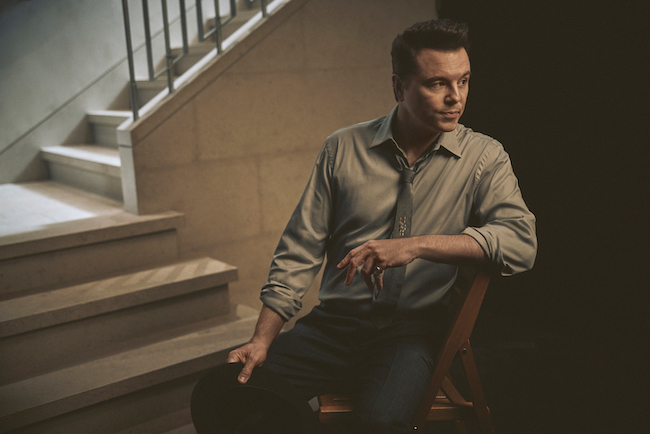
Seth MacFarlane takes a turn from his television and film career to sing arrangements made for Frank Sinatra, but never recorded.
(Photo: Pamela Littky)“I’m not gonna lie to you — I don’t know why I thought this was about The Naked Gun, but I’m happy it’s about the album.” Seth MacFarlane has finished fiddling with his phone while sitting in the darkened bar room of his Beverly Hills mansion, having found a proper viewing angle for our video chat.
The confusion is understandable. MacFarlane’s remake of the classic comedy The Naked Gun was due out the week this interview took place, just the latest in a string of many projects since 1999, when his animated show Family Guy became an instant cultural touchpoint, followed, in 2005, by American Dad. There is also The Orville, MacFarlane’s earnest live-action homage to the Star Trek series, in which he stars as that sci-fi universe’s own version of Captain James T. Kirk.
MacFarlane has emulated another heroic icon from yesteryear in his musical pursuits. A longtime admirer of Frank Sinatra, he’s made a string of excellent big band albums, singing with a classic crooner style in the mold of Ol’ Blue Eyes. His ninth studio album takes the comparison further back into history but also toward what could have been, with Lush Life: The Lost Sinatra Arrangements (Verve/Republic). There are 12 never-before-heard arrangements by Nelson Riddle, Billy May and others, all written for Sinatra but never recorded or released. MacFarlane has taken the extraordinary step of animating these scores to aurality, as he steps into the role formerly played by one of the greatest singers of any generation.
It should be noted that for all his comedic predilections, MacFarlane is profoundly serious about music. “It’s [never] going to be something that pays the bills in the way that the television shows and the movies do,” he concedes. “But for me, it’s just something we try to do as well as we possibly can every time we do it ... with the exact same level of attention to detail and respect for the artistry as any television show or film that I’ve worked on, and in some cases, more so.”
MacFarlane, from the very first episode of Family Guy, has made music a centerpiece of his productions, employing a full orchestra for the soundtracks to everything he does. “The sole purpose, more than anything else, is to keep a certain high level of orchestral music alive in an era where there is almost none,” he explains.
“Watching a show like Family Guy is perhaps the only time somebody will hear a live orchestra on television. Movies are still using live orchestras — although we’re certainly not getting the prolific greatness from the golden era of John Williams and Elmer Bernstein and Jerry Goldsmith and James Horner, composers who were turning out astonishing numbers of truly great orchestral scores that were very listenable outside the film.”
MacFarlane was enamored with those film scores from a very young age. He was already singing then, too, first in the choir at his family’s church (“which is hilarious to anyone who knows me,” he quips); then in musical theater, acting in Gilbert and Sullivan’s The Sorcerer at age 9; then Anything Goes, Carousel and other productions through college as he was getting a degree in animation at the Rhode Island School of Design. He had even decided to pursue a master’s degree in musical theater at Boston University when Hanna-Barbera called with an animation job offer. MacFarlane instead moved to Hollywood and the multiverse branched into our current timeline.
But not before he discovered Sinatra through a compilation album he picked up for some reason at a record store. MacFarlane recalls: “Listening to it, I was suddenly struck by how much in common this music had with film scoring at its best, particularly in Sinatra’s ballads — that he was essentially singing to film scores that were written for vocal accompaniment.” He bought more Sinatra: In The Wee Small Hours, Only The Lonely. Of the latter he asserts: “There’s been nothing before or since in popular music that has really ascended to that level, as far as instrumentation is concerned. The complexity, the richness, the artistry, the high musicality ... I wish there was more of that in popular music today.”
Though he never met Sinatra, MacFarlane forged a friendship with Frank Sinatra Jr., who first made a guest appearance on Family Guy in 2006, singing as himself in a swinging duet with MacFarlane in character as Brian, the family dog. Frank Jr., who appeared numerous times in a recurring role on the show, had inherited his father’s entire library of scores, which were then passed along after his death in 2016 to his sister, Tina Sinatra, who reached out to MacFarlane.
“There are 1,200 charts in those boxes,” says MacFarlane. “The only way to know [what we had] was to play them. I remember going into Fox with Joel McNeely (his longtime musical arranger and director) and the orchestra that we had hired, going through these boxes and just rolling the dice.”
MacFarlane ended up booking extensive time at Skywalker Sound Studios in Marin County, California, bringing in a string orchestra from London along with players from his working big band in Los Angeles. The 12 tracks on the album are a window back into the heyday of the classic Hollywood studio sound and an encouraging nod to the musicians today who have ably carried the torch, anchored by the veteran, L.A.-based rhythm section of guitarist Larry Koonse, pianist Tom Rainier, drummer Peter Erskine and bassist Chuck Berghofer (who played with Sinatra). They are championed and exemplified by MacFarlane himself, who sings with admirable polish and emotivity, an amalgam of his personal influences: Sinatra, but also Dean Martin, Gordon MacRae, Steve Lawerence, Nat “King” Cole and Vic Damone, to name a few.
Koonse, a respected and beloved jazz musician who’s been firmly established on the Los Angeles scene for decades, has served as MacFarlane’s regular guitarist since 2016. He describes MacFarlane as “one of the most natural musicians I’ve ever encountered.” (MacFarlane, in turn, says he regards Koonse as “one of the best soloists on the planet.”) “Seth’s ear and his phrasing are incredible, and his memory is uncanny,” Koonse says during a phone call. “He always asks the audience if they want to request something, and it seems like the entire American songbook is up in his noodle. It really blows my mind because I know how busy he is as a writer and a producer and actor. He’s a seven-day, 15-hours-a-day kind of worker. And yet, he comes in and makes [music] seem so effortless.”
A recording exists of Sinatra attempting Riddle’s complex version of the Billy Strayhorn composition “Lush Life.” But after a couple of false starts he shelved it, exclaiming (on the mic), “Put it aside for about a year!” Those incomplete takes were instructive to MacFarlane, until they weren’t. “You have a roadmap that just suddenly stops,” he says. “You run out of train tracks and you’re in the wilderness. It was interesting to have this clear, sort of paint-by-number [guide] as far as what the intent of the composer was and then suddenly have to just guess from there to the end.”
The other charts didn’t even have an incomplete take to reference. But MacFarlane and McNeely made enough educated guesses to breathe life into these dormant charts, introducing some lesser-known and even unknown “standards” to current audiences.
MacFarlane has done this before, on The Orville, where he had jazz vocalist Sara Gazarek perform the obscure Johnny Mandel song “Close Enough For Love” in full costume and makeup as an alien, 10,000 years from the present day. It’s a hopeful message that jazz might still exist that far into the future.
“There’s an argument that it may be the only kind of music that will still exist,” MacFarlane muses. “It’s been almost 100 years since some of these songs were written, and people are still singing them.
“The great songs over the past 100 years or so have been written for film or stage. … We haven’t done a great job recently in Hollywood of keeping that tradition of high art alive. Part of that is the culture at large, but part of it lies with filmmakers and directors who will hire their buddy from the band they like to write an orchestral score, as opposed to somebody who’s a true composer and really knows how to wrangle all the colors of an orchestra.”
MacFarlane’s musical mission across all his shows and movies and studio recordings is more than nostalgic. With the knowledge, resources and clout to carry on a musical tradition that was once synonymous with Hollywood, he can perpetuate a vital aspect of jazz from Sinatra’s heyday to today, and perhaps into the final frontiers of tomorrow. DB
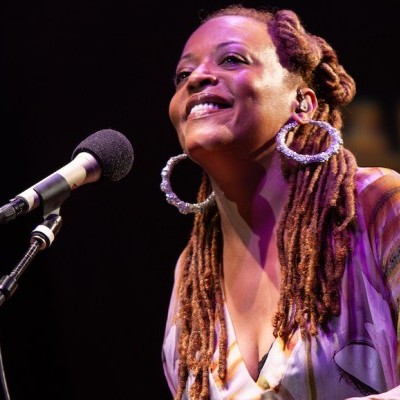
Wilson’s ability to connect to audiences helped her to win two Grammy awards and multiple other accolades. She was named an NEA Jazz Master in 2022.
Sep 3, 2026 10:44 AM
Cassandra Wilson, a singer, songwriter and producer who was one of the most acclaimed and successful jazz vocalists of…
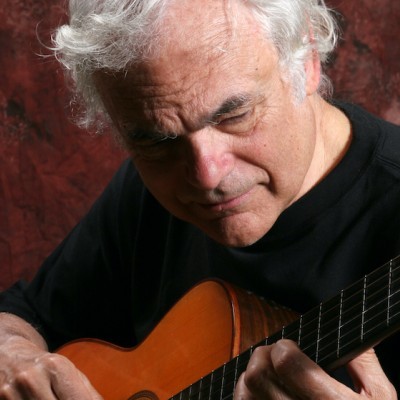
Bertoncini was a specialist and advocate for the nylon-string acoustic guitar, turning down high-profile opportunities that were unsuited to the sound and techniques that he used with that instrument.
Sep 1, 2026 11:06 AM
Gene Bertoncini, an esteemed jazz guitarist, composer, arranger and educator, died Aug. 29 at the Lillian Booth Actors…
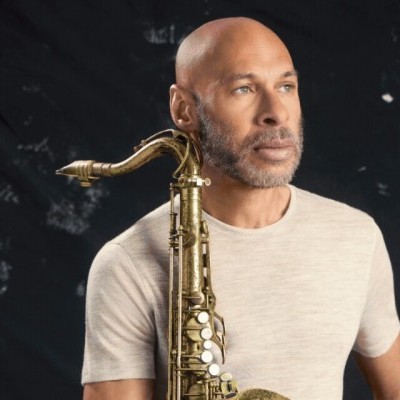
A solo concert by saxophonist Joshua Redman will close the first night of the Hyde Park Jazz Festival on Sept. 26.
Sep 22, 2026 12:26 PM
The Hyde Park Jazz Festival will take place for the 20th time on the final weekend of September 2026. Beginning half…
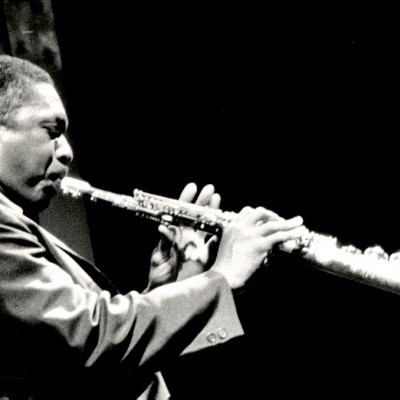
“It was just that suddenly … I could hear it,” Ravi Coltrane said of an epiphany he experienced during his late teens regarding his father’s music. “And it was almost like a calling, like something saying, ‘Hey, man, come on. It’s time to get serious.’ And the first time you really tune in and dial in and focus like that, it can be very life-changing.”
Sep 22, 2026 1:39 PM
Editor’s Note: Tomorrow, Sept. 23, is the 100th anniversary of John Coltrane’s birth. In honor of the tenor and…
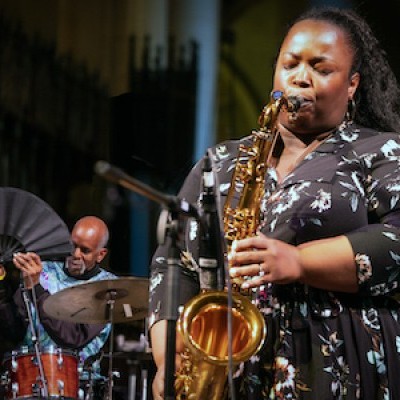
Camille Thurman took to the stage alongside bassist Kenny Davis and drummer Tommy Campbell for a rendition of Johnny Mercer’s “I’m An Old Cowhand” that recalled Rollins’ epochal 1957 trio outing Way Out West.
Oct 6, 2026 1:33 PM
As emcee Mark Ruffin noted at the commencement of an epic tribute to saxophonist Sonny Rollins at the Cathedral of…